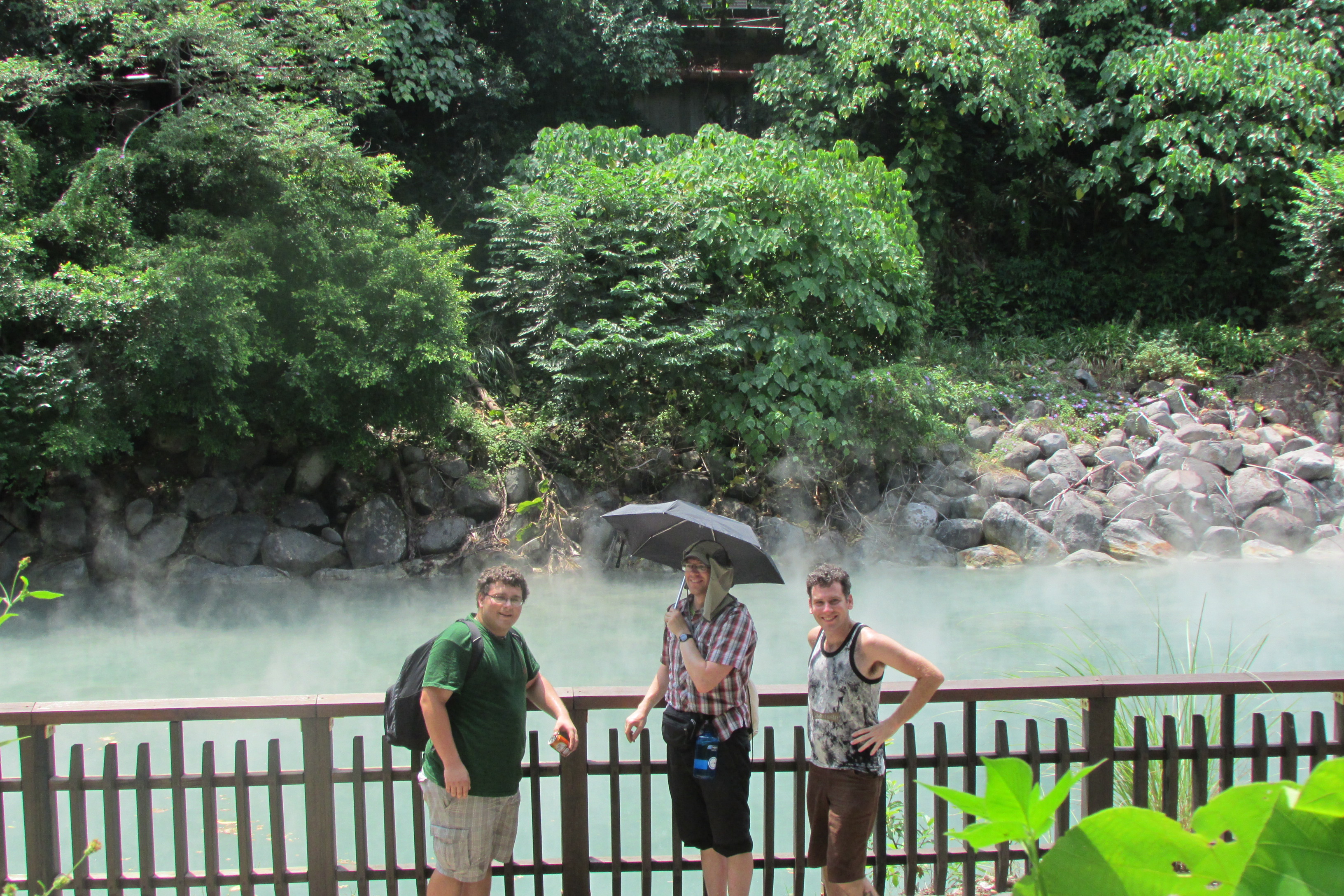
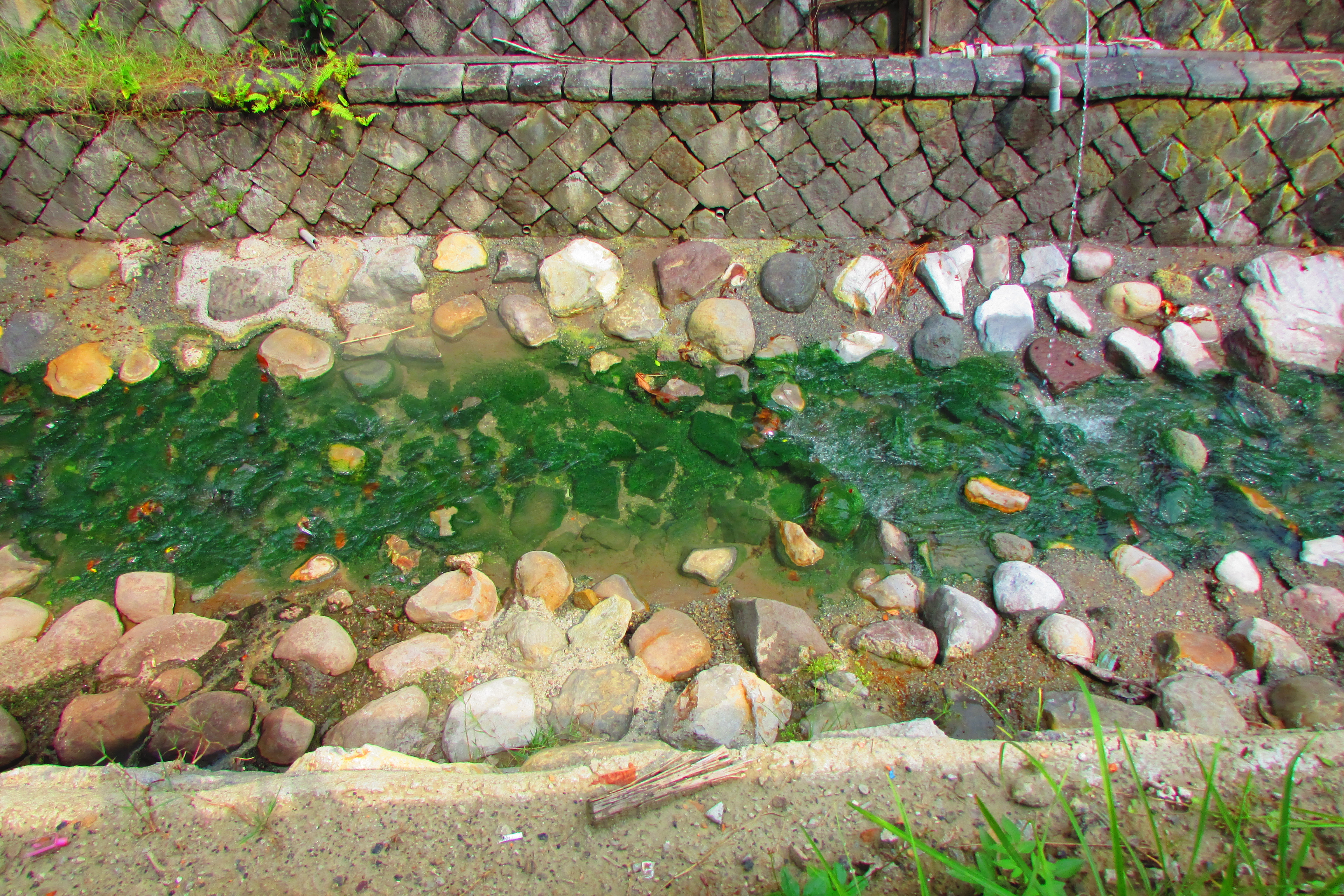
“To everything there is a season, and a time for every purpose under heaven.”
During this time of year, the weather changes quite a bit in Taiwan. Thermometers rise astronomically when it’s sunny, rain pours down in torrents when it’s cloudy, and due to this drastic increase in temperature, typhoons start brewing in the Philippine Sea.
This is also the time when the sound of drums rolls across Taiwan’s rivers and harbors as dragon-headed boats slice through the water. Along with the Lunar New Year and Mid-Autumn Festival, the Dragon Boat Festival (Dwan Wue Gee-eh 端午節) is one of Taiwan’s most important national holidays.
Thanks to years and years of migration and colonization, along with the rising ease of cultural exchange, many countries celebrate the Dragon Boat Festival. As a Canadian from Vancouver Island, I had heard about it before.
Victoria, Vancouver, and many other parts of Canada normally host Dragon Boat events, but in 2026, they were cancelled due to FIFA.Buying bulk dragon boat mix from the grocery store was when I first realized my love for wasabi-coated savory snacks.
This post will outline what makes this time of year significant before looking at some of the festival’s founding legends. Then, we will examine folk beliefs, varying traditions, and a brief history.
The Fifth Lunar Month
For those of you who have read my post on the Lunar New Year, you may be familiar with the distinction between the common (Gregorian or solar) calendar and the lunar calendar. For those of you who haven’t, the distinction is basically that the former tracks dates based on the Earth’s yearly rotation around the sun, while the latter focuses on the phases of the moon.
The Dragon Boat festival is traditionally held on the fifth day of the fifth month, but because this is based on the lunar calendar, that doesn’t mean May 5th. Keep in mind, the lunar new year begins with the first new moon of the year, typically between late January and mid-February.
To make this a little clearer, here are some of the festival dates:
2024: June 8th
2025: May 31st
2026: June 19th
2027: June 9th
To understand this festival better, we need to look back. Long before it became something to celebrate, the time of year was associated with something much more practical and far less joyous: the need to survive.
As I already mentioned, around this time (May to June), things really start to heat up in Taiwan, and I am, of course, referring to the weather. The fifth lunar month is sometimes called the cursed month. It falls at the height of early summer, when rising heat and humidity create ideal conditions for all kinds of undesirables to thrive, such as:
Diseases
Pests
Venemous creatures
In Taiwan’s subtropical climate, early summer provides the perfect conditions for these undesirables to thrive, so the underlying logic of people’s concern is sound. Long before air conditioning and modern medicine, performing protective rituals was a practical response to a potentially dangerous time of year.
Three Interesting Legends
No single story fully explains why Taiwan’s rivers fill with drums and dragon-headed boats on the fifth month of each year. But I have found three legends that offer some interesting backstories.
After getting some information from a book I own on Chinese mythology and numerous online sources, I rewrote the legends as short stories, but be warned, they are far from perfectly crafted.
Please feel free to contact me if you want to know more about my sources. If you just want to bypass this exercise in creative writing and head straight to more concrete details about the Dragon Boat Festival, you can skip ahead to the sections on symbolism, modern dragon boat racing, or the historical timeline.
These are the three legends I am going to look at:
The first is the most well-known. It centers on Qu Yuan (Chew You-wen – 屈原: 343-278 BC). He was a minister, poet, and passionate advocate of the state of Chu (Choo – 楚) during the Warring States Period. He is remembered as an accomplished author whose works include the elegy of Li Sao.
The second story is not as well-known. It involves Wu Zixu (Woo Dzi-Shue – 伍子胥). He was also from Chu but served as a loyal minister to the state of Wu (Woo – 吳). Zixu’s story carries particular resonance in coastal Taiwanese communities with strong maritime traditions, where legends of river and sea spirits remain culturally important.
The last story focuses on Cao E (Chow Uhh – 曹娥), a young woman from Shangyu (Shung Yeww – 上虞) who enters a raging river to search for her father, Cao Xu (Chow Sheww – 曹盱). She was later deified as an enduring symbol of filial piety that persists in literature and temple murals.
Some artistic liberties have been taken with these stories, but I have included a few links for notable people and places. For clarity and to avoid repetitive vocabulary, I refer to some characters by their first names, some by their family name, and others by their full name.
I strove to preserve the essence of these narratives. They all talk about loyalty and grief while exploring a similar underlying question:
What does a community owe to those who gave everything for it?
The River Remembers
In the kingdom of Chu, where the Yangtze River flowed like a bolt of green silk through flowery hills, there lived a poet named Qu Yuan. He was tall, his long fingers were constantly stained with ink, and his eyes seemed to always be distant, like he was composing a verse no one else could see.
The palace court called him the Orchid Minister for two reasons: The first was because he placed an orchid in his belt where other men sheathed their swords. The second was because people claimed his poetic words in their ears when he spoke.
Yuan had risen through the ranks in the palace by being a trusted advisor to King Huai. Yuan always warned the king about making risky alliances.
“The state of Qin is hungry,” Yuan told Huai one morning, “and hunger does not offer friendship. Hunger needs to be fed.”
Not everyone agreed with Yuan. He had rivals in court who were allied with Qin and resentful of Yuan’s influence. They were petty, selfish people, and when they couldn’t beat Yuan’s powerful arguments and logical reasoning, they planted seeds of doubt among the king and his followers.
“Qu Yuan always acts so certain,” murmured one of the ministers, speaking just loud enough to be overheard. “One has to wonder whose interests he truly serves.”
The seed was small, but Yuan’s counsel was often cautionary, and the King was becoming increasingly enticed by voices that were more optimistic – and yet less honest – than the poet’s.
Within two years, the murmurs had grown into full-fledged accusations. Eventually, Yuan was forced into exile. He retired to his garden estate far from the capital and decided that if people would not listen to his wise words, he would quietly write them down. He spent his days filling scrolls that would outlast every throne in the Chu state.
One evening, Yuan was visited in his garden by a young scholar named Song Yu.
“Everyone in the villages still quotes your elegant verses,” Song said. “Please, come back, and petition the King again.”
“I wrote to him several times,” Yuan replied, not looking up from his scroll. “A king who will not heed so many friendly warnings will not open his ears even if I scream from the mountaintops.”
The wind blew through his garden from the west, carrying a soft floral fragrance. But there was something else on that gust; something far more ominous. Unbeknownst to the two men, to the west was also where armies from the Qin state were preparing for an invasion.
The news came on a grey morning on the fifth day of the fifth month. King Huai had been captured, and the Chu State was undone.
Yuan was mortified. He walked down to the river and stood at its bank all day. An old fisherman found him there at dusk.
“You look as though you carry the weight of the world on your shoulders,” the fisherman said.
“I carry the memory of a kingdom that no longer exists,” Yuan replied, “with a body that apparently still does.”
He turned a scroll over in his hands, contemplating what he had written. “If a thing cannot be saved, and a man has given everything trying, what is left to do?”
The fisherman sensed that it was a question with no good answer, so he gave a simple reply. “Go home, Master. Your problems, and the river, will still be here tomorrow.”
Yuan smiled and nodded politely, but he stayed at the bank. He did not move for a long time.
As the fisherman paddled out, he kept looking at Yuan. After a while, the poet’s form disappeared from his sight.
Yuan had walked into the river. He had lost the will to fight, and in that condition, grief alone was heavy enough to drown him. The water closed over the last great poet of Chu as quietly as a blanket being laid on a sleeping child.
The fisherman paddled back to shore and raised an alarm. Within the hour, every boat the village owned was in the water. Voices in the dark called Yuan’s name.
A young woman stood at the bow of one boat, holding her torch high.
“Faster!” she yelled. “If we are quick, we can—”
An old paddler in the boat interrupted her. “The current runs deep here,” he said gently. “He is likely already gone.”
“We continue looking regardless,” she snapped. “We owe him that much.”
They searched until the stars wheeled overhead, but they didn’t find Yuan’s body. Not one trace of him was ever discovered – no clothing, no sandals, not even the scroll he had been holding or the flower in his belt.
All they saw was black overhead and below.
As the boats turned back in defeat, the young woman grabbed the basket of rice that was meant to be shared for supper. She lifted it and began casting handfuls into the river.
“If we cannot bring him back to his family, let the river be his final resting place,” she said. “We will feed the fish, and make their bellies so full that they will not touch him.”
By morning, every boat was doing the same thing. The drums that had driven the search were now beating low and steady, a sound more signifying mourning than urgency.
The next night, the fisherman dreamed was at the bank of the river. Yuan was there, too, but the poet was standing on the water’s surface. He looked as he had in life.
“We couldn’t bring you home,” the fisherman said.
“You tried,” Yuan replied. His tone was calm. “You gave me something better than my old home. You gave me a place to truly be at peace.”
He paused for a moment before continuing, “But the rice sinks too easily. The river dragons take it before it ever feeds the hungry fish.”
“Then what should we do, Master?”
“Wrap it,” Yuan said. “Bind it in silk thread, tight enough that even a dragon’s hunger cannot unwind it. Let it hold its shape against the current. The same way I tried to hold together this kingdom against everything that wished to unmake it.”
When the fisherman woke up, he wasn’t certain whether what he had seen was an actual vision or just a dream caused by grief and exhaustion. But he told everyone else in the village anyway.
On the first anniversary of Yuan’s death, the villagers bound rice in bamboo leaves and wrapped them with silk thread. They dropped the green heart-shaped bundles into the river.
Generations passed. The boats that had once searched in desperation now raced in remembrance, with dragons on their bows and drums driving them forward.
The rice that was once scattered loosely became dumplings called zongzi. They were bound tight and offered each year to a river that had taken a poet and given back, in exchange, a festival that would outlive every ruler who had failed to listen to him.
The Mournful Minister
A young officer named Wu Zixu knelt beside the bodies of his father and elder brother. Both of them had been cruelly executed on the whim of a tyrant king. Zixu did not weep long. Instead, he fled, moving eastward across rivers and borders. He carried nothing but his sword and a solemn vow that he would avenge the lost lives of his loved ones.
It was that same vow that led him to the state of Wu, where King Helü recognized something useful in the exile’s hollow eyes – a hatred he could weaponize. Zixu quickly became the king’s most trusted minister, and within a few years, he had accomplished what he had vowed to do.
Zixu had led his armies into the capital of Chu. The old tyrant king was already dead, but Zixu settled the score with fire and conquest.
“You have claimed your vengeance,” Helü said to him afterward, watching smoke rise over the city. “What now, Minister Wu?”
“Now I will serve you as faithfully as I once sought to ruin my enemies,” Zixu answered. “A man who has been given a second kingdom to serve owes it everything the first one never deserved.”
He meant every word, but he would soon learn that loyalty is a promise that, more often than not, punishes its keeper.
King Helü entered into a war with a smaller, rebellious kingdom, the state of Yue (Yew-eh – 越). When the king of Yue died, King Helü took the opportunity to invade, but he was slain in battle by the defending armies that were led by Yue’s new king, Goujian (Go Jee-en 勾踐.
Helüs’ son Fuchai (Foo Chay 夫差) took the throne, but his ascension wouldn’t be an easy one. Goujian, being inspired by his victory against Helü, marched his armies forward to challenge Fuchai.
Zixu served Fuchai just as faithfully as he had served the young king’s father, and he met the Yue army at a strategic location where the land narrowed between a marsh and a hill. He had scouted that place long before the first arrow was ever loosed. After walking around and testing the muddy ground, he knew that was a prime location to funnel a desperate army into its own grave.
When the battle came, it was more of a slaughter than a fair fight. Zixu’s lines advanced in disciplined ranks while Goujian’s soldiers, already half-starved from a long march and a season of poor harvest, broke against them like surf against a cliffside. They were repelled again and again, each wave becoming weaker than the last.
By midday, mud and blood had churned, becoming indistinguishable underfoot. The marsh was now the color of rust. Zixu’s enemy had nowhere to retreat but into the deeper water, and it swallowed the soldiers. The screams of the dying carried farther across the land than any drum or war-horn ever could.
Zixu rode along the battlefield’s edge, completely untouched. He watched enemy banners fall one by one until the only standard left was the one above Goujian’s own collapsing guard.
By dusk, what remained of the army of Yue had been pressed into a shrinking half-circle against the marsh’s deepest water. The few remaining soldiers were stuck in mud that was too thick to run through and too deep to fight properly in. Finally, Goujian threw down his sword rather than watch the last of his soldiers die trying to win a battle that had already been lost hours earlier.
He was brought to Fuchai’s court in chains, still crusted in the blood-stained mud. Soldiers dragged him into a throne room that was far grander than anything his small, jealous kingdom had ever built. Great pillars were wrapped in red lacquer. The floor was inlaid with polished marble that reflected the torchlight, making the whole hall glow like the inside of a forge.
Goujian knelt on that gleaming floor with his head bowed low enough that it touched the stone. His fate, and that of his kingdom’s, balanced on whatever Fuchai chose to do next.
Zixu stood at the foot of the throne, still in armor unwashed from the field. He looked at the kneeling king before, understanding what could happen when such monarchs were allowed to live.
“Kill him now,” Zixu said, his voice carrying the particular urgency of a man who had watched that exact story play out before. “A defeated king deserves no gratitude. He is a weed in the grass, waiting for his time to spread again.”
But Fuchai was young, and he was enticed by the spectacle of mercy. Goujian knelt low, wept convincingly, and offered tribute. He promised gifts of gold, jade, silk, and eventually, he even gave his own wife as a personal servant.
Bo Pi was another minister, but unlike Zixu, his loyalty bent in whatever direction the wind of bribery blew.
“Your Majesty,” he murmured, leaning in close to the king’s ear. “What glory is there in slaughtering a man already broken? Let the world see your mercy as well as your strength.”
Bo Pi’s words swayed Fuchai, and he spared the rival king. Goujian was sent home in humiliation rather than a coffin.
Zixu watched the events unfold and said nothing more, though something in his face made him look as if he had just consumed poison.
Years passed. Goujian, being far from broken, plotted his revenge. He spent his exile sleeping on a wooden pallet and eating only plain rice and fish heads. The discomfort kept his hatred sharp as he patiently rebuilt Yue’s strength. During that time, he continued to send Fuchai gifts and words of praise. But, more importantly, he made sure to keep Bo Pi’s pockets full.
Zixu watched this happen. Events were unfolding exactly as he had feared. He could no longer remain silent, so he made repeated visits to the king.
“Your Majesty,” he said, on what would be one of his final visits to the throne room, “The tribute from King Goujian is not an act of friendship. It is the behaviour of a farmer who fattens the pig he intends to slaughter. Goujian is not grateful to you. He is patient, and a second chance is the most dangerous gift a defeated king can be given.”
“You see treachery everywhere, old man,” Fuchai snapped, weary of warnings that no longer matched the comfortable peace he had become accustomed to. “Bo Pi tells me that Goujian is loyal. I am more inclined to believe the minister who brings me good fortune over the one who speaks only of accusations, warnings, and ill tidings.”
“Then you are letting the gift blind you to the giver,” Zixu said quietly. “And you do not see the trap.”
It was those words, mixed with some embellishments and lies, that Bo Pi used to finish what years of bribery had begun. He started whispering of disloyalty dressed as devotion. Eventually, he accused Zixu of outright treason.
Fuchai was persuaded at last. He sent his old minister a sword with no letter; it was a command that didn’t require words.
Zixu received the weapon without surprise. Before he fell upon the blade, he spoke to the servant who had carried it. His voice was steady, like someone settling an old debt.
“Tell the king that when I am dead, I want him to take my eyes and hang them above the city’s eastern gate, facing the road to Yue. I could not make him see Goujian’s treachery while I lived. Let me watch it arrive, at least, once I am dead.”
By the king’s final act of cruelty, Zixu’s body was bound in a sack and thrown into the river that ran past the capital and into the sea. The waters there were famous for having a tide that rose more as a single violent wall than a gentle swell.
Years later, Goujian’s armies came exactly as Zixu had promised they would. King Fuchai fell exactly as he had been warned he would. By then, it scarcely mattered whether Zixu’s eyes had been hung above the gate or not. The river into which his body had been thrown had developed a reputation. The local fisherman claimed that the great tidal swell was a product of Zixu’s anger. The violent waters rose and fell as if something beneath them was still trying to be heard.
Zixu was a warrior who refused to lie down quietly, and water spirits remember the wrongs done to noble people.
The Daughter Who Would Not Wait
In a small river town, mulberry trees towered over wet fields of rice. Underneath those trees, you would often find a priest named Cao Xu. He was someone whose voice could call rain from a clear sky and was said, on certain occasions, to have the ability to speak with the spirit that dwelt in the river.
His daughter, Cao E, had grown up beside that river the way children in other villages would grow up beside a cooking fire – close enough to feel both its comfort and its danger.
At the end of the fourth month of the year, the whole village gathered on the riverbank before dawn, heaping various offerings onto woven mats. There were bowls of rice and fresh fruit, strings of paper coins, and bundles of reeds that had been lit so their smoke drifted low across the water, mixing with the rising mist.
Cao Xu had been fasting for three days beforehand, as the festival demanded, and that morning his hands trembled slightly. Cao E told herself that her father’s shaking was only from hunger.
She convinced herself he was fine as she helped him into his robes. They were sewn with silver thread that caught the early light in thin, quick flashes, like minnows darting beneath the surface of a pond.
There were four drums set in a row along the bank, and villagers began beating them as soon as Cao Xu stepped into the water near the ceremonial boat; it was a slow, deliberate rhythm meant to mimic the river’s own pulse and call forth the spirit from whatever depth it kept itself hidden in. The sound rolled out over the water and came back flattened by the wide, swollen current into something different.
The drums were meant as a summons, but that year, they sounded more like a warning.
The current bore little resemblance to the gentler flow Cao E was used to; weeks of spring rain had fed the river, expanding it past the boundaries it usually respected. What had once been a clean separation between water and field now blurred into a patchwork of shallow brown ponds spreading out across the lowlands. The young rice shoots in the fields were drowned before they’d had a chance to root, and whole paddies sat submerged and silent.
The water itself ran a milky-grey color, thickened with silt torn loose from collapsed banks upstream. The river was so heavy with churned earth that it hardly looked like water at all. It caught and carried away everything in its path – broken tree trunks, collapsed fish-traps, and the bloated carcasses of drowned farm animals. The village’s freshly-painted ceremonial boat looked small and unmanageable set against the bank.
The noise of the river was enough to raise the hair on the back of a person’s neck; it was a low, continuous roar, mixed with the wet cracking sound of debris breaking beneath the surface. Even as the villagers watched, the water clawed at the soft earth of the banks and spread wider. The air itself had changed, smelling more like mud and rotten wood. The river had reached deep into the earth and dragged something of that depth back to the surface.
Cao E and the other children would normally wade out and search for crawfish where the water moved in slow bends, but that year the river gushed as a single unbroken current. The surface of the water bulged and rolled like the back of something living and irritable, refusing to break apart into the familiar, harmless channels the villagers had trusted their whole lives.
Even the oldest fishermen on the bank, people who had understood the river’s behaviour for decades, found themselves stepping back from the edge with apprehension.
“Father,” Cao E said, tying the last cord to his waist, “the river seems angry today.”
“The river is always a little angry, my child,” Cao Xu replied. He smiled the way he would smile at everything, as if the world’s dangers were simply small things he had stopped fearing a long time ago. Maybe he had never feared them.
“That is why we make these offerings,” he explained. “We need to remind the river we have not forgotten its temper.”
He stepped into the boat, his silver robes settling around him. He did not look back as the current took hold of the vessel and began drawing him out.
As he rowed furiously, the drums on the bank beat to meet every one of his strokes. When he got to a place where the water ran deepest and darkest, he stopped.
Cao E watched her father put down the paddle and raise his arms. His voice rose over the drums, reciting words she had heard him say many times before but had never fully understood.
Then the boat lurched. No one knew whether it was just from the strong current or if something large had struck the vessel from beneath the surface.
Cao Xu fell over the side without even a cry to mark the moment. He was swallowed as completely as a stone dropped into the depths of a well.
For days, the village searched. They rowed slowly around every bend, dragged nets through the shallows, and called Cao Xu’s name into the fog that rose each morning.
Cao E stood on the bank all day and all night, refusing both food and rest. Her eyes were fixed on the current as though sheer attention might force it to give back what it had taken.
After three days, her mom tried to intervene. “Come inside, dear,” she begged, draping a shawl over shoulders that had gone stiff with cold and grief. “You will catch a fever standing here. Your father would not want this.”
“My father is somewhere in that water,” Cao E said without turning. “I will not leave him alone simply for the sake of my own comfort.”
By the seventh day, the search parties had dwindled and grown discouraged. The villagers muttered that the river kept what it took. People said that their efforts were better spent on mourning than in further searching.
An elder of the village who had known Cao Xu since boyhood approached Cao E. She was still standing at the bank. The bottom of her robe was filthy from walking in the silty shallows. Her hands were raw from gripping reeds to steady herself as she searched the steepest parts of the shore.
“Daughter,” he said gently, “for days you have walked this bank in vain. You honor your father more by living than by wearing yourself down asking something from a force that will not be reasoned with.”
“You misunderstand me,” Cao E said softly.
There was something in her voice that made him go quiet. It was not despair, but a terrible, settled calm; the calm of a person who had already made an important decision and was only waiting for it to play out.
“I am not asking the river to give him back. I am asking it to take me to him.”
On the fifth day of the fifth month, she walked out to the very place her father had gone under, the water moving past her dark, indifferent, and endless.
“I have searched every bank and bend,” she said loudly to the current. Her voice carried clear over its roar. “If you will not surrender him to my searching, then take my devotion as a daughter instead.”
She took another step forward without hesitation and went down. The water closed over her the same way it had closed over her father. The river, true to its nature, showed no signs of gratitude for what it had received.
Days later, fishermen downstream found two bodies tangled together among the reeds. The arms of both father and daughter were locked around each other as though neither current nor death had been strong enough to pry them apart.
The village buried them together, and within a generation, Cao E was no longer remembered merely as a grieving daughter but as a goddess of filial devotion. The river now carries her name rather than its old one, and her shrine adorns the riverbank where she had once stood, refusing to abandon her father.
Her story of devotion exists quietly in temple murals and old verses, reminding us that what we owe the people we love is sometimes paid not in comfort, but in refusing, against all sense, to abandon them in the dark.
Symbolism and Folk Beliefs
Each of the three legends ends in a similar way: a body (or bodies) is given to a river, and a community is left to make meaning from the loss. But the symbolism of the Dragon Boat Festival reaches back further than any one story. There are even older beliefs about the dangers of early summer and the forces believed to govern water and protection.
Beneath the legends lies a deeper layer of folk cosmology, one concerned less with individual people than with the unseen forces a community had to appease, repel, or honor simply to survive the season. The following are three important folk beliefs.
1. The Five Poisons
The snake, scorpion, centipede, lizard, and toad were believed to become more active and dangerous as the temperature intensified in the fifth month. A lot of the festival’s rituals, such as the herbs hung over doorways, the sachets worn by children, and the wine once drunk for its supposed antidotal properties, exist specifically to repel the five poisons.
2. Dragons
Dragons are obviously quite central to the festival. What many people might not understand is that in local folk religion, dragons can be water spirits who control rain, rivers, and the turning of the seasons.
Racing a dragon-headed vessel down a river isn’t just athletic competition; it’s a ritual act meant to appease or command the water spirits whose favor determines whether the coming months bring good rain or torrential disaster. Judging by all the flooding that has been happening around the world, perhaps more people should jump in a dragon boat and start beating drums.
3. Children’s Protection
Children often receive special attention during festival time. Colorful threads are tied around wrists, or small fragrant sachets (Shee-ang Boe – 香包) are pinned to kids’ clothing.
Both are meant to ward off illness and misfortune.
Dragon Boat Racing in Taiwan
The boats themselves carry as much meaning as the legends that inspired them. What began in the old stories as something used to desperately search for a body lost in the river has been reshaped over centuries. They became vessels built specifically to embody the dragon’s authority over water, weather, and fortune.
Taiwan is an island nation, so it should come as no surprise that rivers and harbors shape daily life for a lot of the people who live there. Dragon boat racing is as much a ritual as it is a competition, and to many people, the festival helps shape the island’s identity.
Structure of a Modern Racing Team
A competitive dragon boat crew in Taiwan today includes several specialized roles:
The drummer (Goo Show – 鼓手), who sits at the front and sets the paddling rhythm.
The paddlers (Gee-ang Show – 槳手), who provide the boat’s power.
The steersperson (Gee-oh Show – 舊手), who controls direction from the rear.
The flag catcher, a paddler at the bow who snatches a flag from the water to mark the official end of the race.
Symbolism of the Boats
Like dragons themselves, dragon boats are understood in Taiwanese folk belief as guardians of local waterways. They are vessels whose presence on the water is thought to help chase away disease and bad fortune for any communities that live along the riverbank.
Important Foods and Drinks
There is more to this festival than public spectacle, competition, and old folk beliefs. Like almost every celebration in Taiwan, feasting plays a central role.
Bundled Rice Dumplings
Anyone who has been in Taiwan around this time of year has probably seen zongzi (Dzong Dzih – 粽子). Throwing rice into the river was central to the legend of Qu Yuan. In that story, the rice was wrapped in bamboo leaves to protect it from river dragons.
Sticky rice is still bundled in bamboo leaves, and the practice has grown, over centuries, into one of Taiwan’s richest culinary traditions. The regional variations are a point of genuine local pride and friendly rivalry.
Northern Taiwan style favors steamed, individually loose grains of rice.
Southern Taiwan style is boiled, producing a softer, stickier texture.
Hakka zongzi typically include fatty pork, dried radish, and peanuts.
Some Indigenous communities make millet-based versions reflecting local agricultural traditions.
Vegetarian zongzi are widely available at Buddhist and Taoist temples.
To tell you the truth, I don’t love zongzi. They are not, by any means, bad; I just think they’re a little bland and unremarkable. However, I will eat them when they are given to me, and I am given heaps every year.
Fruit and Drinks
Realgar wine (She-ong Gwong Ghee-oh 雄黃酒) is said to be important to the festival, but I have never tried it. Realgar is an ore that contains sulfur, and it was believed to ward off insects and disease (along with evil spirits). However, I am doubtful that the purported health benefits of drinking something with toxic levels of arsenic have held up to scientific scrutiny.
Now, it is more common for people to drink cooling herbal teas, which I enjoy. This is often paired with seasonal fruits like lychee and mango, which I devour ravenously every chance I get.
A Historical Timeline
The evolution of the Dragon Boat festival in Taiwan combines both Han Chinese and Indigenous understandings of early summer; it is a time that requires protection, purification, and careful transition. This overlap of customs, rather than direct borrowing, shows that there was a shared response to the practical dangers of the season despite different cultural frameworks.
Amis communities, for example, observe summer rituals tied closely to fishing cycles, and some communities incorporate their own unique boat blessing ceremonies into the festival. The Bunun people mark the season with rites connected to agriculture and hunting, with particular emphasis on seeking ancestral guidance during the dangerous time of year.
It is no accident that distinct cosmologies arrived independently at the same instinct toward seasonal protection. It reflects centuries of layered history, as migration, colonization, and political change brought the festival to Taiwan and reshaped it.
To understand how the festival has evolved, we can trace its history from the earliest origins through to the present.
Pre-Qin Origins
The festival’s roots reach back to rituals that predate even the Warring States period. These included fertility rites performed to ensure plentiful crops, prayers to avert illnesses and avoid poisonous creatures, mock battles to awaken the hibernating Heavenly Dragon (Tee-an Long – 天龍), and worship of the water dragons as representatives of the Jade Emperor (Yew Huang – 玉皇). However, the true origin of the dragon boat festival is commonly believed to be the Legend of Qu Yuan rewritten above.
One thing that these traditions do show us is that early summer was always recognized as a dangerous transitional period into the hot season.
Spread to Taiwan
Han settlers brought dragon boat traditions to Taiwan, where the customs were gradually adapted to the island’s distinct subtropical climate and absorbed into local folk beliefs that were already shaped by the island’s geography and Indigenous heritage.
Japanese Colonial Period
During Japan’s rule over Taiwan, dragon boat races were promoted as organized athletic events, and races were structured in ways that influenced how the sport is done on the island today.
Post-War Taiwan
After WWII, temple-centered celebrations grew in prominence, Indigenous elements became more visibly woven into public observance, and the festival increasingly took on a role in tourism and cultural branding as Taiwan sought to promote its distinct cultural identity.
Each of these venues attracts both serious competitive teams and casual spectators. Given that these are all outdoor events and the weather at the time is either extremely hot or extremely wet, my family and I have not made it a habit of attending every year. Besides, I would rather be paddling around in a boat myself than simply watching others do it, but that doesn’t take away from the beauty and cultural significance of the whole event.
A Unique Time of Year
While I don’t really enjoy the blistering heat of a Taiwanese summer, thankfully, a cooling dip in a lake, ocean, or mountain stream is never far away. Besides, the way things have been going for the past few years, it seems record-breaking temperatures are not limited to just this part of the world. One thing we can be thankful for in the sub-tropics is that summer rain keeps everything moist, almost completely eliminating the risk of forest fires that plague the drier summers of more temperate zones.
Taiwan’s Dragon Boat Festival not only serves as an event that showcases elements of culture from Chinese cosmology, centuries-old legends, local folk religion, and Indigenous Austronesian tradition, but it is also a reminder that the natural world is full of powerful forces. While we might understand these forces better than we used to, they can still surprise us. That is why we need to show our respect.
Whether that respect is shown through traditional festivals, age-old customs, or simply making more ecologically-minded decisions, is up to us.
“Love is something eternal; the aspect may change, but not the essence.”
This post will be an addition to the recounting of my ‘The First Few Years’ in Taiwan series, but since this covers many years, it is not a continuation.
This post has one sole focus: my quest for love.
I had been in Taiwan for a little over a year, made some good friends, and gone on many adventures (which will be included in a separate post), so I set my sights on finding that extra-special someone.
The Single Days
Not having a serious partner at that time in my life was not the most terrible thing in the world. Though I lived in a small town, the city was not far away. I would often head there for the weekend. Dating apps were becoming more popular and widely used, so I could chat with someone online for a little while and then meet up with them for some fun when I was off work.
I enjoyed the sights, sounds, and companionship (along with a wider selection of food vendors) that came from stepping beyond the borders of lil’ old Zhushan. However, I yearned for something more. I had a nice motorcycle but no one to wrap their arms around me on scenic journeys. I had a large bed but mostly slept alone.
Scrolling With Hope
While visiting the city, hanging out in bars, and enjoying some casual encounters can be pleasant, I never gave up on my search for someone I could share more with. That was when I came across a profile that caught my eye.
This lovely lady lived in Taipei, so unfortunately, it was a little too far for a quick visit. We chatted for a while, but eventually the conversation fell flat. My questions were met by simple one-word responses, and we never made plans to actually hang out. I decided to scroll on and see if I would have better luck with someone who lived a little closer.
Love at Second Sight
Some more time went by, and I still hadn’t had much luck finding that special someone. It was during a trip to Japan when I started chatting with the beautiful woman above once more. Ling Lin (LL) had changed the photos she had posted online and cut her hair, so it took us a little bit of time to realize that we had chatted before. This time, however, our conversations were a bit more lively.
It turned out that LL had left Taipei and moved back down to her hometown of Linnei. This neighbored the small town I lived in, so it would be a lot more convenient for us to meet up. I often wondered whether the big-city girl I had met at first just had no interest in a small-town boy like me, but once she was back home, it seemed her perspective on me had changed, and she decided to give me a shot.
For our first date, we kept it simple and took a backpack full of sangria to Ikea. There, we pretended we were married, looked at housewares, sat on couches, and rolled around on mattresses.
After that, we went to a night market, and I introduced her to some friends.
Everyone seemed to approve of my new partner in crime.
After a few more dates, we took a trip to Taipei together. LL had done some modelling up there and was in a show that had been organized before she moved away.
Needless to say, sitting in that audience made me feel like a very lucky person. 😉
I quickly learned that LL was a kind, honest, and hardworking person. Every day, she took the train to the university where she worked. Sometimes, she would work so late that she would miss the train home. When that happened, she just slept in her office and resumed work the next morning.
When LL came and met me at the old house I had just moved into and helped to clean the disgusting kitchen, I knew I had found a keeper.
From there, we had more dates and found ourselves really enjoying one another’s company.
Full Steam Ahead
So, I had finally found someone worthy of special attention, and we continued our relationship by dating exclusively. We did all the usual stuff new couples liked to do.
We ate out a lot (we still do), getting to know each other while enjoying delicious food.
We hiked all around Taiwan, enjoying both small forest trails and long mountain treks.
I met her family and friends, making some new pals along the way.
We went on adventures, travelling both locally and internationally.
Settling Down
The time comes when you are convinced you have something special, so we moved into a house together, adopted some animals, and grew a small garden.
From there, anyone who knows me probably knows the rest of the story.
I proposed during a trip to Taipei.
We went to a little shop and made our own wedding rings.
We didn’t want to wait too long before getting married. Unfortunately, COVID had struck, so we were not able to invite anyone from Canada. Luckily, my mother got stuck in Taiwan during that time, so she was able to attend.
We found a small campground that had a couple of cozy cabins and booked the whole place for one day and night. Our friend was the DJ, and we got a nice restaurant to cater the food (I will upload more pictures when I am able to find the online album).
‘Till Death Do Us Part
And that, as they say, is that. LL and I have been together ever since. We have two lovely boys together, and we moved into a house close to her parents (the same town she grew up in and where we first met).
Being married can be a challenge for anyone, but I would not change it for the world. LL and I have known each other for over ten years, and I look forward to knowing her for a hundred more.
“That love is all there is, Is all we know of love.”
A child’s first year marks not just their beginning,
but the unfolding of a universe previously unknown.
I’m sure most people would agree that having a child turn one marks a significant milestone in their life journey and is definitely something to be proud of as a parent.
While the first year of a baby’s life is great, let’s be honest: It is mostly just drinking milk, sleeping, and getting used to some basic bodily functions. I’m sure there’s a different timeline for every child, but when they get close to the year mark, I believe that you can really see their unique personality start to develop.
In different countries, a child’s first birthday is celebrated with varying practices that reflect values, traditions, and familial hopes for the child’s future. In Taiwan, the celebration of a child’s first birthday can hold profound cultural significance, featuring unique customs that have been preserved for generations.
Both of my boys have celebrated their first birthdays in Taiwan, and while we are not a very traditional family, we did host amazing celebrations each time. This post will examine an interesting historical tradition associated with a child’s first birthday, as well as share the fun that we have had.
The History of First Birthday Celebrations in Taiwan
The practice originated during the Three Kingdoms period (220-280 CE), when families would place various objects before a one-year-old child to gain insight into their future inclinations.
Throughout the centuries, as dynasties rose and fell across China, this tradition evolved but maintained its core essence. When Chinese immigrants settled in Taiwan, particularly during the Ming and Qing dynasties, they brought this cultural practice with them.
Despite Taiwan’s complex political history, this ceremony has remained a steadfast element of Taiwanese cultural identity. Every time I have been to a child’s first birthday, this ceremony has been done, and we were sure to include it in both our boys’ birthdays.
Understanding the Ceremony: A Glimpse into a Child’s Future
It is remarkable how this tradition, like so many others in Taiwan, has adapted while preserving its essential meaning. Families continue to honor this ancient practice, viewing it as a meaningful connection to their cultural roots and an opportunity to gather in celebration of new life.
The Meaning Behind the Name
The term Jah-Joe (抓周) combines two Chinese characters that encapsulate the ceremony’s purpose: Jah (抓) means to grab or to seize, while Joe (周) refers to an anniversary or cycle.
There is a metaphysical underpinning of the tradition – the belief that even at such a young age, a child’s natural tendencies might manifest through their choices, guided perhaps by fate, gods, or innate disposition.
Traditional Items and Their Symbolic Meanings
The ceremony centers around a carefully curated collection of objects, each with a symbolic significance. These items represent different professions, skills, or life outcomes that the child might pursue or experience.
Some of the common traditional items include:
Abacus: Mathematical aptitude and potential success in business, finance, or commerce. A child who chooses the abacus might grow up to be financially astute or possess strong numerical abilities.
Calligraphy brush: Literary talent, artistic ability, or scholarly pursuits. In traditional Chinese culture, scholars were highly respected, making this a particularly auspicious choice.
Book: Educational achievement and wisdom. This choice suggests the child may excel academically or pursue knowledge-intensive professions.
Stethoscope or medicine container: Healthcare, suggesting the child might have a future in medicine, healing, or caregiving professions.
Green onion: In Mandarin, green onion – tsong (蔥) sounds very similar to intelligence (聰), making this item a symbol of cleverness and quick-wittedness.
Camera: Perception and artistic vision. Beyond the obvious connotation that the child may be a photographer or filmmaker, the camera symbolizes the act of capturing moments and preserving memories in any form.
Rice or glutinous rice ball: Abundance, never going hungry, and prosperity throughout life.
Chicken leg or meat: Physical strength, good health, and a life free from want.
Coin or money: Wealth and financial security.
Ruler or measuring tape: Precision, attention to detail, and potential careers in design, architecture, or engineering.
Seal or stamp: Traditionally symbolizing governmental positions or authority, reflecting the prestige associated with civil service in historical Chinese society.
Musical instrument: Artistic talent and potential success in the performing arts.
Families often customize these items based on their values, aspirations for the child, or regional variations of the tradition. Some may include items that represent family businesses or professions, creating a more personalized experience.
Right before Isaiah picked his items, I sneakily added a toy cap gun. This was largely ignored by both my son and the guests, so I didn’t repeat the prank at Leon’s party (actually, I just couldn’t find the toy gun).
The Process: From Preparation to Interpretation
You’ve probably gotten the gist of it now; it is neither a difficult nor an elaborate process:
1. Arrange the items in a circle.
2. Prepare the child for all the fun they are about to have.
3. Herd the child toward the circle.
4. Let the selection begin!
Our kids picked three things each; I believe some people do more or less.
Isaiah chose the abacus first, showed a bit of interest in the piano/keyboard, and then moved on to grab the camera and the book.
Leon also chose the abacus first. Then, he picked up the microphone and the airplane while showing some interest in the artists palette.
For those of you who want to learn more about the traditional ceremony, read on. For those of you more interested in what we got up to, skip ahead to the next section.
The Jah-Joe ceremony traditionally follows a structured process that enhances its ritual significance:
Preparation: Families select a propitious time for the ceremony, often consulting traditional calendars or fortune tellers. The venue is usually the family home, particularly the living room or a specially designated area, though modern families sometimes opt for specialized cultural centers or restaurants.
Arrangement: The selected items are arranged on a clean mat or table, usually in a circular pattern to symbolize completeness. Red, the color of good fortune in Chinese culture, often features prominently in decorations.
The Selection: The one-year-old child is placed in the center of the arranged items. Family members gather around, often creating an encouraging atmosphere with gentle prompting. The first item (or sometimes three items) that the child reaches for and grasps is considered most significant.
Interpretation and Celebration: Once the child makes their selection, family members respond with excitement and discuss the implications of the chosen item(s). This moment is filled with joy, laughter, and sometimes playful debate about what the choice might mean for the child’s future.
Documentation: In contemporary celebrations, the entire process is usually photographed or recorded, creating lasting memories of this cultural milestone. In the past, the results were often written down.
The interpretation of the child’s choices can be both serious and lighthearted – while members of the older generation might genuinely believe in the predictive aspects of the ceremony, there’s also an understanding that the child’s future remains open to many possibilities. We didn’t have any seniors at either of the parties, so we did it just for fun.
Evolution of Venues and Settings
While traditionally held in family homes (or in our case, the local park). There has been an emergence of specialized venues for Jah-Joe ceremonies. Cultural centers like the Luzhou Lee Heritage Residence in New Taipei City offer authentic settings for families wishing to perform the ritual in a traditional environment. These venues often provide guidance on the proper arrangement of items and may include educational components about the ceremony’s historical significance.
Upscale restaurants and hotels have also begun offering Jah-Joe as part of comprehensive first birthday celebration services, combining the traditional ceremony with modern party elements.
The Taipei Zoo even hosted one of these ceremonies for its new baby panda.
Contemporary Items Reflecting Modern Professions
As already mentioned, the selection of objects that the child can choose from often varies from family to family. Modern additions often reflect contemporary career paths and societal values.
Calculator or computer mouse: Representing careers in technology, programming, or digital industries.
Sports equipment: Symbolizing athletic talents and potential careers in sports.
Microphone: Suggesting public speaking abilities, broadcasting, or careers in communication.
Airplane or globe: Symbolizing a future involving travel, exploration, or international relations.
Paintbrush or art supplies: Indicating creative talents beyond traditional calligraphy.
Family Stories and Predictions Come True
Many Taiwanese families treasure stories about the predictions made during Jah-Joe that seemed to foreshadow their children’s actual life paths. A common narrative involves the child who grabbed a stethoscope and later became a doctor, the one who selected a calligraphy brush and went on to be a published author, etc.
My mom, who was at Isaiah’s first birthday, was extremely happy that he picked the abacus. She was equally impressed when she heard Leon did as well. Whether they become accountants or not, it is nice to think that they might follow in her footsteps.
Contemporary parents in Taiwan often approach the ceremony with a blend of cultural respect and modern skepticism. Many perform the ceremony out of appreciation for tradition rather than strict belief in its predictive powers. This pragmatic yet respectful approach typifies how many young Taiwanese families engage with traditional practices in the 21st century.
The narratives created from this first birthday ceremony, whether coincidental or truly predictive, become part of a family’s story and reinforce the cultural significance of the tradition. In the end, isn’t all just about good family stories?
There are other Taiwanese birthday traditions, but I’ll save those for another post. Time to continue with more fun stuff.
The Witherington Way
Even though we don’t strictly follow tradition, we did want to have a grand time for both Isaiah’s and Leon’s birthdays; the ocassions had to include good people, good food, and good times.
Isaiah D. W. – November, 2023
It was a beautiful sunny day for Isaiah’s first birthday, and we set up in Linneiyi Station, which is a lovely park right across the street from our house.
There is a restaurant in an old building there (it used to be the office for the Taiwan Mitsubishi Paper Mills Company). The manager is very nice and let us borrow stools and tables.
We brought a selection of food and snacks and ordered more from different restaurants nearby. We were sure to include chips and salsa (my favorite) and pizza (a favorite of almost any child, I reckon).
It wasn’t long before people started to arrive; Isaiah got some gifts and everyone enjoyed the feast.
After everyone was thoroughly satiated, we only had one activity on the agenda: The gender reveal for the baby in LL’s belly.
I’ve never cared too much for this tradition, and there was no surprise for me because I had already glimpsed something during a recent ultrasound. However, it can still be a lot of fun, and I was the only one who knew the gender of the baby already.
The reveal was simple. I had some friends secretly put a bra on me that was either pink or blue. I then covered myself with a button-up shirt.
We inquired about everyone’s hopes (since we already had a boy, many – including myself – were hoping for a girl), LL did a brief countdown, and then I ripped off my shirt…
I revealed, to some people’s surprise (and maybe some people’s disappointment), a blue bra; another boy was on its way.
Everyone mingled, ate some cake, and played around. Isaiah’s first birthday was a complete success, and cleanup was not so bad.
Leon B. W. – March, 2025
On the morn’ of Leon’s birthday, we woke up to dark clouds and gusty winds. We were worried that repeating the same venue we used for Isaiah’s birthday might be a bad idea.
Luckily, Linneiyi Station has an area in the back with cover, so the manager was kind enough to let us set up there.
With two young boys, we decided not to waste any time and just paid for a caterer to provide all the food (burgers, croissant sandwiches, fried veggies, quiche, etc.). We also ordered customized drinks.
The party started out as normal with mingling and feasting.
Our neighbor, Emma, is a very talented face painter, and she was kind enough to donate her talents to the party.
Since we had no gender reveal to do this time (though I did joke that we should pretend), we had to come up with some other activity. LL had the bright idea that we would do a small quiz. She asked questions (mostly about Leon) and whoever guessed the right answer would win a prize.
It took a short while for people to get into the game; it was almost as if they were just content to hang out with each other and chat. But once they saw the lavish prizes, they couldn’t resist. We gave away:
Leon edition water.
Leon edition cola.
Socks that looked like hotpot meat.
A bag of rice.
A bottle of wine.
The grand prize (for correctly guessing my age) was truly extravagant…
A shirt of me.
The dark clouds rolled away, and no storm came. So, we unleashed bubbles and an oversized football.
In the end, this party was also a huge success, and I believe everyone had a great time.
What Does it Mean?
This ceremony in Taiwan exemplifies how traditional practices can remain relevant and meaningful across centuries of social change. The ritual’s enduring appeal lies in its ability to serve multiple purposes simultaneously: it honors cultural heritage, strengthens family bonds, creates memorable celebrations, and offers a playful glimpse into a child’s potential future.
We didn’t spend too much time on this tradition. After all, no matter how old you get, the focus of a birthday should be fun. We just used it as an excuse to hang out with our friends. In the end, isn’t that all that matters?
The more you praise and celebrate your life, the more there is in life to celebrate.
The smell of grilled food fills your nose and the sound of happy chatter can be heard all around. Explosive pyrotechnic displays happen regularly, with fireworks exploding right above your house on occasion. This is not some kind of Fourth of July celebration, this is the new year holiday in Taiwan, and you’re in for a good time.
You can always tell when New Years is coming because the outsides of grocery and convenience stores fill up with boxes of cookies and other treats for easy gift-giving.
For me, this has generally been a time to get together with the families of friends or my in-laws. It almost always involves eating a lot, playing mahjong or dice gambling games, and sipping on some fine whisky or Kaoliang. But, it is obviously a lot more than that.
New Year’s in Taiwan is their longest yearly holiday (comparable to December’s winter break in Canada or the US – but most people only get one week off work). It is steeped in history. Since I am not entirely familiar with all the traditions, I’ve done some research to try and paint a more comprehensive picture of the festivities that goes beyond just my personal experiences.
What’s In a Name: Spring Festival, Lunar, Chinese, or just New Years?
To get started, you might want to know why the new year is celebrated at a different time in Taiwan. This all has to do with the various kinds of calendars.
The Gregorian calendar is the most common calendar, and what people generally find on their electronic devices or hanging on their walls. It is a solar calendar, and, as the name suggests, it tracks time based on Earth’s movement around the sun.
The Gregorian calendar is what gives us 12 months of varying length that make up a year of 365 days (366 on a leap year). According to this calendar, New Year’s Eve and New Year’s Day fall on the same days every year – December 31st and January 1st.
Taiwan celebrates this new year along with many other countries in the world. In fact, Taipei 101 has a mesmerizing fireworks display every year after the countdown, and January 1st is a national holiday.
However, the biggest New Year’s celebration in Taiwan happens following a lunisolar calendar, which tracks time based on the solar year and the phases of the moon. The Lunar New Year happens at different times each year, but it is generally celebrated on the second new moon following the winter solstice, which falls between late January and mid-February. It ends when that lunar phase has come to an end – around 15 days (half a lunation) later.
This is the Chinese zodiac, which differs from the Western zodiac inspired by Greek and Babylonian astrological traditions.
The Chinese zodiac doesn’t refer to star constellations, it follows the lunisolar schedule on a 12-year cycle. Each year is represented by a different animal – 2024 was the year of the dragon, and 2025 is the year of the snake.
There is a debate about what this holiday should be called (similar to conversations about saying Merry Christmas or Happy Holidays in the Western world). Some call it Chinese New Year, which is an acceptable term given that many of the traditions come from Chinese culture. After all, there were many times in history when China’s borders and influence extended far beyond what they do today.
The holiday is also occasionally called the Spring Festival because the time of year marks the beginning of spring on the traditional lunisolar calendar. In my experience, not a lot of people use this term but I do like the focus on spring that happens in Taiwan.
I used to live in a house surrounded by rice fields, and every year the farmers would plant cover crops of sunflowers, gerberas, chrysanthemums, and other pretty flowers. They would let these fields grow for a while, providing visitors with ample time to snap photos. When the holidays end, they would till the flowers back into the soil as a form of green manure.
A lot of different Asian countries (including Taiwan) have their own unique ways of celebrating this holiday, and I’ve never lived in China, so I generally call it Lunar New Year or just New Year. The common phrase to say during this time is shin-knee-en kwie-luh (新年快樂), which just means happy New Year. In 2025, it fell on January 29th and the official holidays were from January 27th to February 2nd.
Lunar New Year in Taiwan: A Blend of Tradition and Modernity
This is a time for grand celebration and is deeply rooted in centuries of tradition that seamlessly weaves together ancient Han Chinese customs with distinct Taiwanese practices to create a unique cultural mosaic that defines the island’s heritage.
As I already mentioned, my experiences generally just involve family gatherings, eating, drinking, some mild gambling, and lots of merriment. But, this post will go a little deeper and explore some of the customs other (more traditional) people uphold.
Preparing for the New Year: A Time of Renewal
The preparations for Lunar New Year begin well in advance, with families engaging in the time-honored tradition of da-sow(sounds like female pig not plant a seed)-chew (大掃除), which just means a general cleaning.
Here’s where you’ll see everyone busy sweeping, decluttering, and washing everything. I witnessed my neighbor cleaning her screen door with a toothbrush (now that’s dedication). The father of some students I tutor got a little overzealous and threw out all the books we were working on – oh well.
The streets are lined with extra junk people plan to throw in the local garbage truck drive-bys. In smaller areas, you might see a trail of black smoke rising from a sneaky bonfire.
The rigorous chores represent more than just physical cleanliness; they symbolize sweeping away the previous year’s misfortunes and making way for incoming prosperity.
Every corner of the house must be spotless, every drawer organized, and every surface polished to perfection.
Businesses often mark the year’s end with elaborate dinners or banquets. These festive gatherings serve multiple purposes: expressing gratitude to employees for their hard work, strengthening company bonds, and invoking blessings for the upcoming year. The events often feature lucky draws and entertainment. While I have never worked a job that has hosted such elaborate parties, I have been treated to a few employee dinners.
A significant spiritual preparation occurs on the 24th day of the 12th lunar month when religious families bid farewell to their household deities.
This custom acknowledges the gods’ annual journey to heaven to report on earthly affairs. Families prepare elaborate offerings of food and incense, ensuring their divine protectors depart with proper respect and return with continued blessings.
New Year’s Eve: A Night of Family Unity
The heart of the celebration lies in the dinners, where families of all generations gather around tables laden with various dishes.
The careful selection of foods reflects hopes for the coming year: whole fish symbolizes abundance, dumplings represent wealth, and sticky rice cakes suggest rising prosperity and status.
Homes transform into festive spaces adorned with bright red. Stores open up just at this time of year to sell decorations, gifts, fireworks, etc. Some people just sell them out of the front of their houses.
Families hang red couplets featuring phrases with gold lettering on their doorways and windows; red lanterns illuminate entrances. These vibrant decorations serve both aesthetic and spiritual purposes, creating a protective barrier against negative energies while inviting good fortune.
The tradition of staying awake past midnight – just like Western New Year’s Eve – remains a cherished practice. Children play or nap as families chat loudly, play games, or watch special New Year television programs (I’ve never seen the TV shows).
Four MANY hours leading up to midnight, people light off fireworks EVERYWHERE. While living across the street from a lovely park is generally enjoyable, the bombardment of explosions can get a little old after a while (especially when you have two little boys trying to sleep). That doesn’t stop me from going outside, standing in the middle of the street, and watching them.
These lively late-night customs are not just for fun, they are believed to extend the life of one’s parents, adding a touching dimension to the festivities.
Fifteen Days of Celebration
While I have not observed many of these customs, each day of the New Year period carries its own significance for some.
On the first day, families don new clothes and visit local temples to pray for blessings. Sharp objects are stored away to avoid cutting off good luck, and cleaning is avoided to prevent sweeping away fortune – good thing the houses were already made spotless.
The second day highlights the importance of family ties, as married daughters return to their childhood homes. Since I live in my wife’s hometown, this is not much of a concern for us, but the tradition strengthens family bonds through the exchange of gifts.
The third day provides a welcome respite, as it’s considered somewhat inauspicious for visiting, allowing families to rest and recover from the festivities.
The fourth day marks the welcoming back of the deities, with fresh offerings and renewed prayers. By the fifth and following days, the practical aspects of life begin to resume as some businesses reopen.
This time is often accompanied by – less visually appealing but equally noisy – firecracker displays at temples to attract prosperity and drive away evil spirits.
A highlight of the extended celebration occurs on the ninth day, particularly significant for Taiwan’s Hokkien community.
This day marks the Jade Emperor‘s birthday, celebrated with elaborate ceremonies and offerings that showcase the deep spiritual connections maintained in Taiwanese society.
A Mix of Modernity and Tradition
Modern celebrations have adapted while maintaining their cultural essence. The tradition of giving red envelopes called hong-bows(sounds like to bend at the waist out of respect, not something you use to shoot an arrow) (紅包) is quite common, and this is a tradition we uphold.
Generally, parents give red envelopes to their kids until they’ve been employed for a while. After that, everyone gives them to their parents and grandparents.
The giving of red envelopes also happens at weddings, birthdays, and the arrival of new babies. It has expanded beyond family to include various social and professional relationships. It isn’t uncommon for a valued employee to receive one month’s (or more) salary in a red envelope before the New Year’s holiday. I have never been this lucky, but some employers have given me small amounts over the years.
During the holidays, you can also see lion and dragon dances enlivening public spaces, with professional troupes running around shopping centers and corporate events.
These performances maintain their traditional purpose of bringing prosperity while adapting to contemporary settings and audiences.
A Living Heritage
No matter how you choose to participate, the New Year’s celebrations in Taiwan exemplify how traditions can remain vibrant and meaningful in a modern society. While the core elements of family unity, spiritual devotion, and cultural preservation remain strong, the festival continues to evolve, incorporating new practices while honoring ancient customs.
It doesn’t matter where you come from, it isn’t hard for any foreigner or local to find a full glass, stuffed tummy, and plenty of smiling faces in Taiwan during this time – as long as you don’t mind a few crowded venues and traffic jams.
Whatever you do, or dream you can, begin it. Boldness has genius, power, and magic in it.
So there I was, staying in a stranger’s house in the small town of Zhushan (竹山). It didn’t take me long to discover that there weren’t many other foreigners. In fact, strangers like myself were so rare that it wasn’t uncommon for locals to stop what they were doing, point at me with surprise, and yell “way-gwa-ren” (外國人), which means foreign person. Though, sometimes I think they were saying “may-gwa-ren” (美國人), which means American (person).
Who was I to correct them? Canada is in North America, so I suppose they weren’t wrong.
In all honesty, sometimes people – especially children – still point and yell this at me (or other foreigners). I suppose it’s one of the quirks of living in small towns; I don’t think it happens too much in the cities.
Learning to Ride
Anyway, to get around in Zhushan, Mia had allowed me the use of a scooter. She asked me if I knew how to drive one, and I assured her I did. In reality, I had never really done it before, but I was confident I would learn quite quickly. I did get a few raised eyebrows when I had to ask how to turn the scooter on (for those who don’t know: turn the key, hold the brake, and then press the ignition button).
To be clear, by scooter I mean a two-wheeled open motor vehicle with a whopping 125 CCs of pure power, not a foot-propelled children’s toy.
It turns out that I wasn’t wrong, and I was quite adept at driving around on 2 wheels even though it was my first time. The adventuring could fully commence!
Eventually, I bought my own scooter. I called it the Grey Pilgrim, and it served me VERY well for many years. Unfortunately, I didn’t think to take many good pictures of it, but it survived flying into a rice field, flipping down in a concrete ditch, towing a motorcycle and its driver out of the forest, and hauling all my brewing supplies.
After a while, I yearned for something more stylish and started looking at motorcycles. Shopping for one was quite an interesting experience. I had seen a few I liked on the street and at various shops and was about to make a purchase. That was when my boss told me she found out that Hartford Motorcycles had a showroom in the nearby city of Taichung (臺中市).
As it turned out, they were getting rid of their 2014 models to make room for the 2015s. So, we took a trip up there and looked around. I found one I liked for a great price, and they arranged to have it shipped to a dealer close to Zhushan.
I had never driven a motorcycle before, but I watched a quick video on how to change gears and only stalled a couple of times after picking it up.
Ready to set off.Parked at a local campsite.The bikes and James at one of our favorite hangout spots.
Given enough time, it’s not hard to start a bit of a collection.
Taken around 2019. Starting from the back left: LL’s scooter, my mom’s electric bike, the Grey Pilgrim, my friend Sam’s scooter, and my motorcycle.
A Surprise Guest
During one of my first nights in Zhushan, I had settled into the room I had been offered by Mia. The house belonged to her sister, Mandy, and Mia had gone away on a short trip, which she liked to do often. I turned off the lights, crawled into bed, and drifted off to sleep. After a while, I became aware of someone else in the room. In fact, there was actually someone else in bed with me.
A small body crept closer, and then eventually lay right on top of me.
Meet Perry. He is Mia and Mandy’s nephew. Unbeknownst to me, he often slept at Mandy’s house during the week because it was very close to his elementary school. When he did, he would use the room I had settled in. It turns out I would have a squirmy bed partner during my stay there.
Apart from occasionally sharing a bed, Perry and I would take walks to the playground, cook sausages in the toaster oven, and watch cheesy Taiwanese TV shows.
I would also become his English teacher at the buxiban for many years.
Class Is in Session
My days of freedom were coming to an end, and it wouldn’t be long before I would officially start work as an English teacher. I wondered about some sort of training or orientation, but I guess I had sold myself well enough with my resume that I was just going to be thrown straight into the classroom. My boss even asked me if I could help train the other new teacher, which I found a little strange considering I hadn’t done any actual teaching yet.
The school I started working at was called Tom Kindergarten (南投縣私立湯姆幼兒園). It can also be referred to as a nursery school because they look after young kids anywhere from 2 years old until they are ready to enter elementary school. I would work there from 9 am-3 pm Monday to Friday (with occasional weekend events). We would teach the kids English through a mixture of stories, crafts, various activities, and traditional bookwork (ABCs, phonics, etc.). We would also take them on monthly field trips.
It wasn’t hard to fall in love with these kids, and they seemed to enjoy having me around. I decided quite quickly that I would remain there for three years. That way, I could see my youngest students move on.
I soon noticed a flaw in my original plan; when one group of students ‘graduated‘ from the school, they were replaced by another. Each new class of youngsters was just as delightful as the last, and I found it hard to leave. My salary was decent, the work was enjoyable, and the students were adorable. In a way, I considered this a bit of training for when I was to become a parent. I got comfortable and remained at Tom Kindergarten for over seven years.
In July, the school year would end with a graduation for the children who were moving up to elementary school. Everyone would get dressed up and we would put on a big show for the parents. The children wore costumes, put on plays in English, and did various dances and musical performances.
At around 3 pm every day, I would head over to the buxiban and teach elementary-aged kids until 7 pm. These kids were not always the best behaved, but we still managed to have a little fun and learn something.
I will write more about schools, teaching, education, etc. in a separate post.
Better With Two
Both schools were quite large and had a lot of students, so even though I was teaching a lot every week (~30-35 classroom hours), the job was too big for just me. Mia had mentioned that I would have a coworker, and I didn’t have to wait long.
Emily arrived in Zhushan not long after I did, and she was also given a room in Mandy’s house. She is an American, and I believe this was her first big solo adventure away from her family. Seeing as we were the only two English-speaking people around, we spent our free time together.
Emily and I would often jump on the scooter and explore the local area. I would drive and she would sit on the back, relaxing and taking the occasional nap.
We enjoyed heading into the mountains to wander around the misty tea fields that are so plentiful in Nantou County (南投縣).
After a while, we grew tired of crashing at Mandy’s house (plus, I yearned for a bed without Perry). So, with the help of Mia, we began searching for our own accommodation.
Settling down doesn’t mean settling for less; it means finding where you’re meant to be.
Getting Up To Speed
Needless to say, a lot of time has passed since my last post. Life got in the way of my blog creation. Call it a New Year’s resolution if you like (though I’ve never been a fan of the practice), now I’m back to doing some of my own writing. When I logged back on to my blog, I was disappointed to find out that I had lost a lot of earlier draft posts about my travels in Europe as well as South and Central America. I will focus on my life in Taiwan for now and revisit the other adventures when I have time (and have reread my journals).
To catch up, I had been bumming around Taipei, a little unnerved from my attempt to camp in a typhoon and wondering what my next move would be; my plan had been to take my little tent around Taiwan before I departed. I moved to a cheap hostel where I could have a private room and plan my tour of the island. I had a flight to South Korea that left in three months because my original plan had been to go there and pursue my goal of becoming an ESL teacher.
Becoming An ESL Teacher In Taiwan
It wasn’t long before I realized that teaching English in Taiwan was not only a possibility, but it could also be quite lucrative. While the wages for an English teacher in Taiwan are not amazing, the cost of living is VERY reasonable – especially if you live outside of the cities.
I grabbed my laptop and started searching. I had already applied for jobs in South Korea and received many offers, so I knew my resume was fairly decent. It didn’t take long until I got some positive responses.
This county is directly in the center of Taiwan and is one of the only ones without a border on the ocean.
A Lovely Location
I did a little research into Zhushan before replying and was happy with what I saw. Its name (zhu 竹 + shan 山) roughly translates to bamboo mountain, and the name didn’t disappoint. The town was nestled in a valley surrounded by mountains containing vast tea fields, raging waterfalls, towering bamboo forests, and plenty of areas for hiking and exploring.
One of the major tourist attractions in this area is called the Zhushan Sky Ladder (竹山天梯). With 208 steps spanning 136 meters (446 ft), it is one of the biggest suspension bridges in the world (that has stairs).
I will write more about Zhushan, Nantou County, and the Sky Ladder in separate posts. For now, I will focus on my journey.
The person who offered me the job was named Mia Lee, and she would be quite influential in my early days (years) in Taiwan.
An Offer I Couldn’t Refuse
Mia said I could have the job if I wanted to. I would be working in a kindergarten in the mornings, and then in the afternoons at what is called a buxiban (補習班) or cram school. I told her I would love to take the job, but she was a little wary. She worried that a newly arrived foreigner would be lonely in a small town like Zhushan. So, she invited me to come down and spend a week there to determine if I could survive teaching in such a small place for a full year.
I had no problem with a small town; in fact, I preferred that setting to working in a big city (obviously, Mia wasn’t aware of Duncan—the town I grew up in). I graciously accepted her offer, packed my backpack, and jumped on the train heading south.
Map of Taiwan’s TRA (slow) rail system.The train journey can be quite scenic, passing coasts, farmland, mountains, jungles, etc.
Zhushan doesn’t have a train station, so I arrived at a town called Linnei (林內) in the bordering Yunlin County (雲林縣). Coincidentally, that is where my wife was raised and where we live at the time of writing.
Mia was there waiting for me. We loaded my gear into her car, and she drove to Zhushan. She brought me to her house and let me settle into an empty room. She told me she would take me to the school so that I could meet the teacher I was going to replace. Even though she was about to leave on a trip, she assured me that I could stay at her house and provided me with a scooter I could use to drive around town and explore.
I was amazed at the trust she was willing to show someone she had just met. It wouldn’t take me long to discover that this level of generosity and kindness isn’t uncommon in Taiwan.
The use of traveling is to regulate imagination by reality,
and instead of thinking how things may be,
to see them as they are.
After a brief recharge at my favorite Taipei hostel, I was ready to head out once more. I went to the Xindian River, which leads to a body of water called Bitan, meaning green lake.
On the hike up the mountain, I got to witness even more evidence of the past typhoons.
It was an easy hike up except for the intense heat. By the time I got to the top it was almost noon. The view was amazing, and I was rewarded with a panorama of northern Taiwan, including many other mountaintops and the riverway. I met a lovely Polish lady named Ursella and we hiked down together through a thick jungle filled with butterflies and other insects.
When we got to the bottom we realized we were on the wrong side of the river (very far away from the bridge). Luckily, there was a boatman willing to take us across for a little coin (we paid, the locals did not.) I was so happy to have someone to adventure with that we made plans for the following morning.
The goal was to find the waterfall I failed to locate upon my arrival in Taiwan.
We met up in the early morning, and, after a brief gondola ride, we shared a snack next to a friendly-looking statue.
With food in my belly and a friend to accompany me, I felt so much more confident in exploring. I am not sure if Ursella felt the same way, but I just liked the idea that if something bad happened, there was a good chance one of us could go find help. We wandered for a long time. Sometimes there was a trail or stairs, sometimes there was nothing.
We passed shacks with music playing and toothless farmers waving happily.
We marched on, passing many shrines with fresh flowers.
Ursella read a bit of Chinese, so she deciphered any signs we encountered and led us toward a waterfall. We found a stream and followed it in hopes of finding the silver shower.
We eventually came to a lovely temple built into a cave with a small waterfall flowing down its side.
This was not the waterfall I had been aiming for, but it was a lovely spot. Good enough for a victory picnic and a relax in the shade.
We were the only people there, and it was lovely (no, I am not naked, just shirtless).
The whole temple area was covered in cacti, orchids, and epiphytic plants. It was then that I realized this was the place I could finally perfect my knowledge of growing air plants. The air is so humid here that all they love to grow. No wonder I have had trouble growing tropical epiphytes in ol’ Canada.
Ursella and I lingered for a while, then headed back. We stopped to put our feet in the river a couple of times and many a little fish came and nibbled our toes. Everything is so alive in this country.
and to lose sight of all that familiar comfort of home and friends.
You are constantly off balance.
Nothing is yours except the essential things – air, sleep, dreams, the sea, the sky,
all things tending towards the eternal or what we imagine of it.
My apologies for the delay in this post. I had most of it written but somehow it got lost in the ether. It can be disheartening to have to rewrite something that took some thought. I have now figured out a better way of navigating WordPress.
So, on a train I went, heading for some good ol’ beach camping. Three hours northeast. Shame I didn’t check the weather forecast.
It all started so perfectly. I spent my first night at a real campground, they advise you to set up your tent on a small raised platform. That way, if it rains you don’t have to worry about sleeping in a swamp. Except for a small summer camp of youngsters, I was the only one in the whole 37 hectares. The first day/night was great. Every couple of hours, a train of kids walked by just loving the chance to practice saying “Hello” and “How are you.”
I went down to the beach for some real relaxation, but the locals kept on looking at me warily; some of them were trying to tell me things I could not decipher. Eventually, I came to understand that bad weather was rolling in and I probably shouldn’t be camping. There was some grey sky approaching, so I battened down the hatches and found a good spot with tree cover on three out of four sides. Then, I salvaged some extra rope and tied down everything I could. I even used rocks so I didn’t have to worry about a tent chase. People still seemed to think I shouldn’t be outside, but I am Canadian, and we camp in the winter!
I equated this to my time in South America when people would hide from warm rain downpours, Tristan and I would march happily down the center of the street with water up to our ankles. Why are people always so apprehensive?
At first it wasn’t so bad, but it wasn’t that enjoyable either. As Mr Gump once said:
“We been through every kind of rain there is. Little bitty stingin’ rain… and big ol’ fat rain.
Rain that flew in sideways. And sometimes rain even seemed to come straight up from underneath.
Shoot, it even rained at night… “
Even with all my prep, I was getting wet in the tent. It seemed like the wind was blowing the rain along the ground and then up in between the tent and my fly. I did make one friend though.
The weather didn’t ease up, enough was enough. A man I had talked to earlier found a younger guy to come and explain the situation. He told me no one should be outside at all. I acceded to his advice and packed up my gear as fast as I could. I donned my helmet (special thanks to Lisa S from Swedan for the life-saving gift) and the nice young lad offered me a ride back to the office at the campsite where I was met with a few other concerned individuals. I was rushed to a collection of little A-frame structures, given some bottled water, instant noodles, and told to stay inside. the weather should ease up tomorrow evening.
Typhoons are a magnificent display of the power of nature. The downfall of rain made streams and rivers appear everywhere, the thunder roared while the flashes of lightning illuminated branches flying through the air and trees tumbling to the ground. I think the storm was centered right above my little A-frame; there were only seconds between thunderclaps. Perhaps there was an earthquake, or can thunder be that strong? It didn’t ease up for a couple of days, at least that nice young guy came back with more water and noodles. Days bled into night, it was always dark. This was my life:
,Unfortunately, I did not bring enough books, only two small novels. Plus half of Verne’s 20,000 Leagues… is just scientific names listing all of the plants and fishies Prof. Aronnax gets to witness on his voyage with Capt Nemo… skim/skip. So I got to voyage into the depths of my own mind and spend way too much time contemplating life, love, and the nature of my current predicament. The weather was so bad no trains or busses came through the town. Was I safe there? How long was this typhoon going to last? Who were these people who so quickly ushered me into this little cabin? Did they have an ulterior motive? How much was their kindness going to cost me?
After a few days and a few nights, the weather started to break. It still wasn’t nice but I could see some blue sky and maybe even a little sunshine. Time to flee the cage and spread my wings. I tallied up a rough estimate of how much food and bottled water I was provided with, added some for disaster accommodation, and doubled it. With the keys to the A-frame and a wad of bills I left in search of life.
I found a couple of people crawling out from under their own protective rocks, and then I noticed the nice young gentleman who had kept me alive with provisions. I handed him the key and the pile of cash. He rejected the latter. I tried to find someone who wanted to take my money for their kindness, but everyone responded “its ok.” I got a feeling like the generous people of Taiwan look after each other in times of trouble and they took pity on me. I will find a way to show my gratitude.
Typhoons are indeed a force to be reckoned with, they are unpredictable and violent. Nothing I’ve experienced on the west coast compares (another reason Vancouver Island is awesome).
A typhoon is a tropical cyclone formed by six factors:
Warm temperature on the surface of the ocean.
Atmospheric instability.
High humidity in lower levels.
The spin of the earth causes a swirl(like the flushing of a toilet), and a low-pressure centre develops.
Pre-existing low level disturbance.
Low vertical wind shear.
Taiwan had received the wettest typhoon on record. The storm I endured was named Typhoon Matmo, it was not bad in comparison to others but in Taiwan, it claimed one life, injured five, damaged cars and buildings, and caused tens of millions of dollars of agricultural losses. A TransAsia plane caught in the typhoon crashed and 48 out of the 58 passengers died.
A friend later told me a story of a particularly destructive typhoon. A small town in a valley was waiting out an average typhoon. It was passing by the coast and everyone believed that they would be waking up to blue skies in the morrow. Then, they heard some rocks falling down the mountain. As the typhoon was traveling down the coast, it got to the spot where the nearby river entered the ocean. Instead of passing by, the typhoon was sucked up the riverway. The intense typhoon-weather-power and heavy precipitation caused the river bed to expand so much that it burst its bank, causing water and half of the mountain to fall into the valley. Now there is a memorial to that village that once was.
I am not going to camp when typhoons are near anymore.
For my part, I travel not to go anywhere, but to go.
I travel for travel’s sake.
The great affair is to move.
So it was time to get a little social. I met a few nice people over some late-night drinks at the hostel and the next day, after saying goodbye to Lisa from Swedan, I went to the National Palace Museum with Hao from China and Monica from Taiwan.
No cameras were allowed inside the museum, so these photos are not my own, but there were many great exhibits. I enjoyed looking at the paintings done over centuries, some of the landscapes were my favorites.
There were bronze artifacts dating back past 1050 BC, some interesting and rather heavy-looking wine containers.
They also had very old swords with gold inscriptions.There was an entire exhibit hall dedicated to the various God and Buddha statues that have been popular over the centuries. But what everyone really came to see was the jade. They had jade of all sizes and colors; it was crafted into beautiful jewelry, statues, snuff boxes, and dishes.
The real prize? A naturally occurring piece of jade that looked just like a chunk of pork belly.
And of course, no hunk of pork would be complete without a piece of jade crafted to look like a cabbage.
We spent many hours at the museum, I don’t think Hao wanted to leave. He was busy looking at the rare books and calligraphy, but Monica and I had started to get tired so we had a coffee break.
A little internet ressearch told me there was a five day music festival happening at a nearby beach. Since I had been there over a week and not done any partying, I figured this would be the perfect chance. I met a girl named Jackie who really wanted to go so we boarded a train and headed to Fulong Beach.
The Ho-Hai-Yan Rock Festival happens every year, right on the beach. The word hohaiyan roughly means waves and oceans. The day we went showcased rock music from all around the world. One of my favorites was a band from India, least favorite was a heavy metal band from Quebec (too bad cause everyone was excited to point out the Canadian music to me).
The place was bustling. Everything you could ever desire was for sale, music was playing from two big stages and almost every little booth along the way. Once you got passed the train station and shops, you had to cross a bridge out to a sandy peninsula. This is where you could swim, dance, eat, or lay under a shady umbrella.
I liked the technique of digging a hole in the sand to make a beach recliner. It made you sandy, and walking through the crowd was hard without tripping over people. But it was a comfortable way to rest your feet after dancing in the sun. We stayed late into the night. The show ended with some fireworks and everyone crammed onto the last train back to the city. Did I mention that it was all free?
I went back to the festival the next day, but a typhoon was passing through to the north and it was very windy and rainy, so I didn’t stick around to party in the mud. I went back to the beach after the festival was over and enjoyed swimming and sun without to much crowds.
I still had my home base in Taipei, the longest I have ever spent in a capital city. It is just so clean and full of friendly people that I couldn’t leave. It also has a very convenient public transport system, so I could do day trips all over northern Taiwan. My next stop was the Tamsui River.
Tamsui means fresh water, though the place is not that big, it has three universities and an old fort. Due to its location, historically it has been quite influential in Taiwanese history.
This is Fort Santo Domingo, originally built by the Spanish in 1628. One night in 1636, a group of locals angered by Spanish tax attacked the fort and razed it to the ground. The Spanish rebuilt it with higher walls, but the Dutch took it over in 1642. The Dutch renamed it Fort Antonio but the locals called it Peh-oe-ji, or fort of the red-haired. After the second opium war in 1868, the British took control of the fort and made it their trade consulate. After the British broke off diplomatic relations with the Republic of China’s government, the building was turned into a museum. It has beautiful gardens and a row of old canons, each one from a different time period and nationality.
After the fort, I toured around the gardens of the universities and enjoyed the rest of Tamsui.
I am growing tired of the city, so i bought a really nice tent and am now going to head out. I can secure some of my gear, along with my laptop, in the basement of the hostel, so I may not be back for a little while, but I shall return with good stories assuredly.
he went strenuously in search of people, of adventure, of experience.
The tourist is passive;
he expects interesting things to happen to him. He goes ‘sight-seeing.’
After a day of getting established, buying supplies and sorting out the metro system, I am ready to head out of the city in search of wonders.
My first adventure started with a trip to the Maokong Gondolas to ascend mountains and check out some shrines and temples. The metro stopped at the zoo but I decided to skip out on that attraction in favor of heading up. Some of the gondolas have clear bottoms, and everyone was lining up to wait for them. I didn’t need a clear bottom so I could skip the line and got the ride all to myself.
I felt like James Bond ascending into Jurassic Park.
The first stop was Zhinan Gong, built in 1891 this temple worships Lu Tung Pin, one of Chinese Mythology’s eight immortals. I must visit them all and discover their secrets of long life. A Tao inscription reads:
In a confused world, people fight for power with all means. In a chaotic society, people struggle for fame and fortune with no end. What a pity that they do not realize that the tao tolerates no excess. Those in power may encounter extreme adversities. Those in good fortune may lose everything in a blink. It is therefore better not to fight at all than to struggle with all might. As the tao master says, “It is in not fighting for anything that one ensures that nothing will fight against him.”
The Tao teaches the way to make peace with one’s inner self. In that state, one may expand beyond external boundaries freely without any conflict with the heaven, the world, or other people. He will then experience contentment, longevity, and eternal bliss.
The meaning of not fighting is so profound. It is the optimal way for us to bring peace to the world, enhance harmony in society, and maintain equilibrium in life.
In a confused world, people fight for power with all means. In a chaotic society, people struggle for fame and fortune with no end. What a pity that they do not realize that the tao tolerates no excess. Those in power may suddenly encounter extreme adversities. Those in good fortunate may lose everything in a blink. It is therefore better not to fight at all than to struggle with all might. As the tao master says, “It is in not fighting for anything that one ensures that nothing will fight against him.”
The tao teaches the way to make peace with one’s inner self. In that state, one may expand beyond external boundaries freely without any conflict with the heaven, the world, or other people. He will then experience contentment, longevity, and eternal bliss.
The meaning of not fighting is so profound. It is the optimal way for us to bring peace to the world, enhance harmony in society and maintain equilibrium in life. – See more at: http://studymorechinese.com/photo/tao-stone-near-zhinan-temple-taipei-taiwan#sthash.4m5D0WTe.dpuf
In a confused world, people fight for power with all means. In a chaotic society, people struggle for fame and fortune with no end. What a pity that they do not realize that the tao tolerates no excess. Those in power may suddenly encounter extreme adversities. Those in good fortunate may lose everything in a blink. It is therefore better not to fight at all than to struggle with all might. As the tao master says, “It is in not fighting for anything that one ensures that nothing will fight against him.”
The tao teaches the way to make peace with one’s inner self. In that state, one may expand beyond external boundaries freely without any conflict with the heaven, the world, or other people. He will then experience contentment, longevity, and eternal bliss.
The meaning of not fighting is so profound. It is the optimal way for us to bring peace to the world, enhance harmony in society and maintain equilibrium in life. – See more at: http://studymorechinese.com/photo/tao-stone-near-zhinan-temple-taipei-taiwan#sthash.4m5D0WTe.dpuf
In a confused world, people fight for power with all means. In a chaotic society, people struggle for fame and fortune with no end. What a pity that they do not realize that the tao tolerates no excess. Those in power may suddenly encounter extreme adversities. Those in good fortunate may lose everything in a blink. It is therefore better not to fight at all than to struggle with all might. As the tao master says, “It is in not fighting for anything that one ensures that nothing will fight against him.”
The tao teaches the way to make peace with one’s inner self. In that state, one may expand beyond external boundaries freely without any conflict with the heaven, the world, or other people. He will then experience contentment, longevity, and eternal bliss.
The meaning of not fighting is so profound. It is the optimal way for us to bring peace to the world, enhance harmony in society and maintain equilibrium in life. – See more at: http://studymorechinese.com/photo/tao-stone-near-zhinan-temple-taipei-taiwan#sthash.4m5D0WTe.dpuf
The temple sits perched on the mountainside surrounded by lush forest. A pathway weaves through the jungle leading interested parties to various shrines. The whole area is filled with beautiful bromeliads, green shrubs, and hundreds of butterflies (hard to capture the amount in one shot).
In a confused world, people fight for power with all means. In a chaotic society, people struggle for fame and fortune with no end. What a pity that they do not realize that the tao tolerates no excess. Those in power may suddenly encounter extreme adversities. Those in good fortunate may lose everything in a blink. It is therefore better not to fight at all than to struggle with all might. As the tao master says, “It is in not fighting for anything that one ensures that nothing will fight against him.”
The tao teaches the way to make peace with one’s inner self. In that state, one may expand beyond external boundaries freely without any conflict with the heaven, the world, or other people. He will then experience contentment, longevity, and eternal bliss.
The meaning of not fighting is so profound. It is the optimal way for us to bring peace to the world, enhance harmony in society and maintain equilibrium in life. – See more at: http://studymorechinese.com/photo/tao-stone-near-zhinan-temple-taipei-taiwan#sthash.4m5D0WTe.dpuf
In a confused world, people fight for power with all means. In a chaotic society, people struggle for fame and fortune with no end. What a pity that they do not realize that the tao tolerates no excess. Those in power may suddenly encounter extreme adversities. Those in good fortunate may lose everything in a blink. It is therefore better not to fight at all than to struggle with all might. As the tao master says, “It is in not fighting for anything that one ensures that nothing will fight against him.”
The tao teaches the way to make peace with one’s inner self. In that state, one may expand beyond external boundaries freely without any conflict with the heaven, the world, or other people. He will then experience contentment, longevity, and eternal bliss.
The meaning of not fighting is so profound. It is the optimal way for us to bring peace to the world, enhance harmony in society and maintain equilibrium in life. – See more at: http://studymorechinese.com/photo/tao-stone-near-zhinan-temple-taipei-taiwan#sthash.4m5D0WTe.dpuf
Many young Taiwanese people avoid the main temple because ol’ Lu was known to be a jilted lover, so the resident God is rumored to split up unmarried couples.
After a light snack of shrimp rice and an espresso (yes, there is good coffee here!), I get back on the gondola for the journey to the top. The views of the Zhinan River valley are glorious.
The top of the mountain was bustling; loud music played from restaurants, people mingled in the many teahouses, and a steady stream of folks meandered down the road toward shrines and gift shops. I took a small path running beside the San Xuan Temple and made my way up the mountain by means of the never-ending staircase.
I lost count after about 500 stairs and kept climbing, it started to become more rugged and less clean. After aproximately the 1000-stair mark there was a little shelter, and my book told me that was where I head into the bush to find Yinhe Dong Pubu, the Silver Stream Waterfall. After all those stairs, I was heading straight down the other side of the mountain, jumping from rock to rock. I regret wearing my new flip-flops, I slip a couple of times, and start to feel a little lost. Then, I almost run in to the web of this colorful lady:
Research later tells me this must be Nephila pilipes, the golden silk spider. It has a strong web that has been used for making fabric. Its venom is toxic but not lethal to humans; of course, I did not know this at the time. There were many butterflies and other critters along my journey into the depths of the valley.
Just when I am starting to feel like this solo hike is a bad idea, I hear the cound of running water and come across a small river, my directions tell me to go downstream, so onward I march.
Day was fading, and no waterfalls in sight. In the future, I will not make these trips on my own. I soaked my sore feet in the river and then started the long journey back. The buzzing of the bugs almost hides the loud beating of my heart (just a bit scared) as I climb out of the mountain valley. Lots of mosquitoes. Back at the shelter I cracked the beer I had saved for the waterfall and relaxed before heading back down the near-endless stairs.
It felt like the day had been quite successful despite not finding the waterfall. But I probably shouldn’t hike alone in a strange land. The next day I was a little sore so I decided to head to Dire Gu (Hell Valley), the geothermal valley of Beitou (this would become one of my favorite spots in the country). It was time to soak my sore muscles in some hotsprings.
Though it may seem strange to head to this steamy valley when it is so hot outside, this place amazes me. On my second visit I played tour guide to some friends who had arrived in Taipei from a high school environmental conference.
The Beitou Thermal Valley covers 325 sq m (3500 sq ft), it is a deep valley that was created prior to the eruption of a nearby volcano. Though the water temperature in the crater is slightly higher than 90C, it is deemed not hot enough to sustain another eruption. Visitors used to be allowed to lean over the edge and cook eggs, but that is now forbidden. I guess boiled tourists are less than ideal. The hot spring in the valley is one of only two green sulfur springs in the world.
No, that is not algae. When the ground water mixes with volcanic gases it gets heavily acidified and contains a high concentration of chlorinated sulfate. The sediment settles into the cracks of rocks and after a long time, crystallizes, splitting the rocks into pebbles containing the rare mineral hokutolite. Most of it has been extracted by collectors. The green sulfur spring contains traces of radioactive matter called radium, rumored to have a magic effect for recreation, sanitarium, rehabilitation, and beauty. Might as well pipe it into some stone pools and let people soak it up!
This is the Beitou public hot springs. The pool at the top right is a scalding 48 C, I could not stay in there very long. Seems like that was for the seasoned veterans (old locals). As the water cascades down to the lower pools, it naturally cools: middle pool ~38 C, bottom left ~30 C. On my first visit, I wondered why the two clear pools in the front of the photo were so full of people. When I finally squeezed myself into one of them I discovered why they were so popular; they were filled with clear, cool water. I have no idea how they keep them so refreshing, maybe it just feels cool by comparison to the hot pools. On my next visit, I met a gaggle of ladies from Toronto who would have lived in those cool pools if given the chance.
Reflections on the journey thus far:
You are only allowed to wear tight speedos in the public hot spring. No loos shorts allowed.
I need to get a cell phone, everyone spends all their time staring at them. Should have bought one in Canada, they are not much cheaper here.
Tie-dyed clothing is perfect for hiding sweat marks.
The humidity here fogs up my camera, making it very hard to take good photos, especially since I do not have a viewfinder. Moisture droplets are starting to appear inside the camera, don’t think it is going to last.
The employees at the hostel love English music, especially Leonard Cohen… I approve.
It is vital to find an adventure partner so I don’t have to hike alone. Preferably a Taiwanese adventurer (if they exist).
Never discount the rejuvenating powers of a cold beer and some Nina Simone after a grueling hike that has left every article of your clothing dripping with sweat.


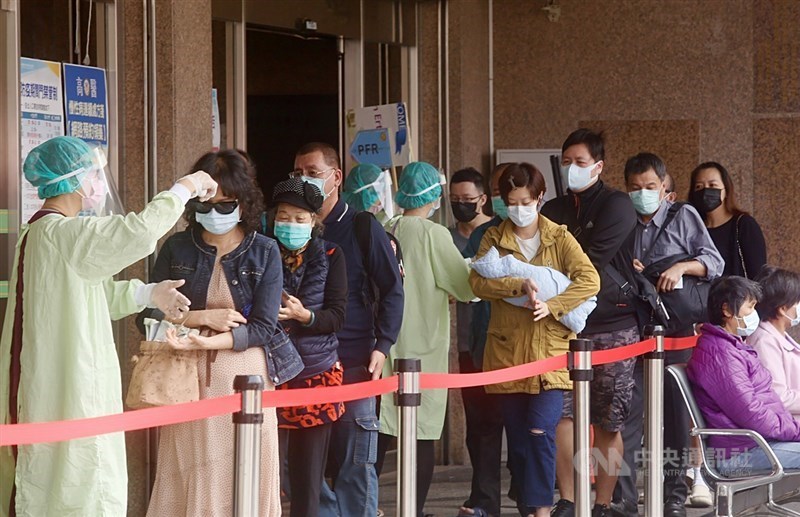


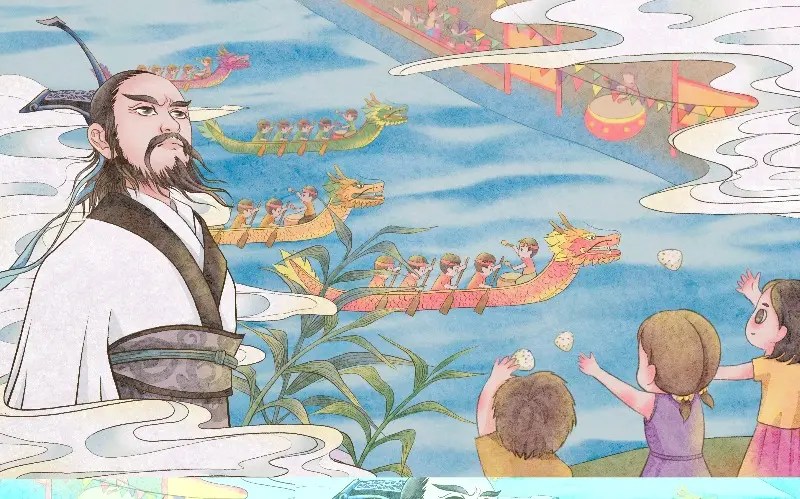

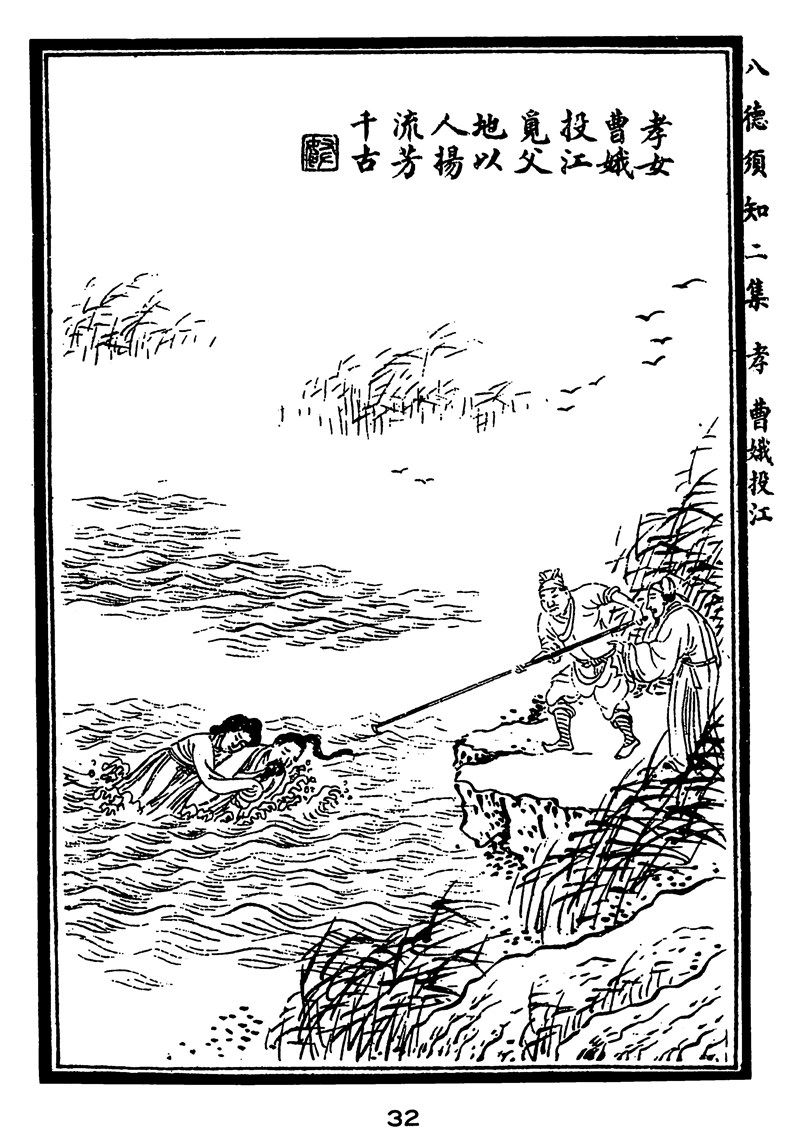


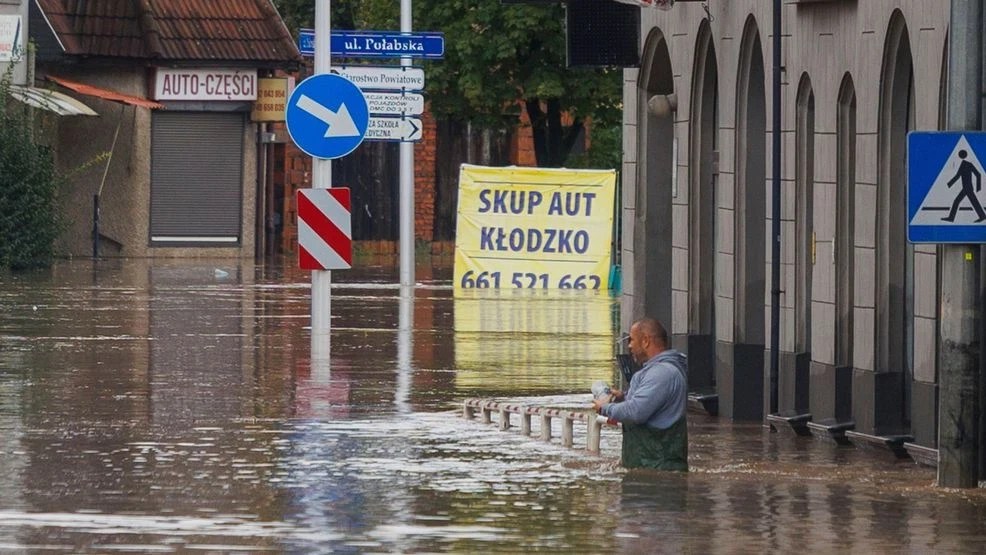




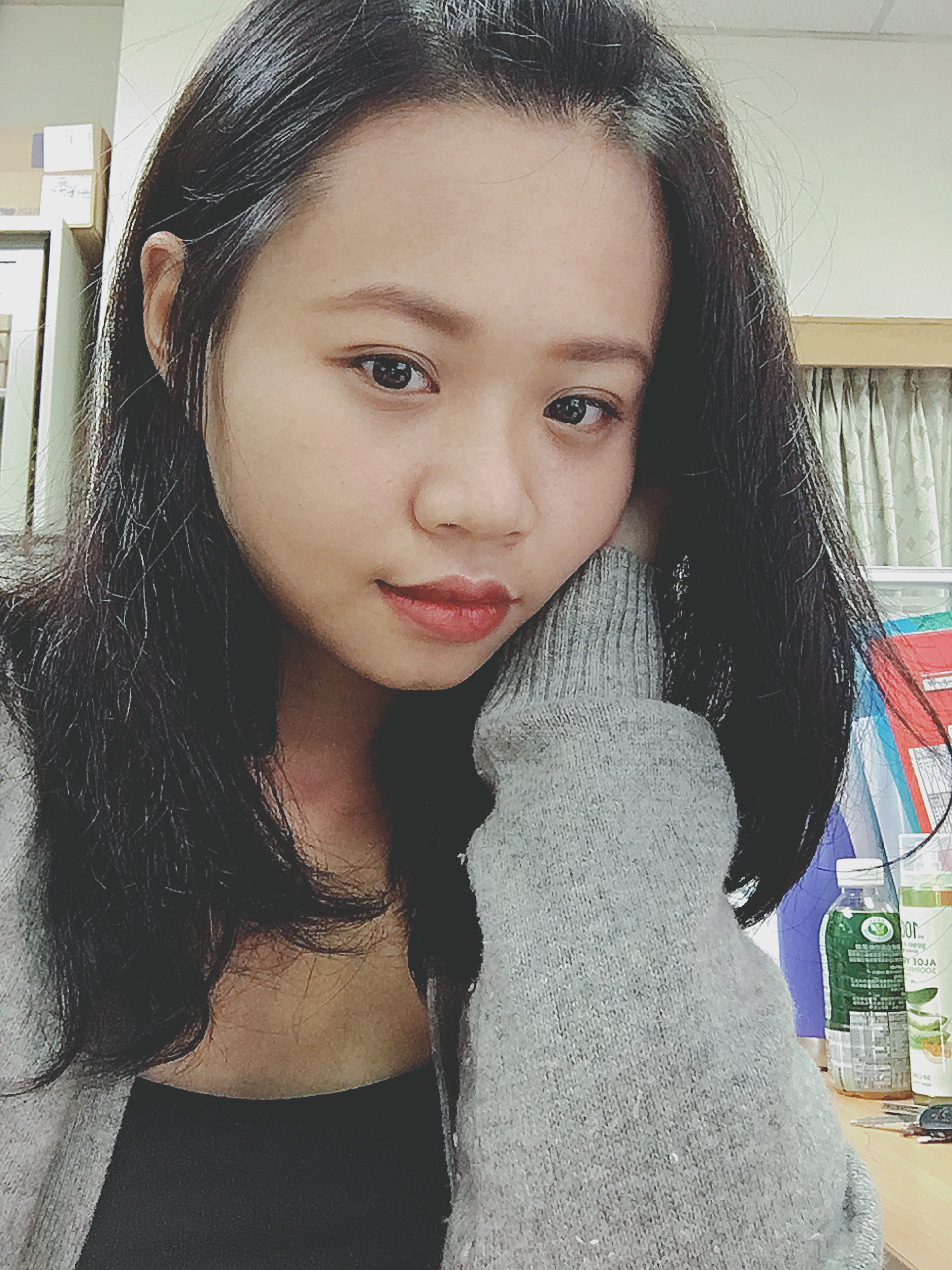


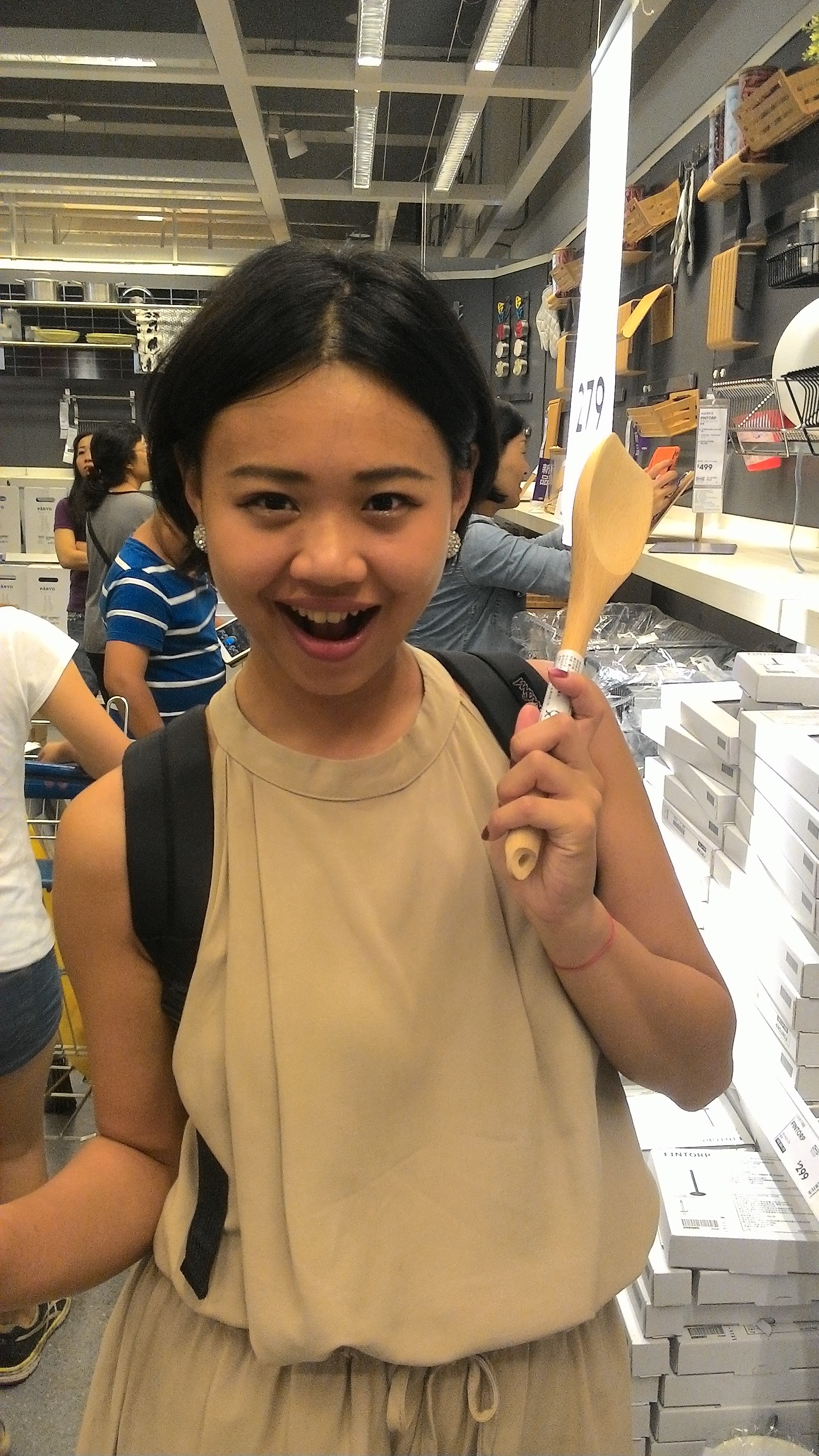
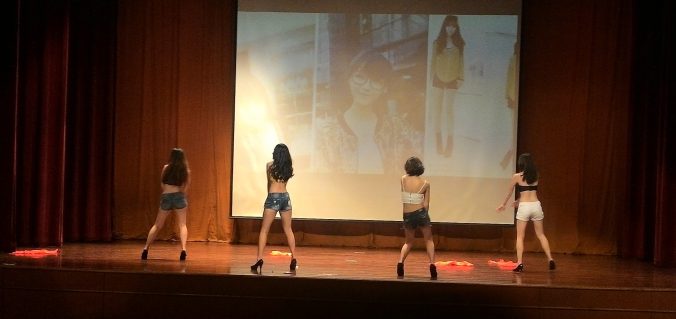
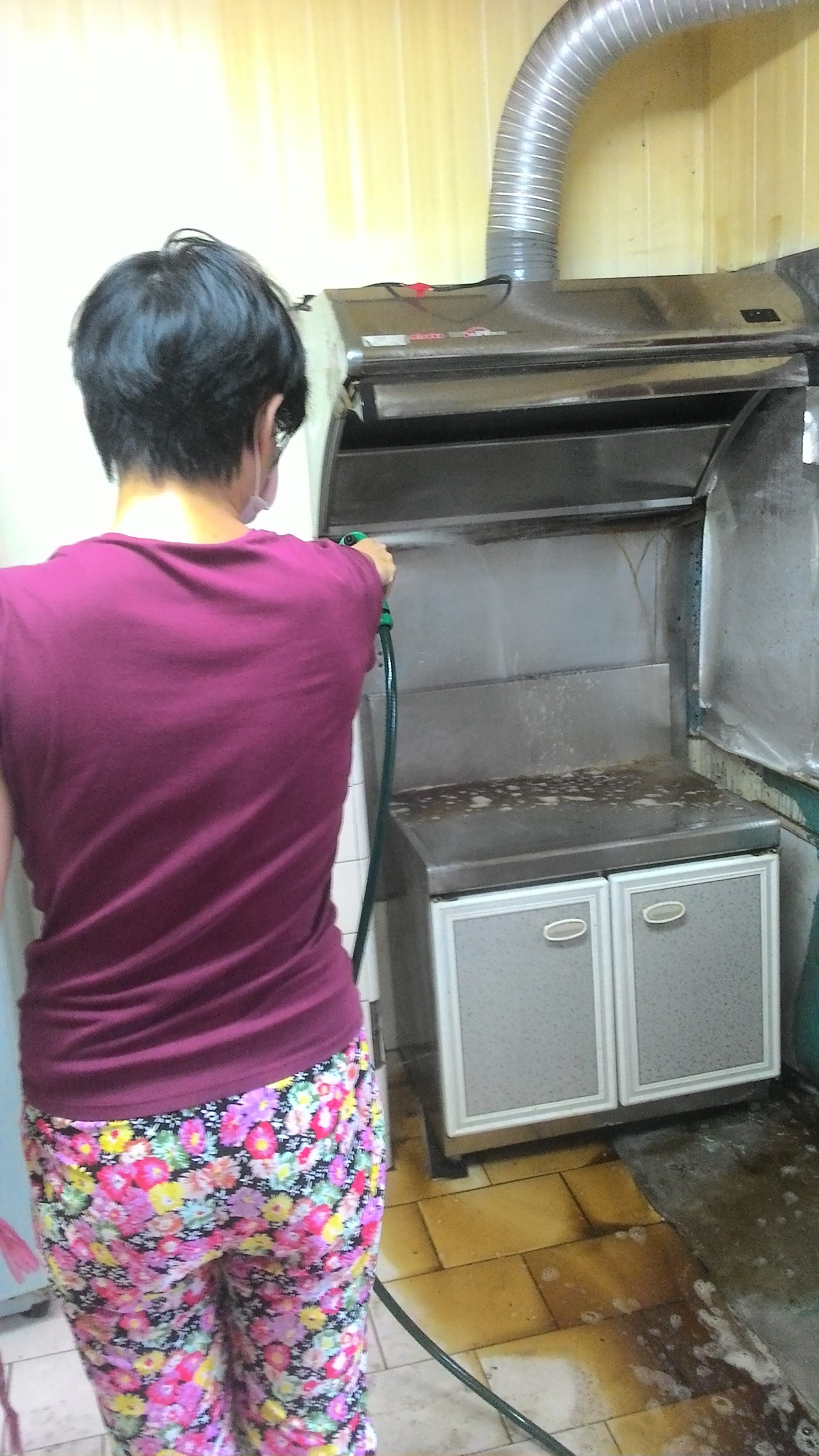
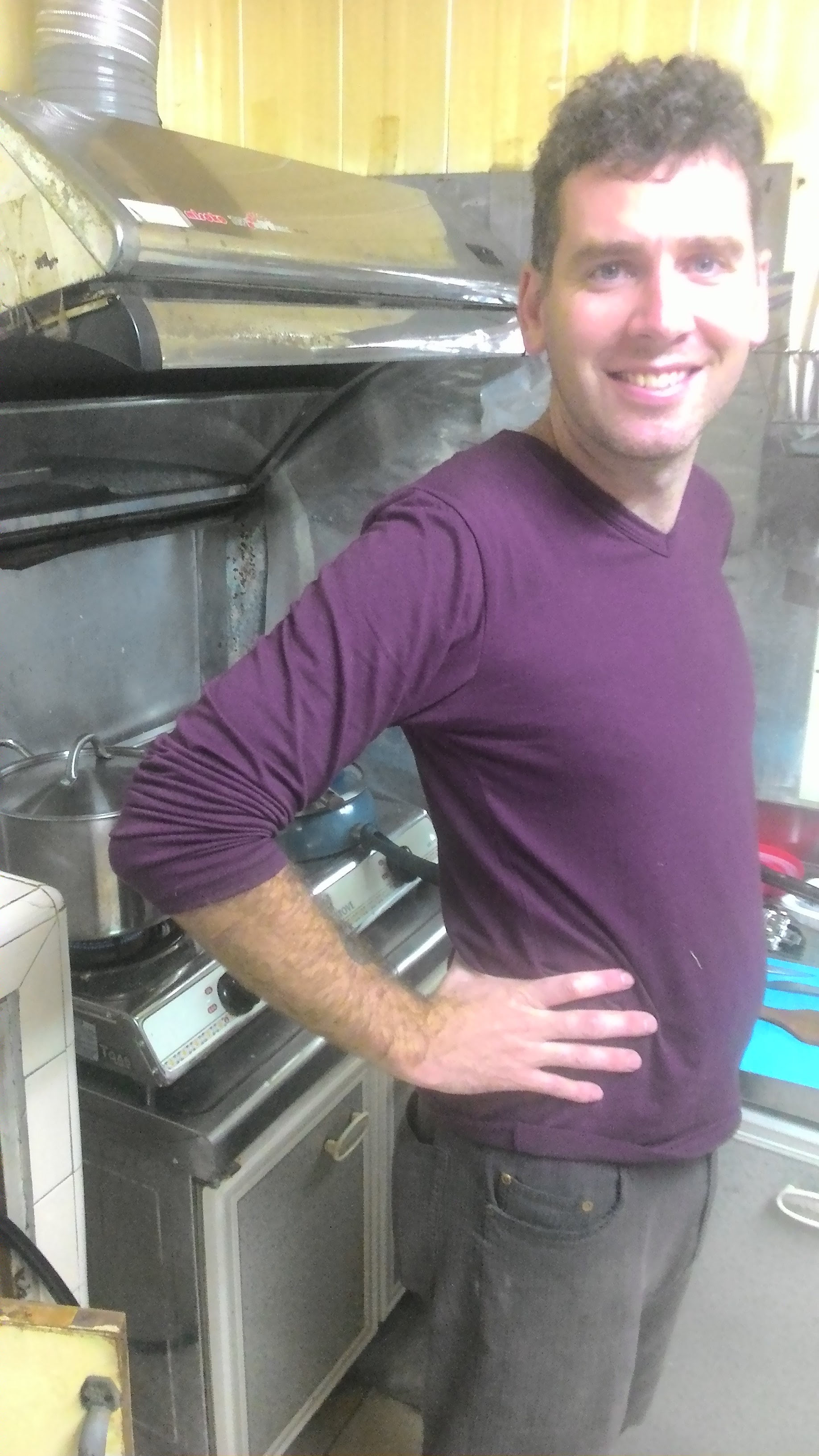
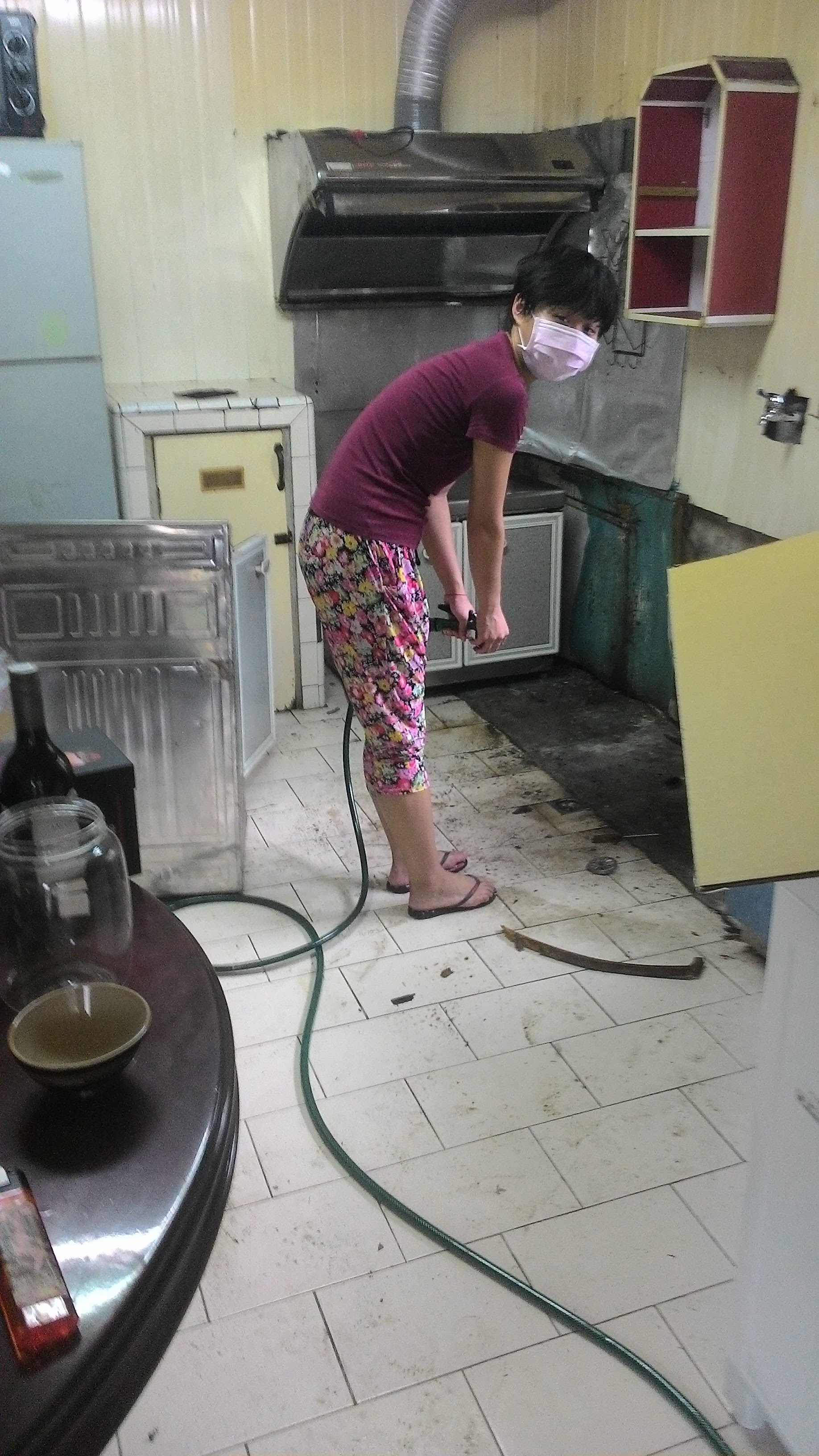
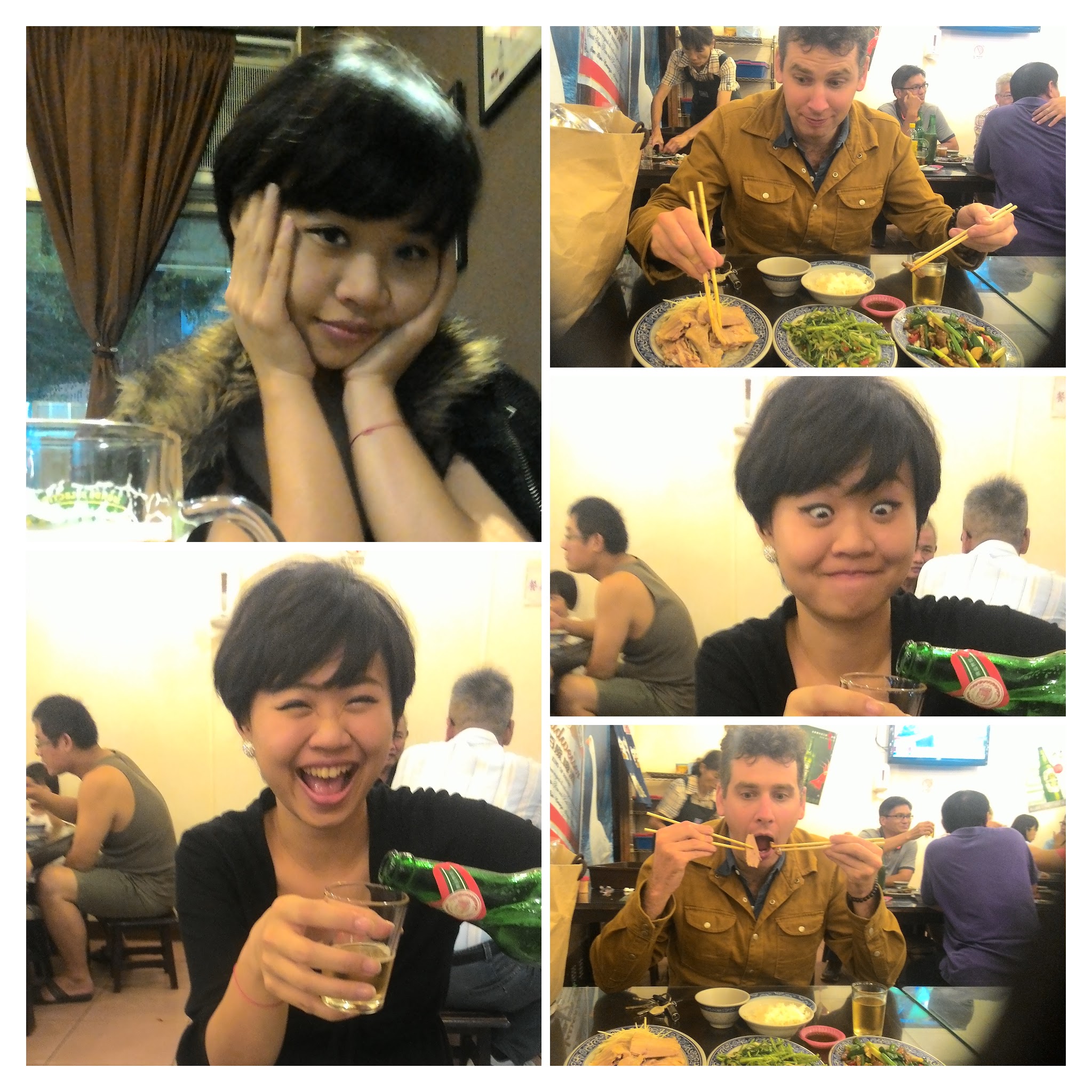
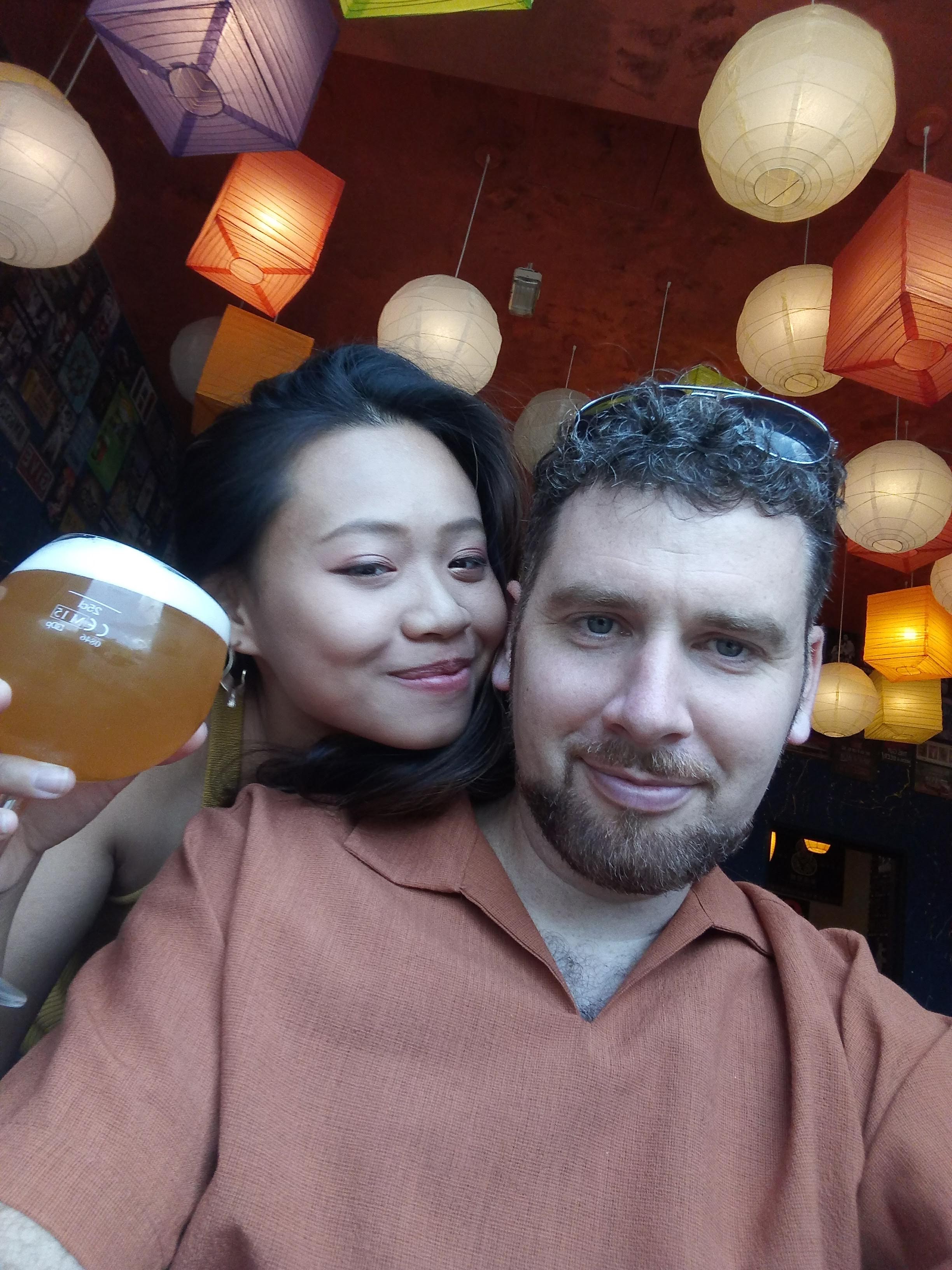
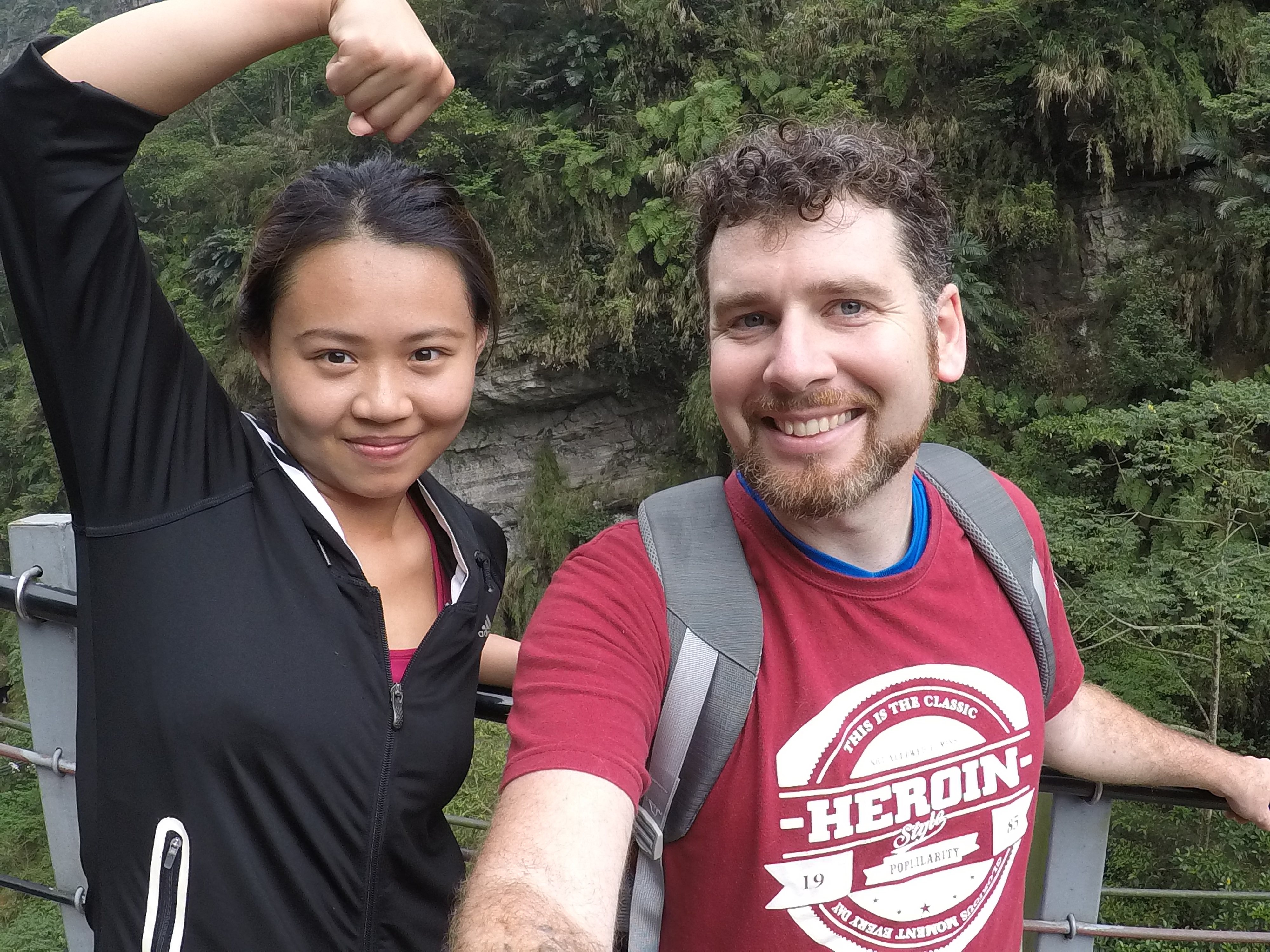
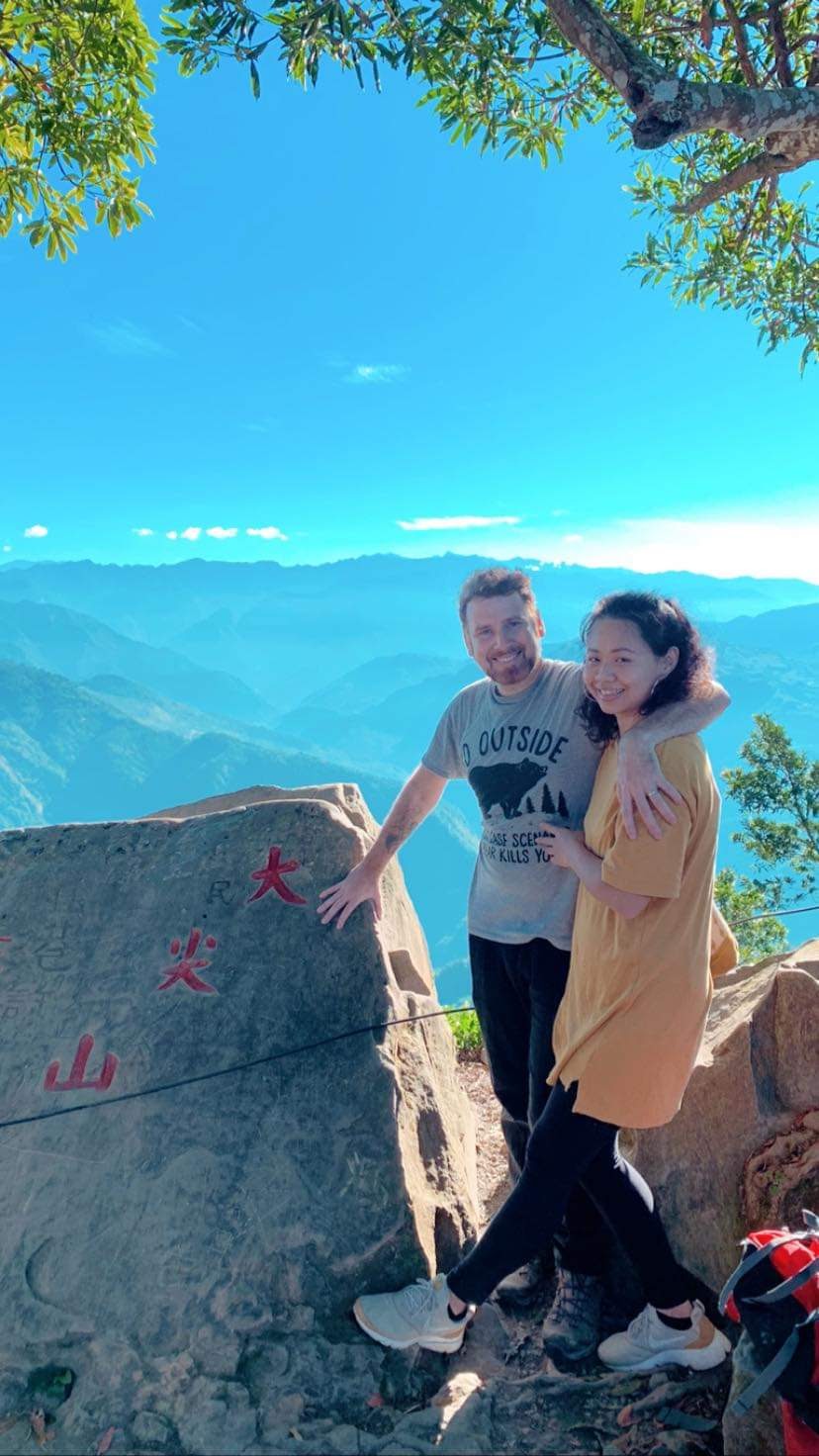
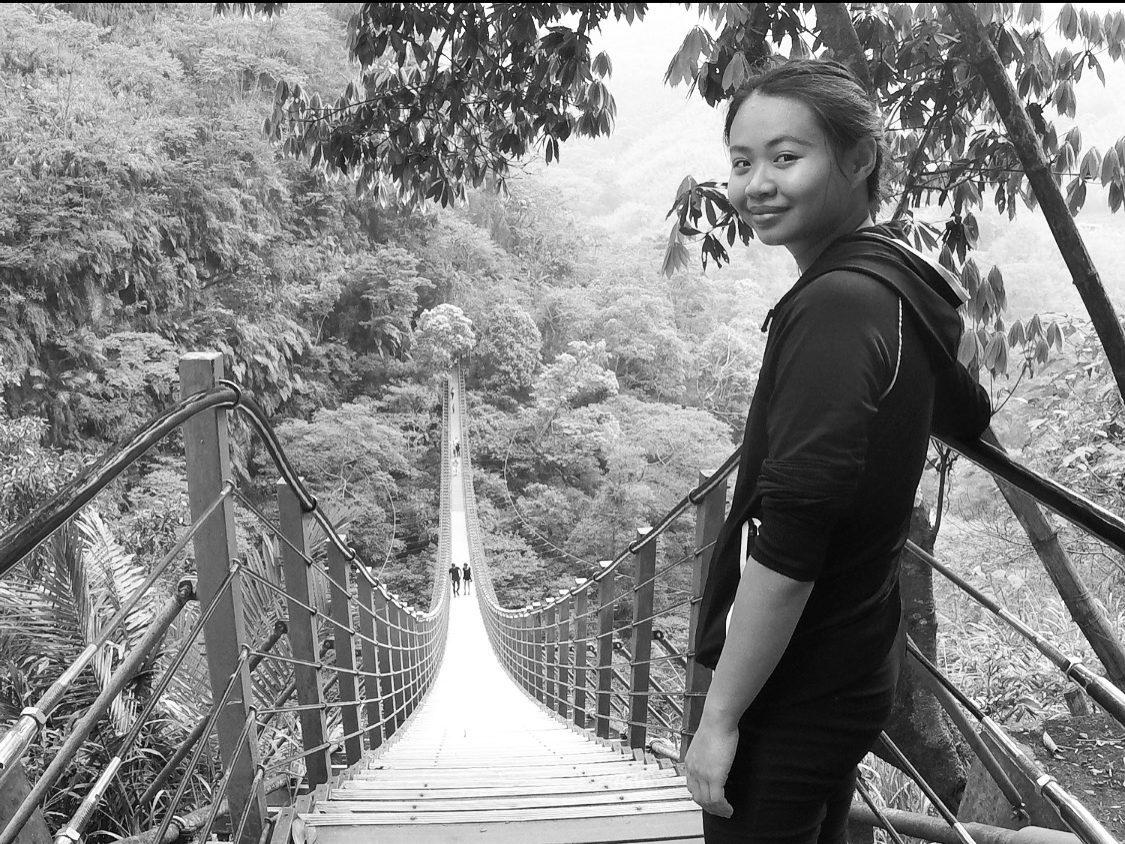
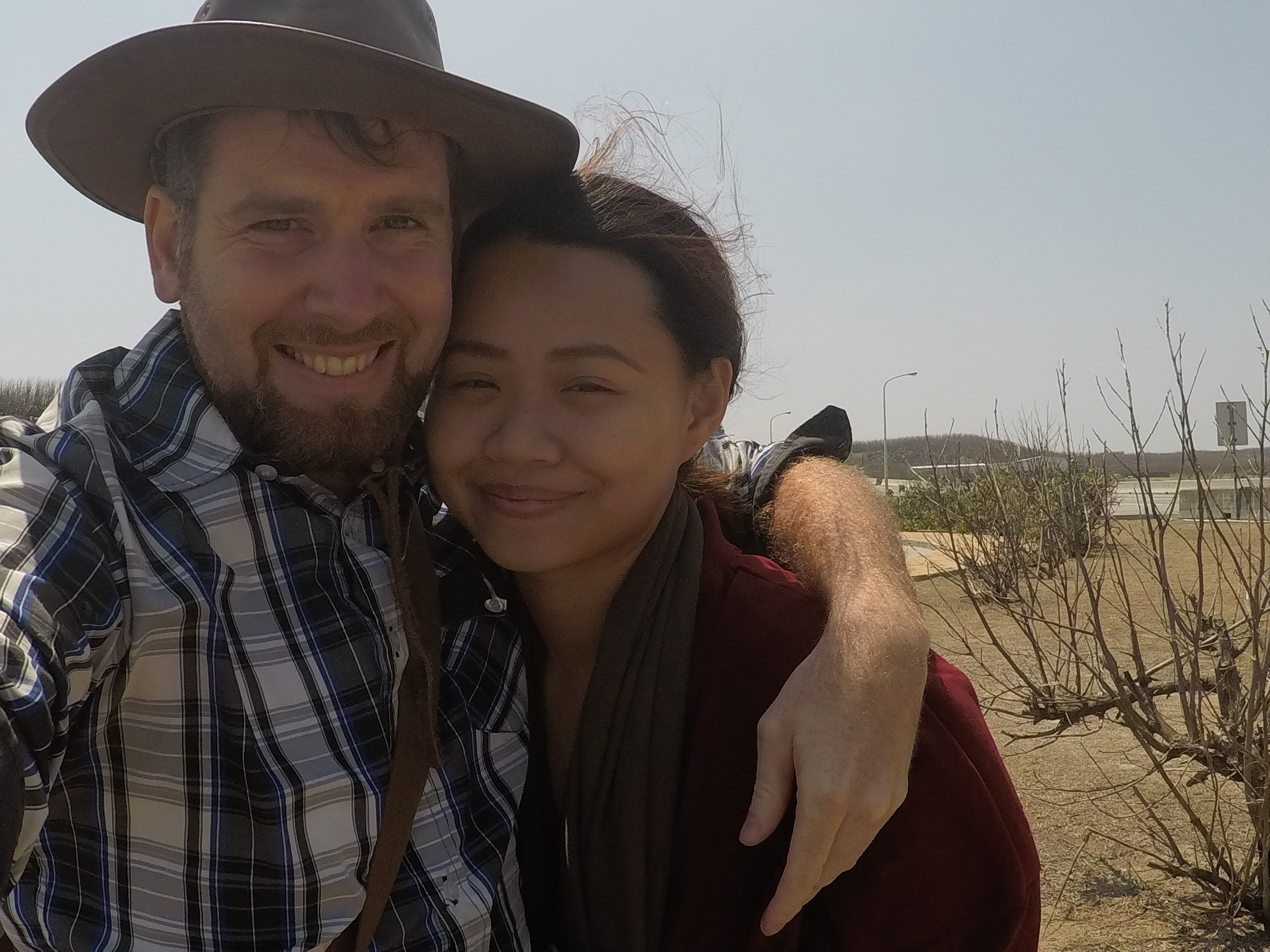
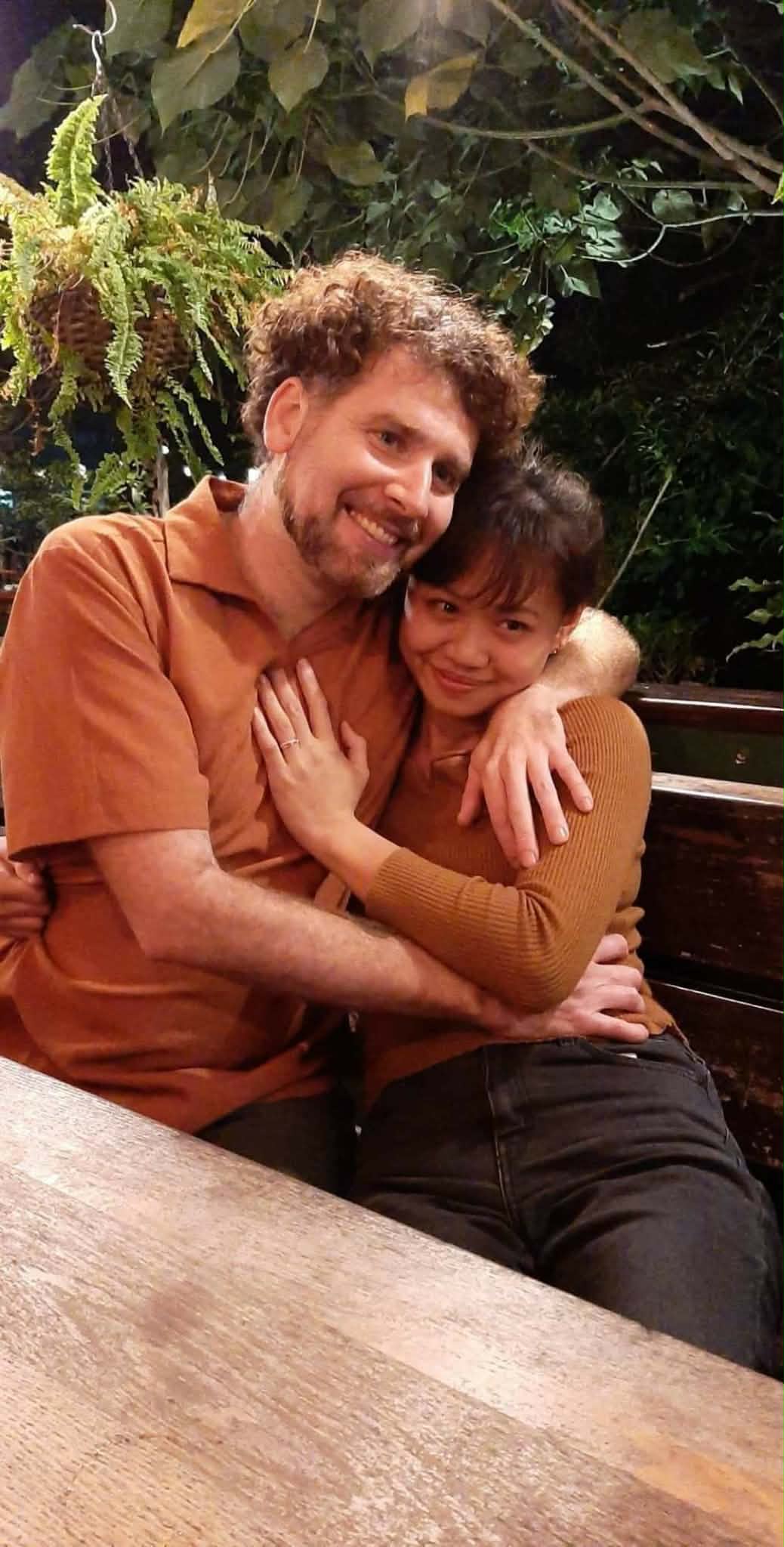
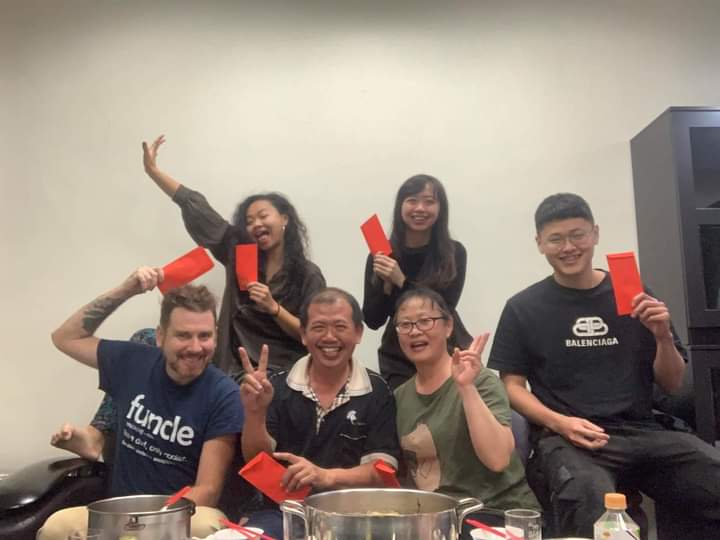
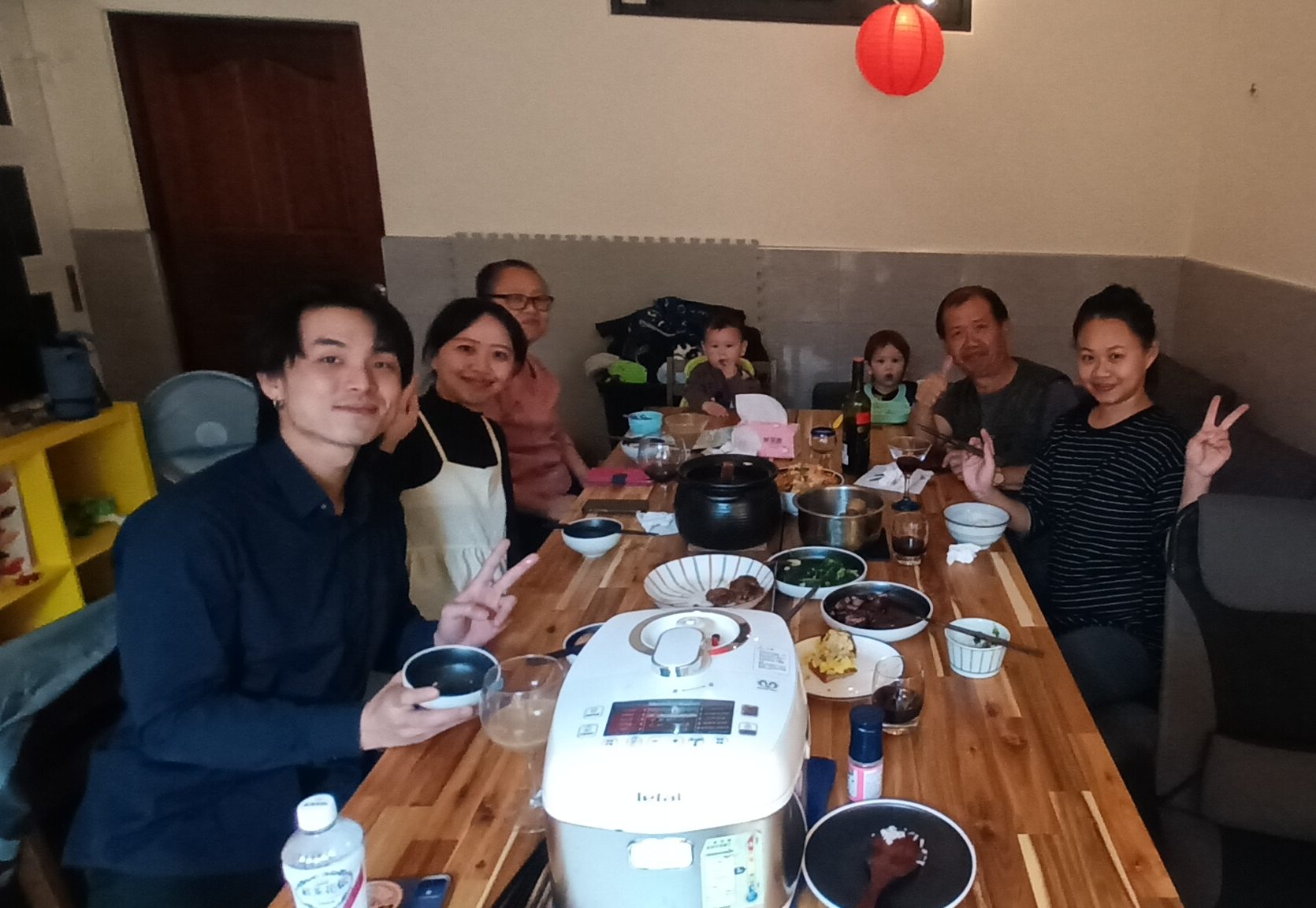
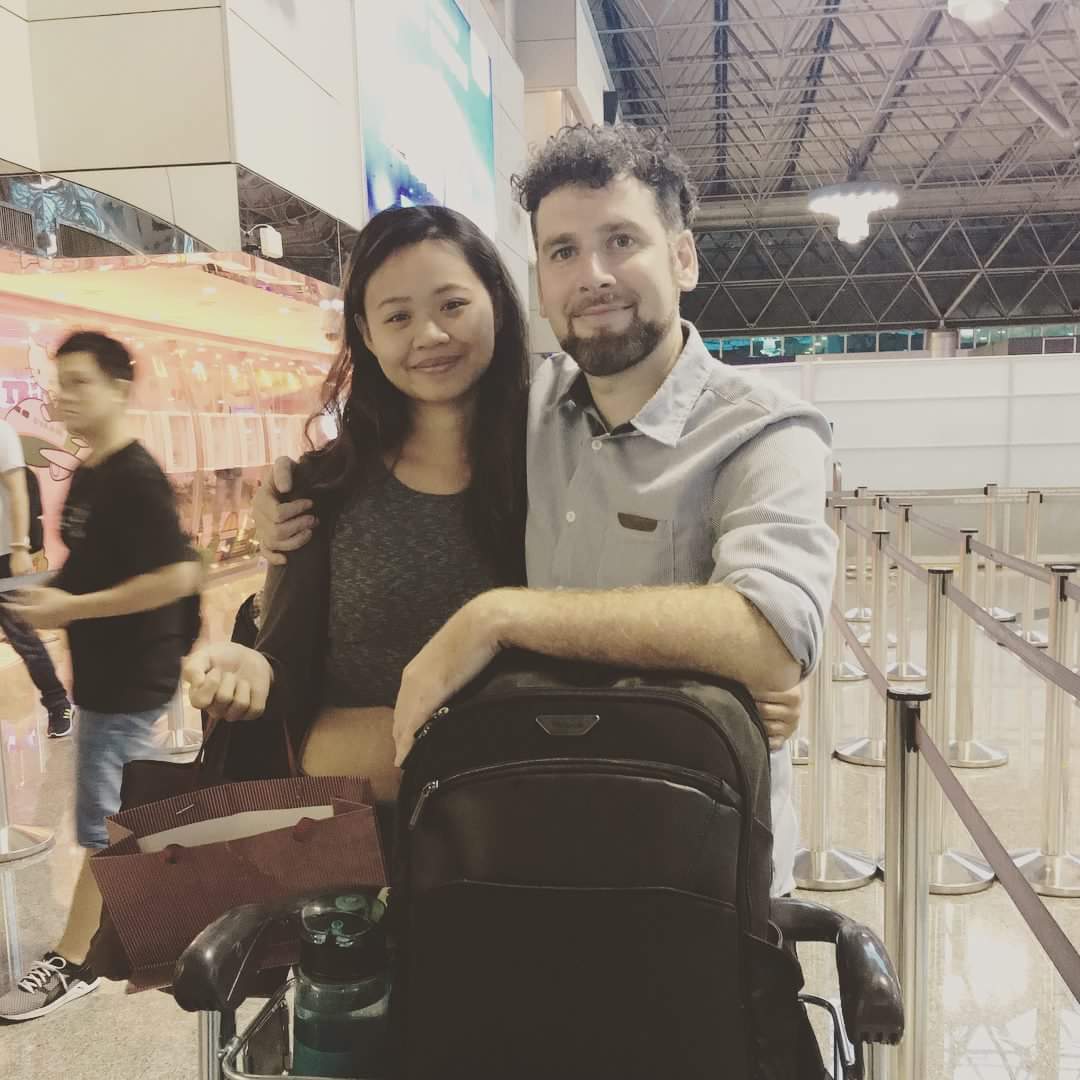

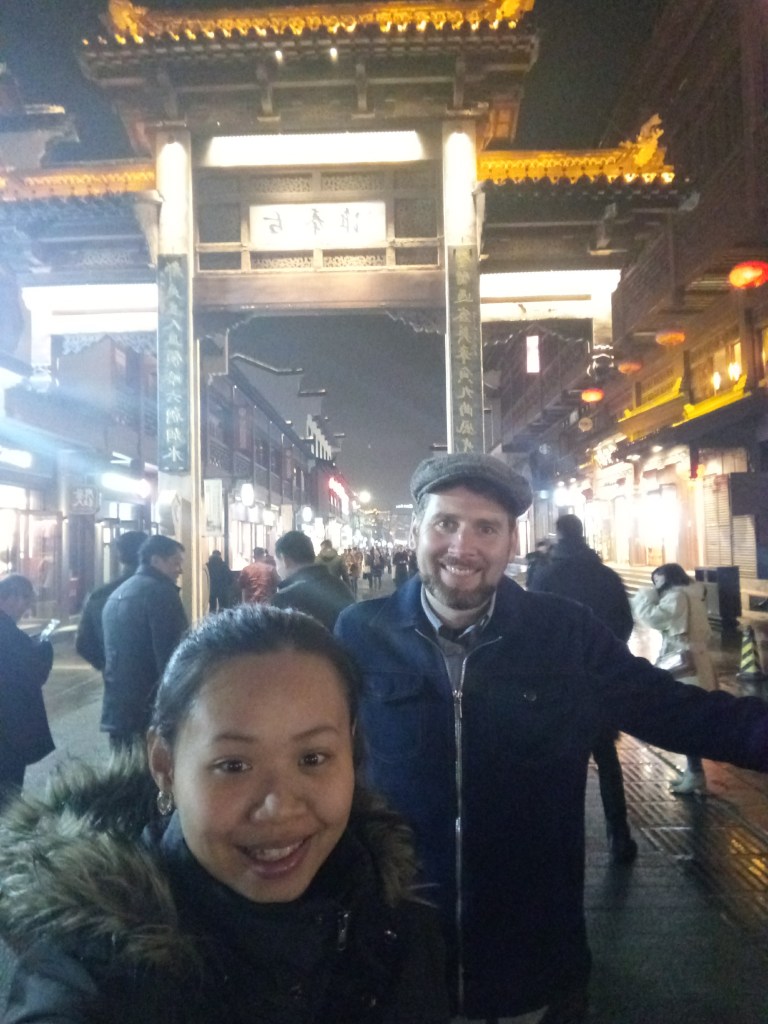
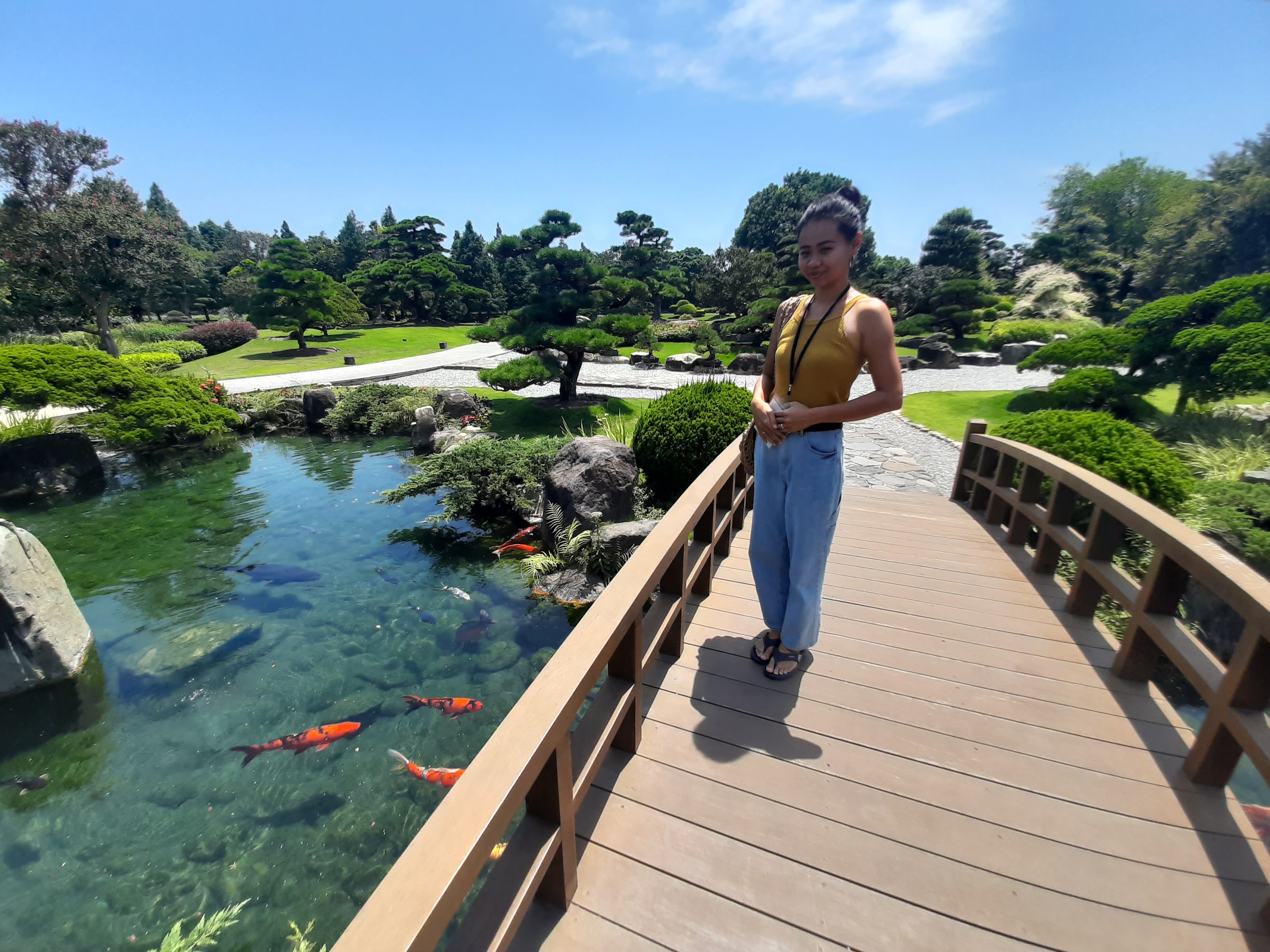
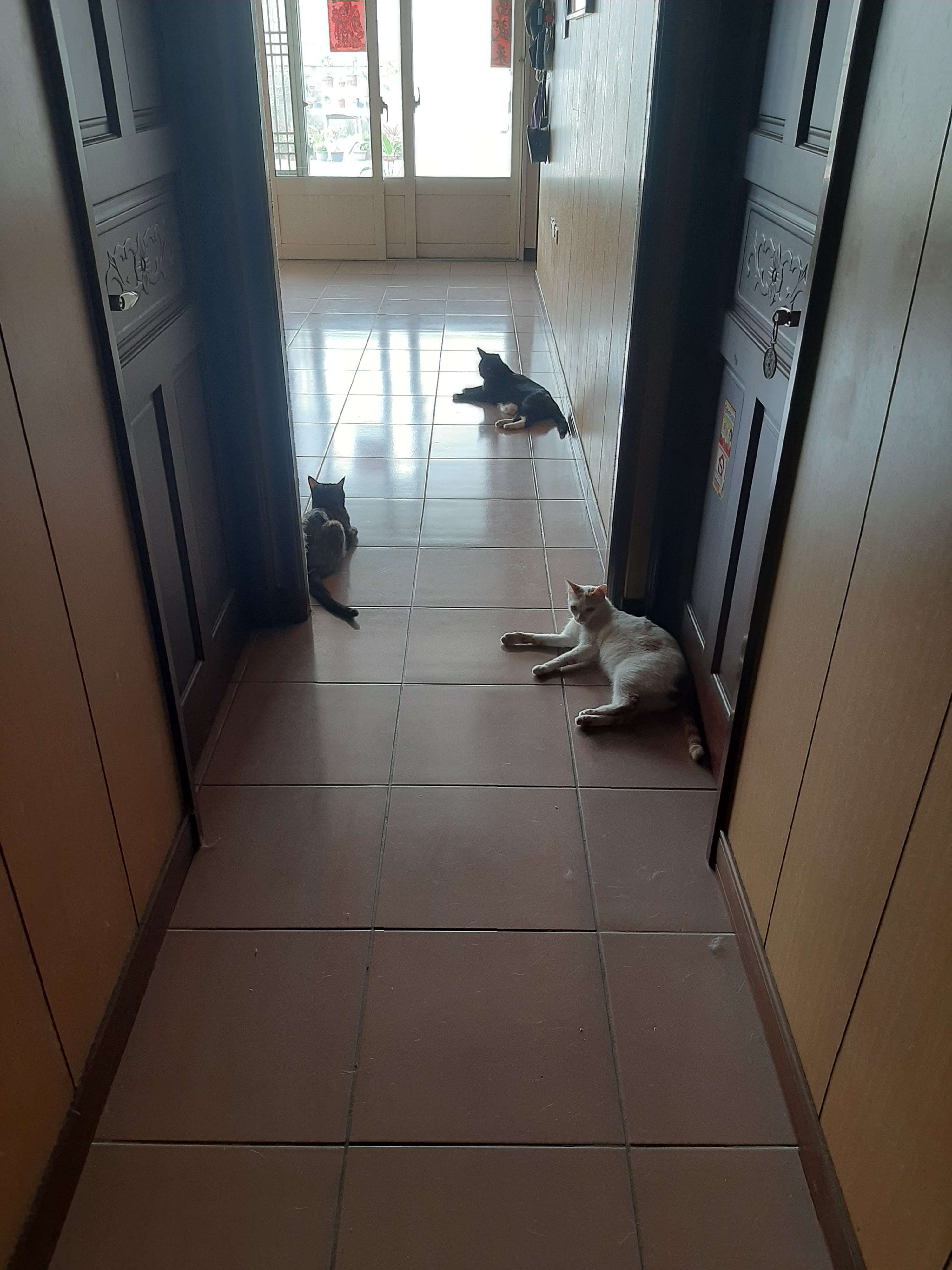
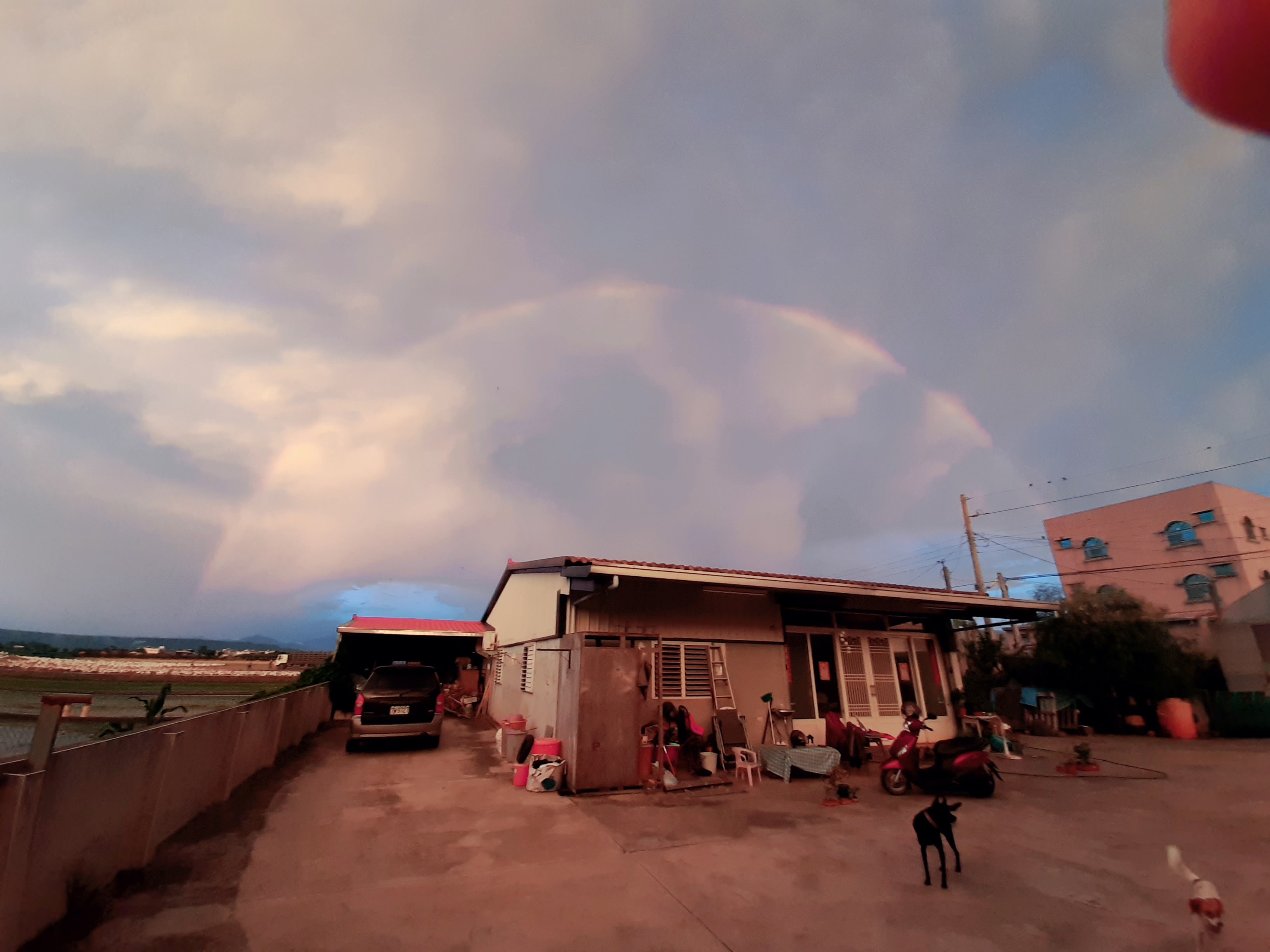
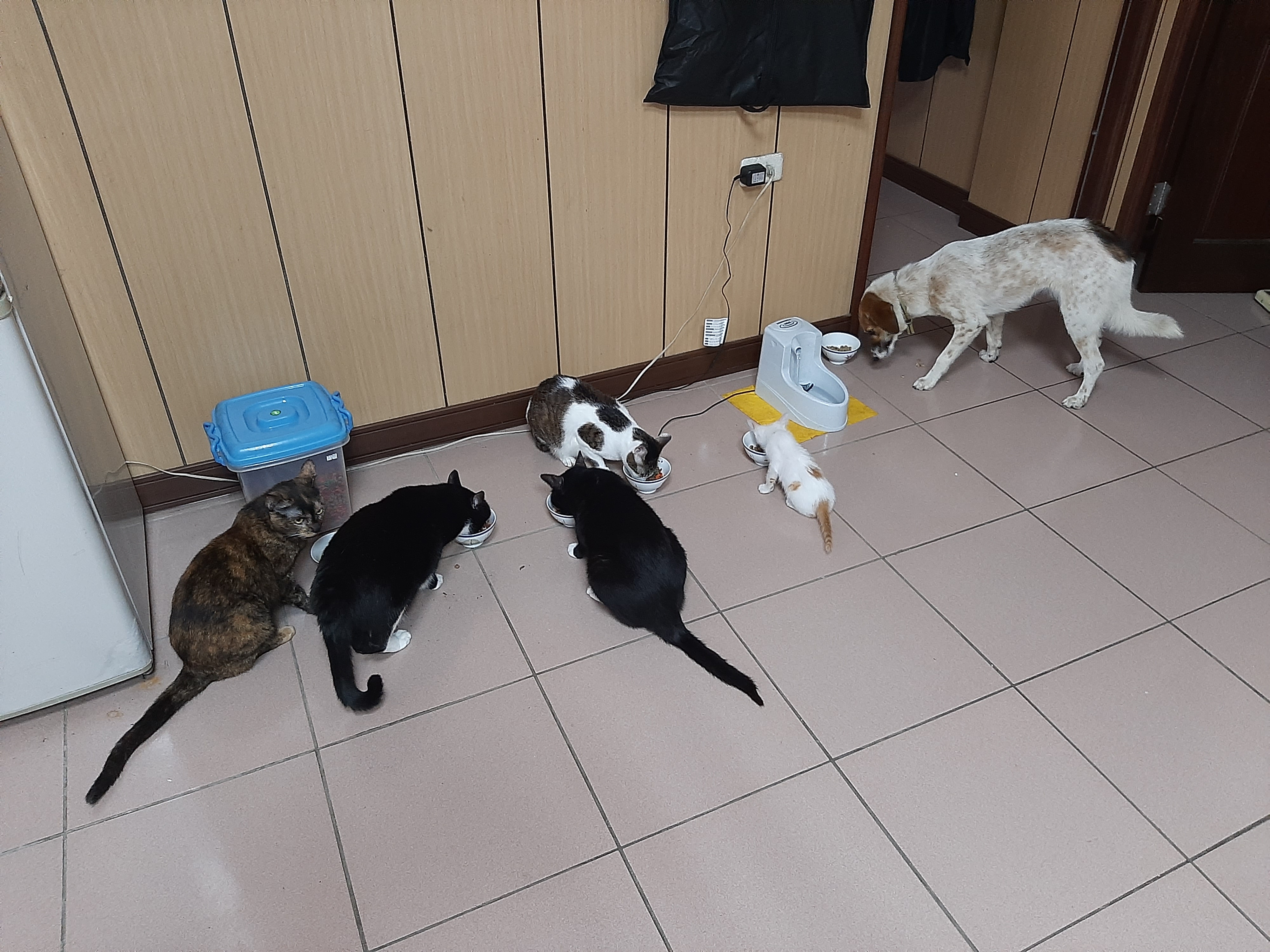
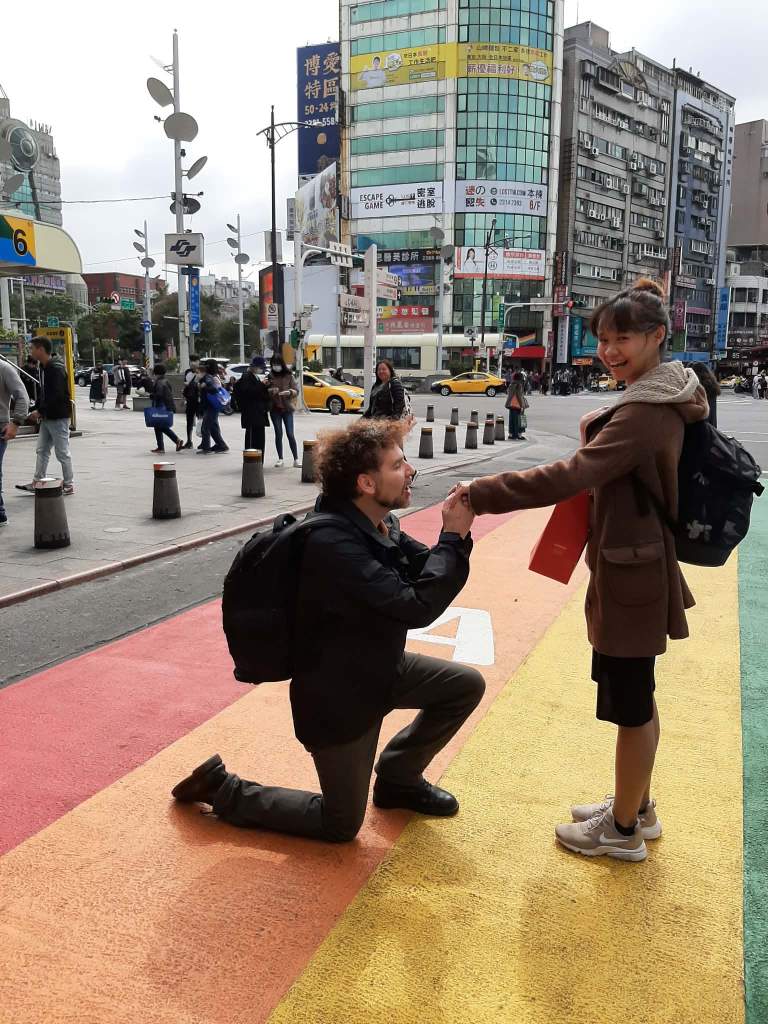
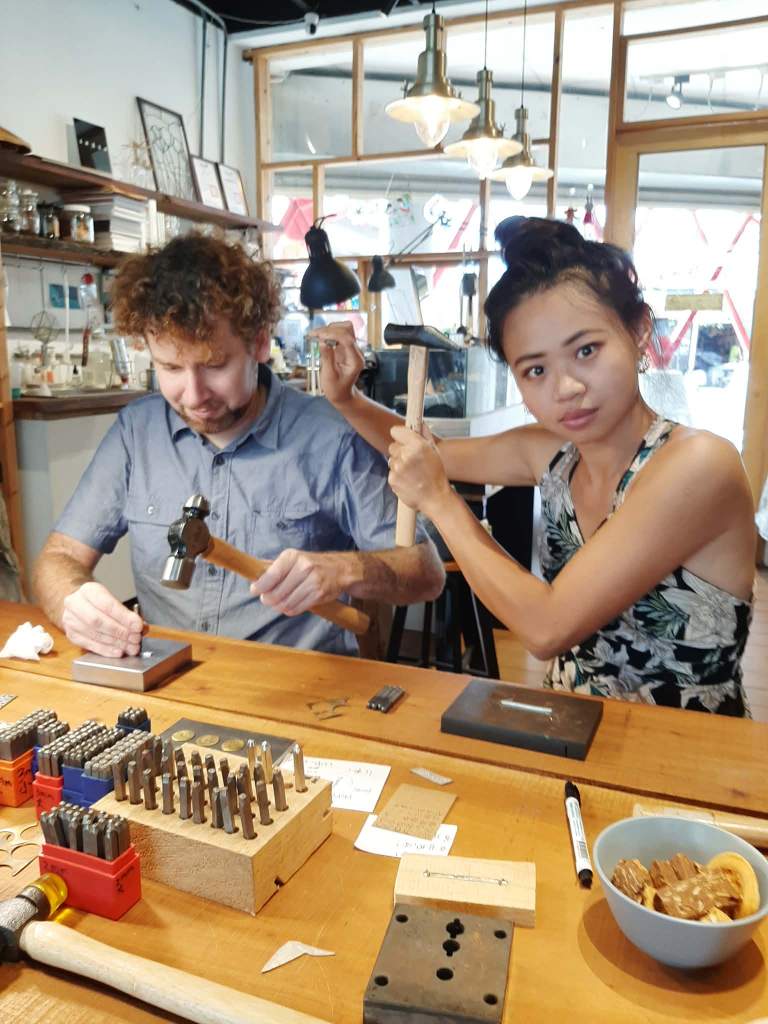
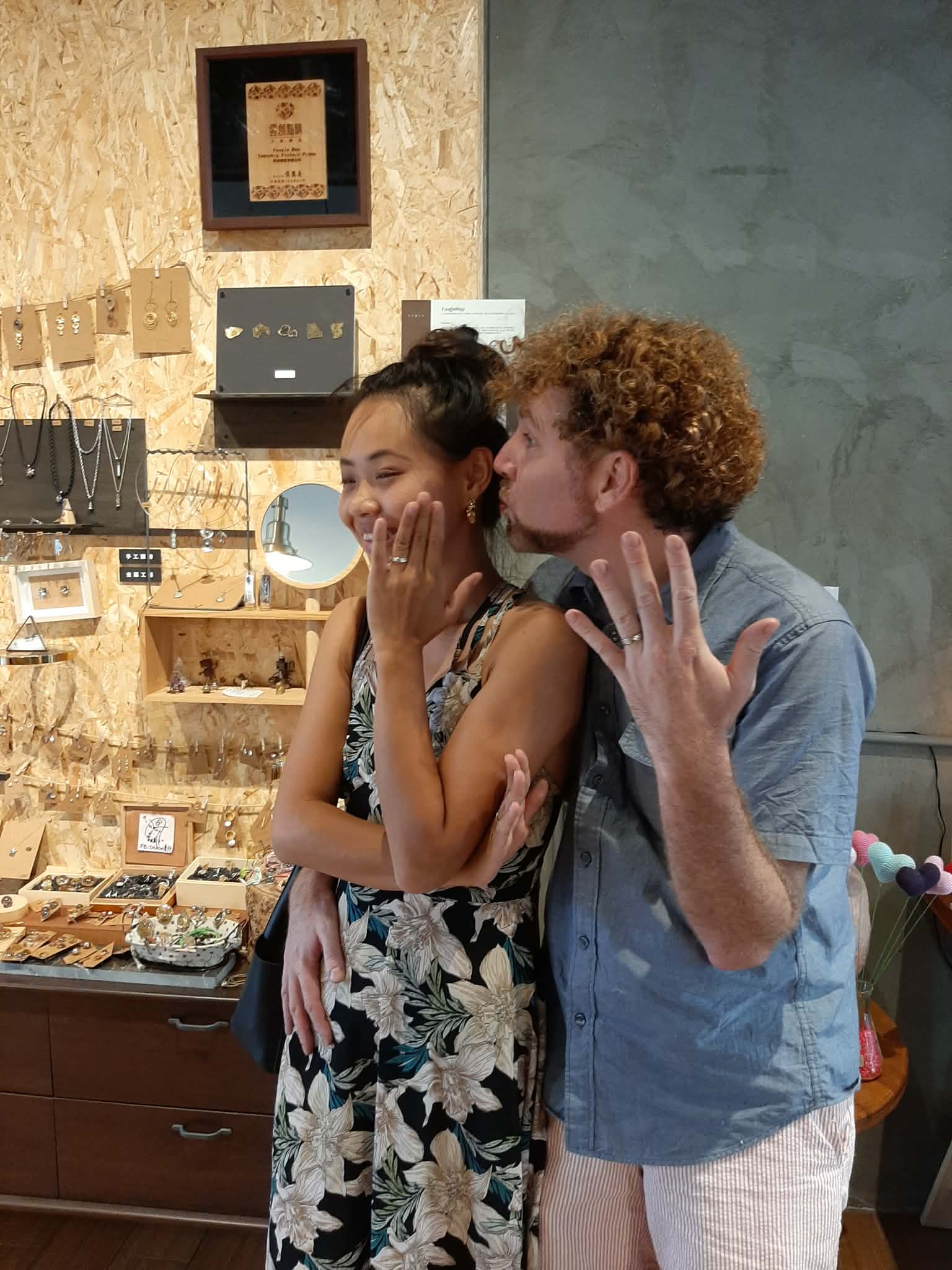
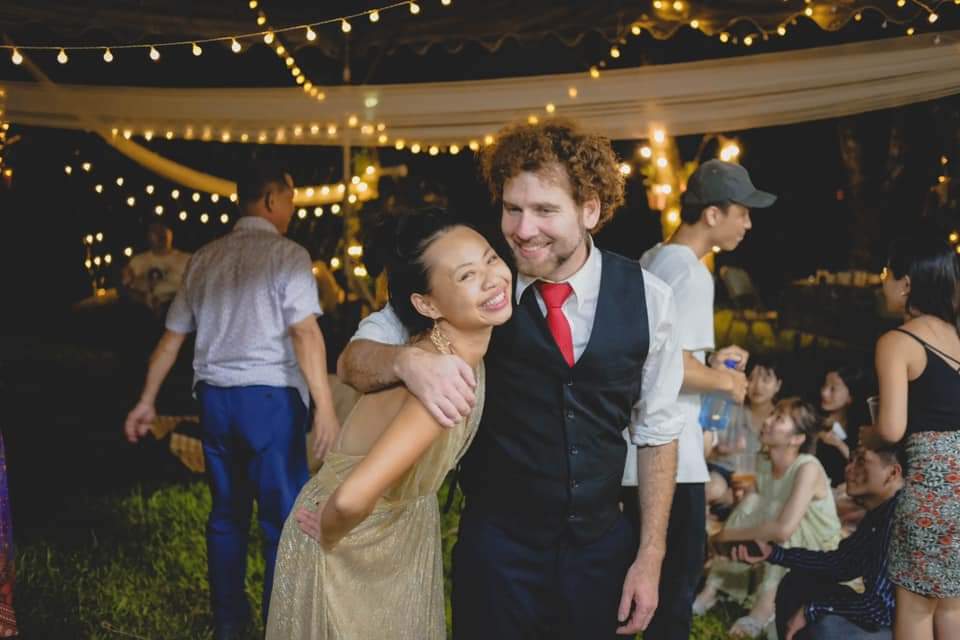
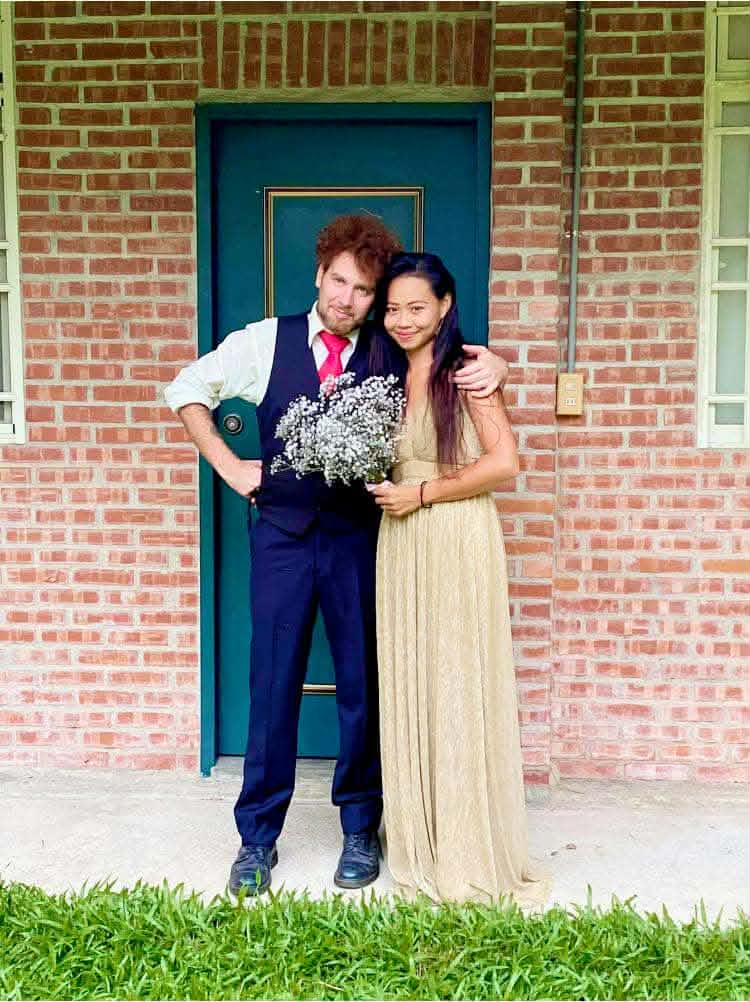
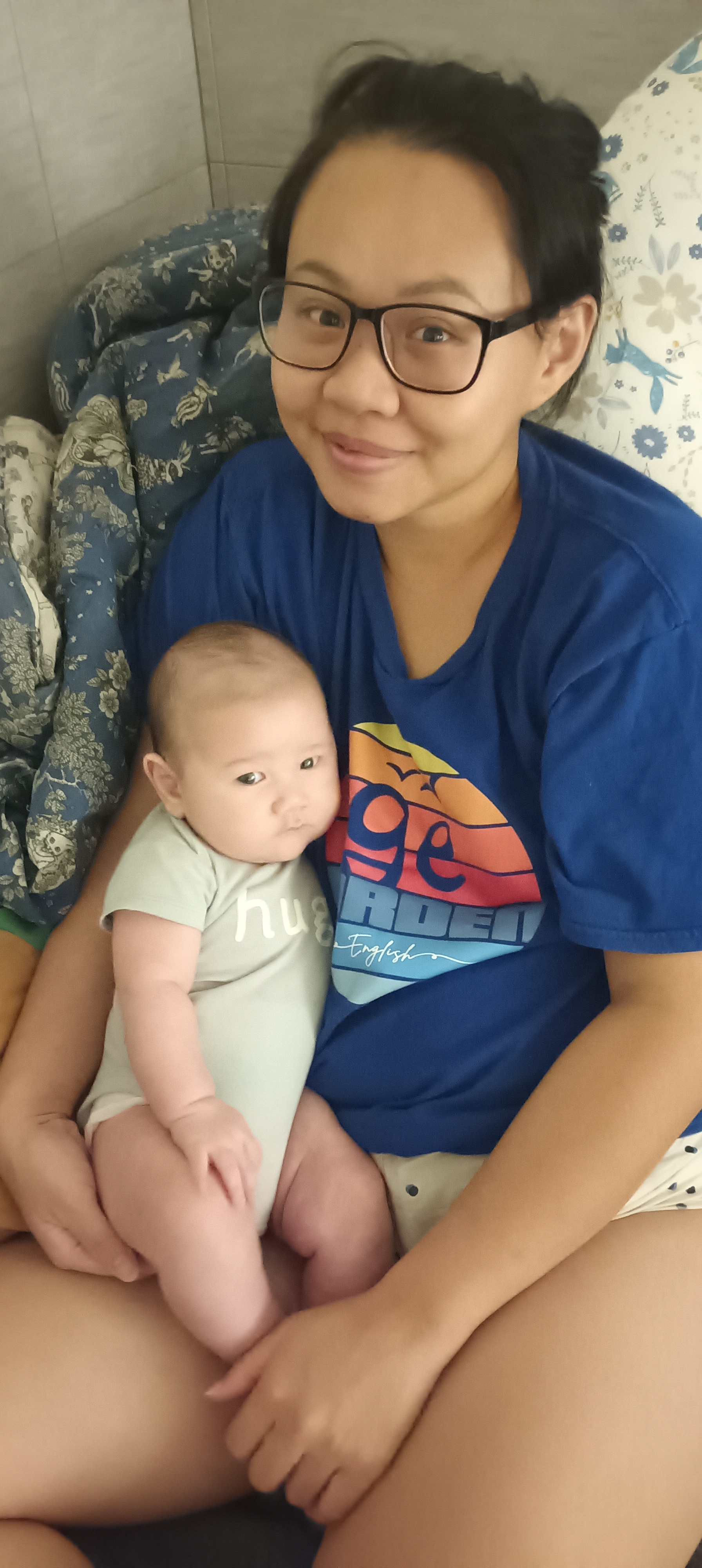
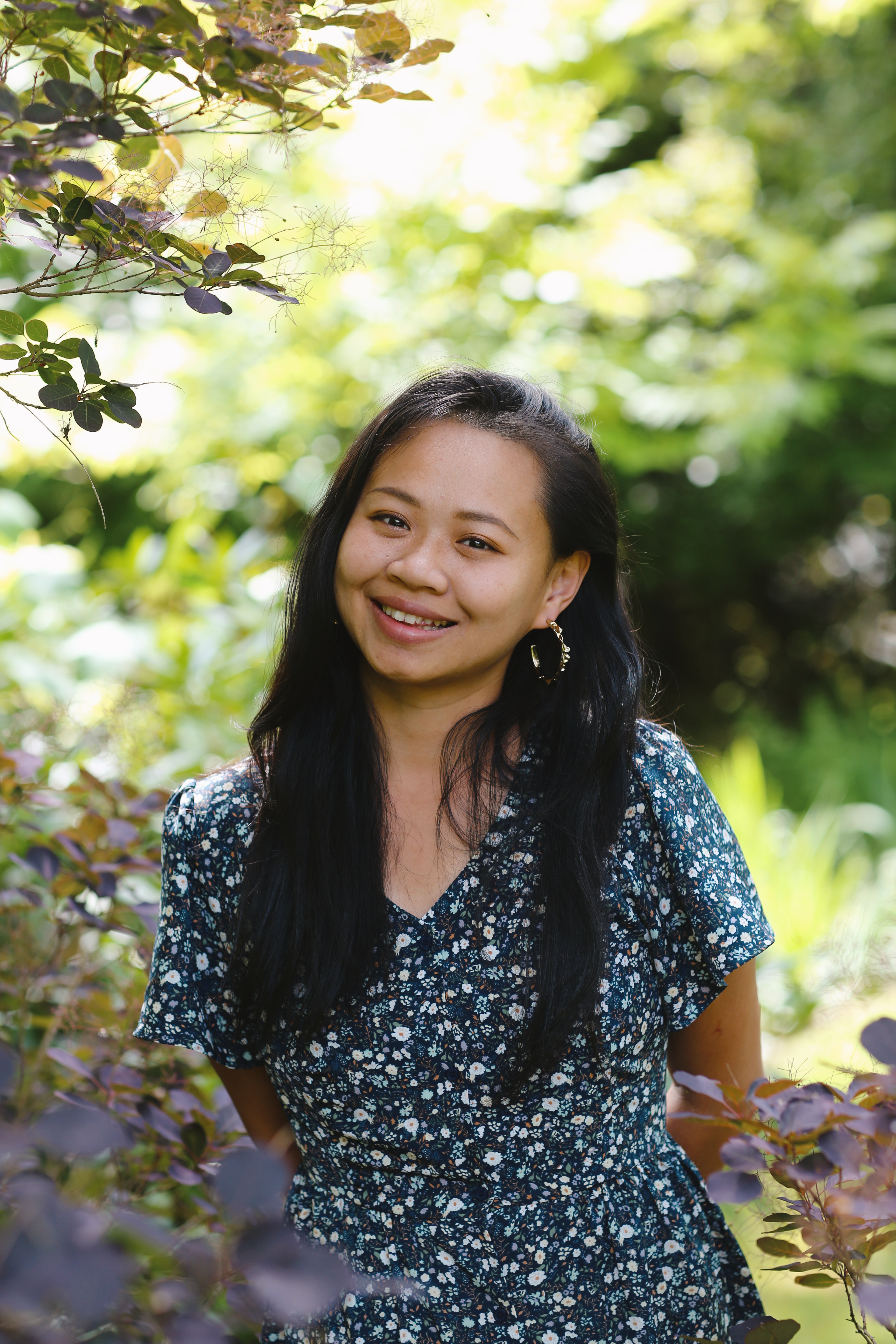
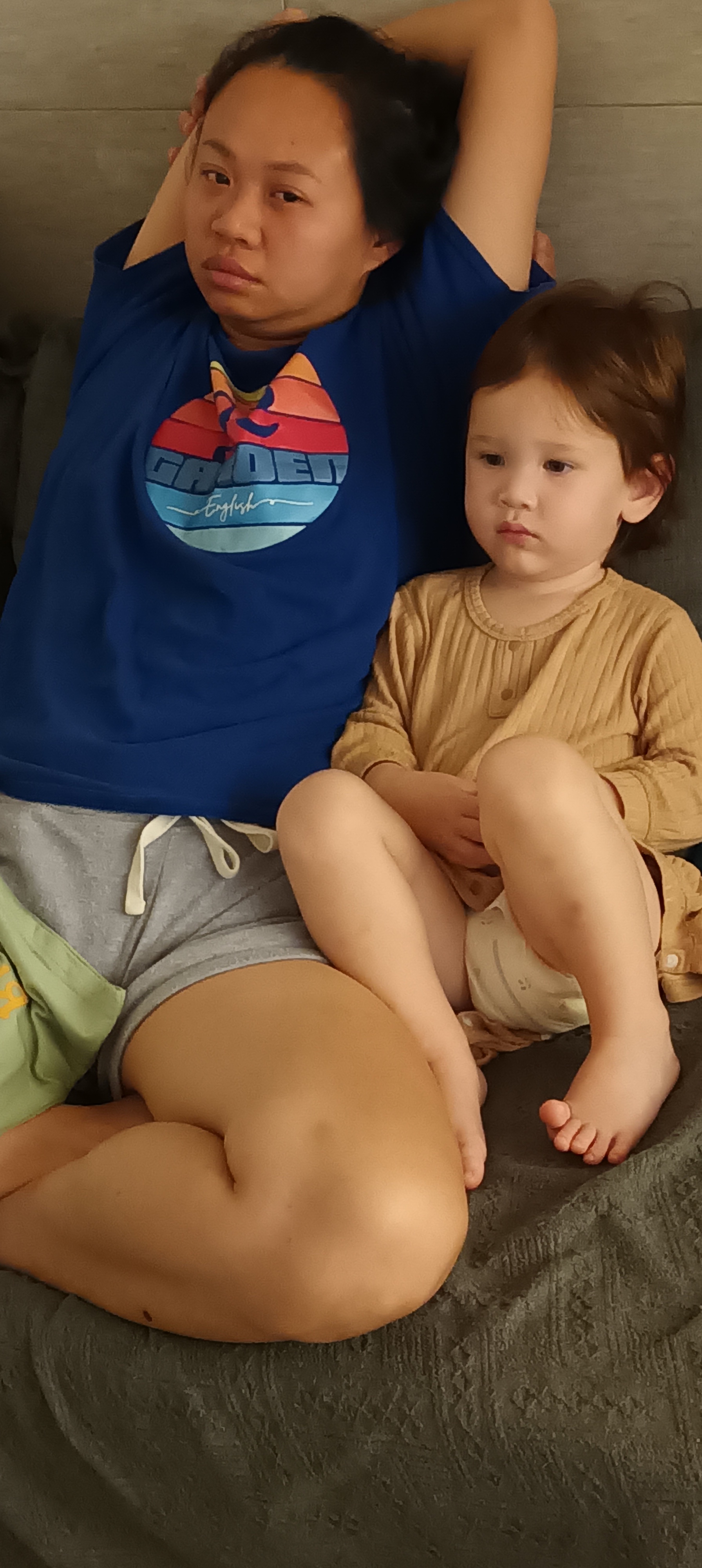
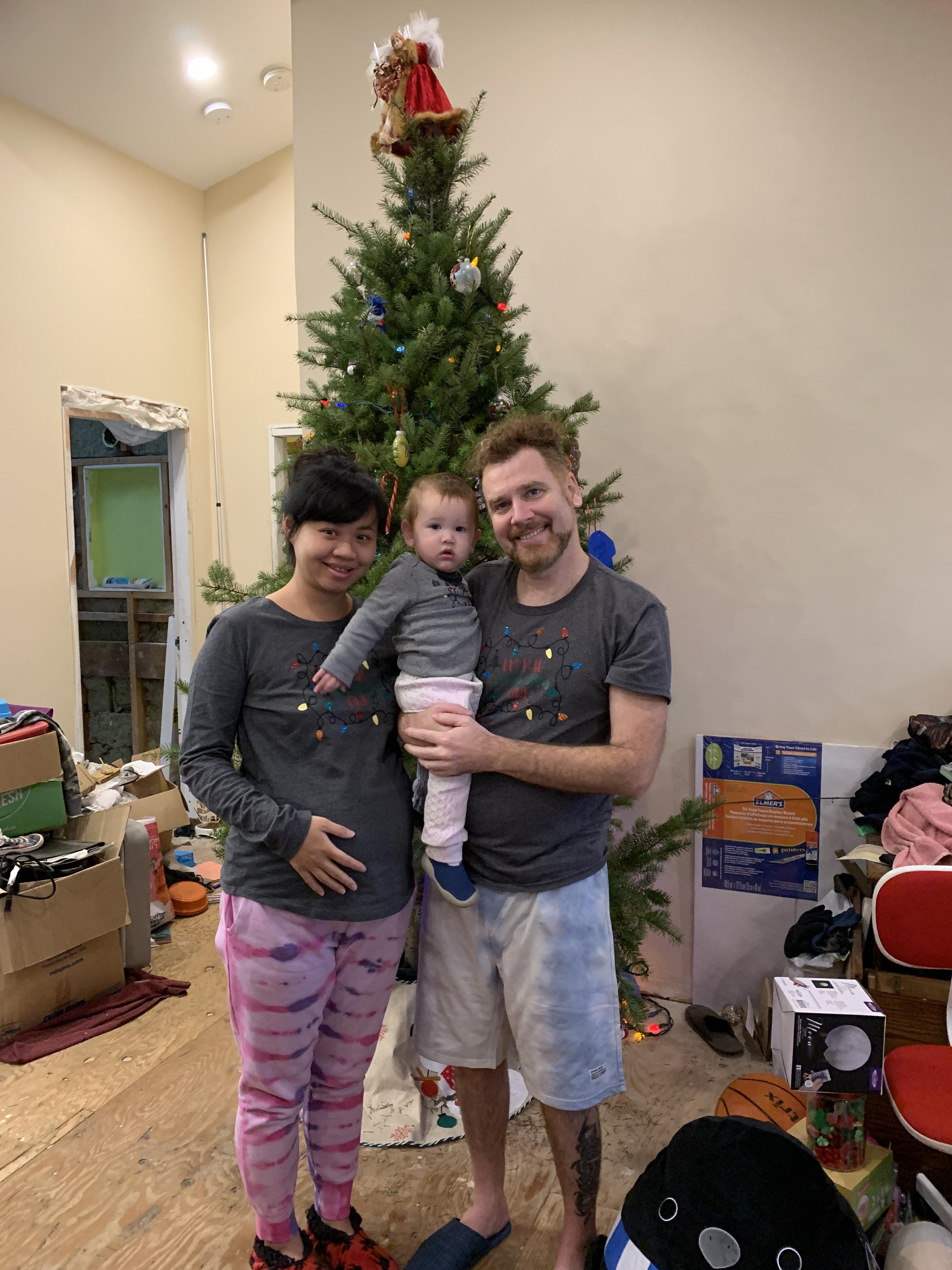
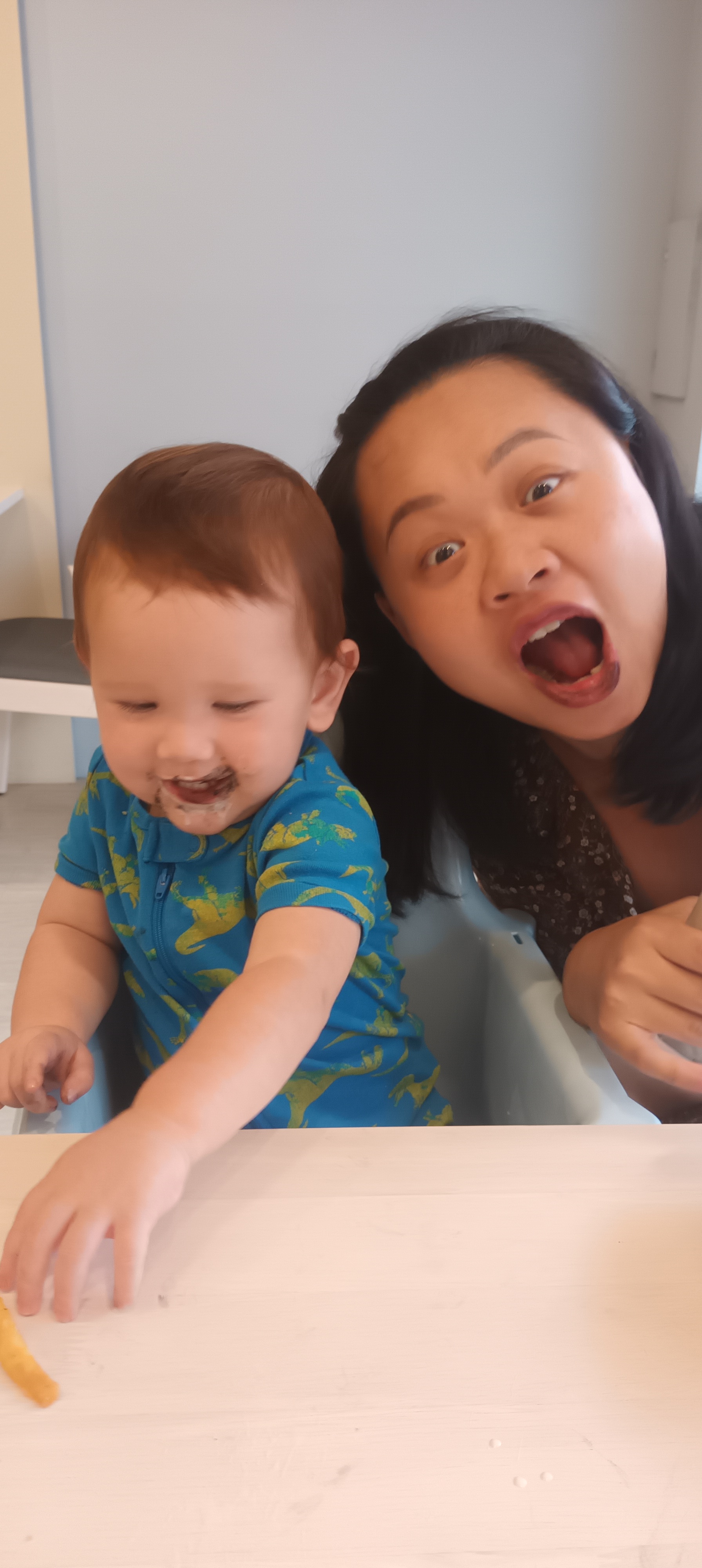
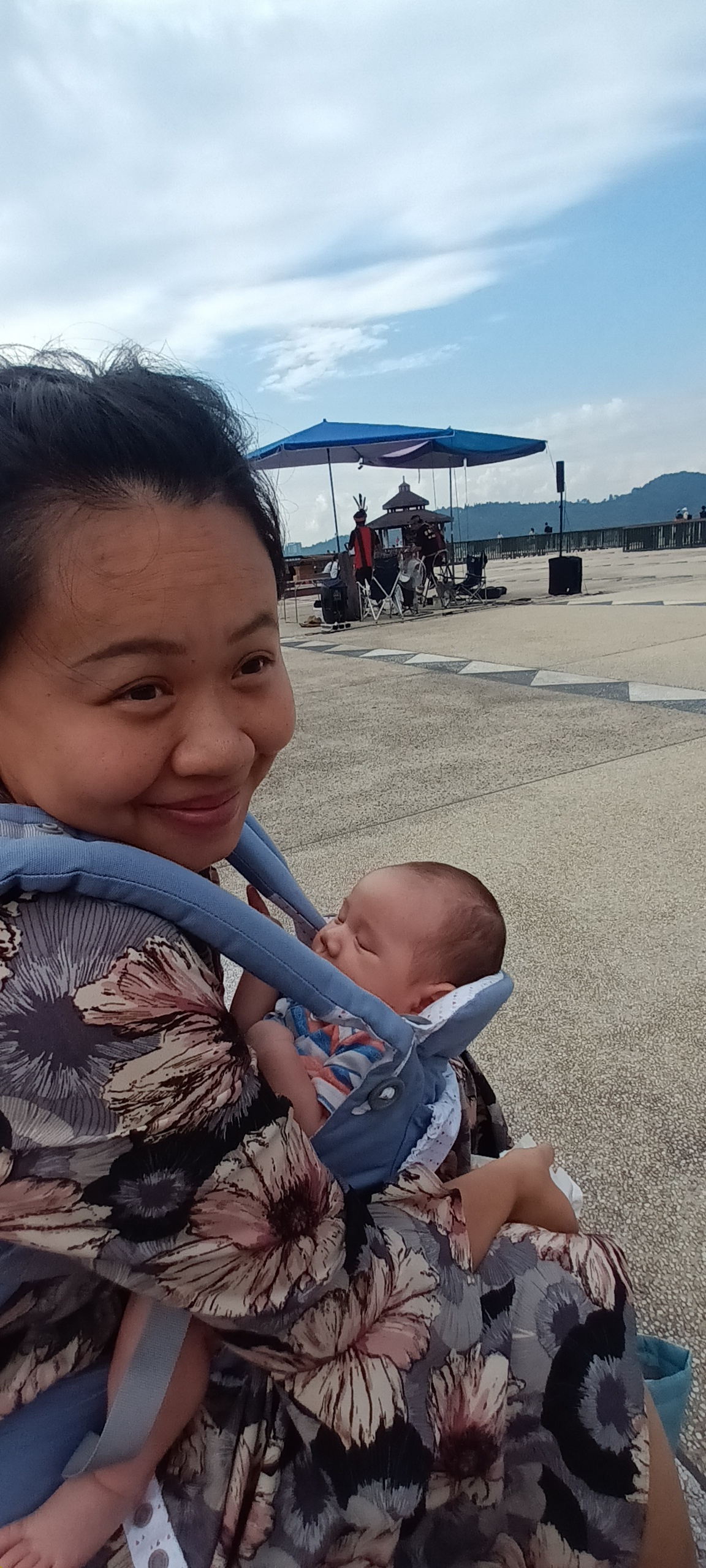
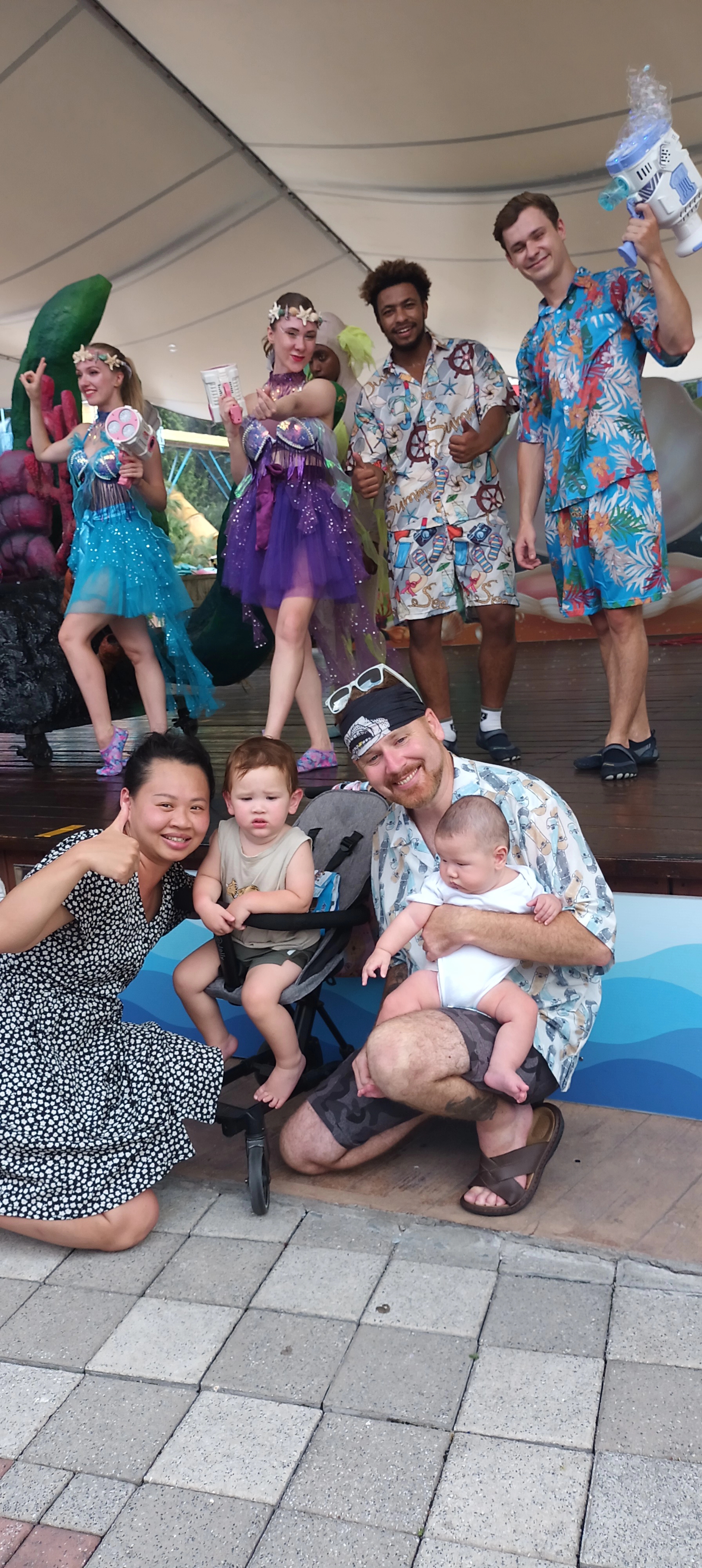
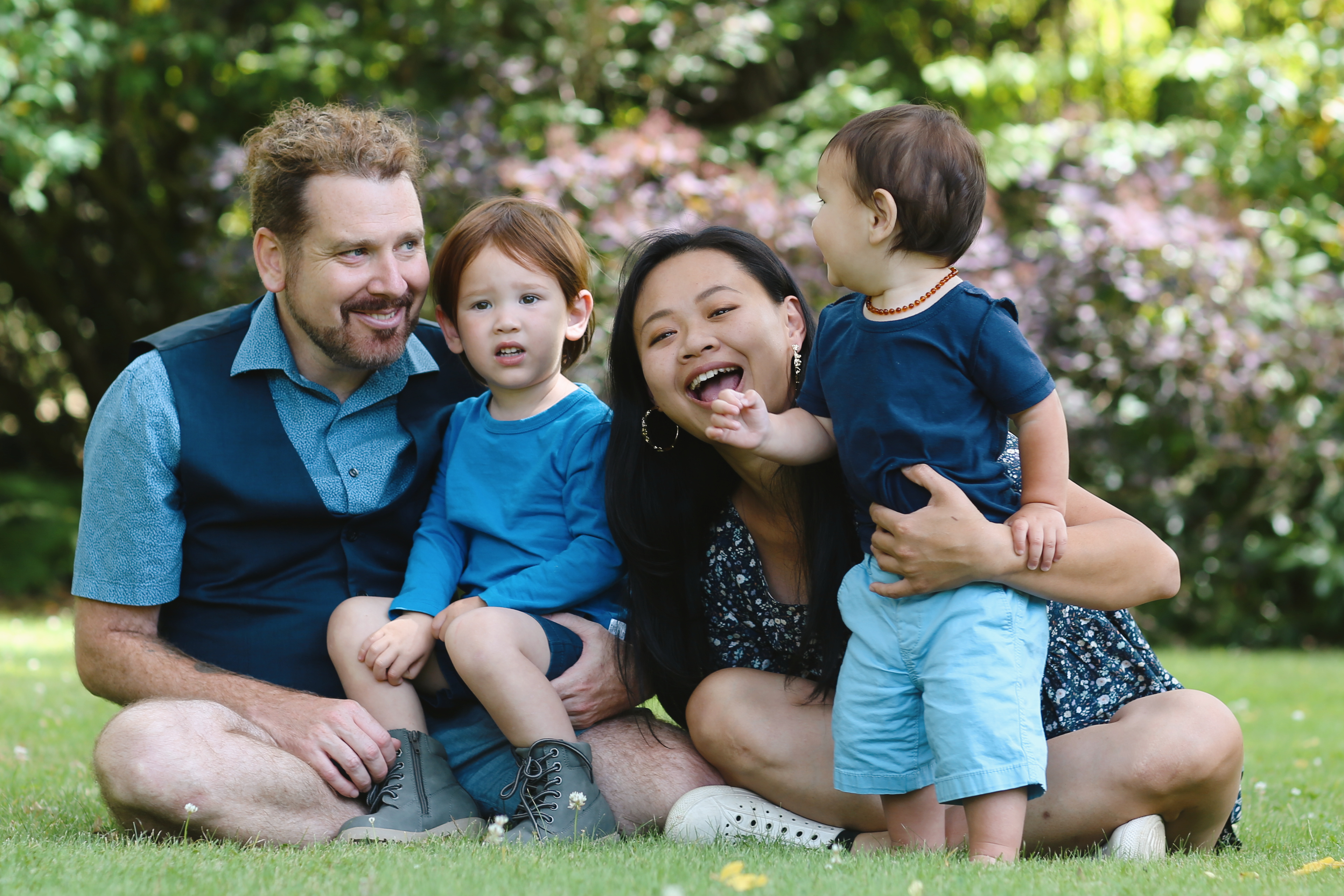
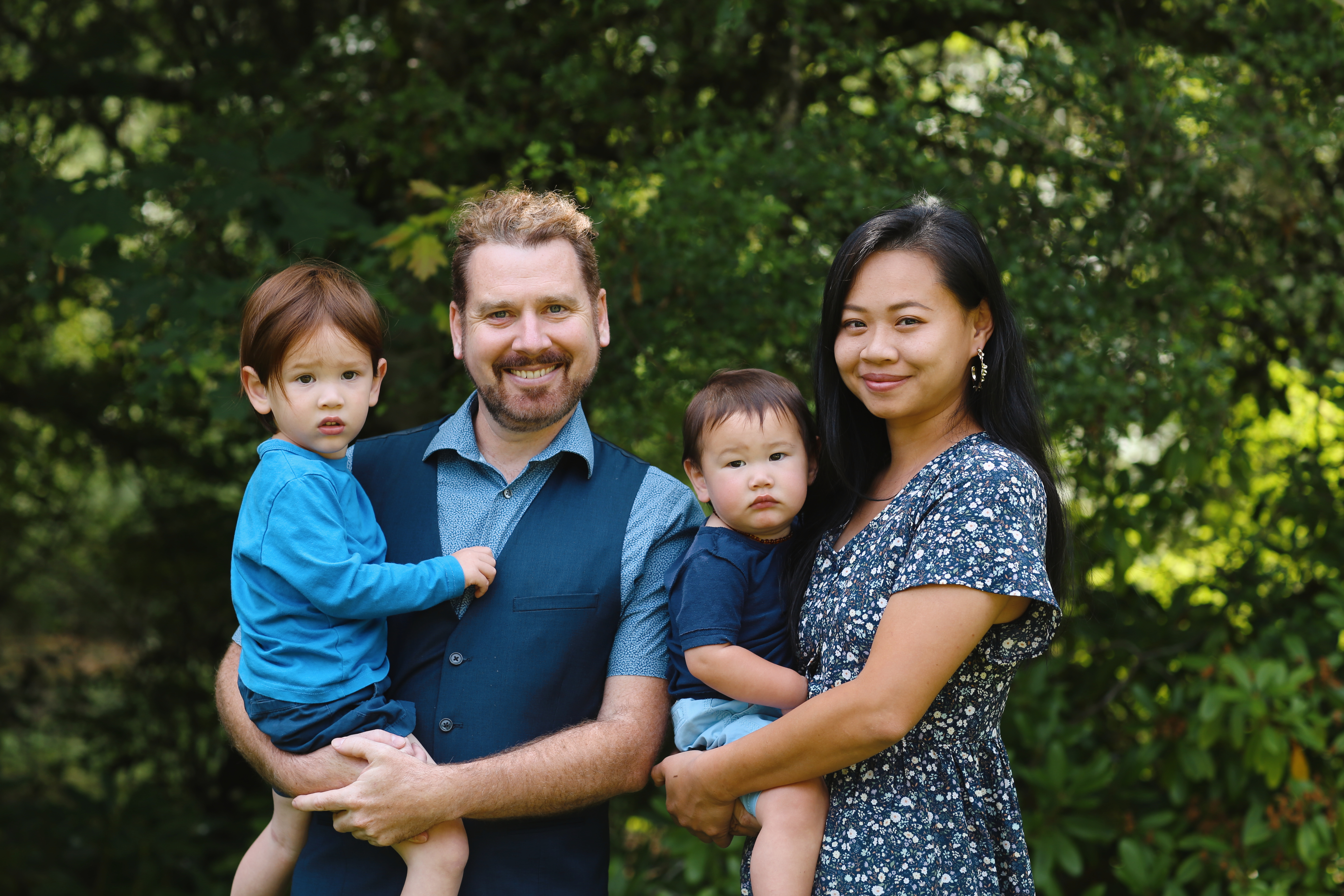

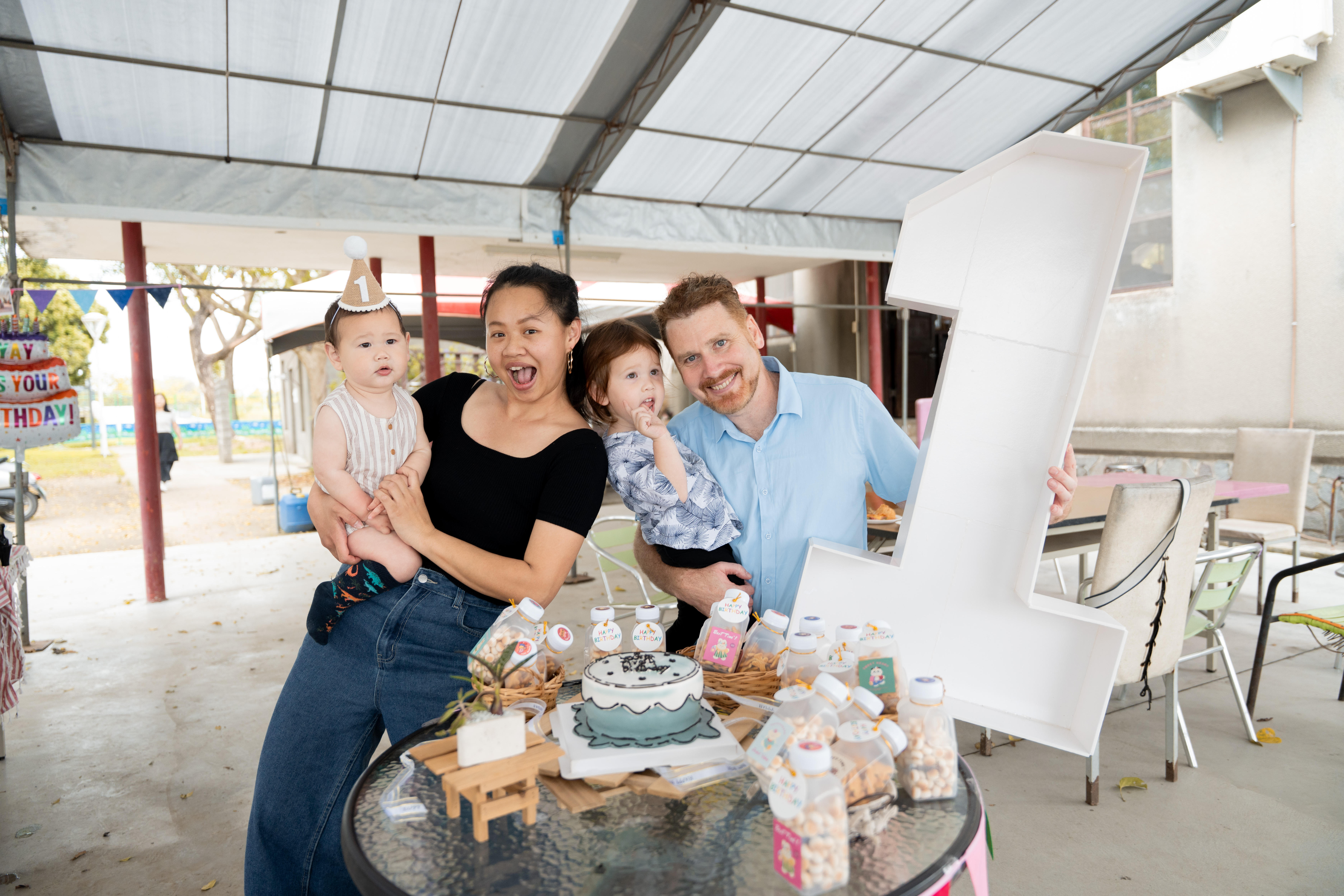
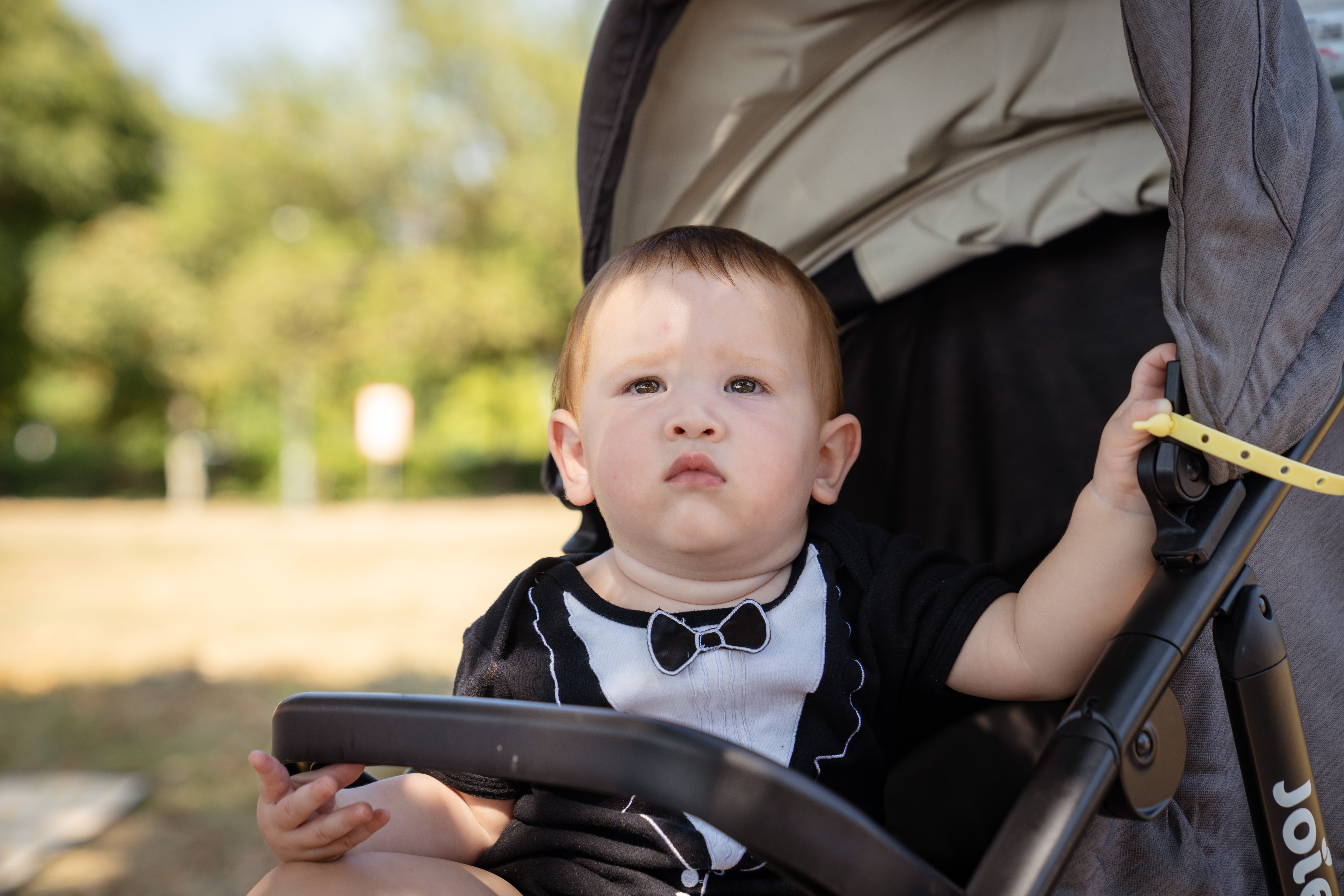
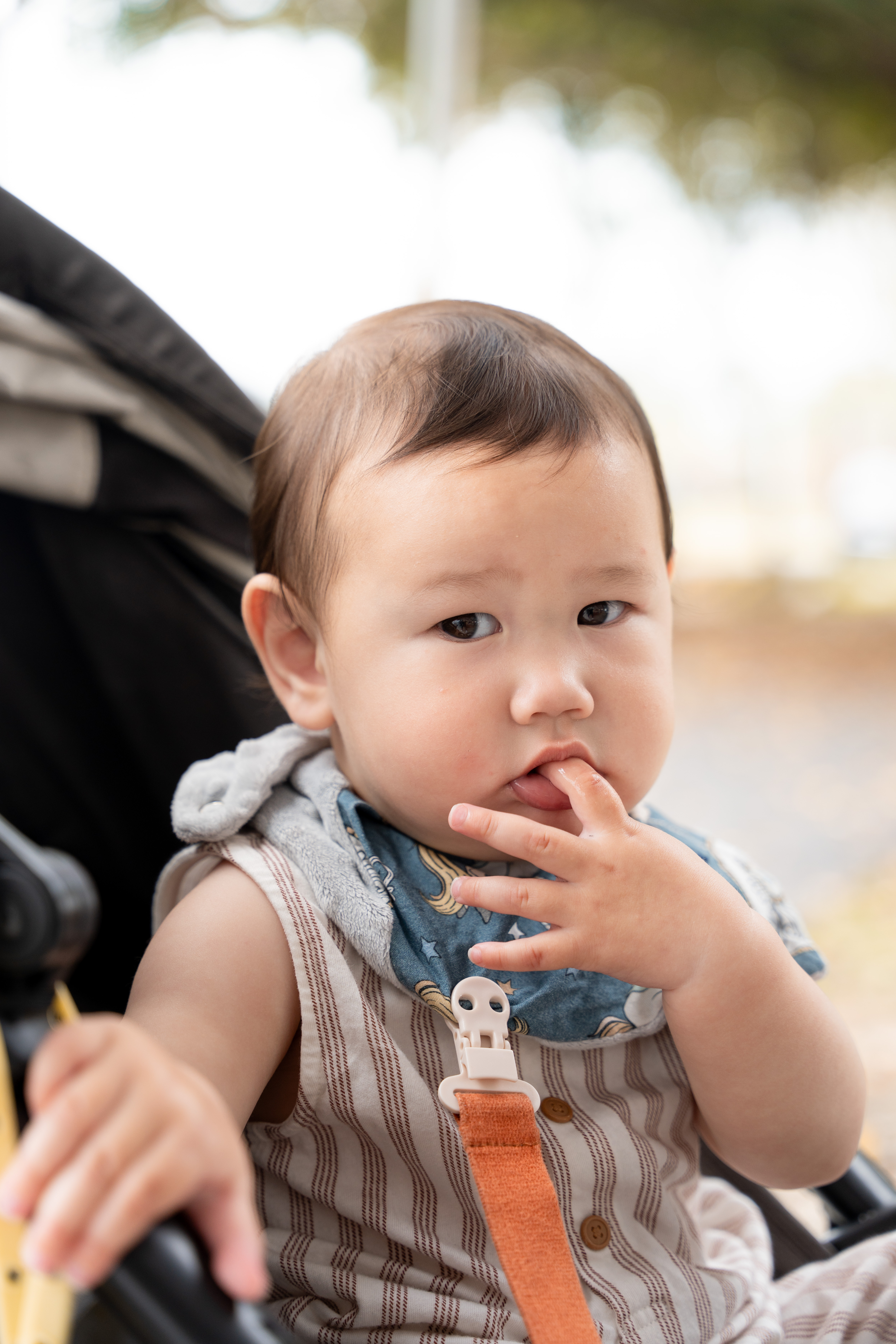


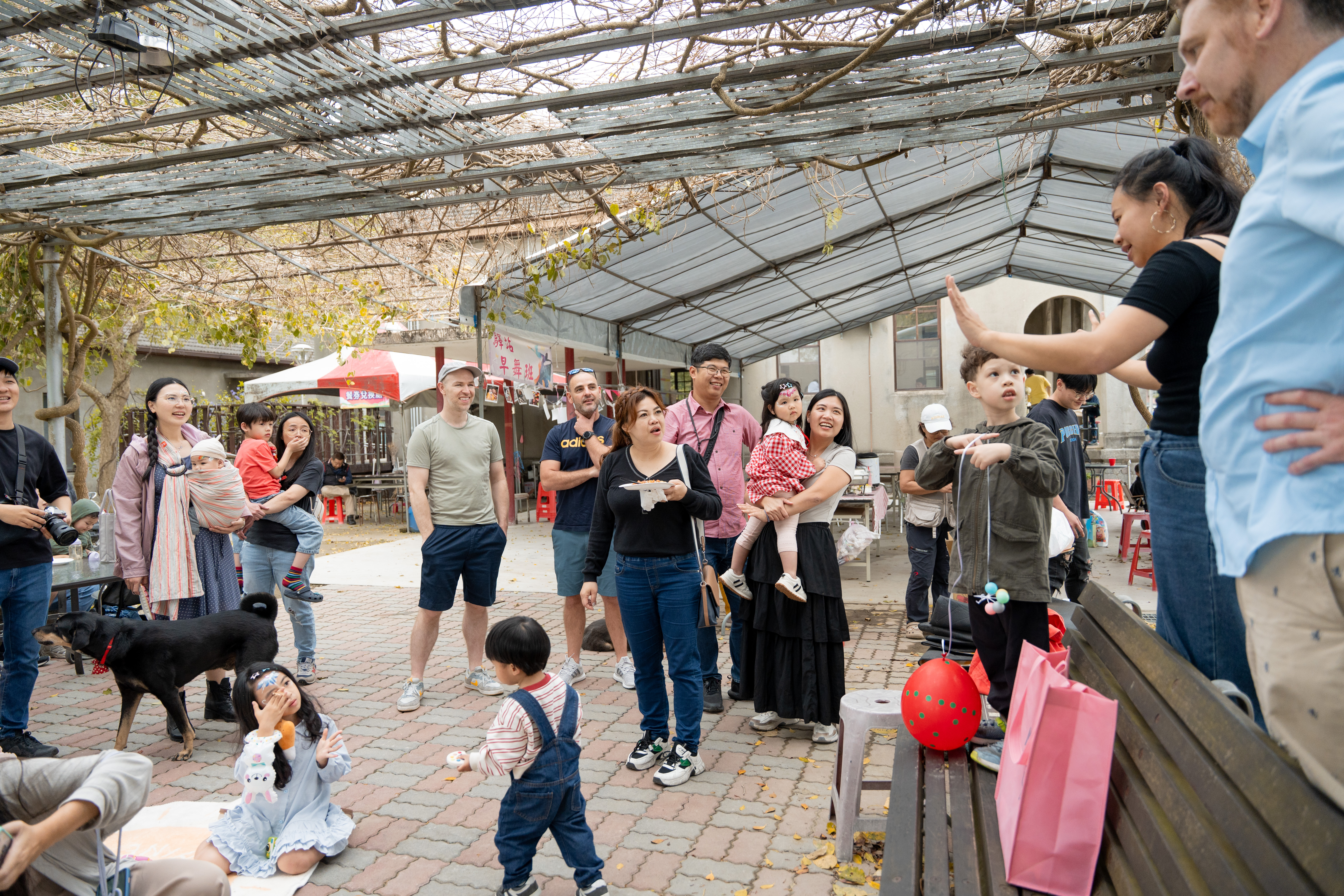
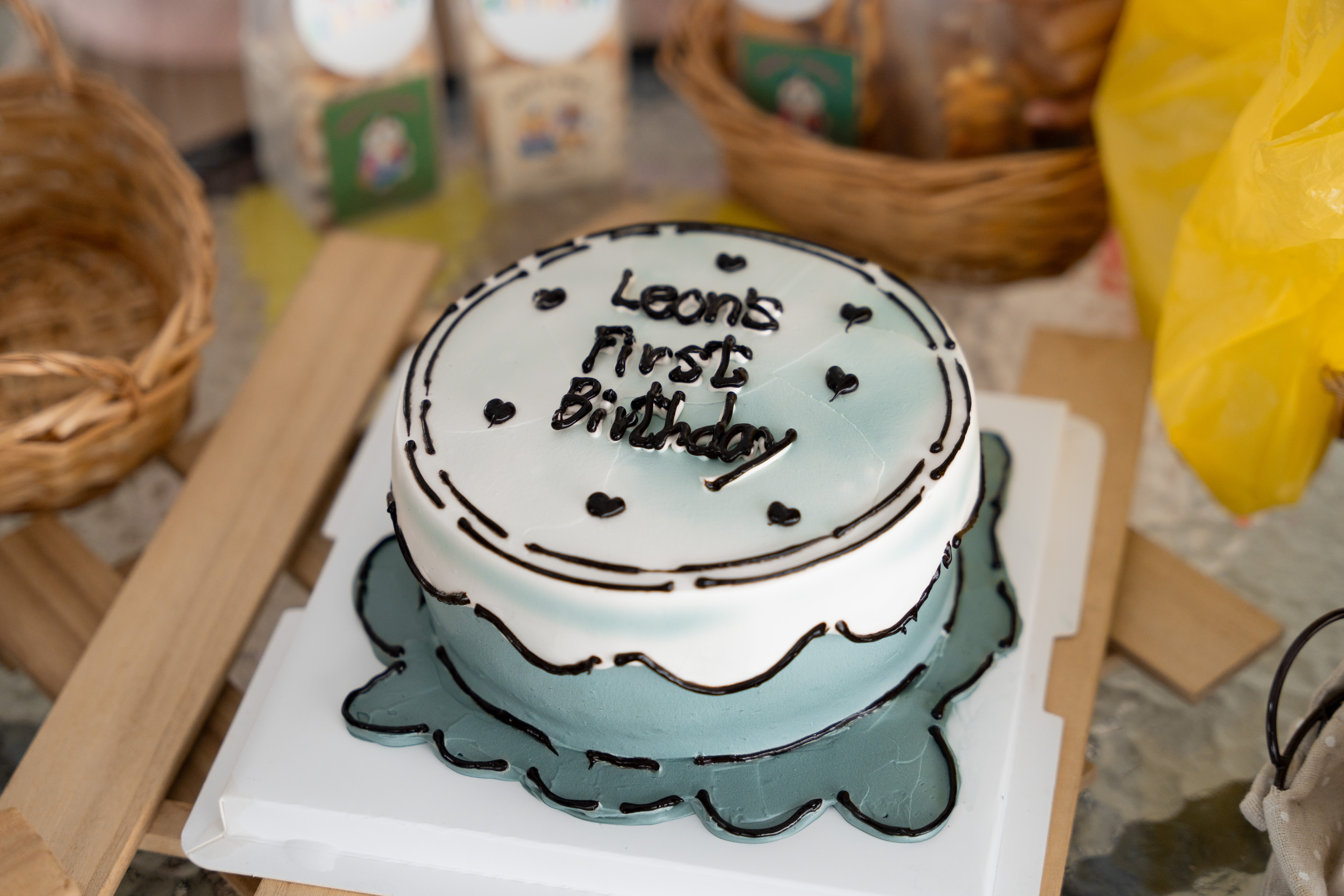


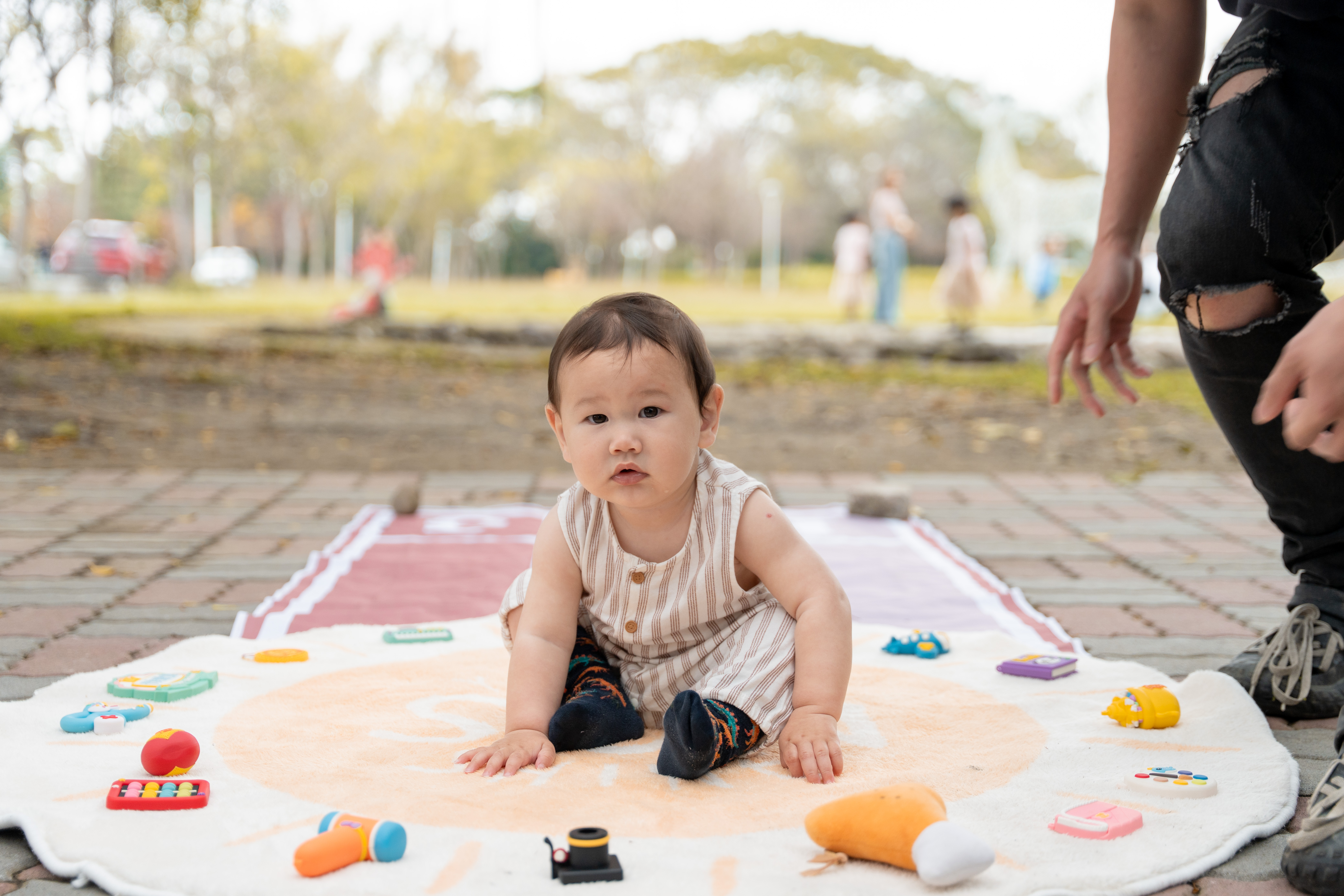
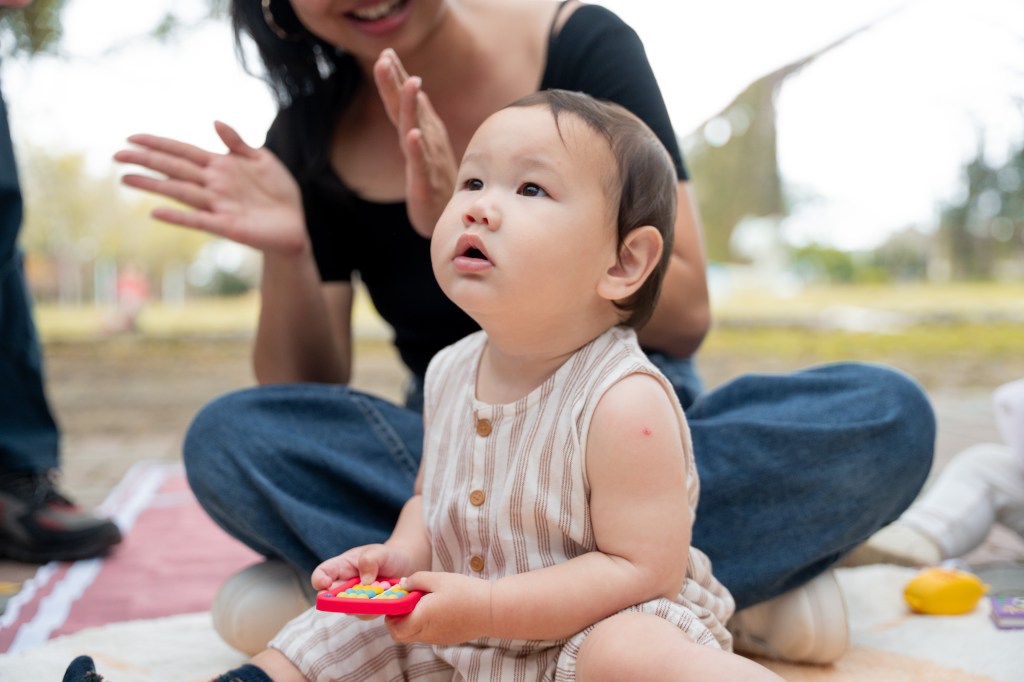

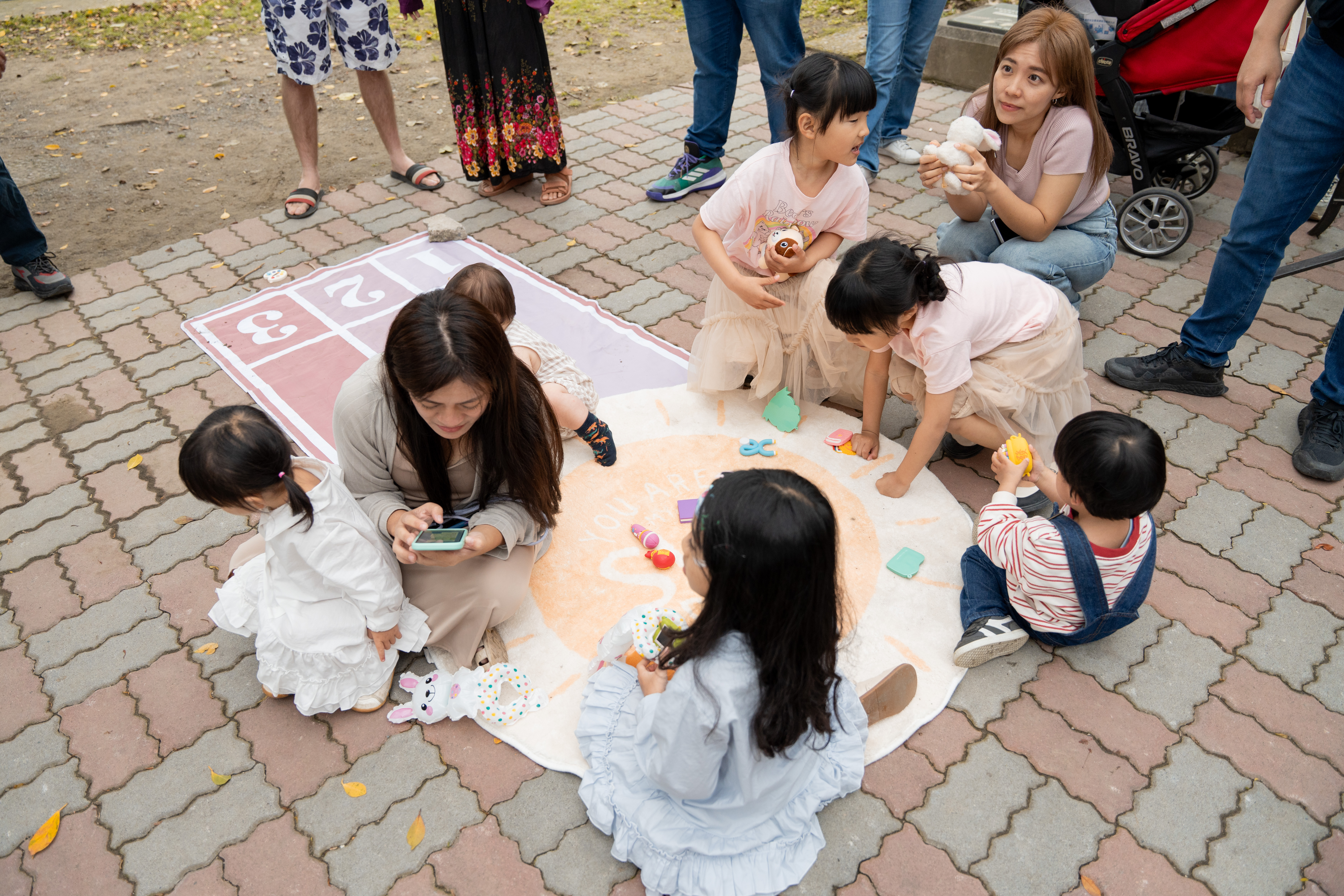
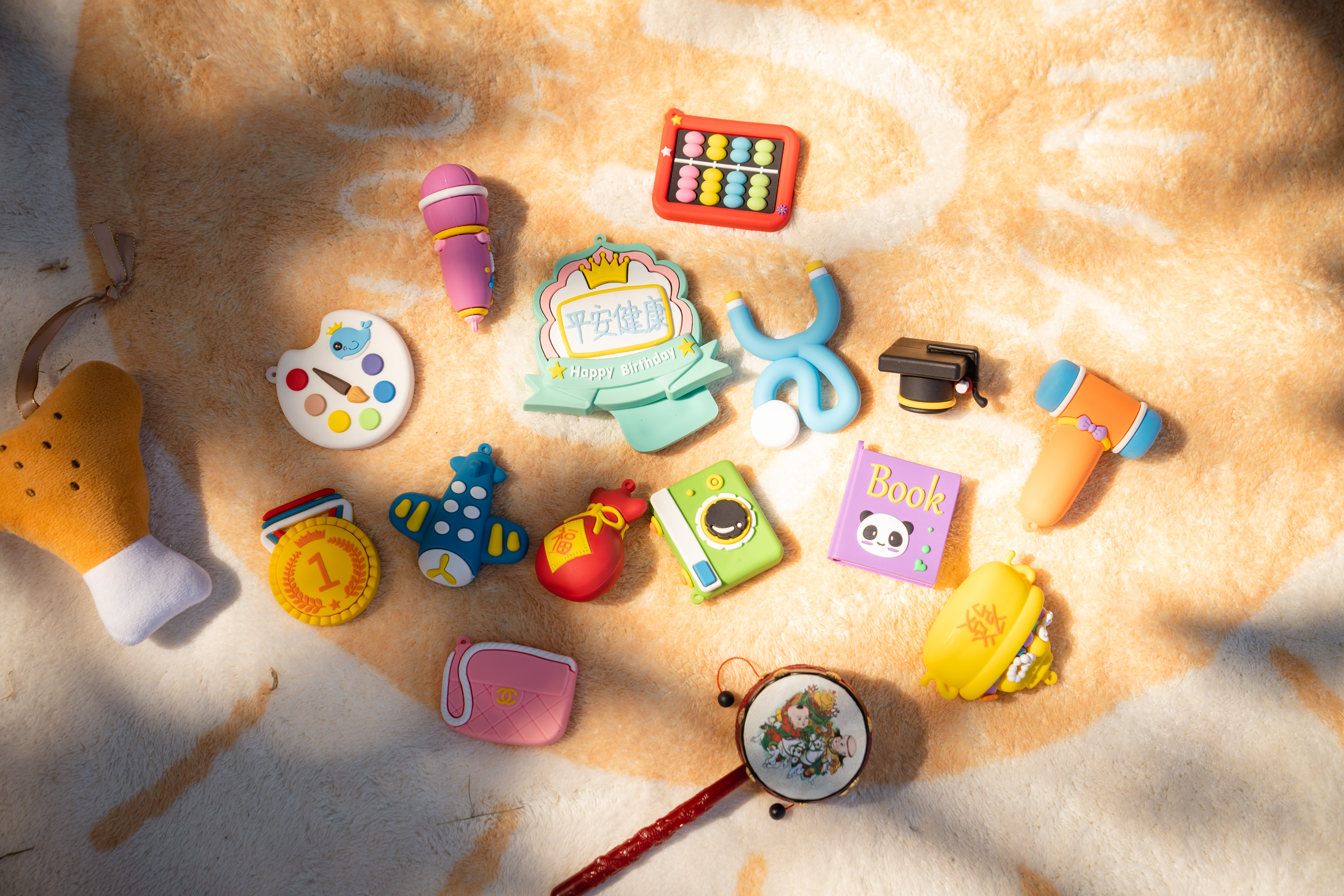
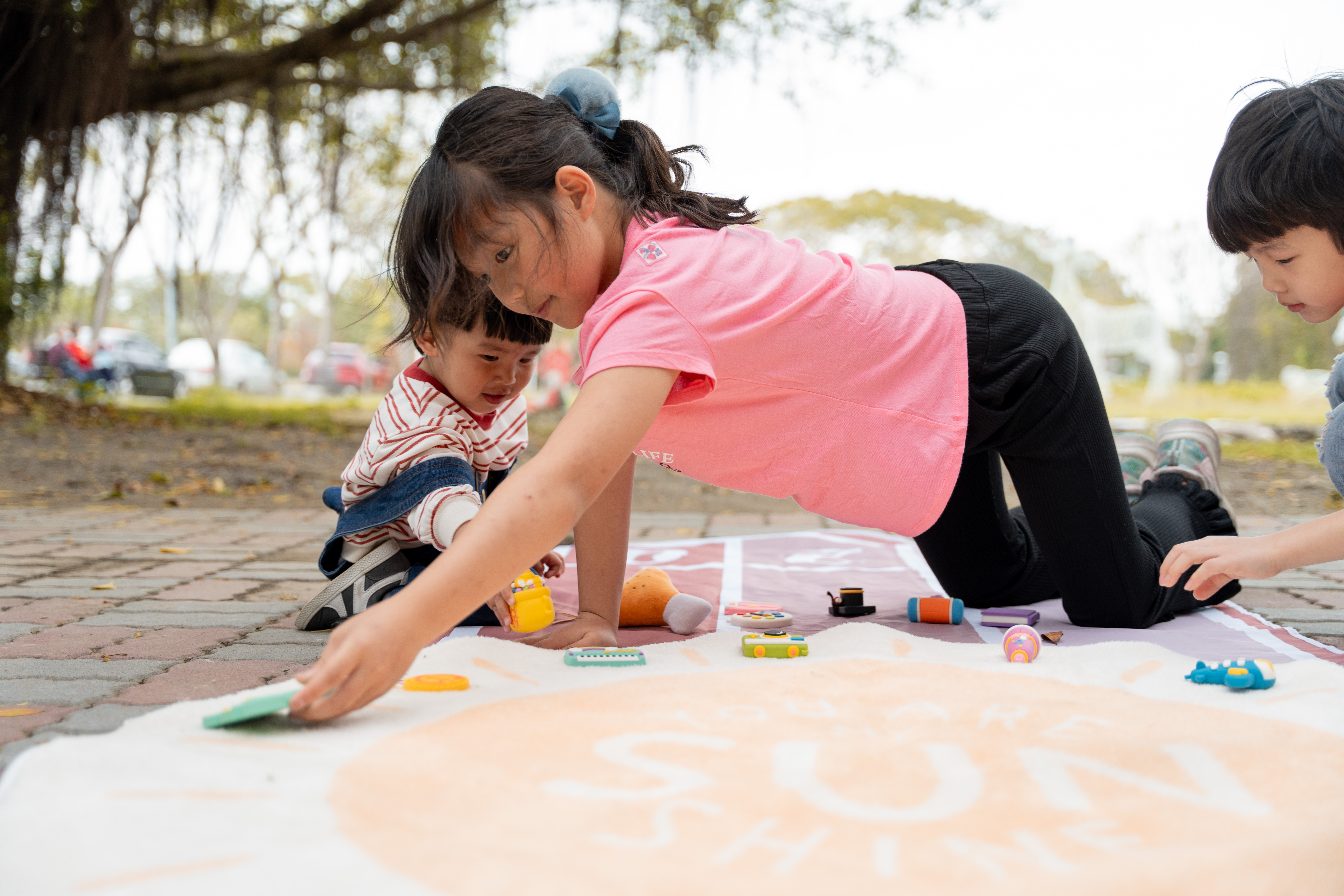


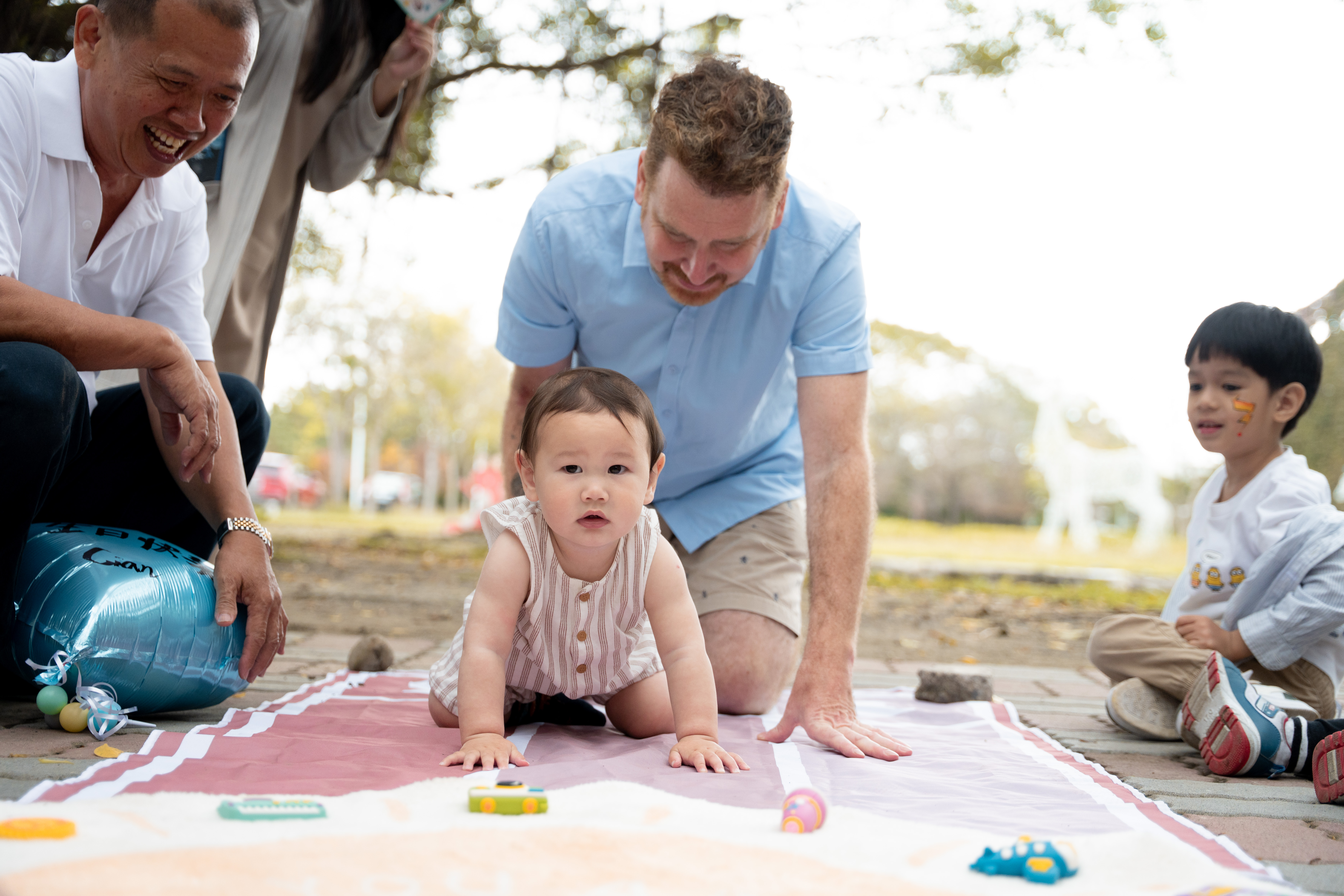


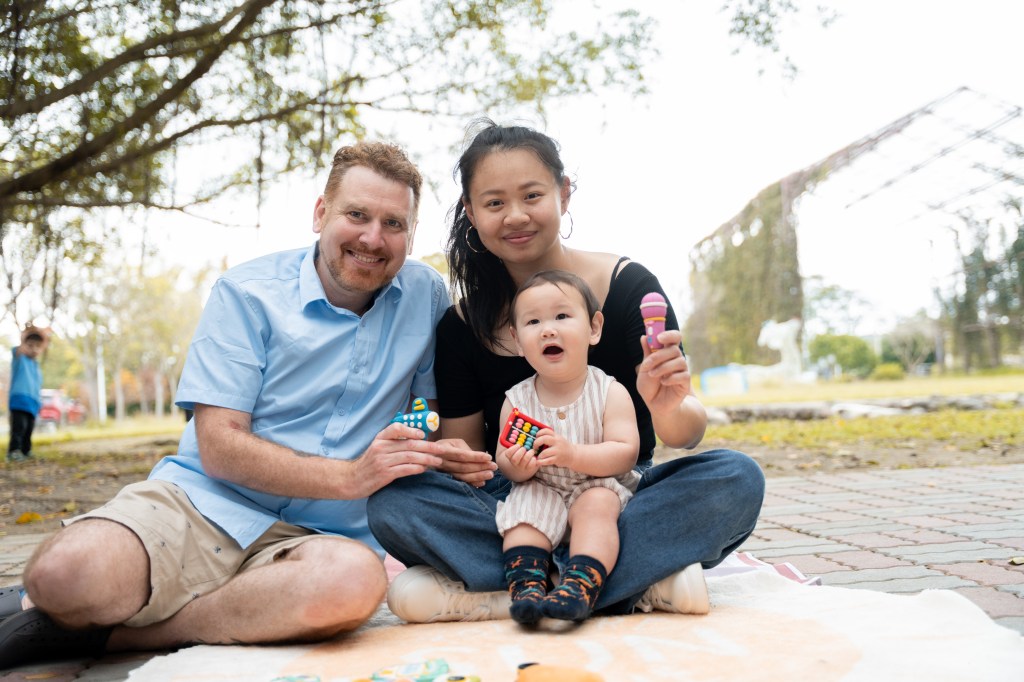
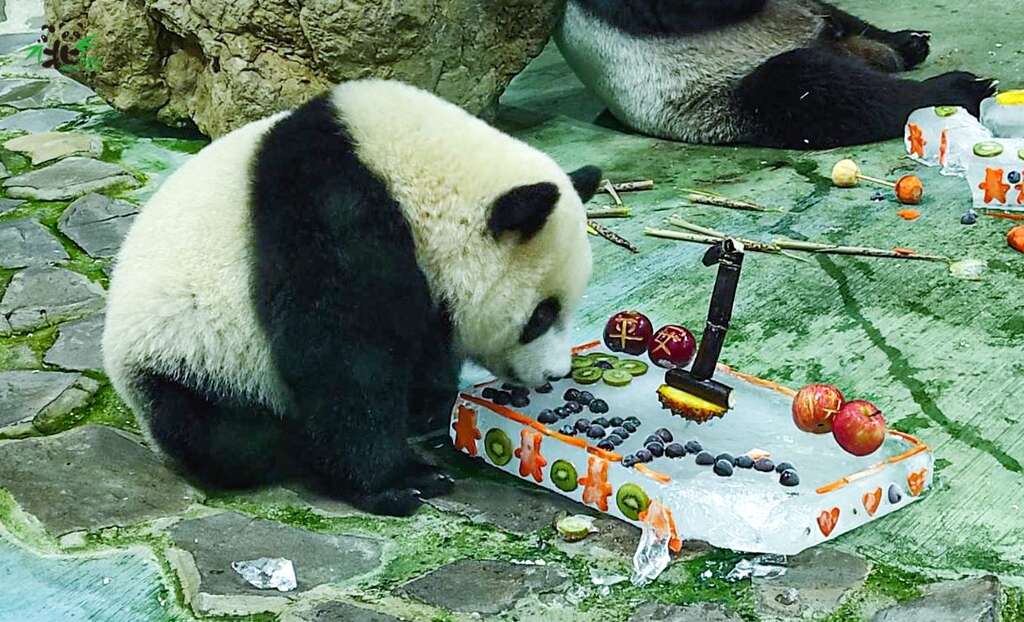

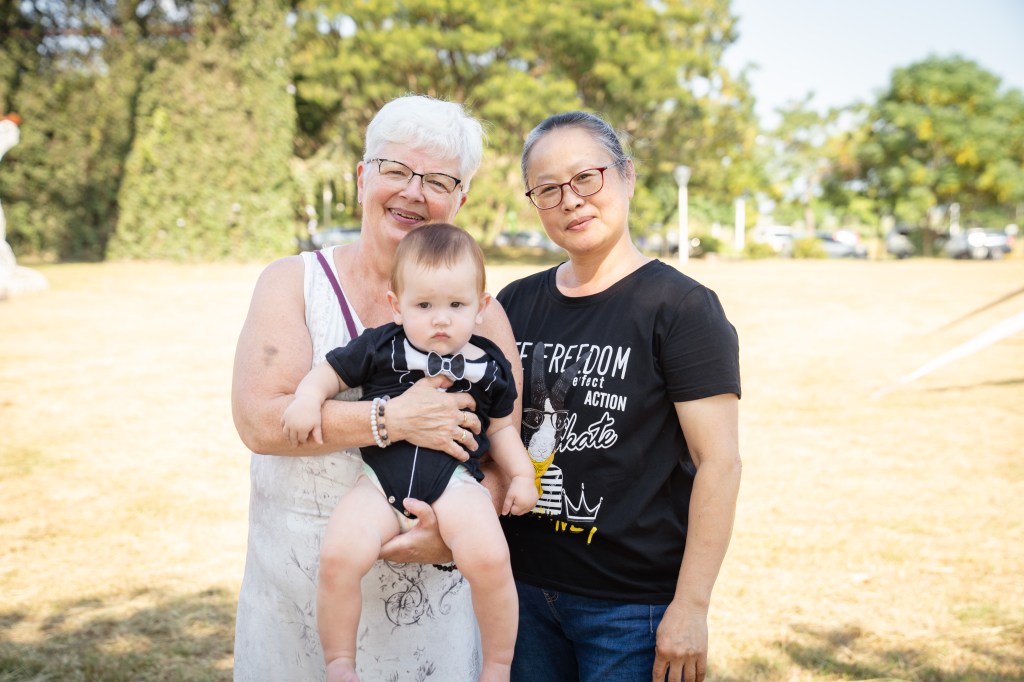
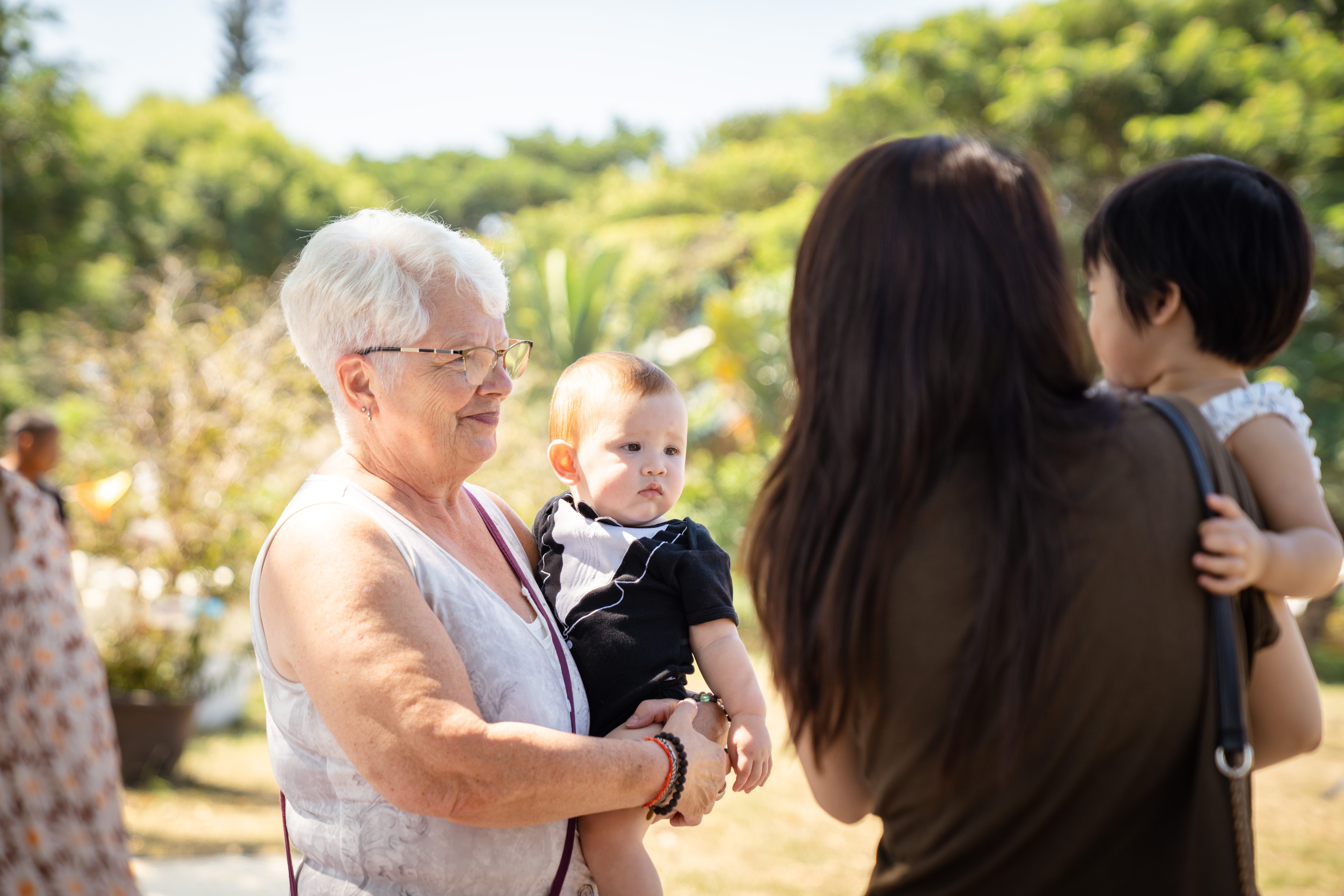


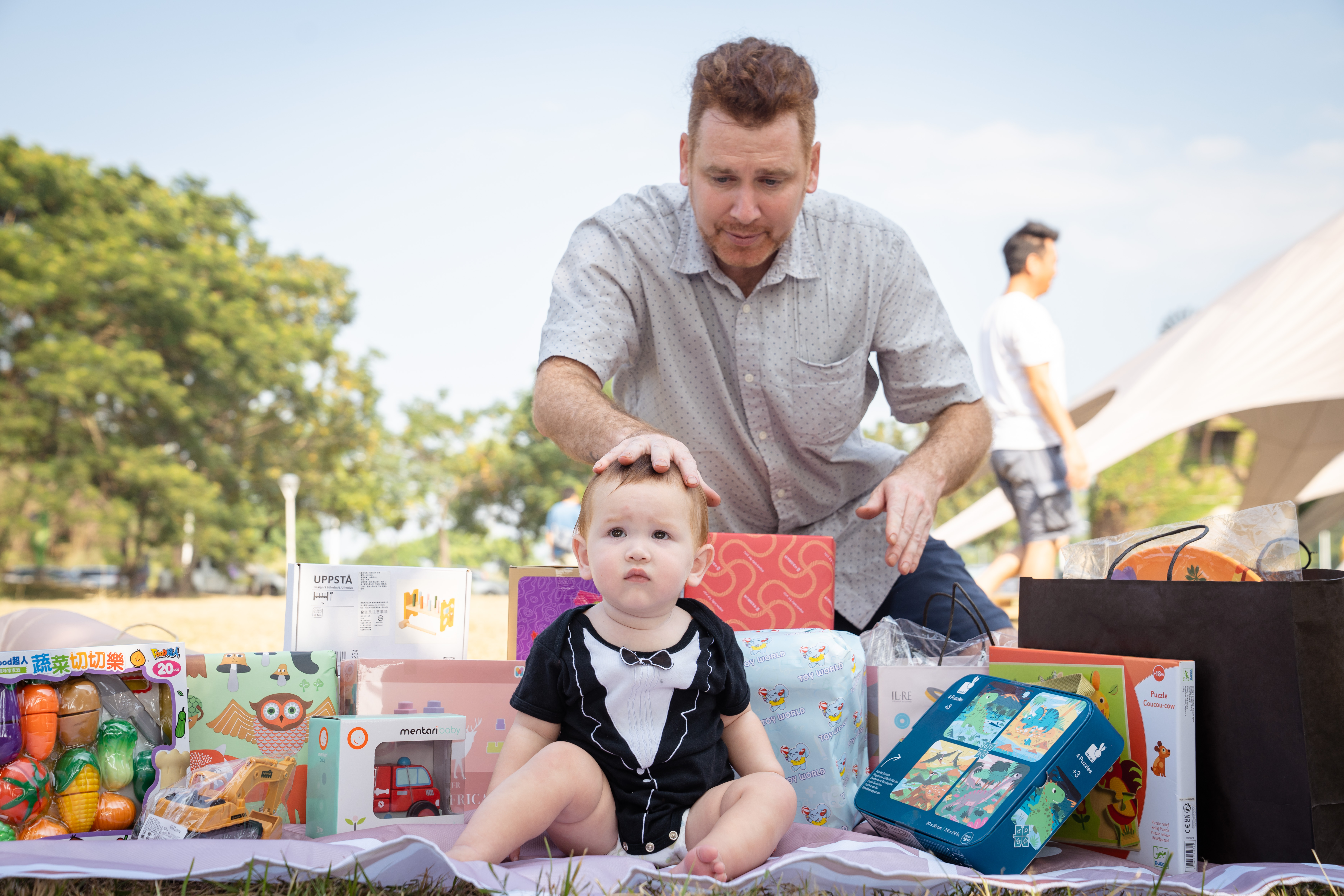
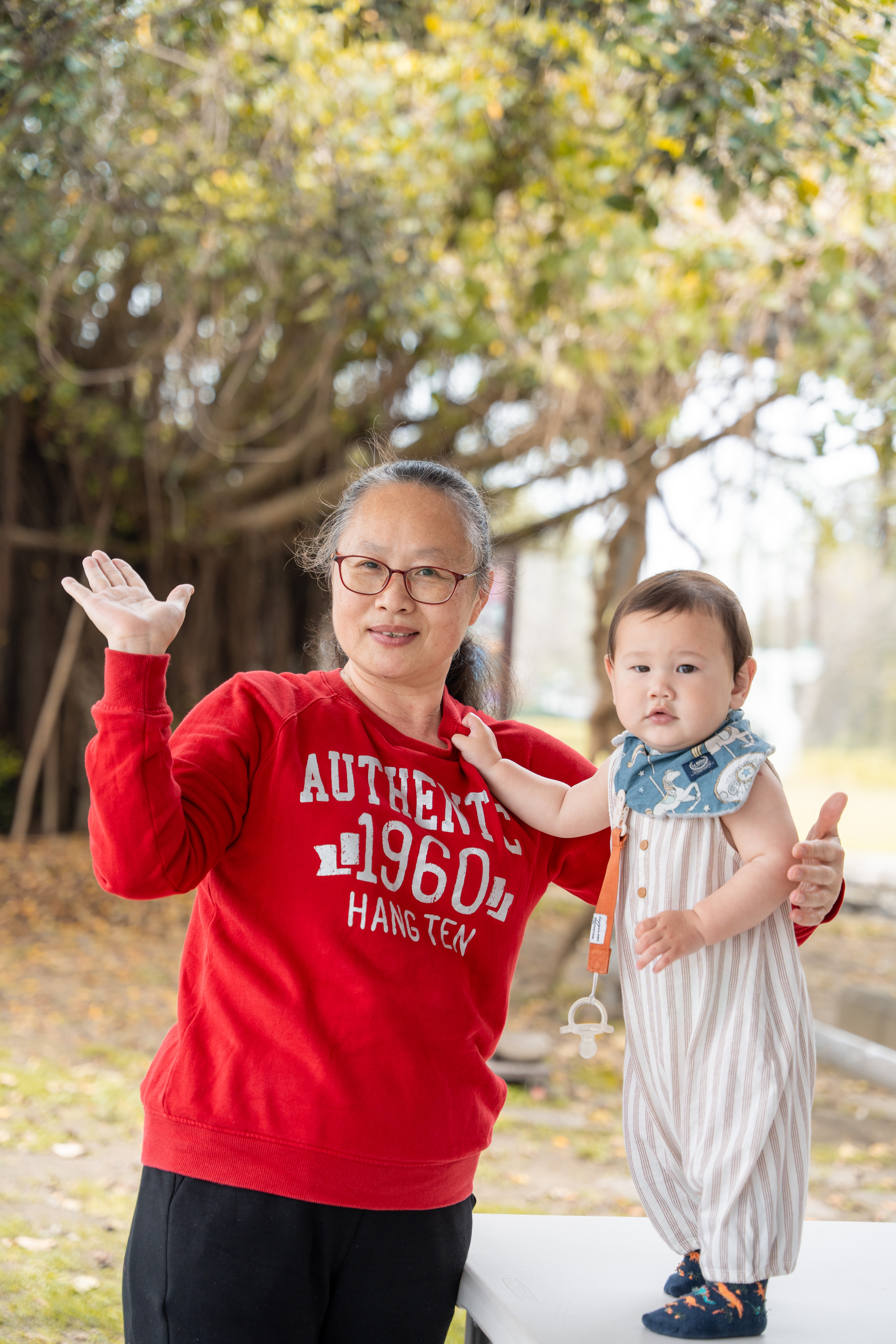
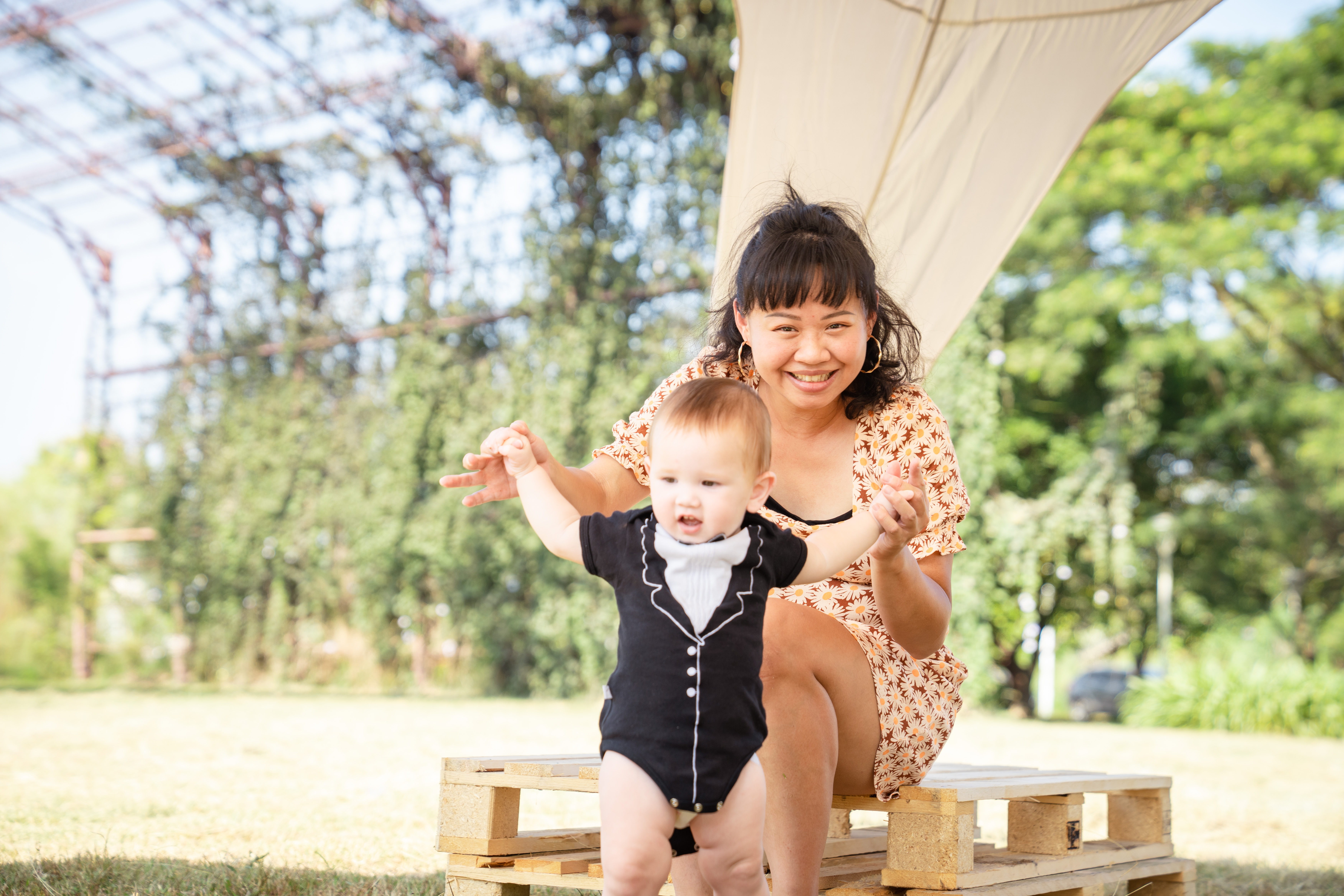

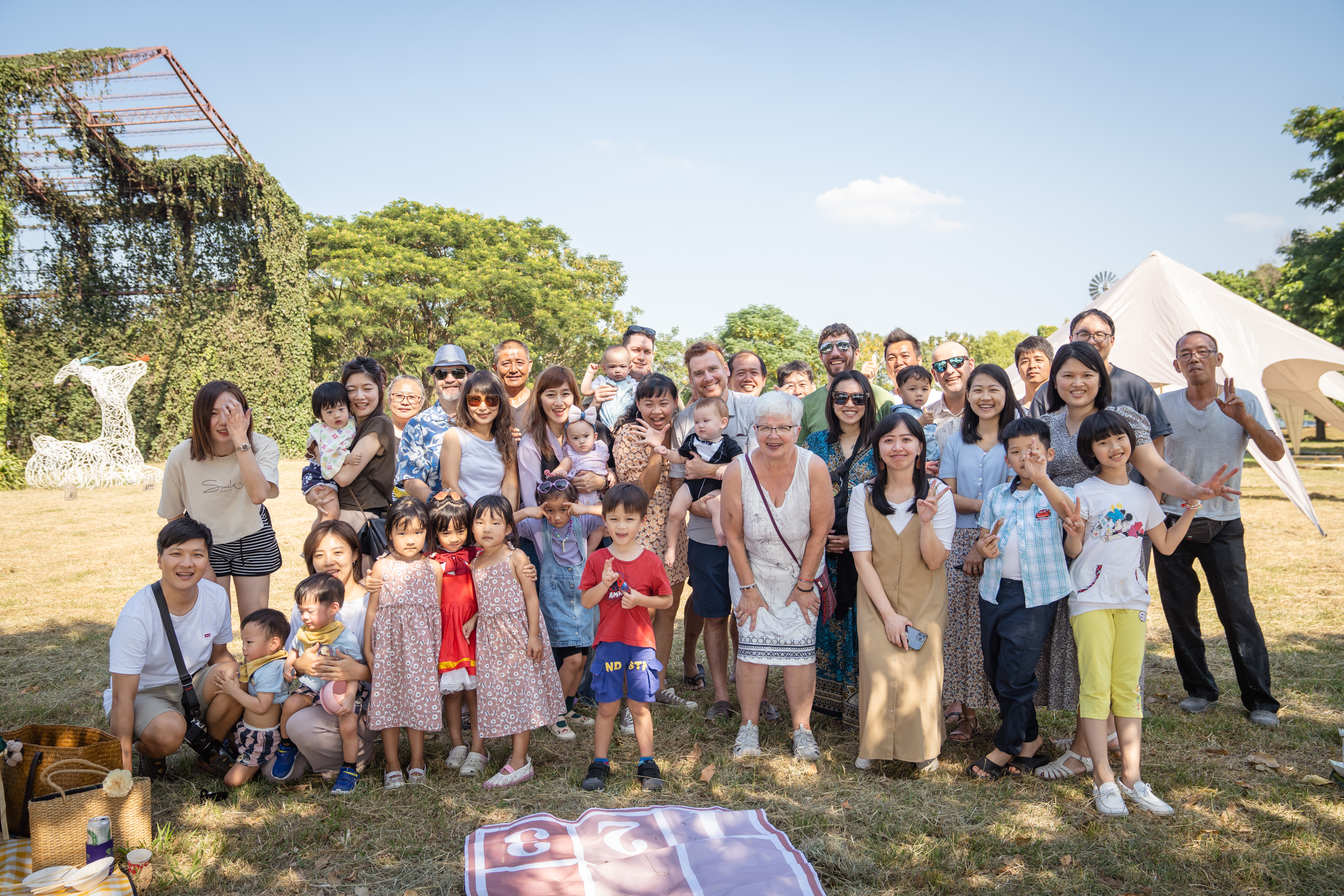
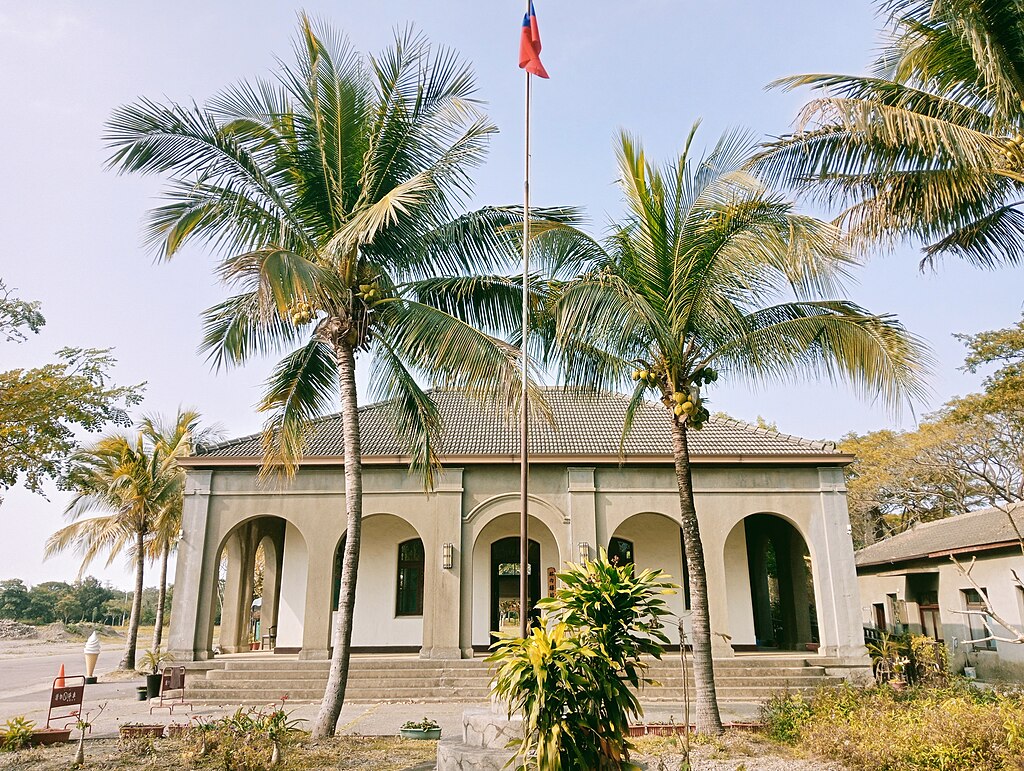


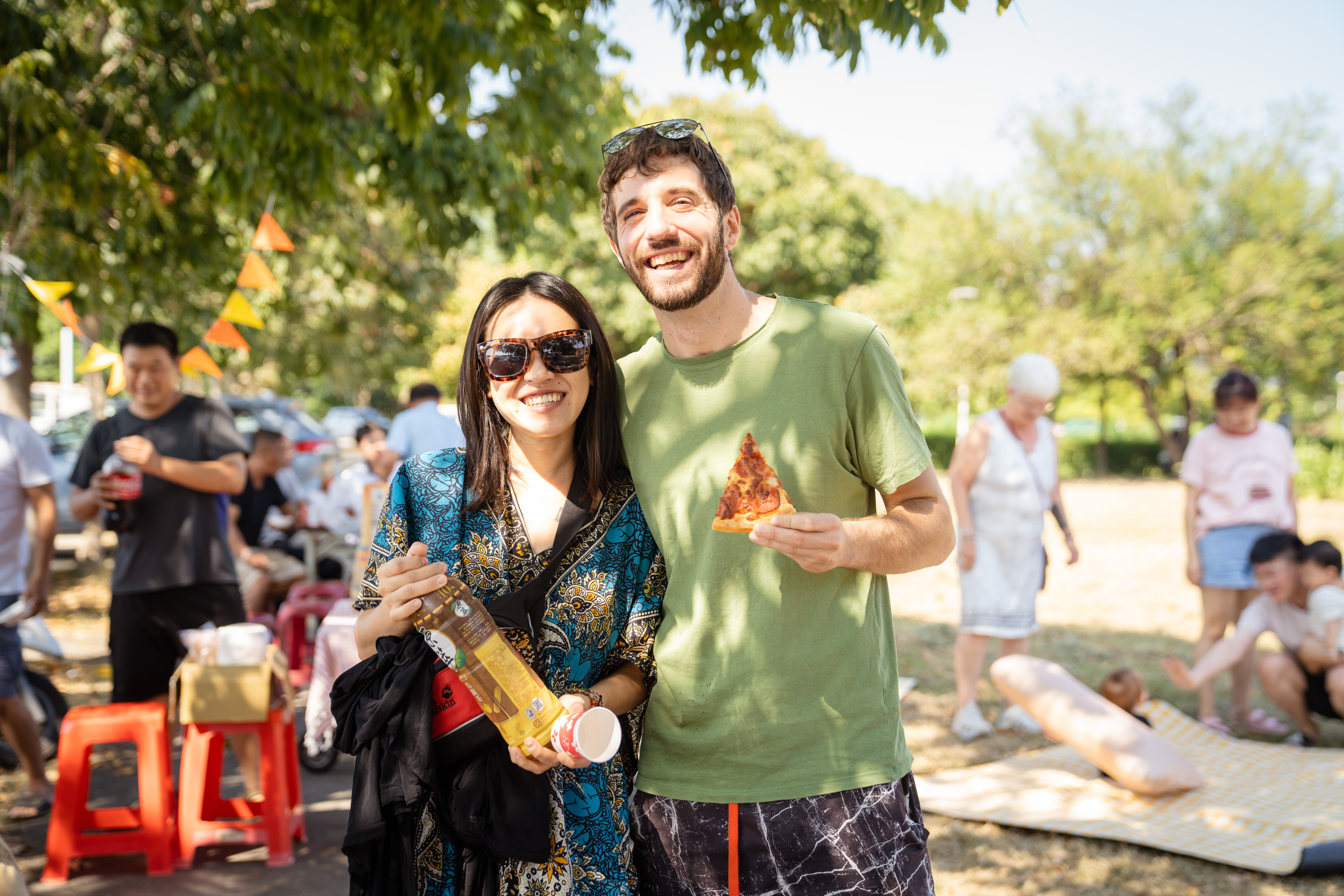
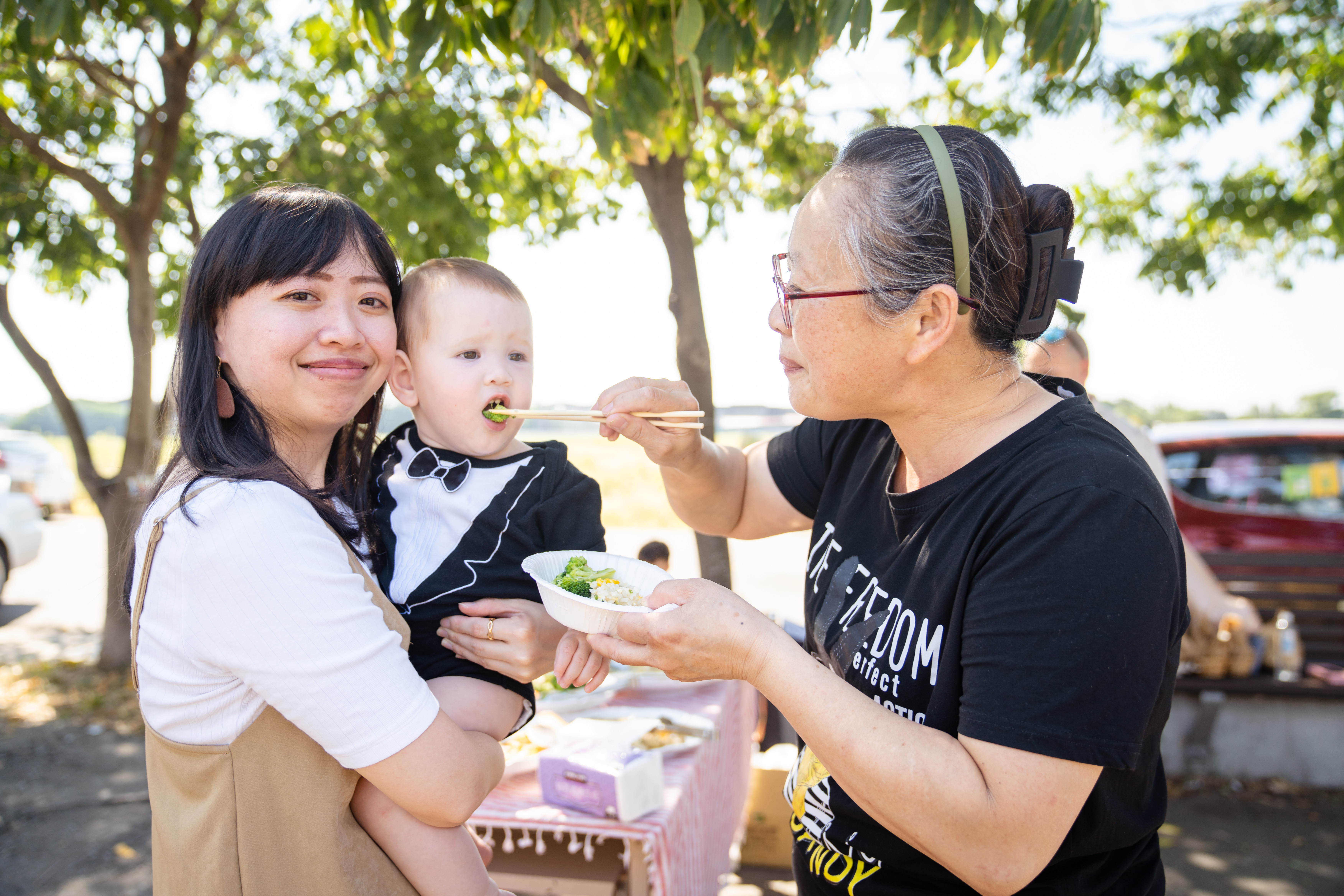
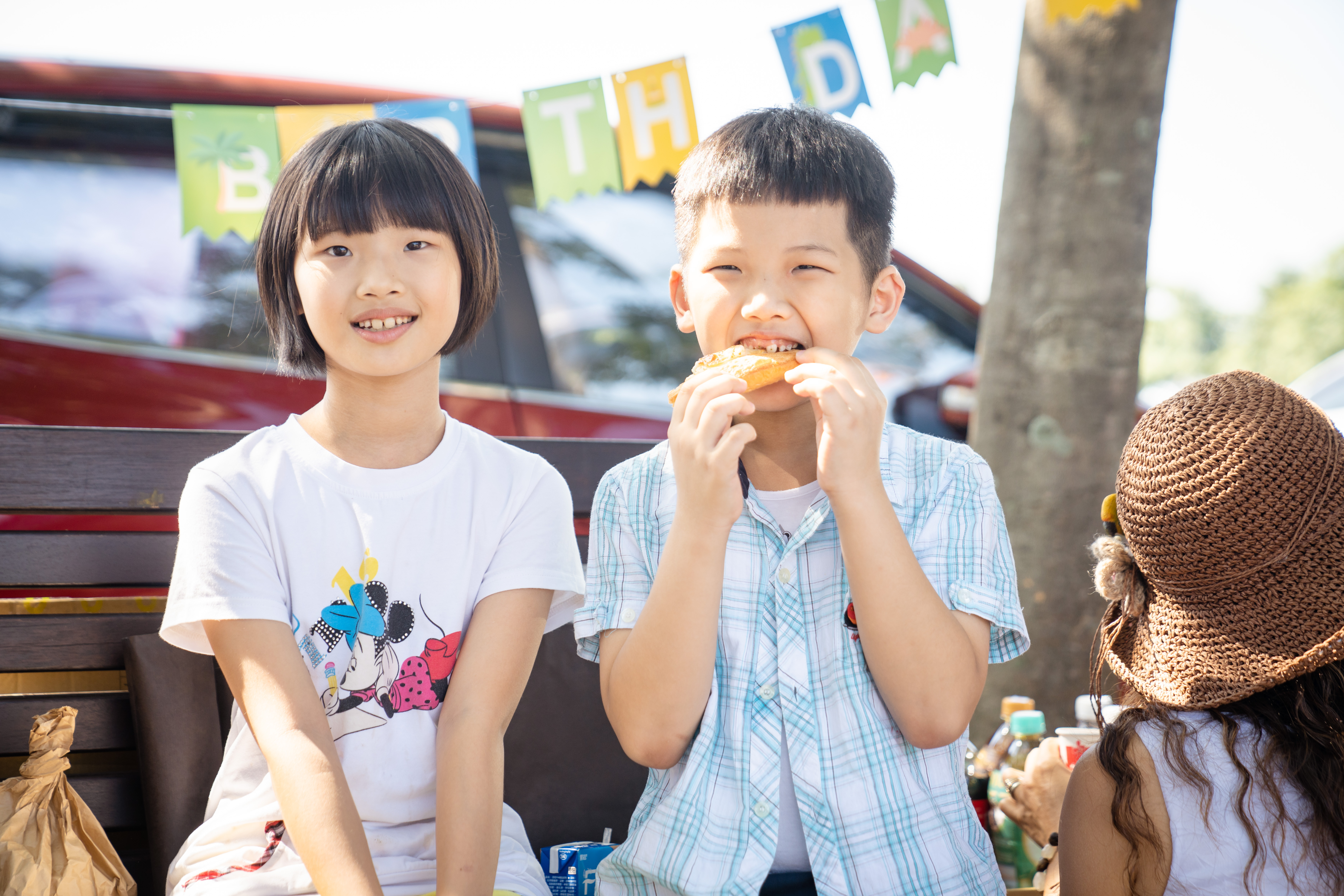


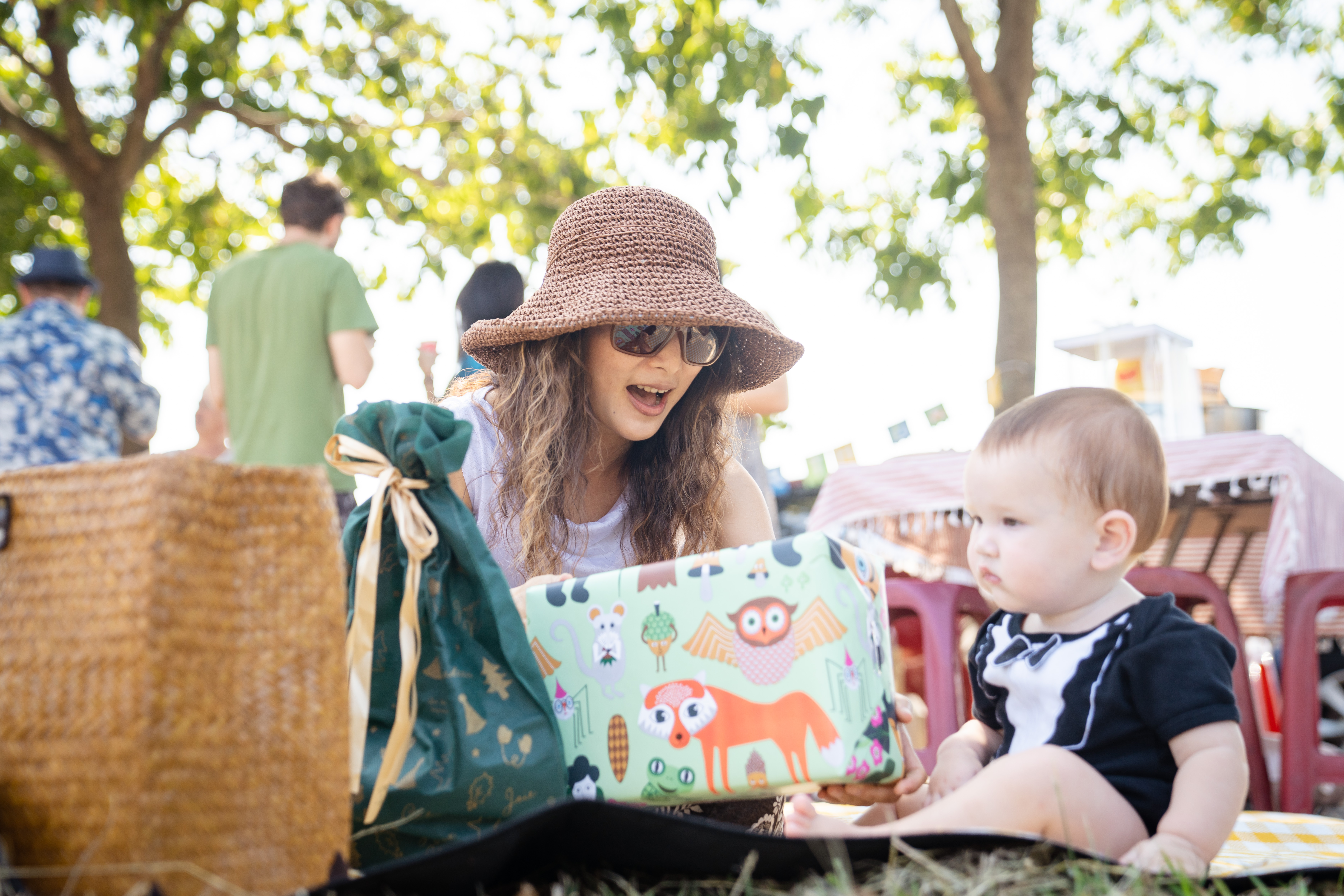

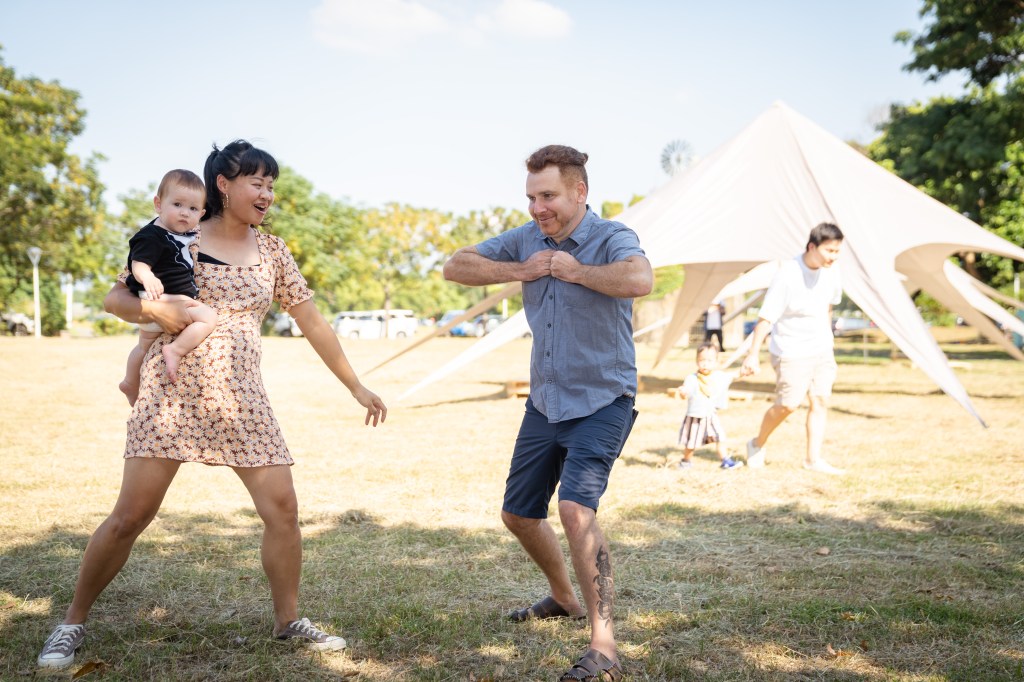


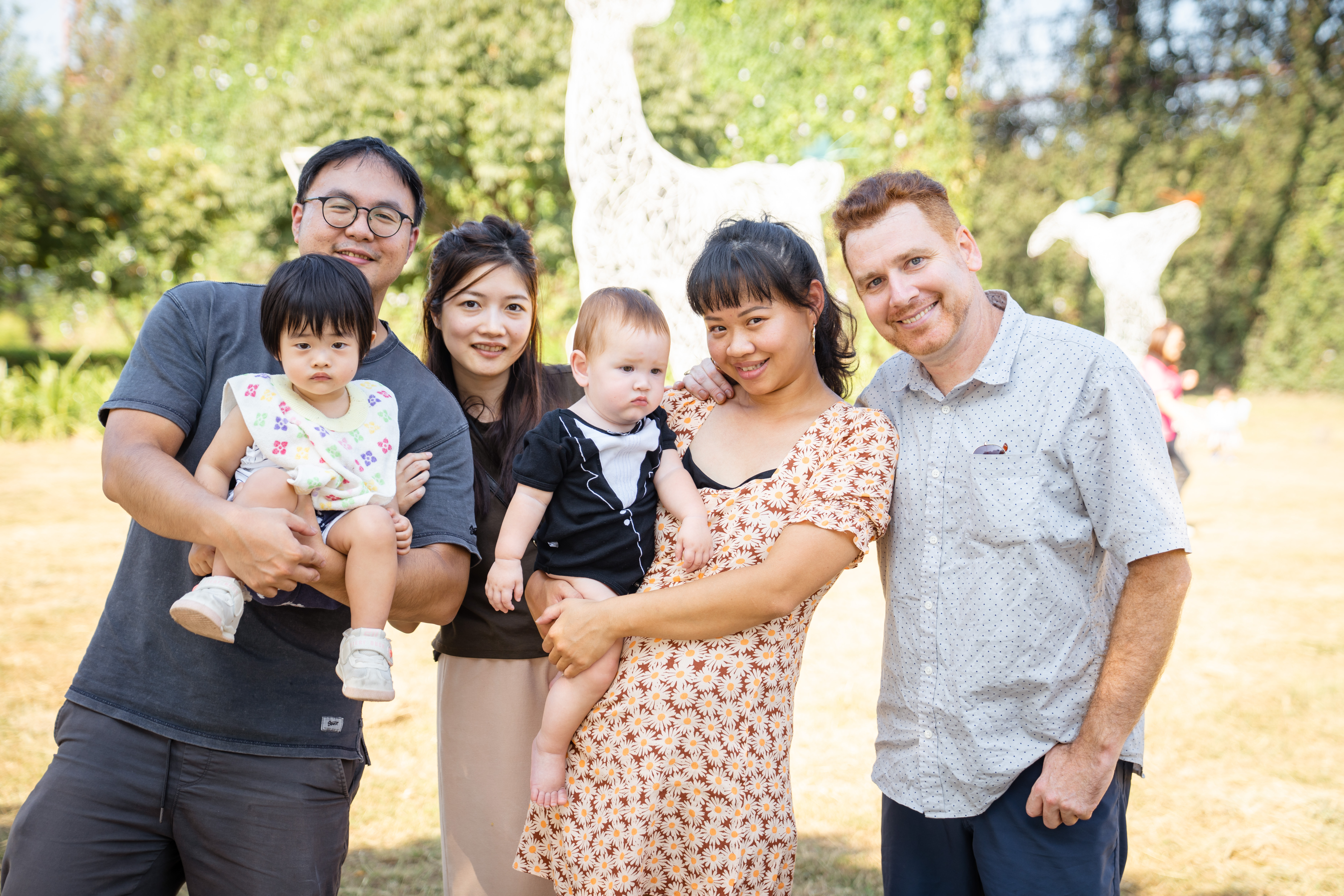

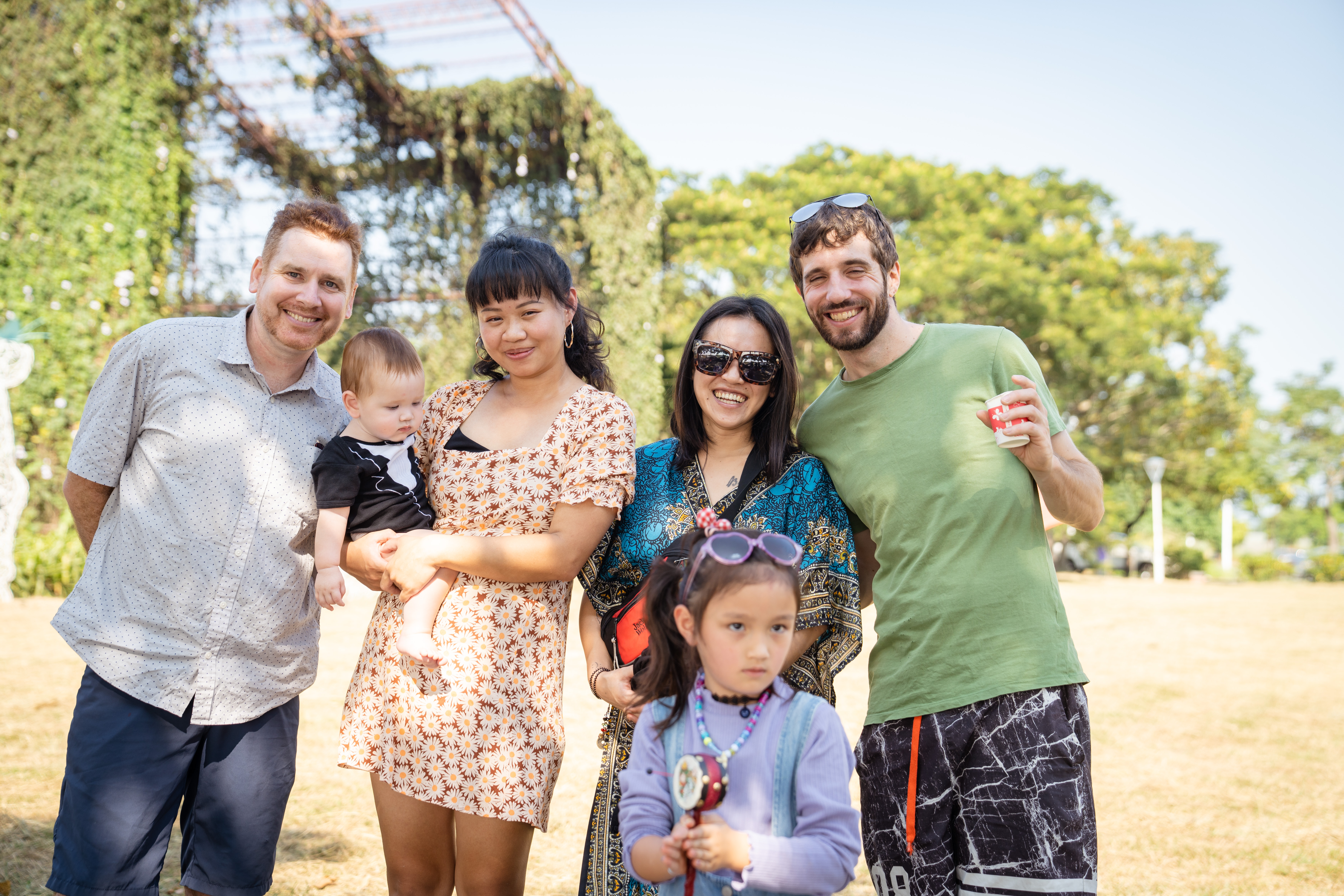


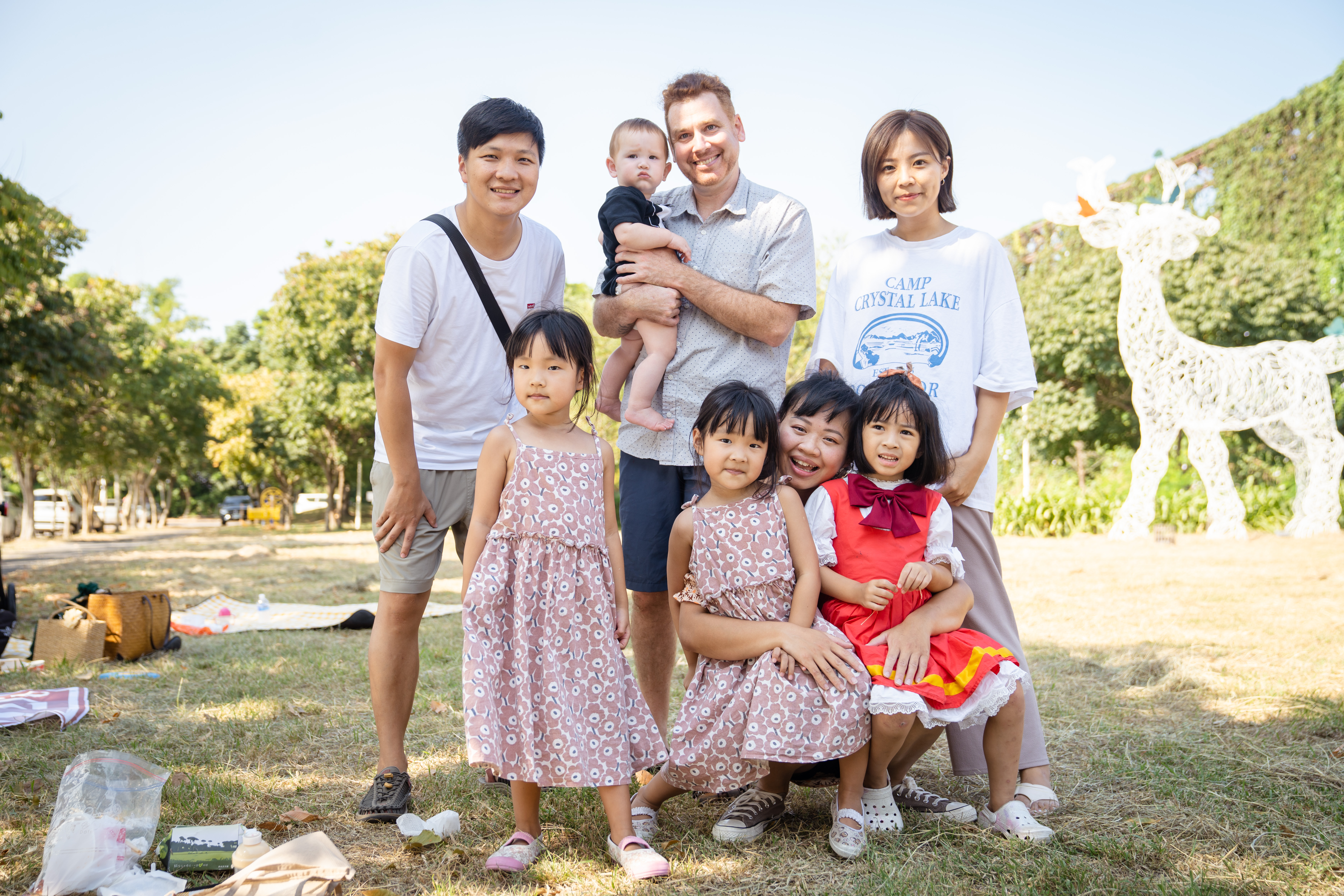
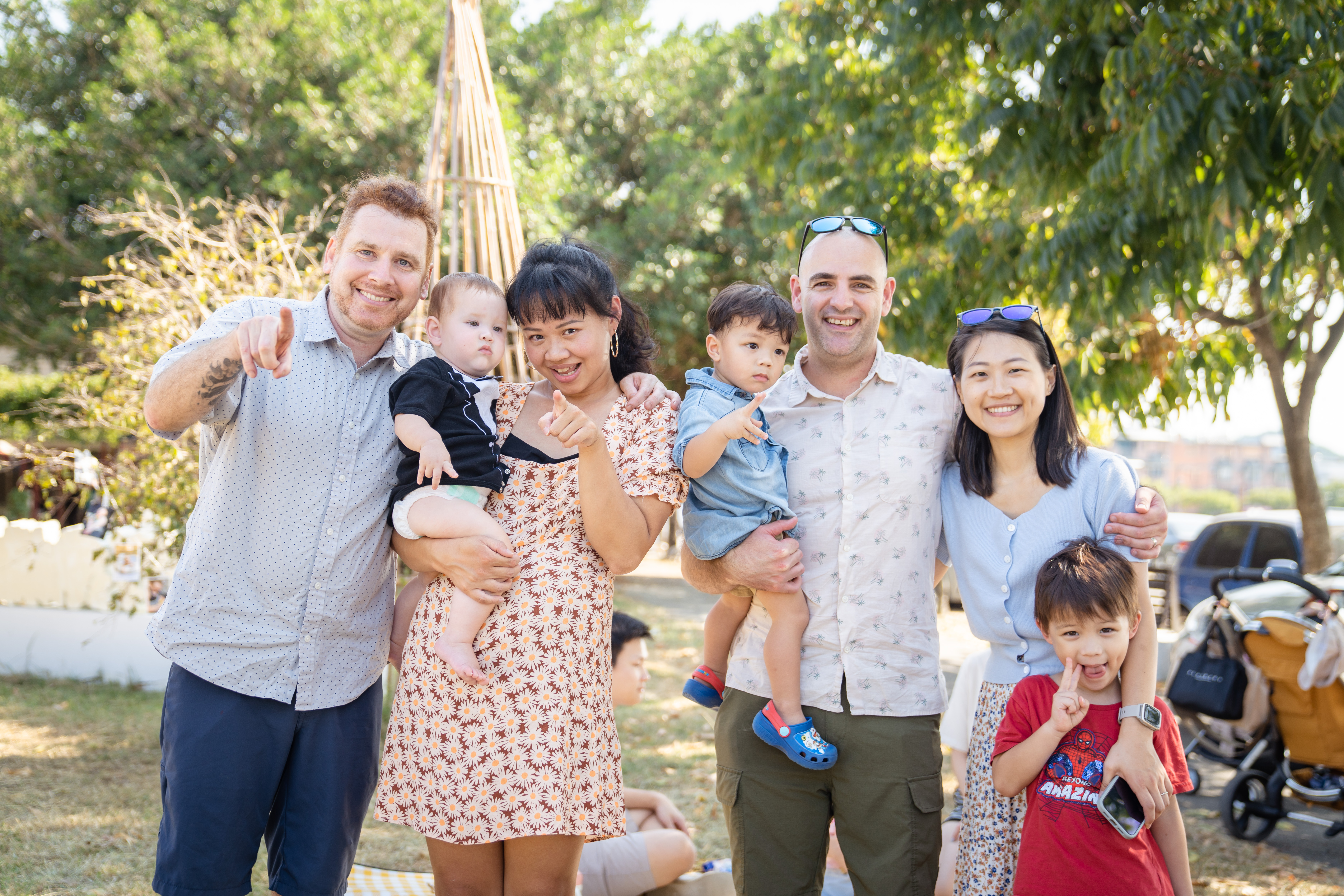

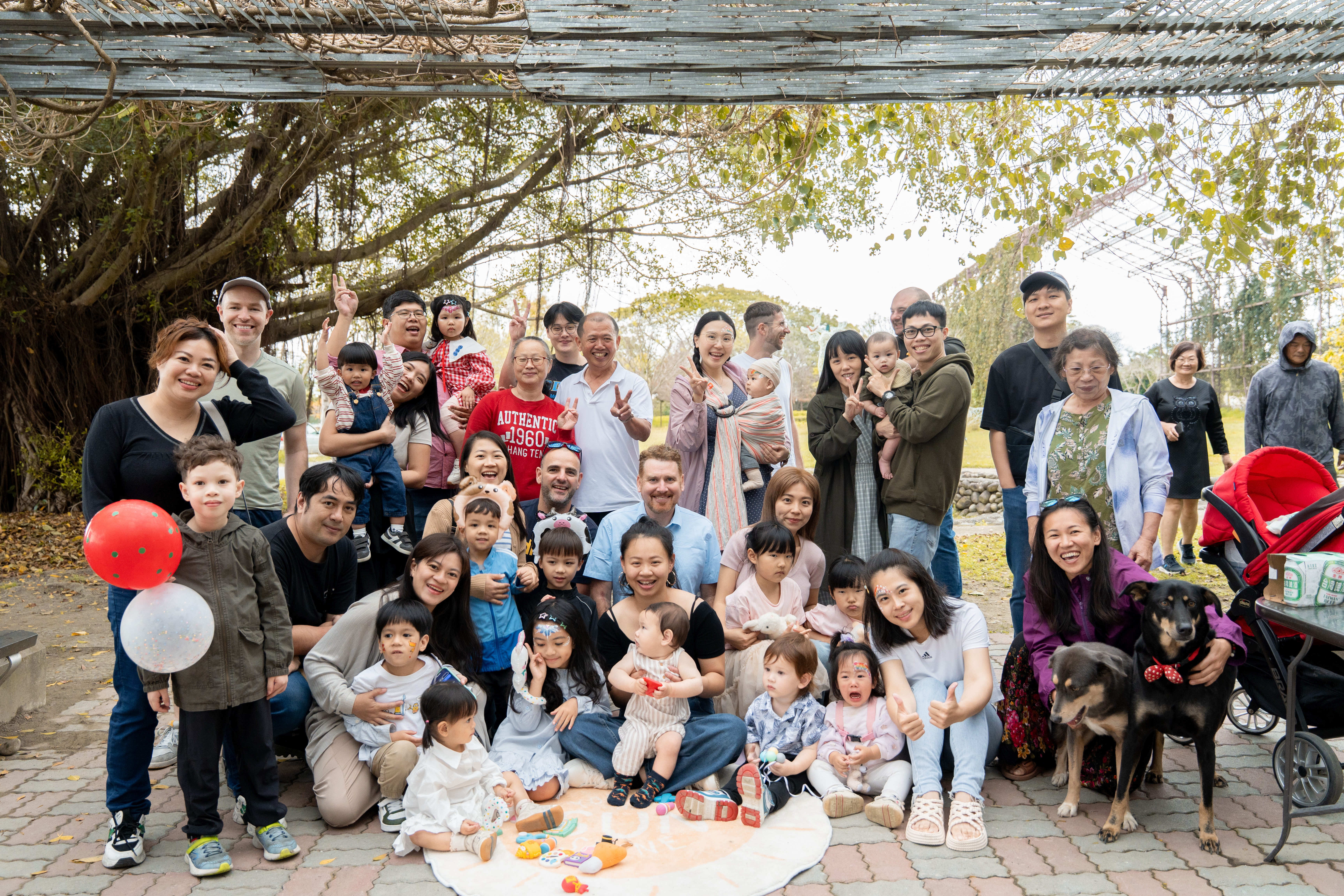

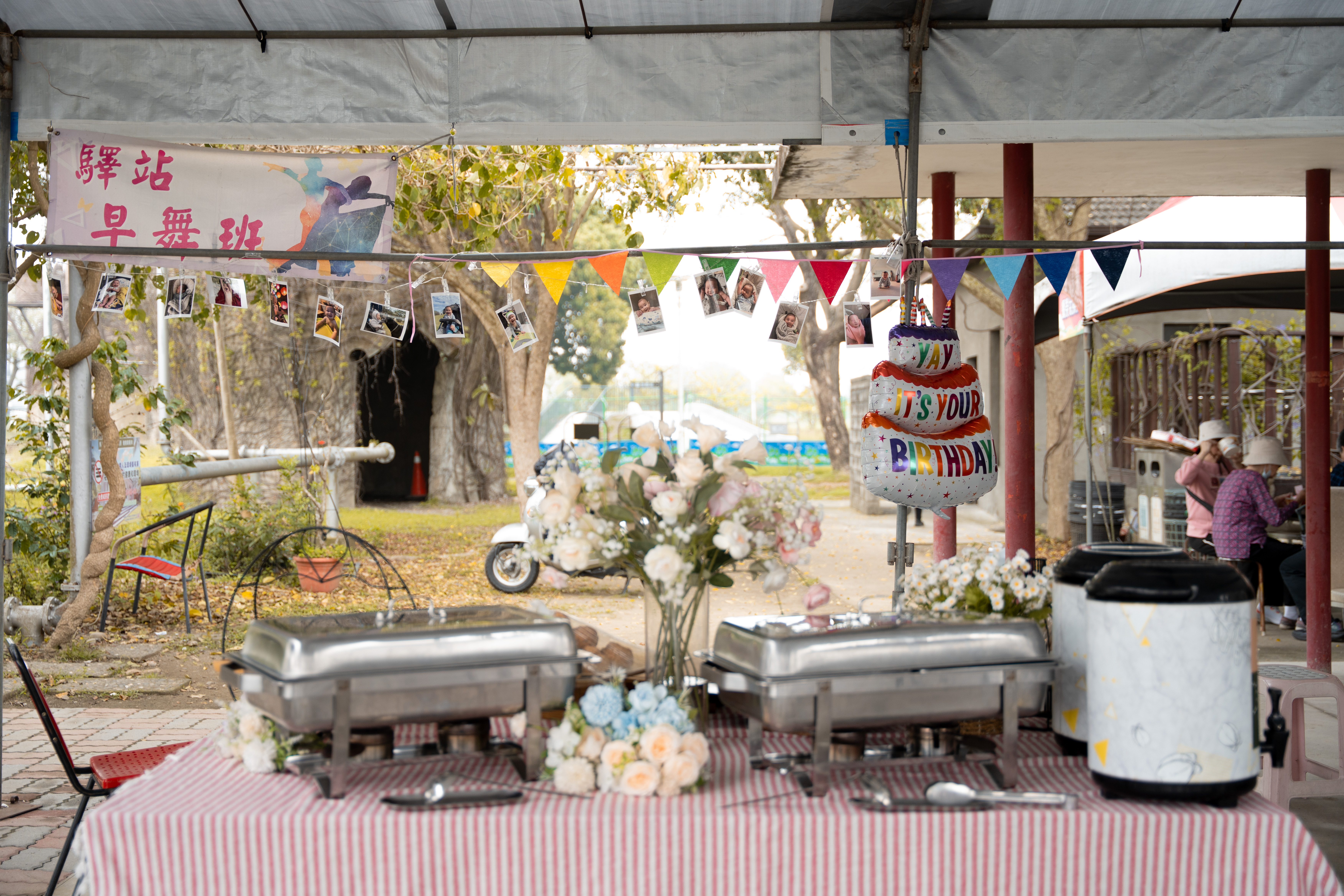
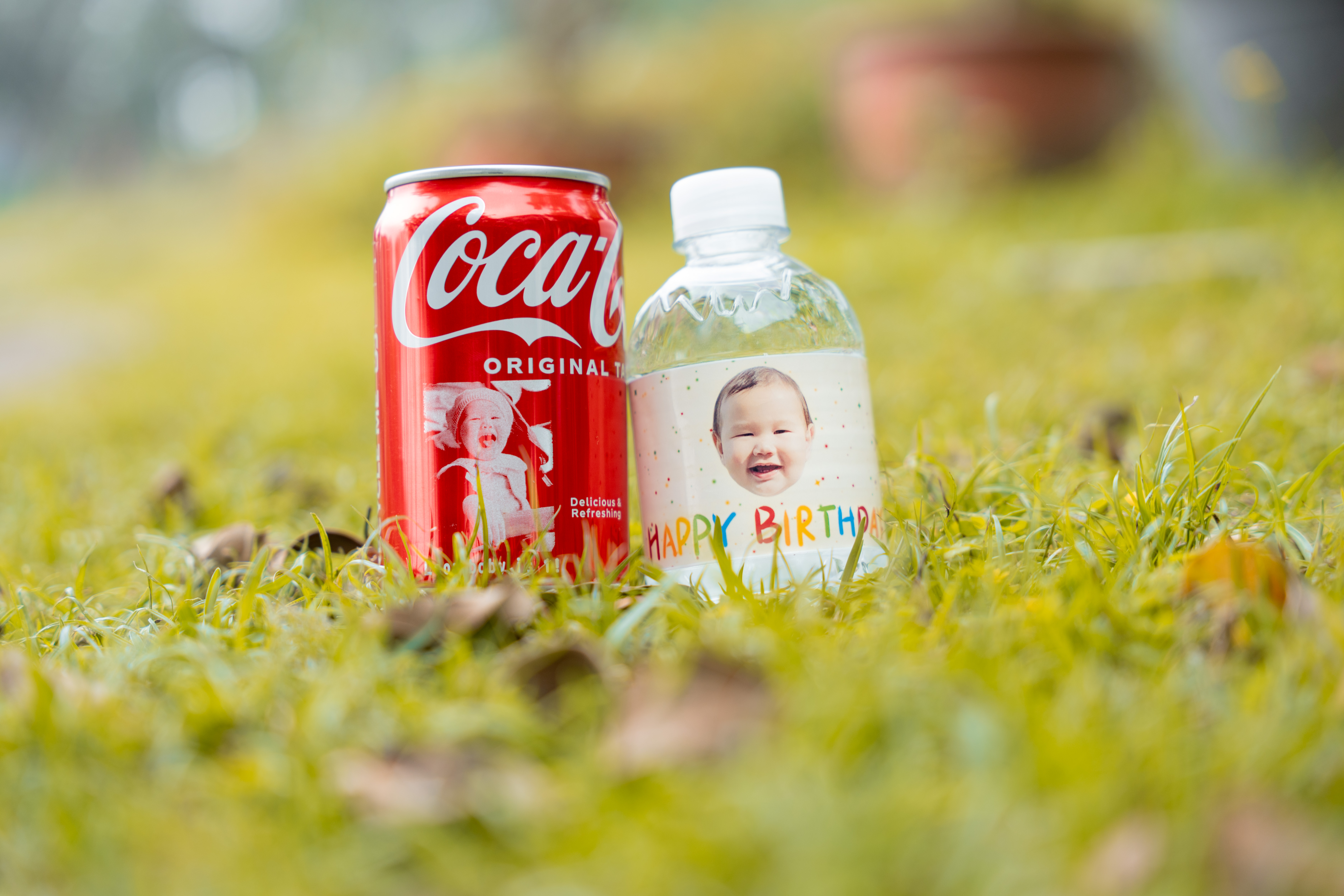

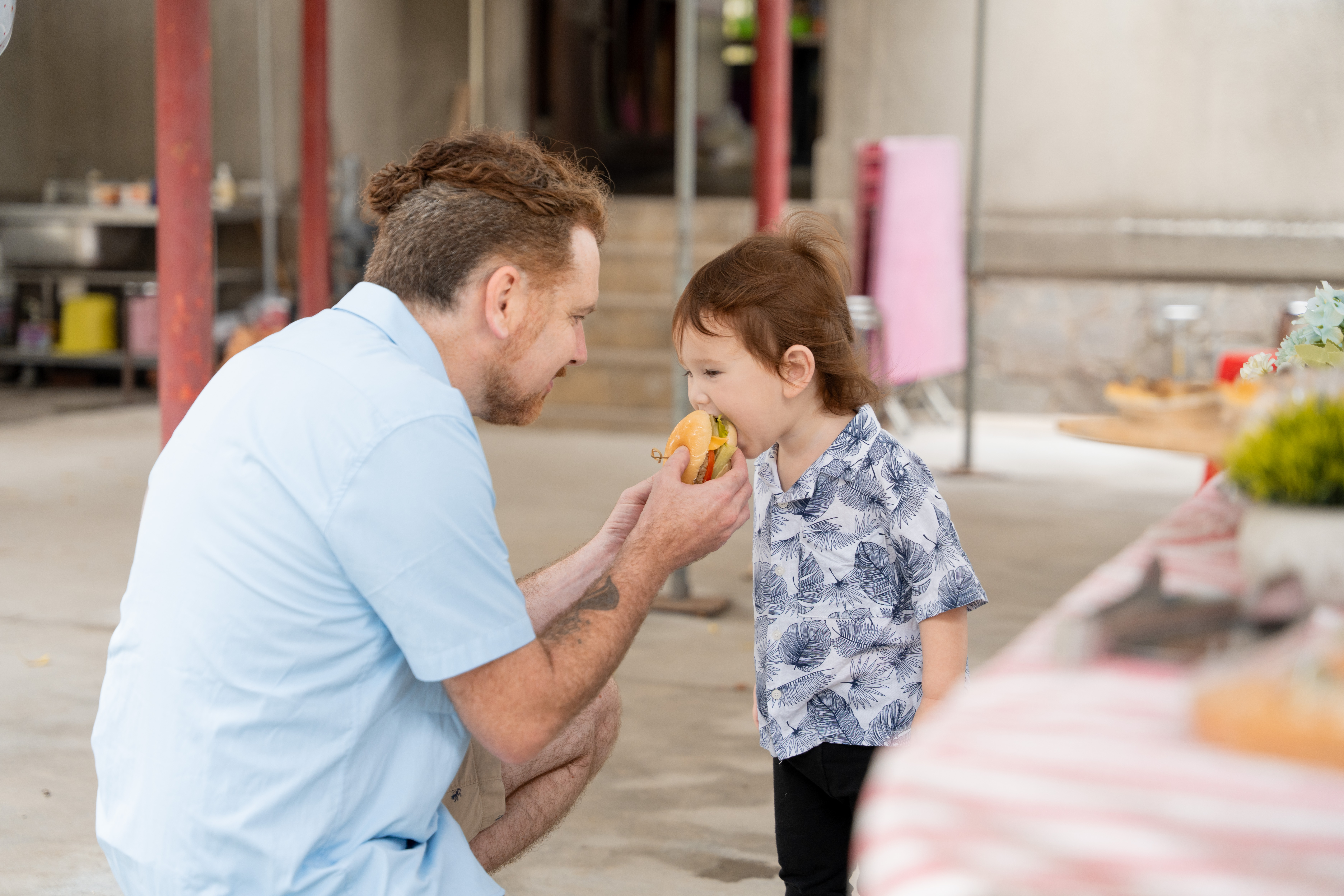

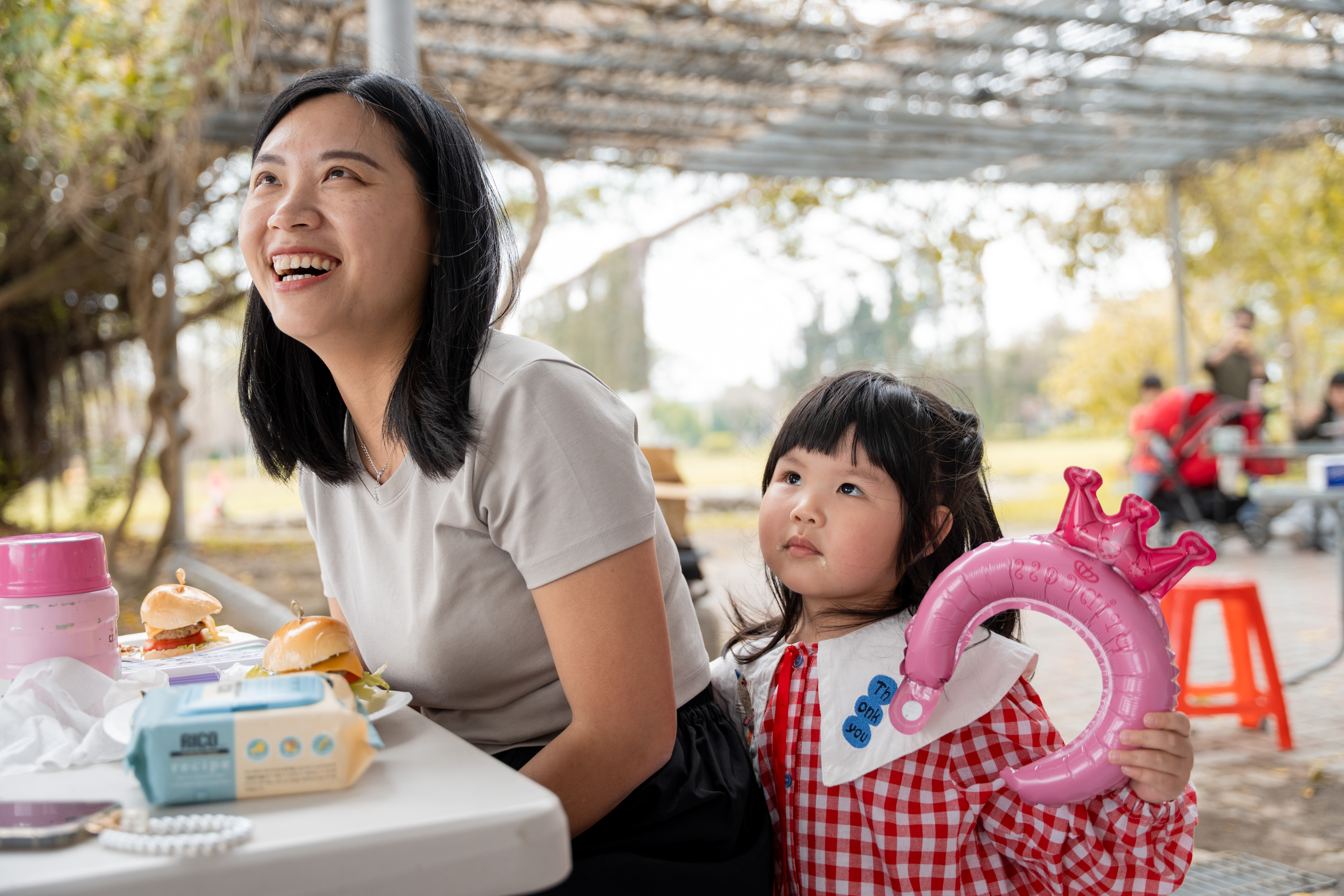
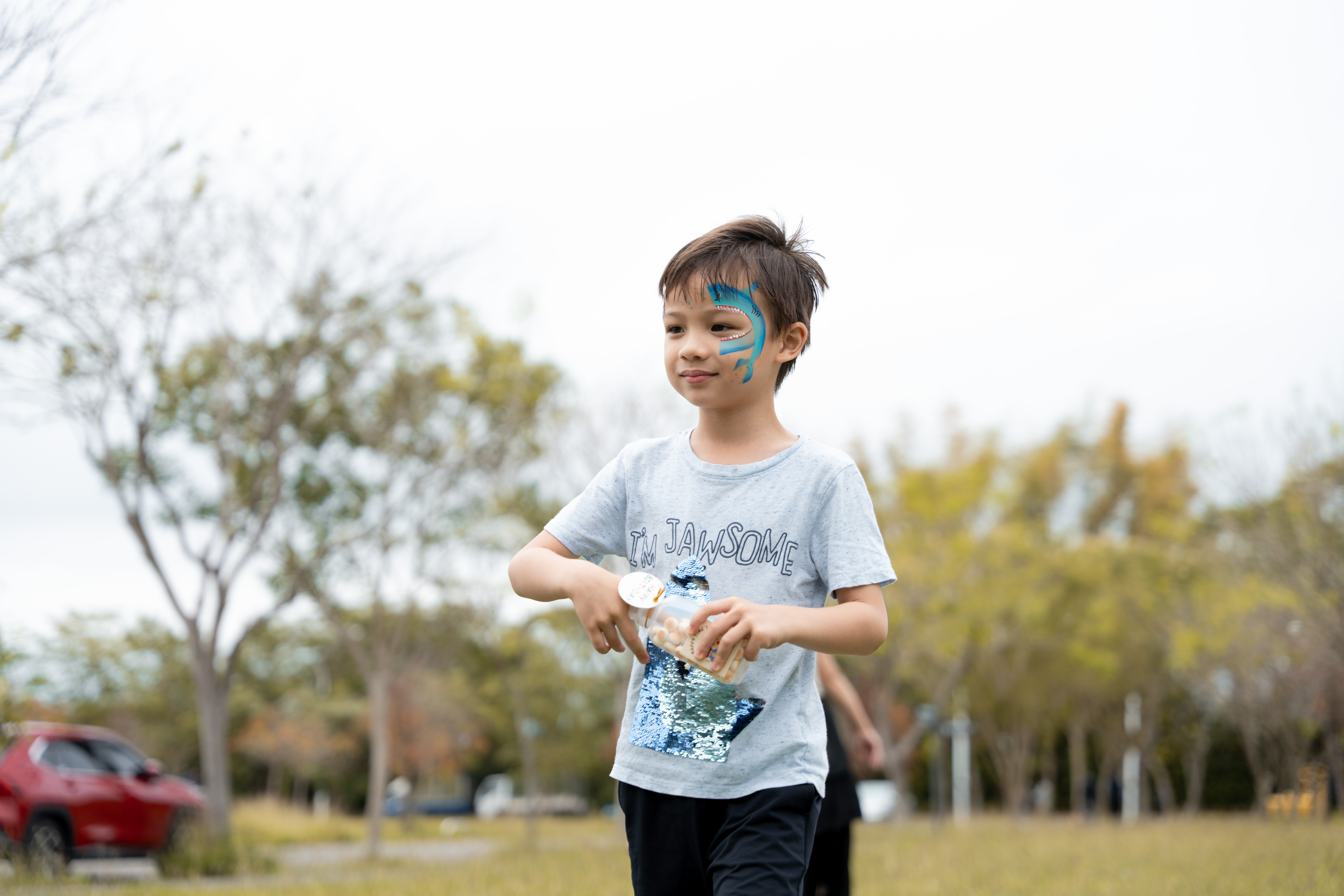

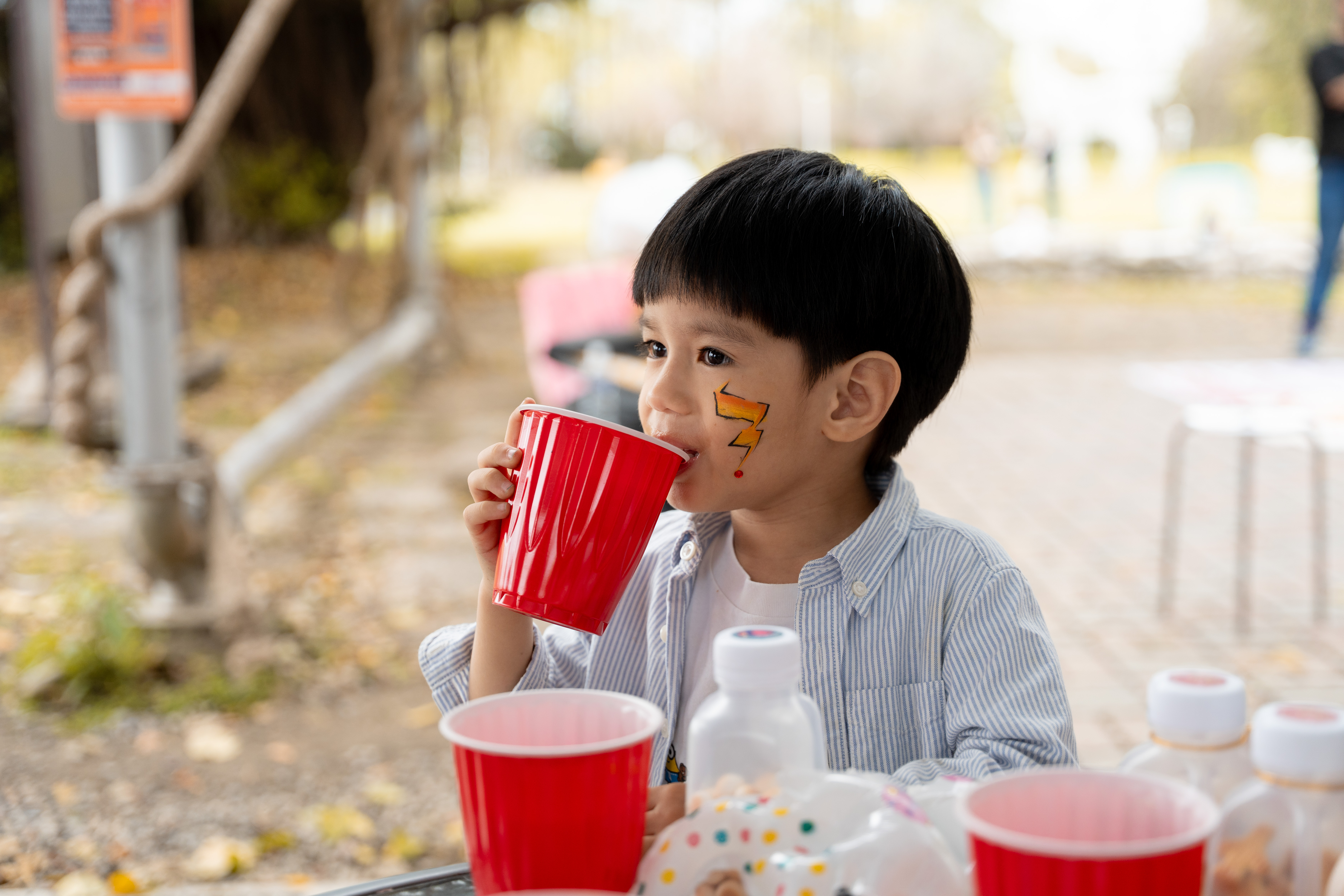
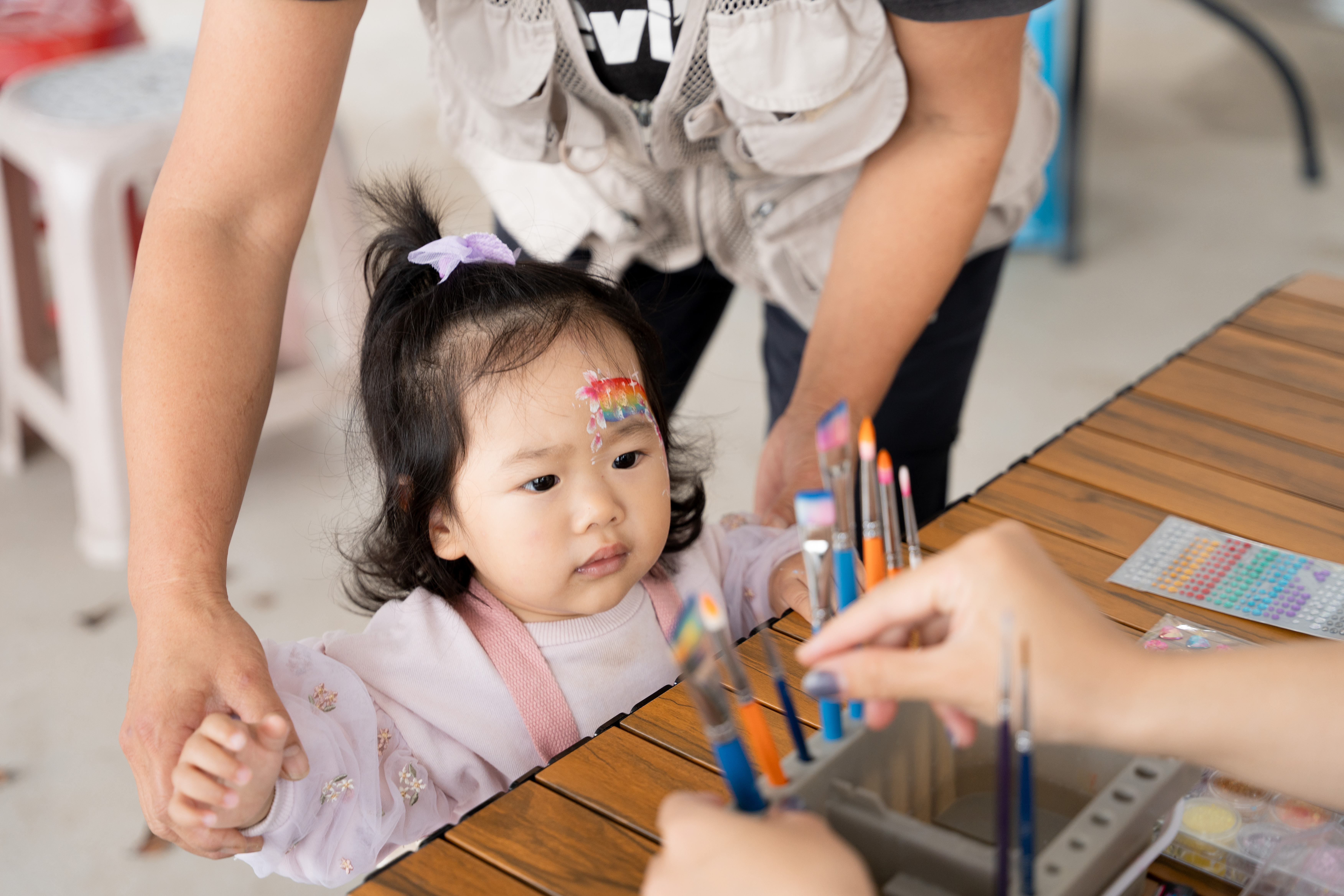
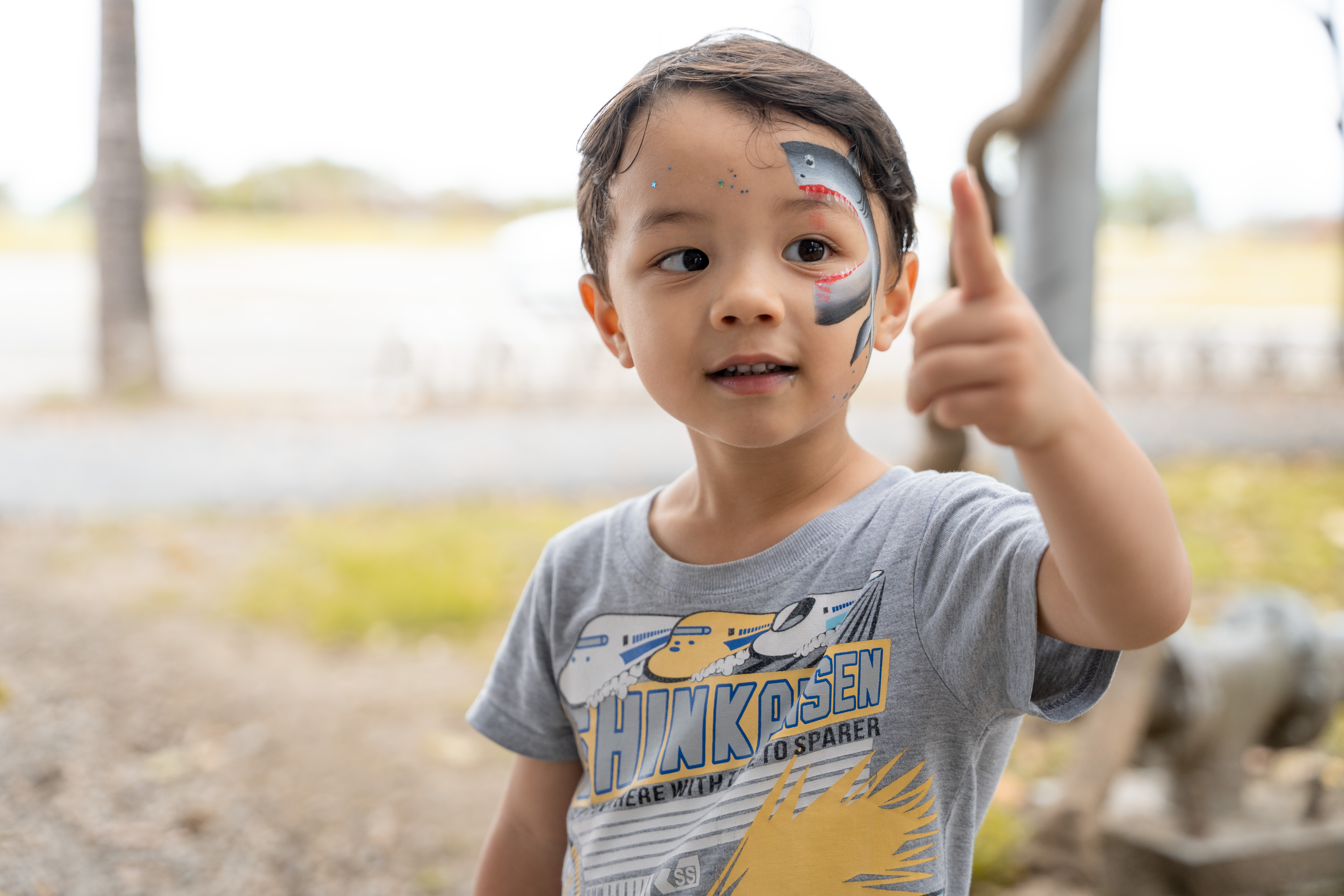
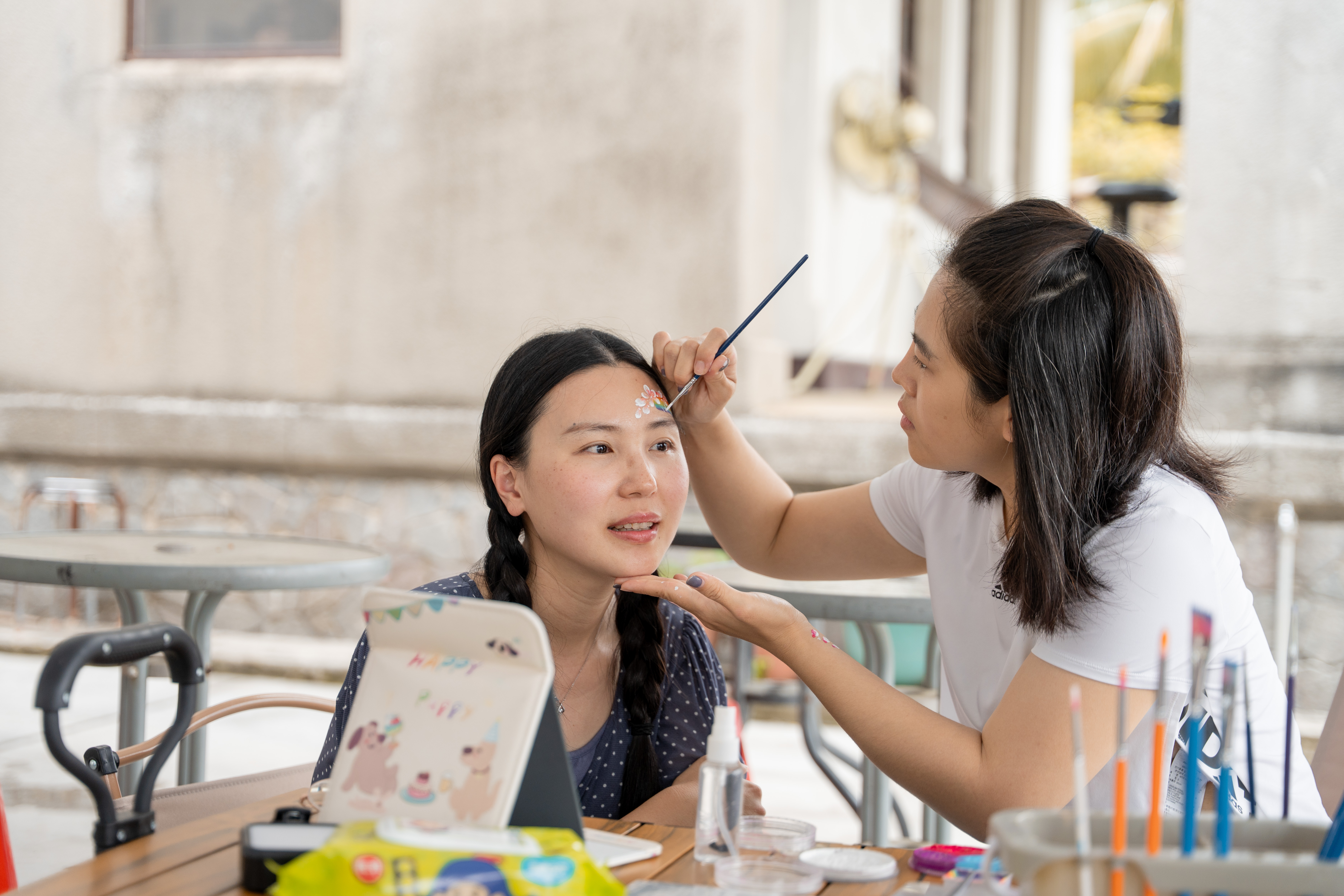


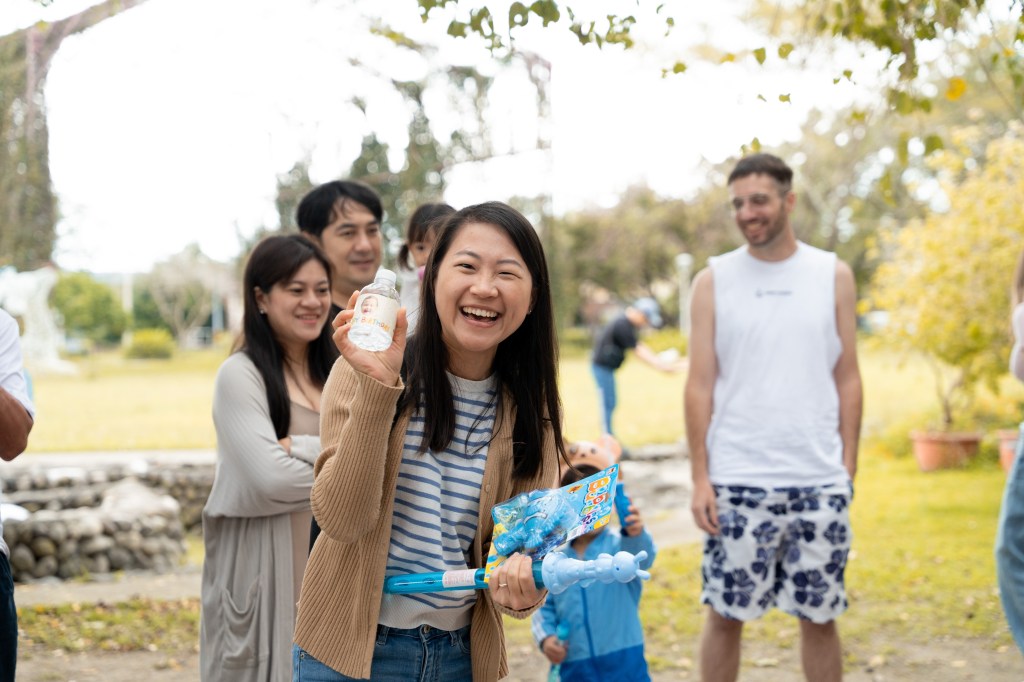

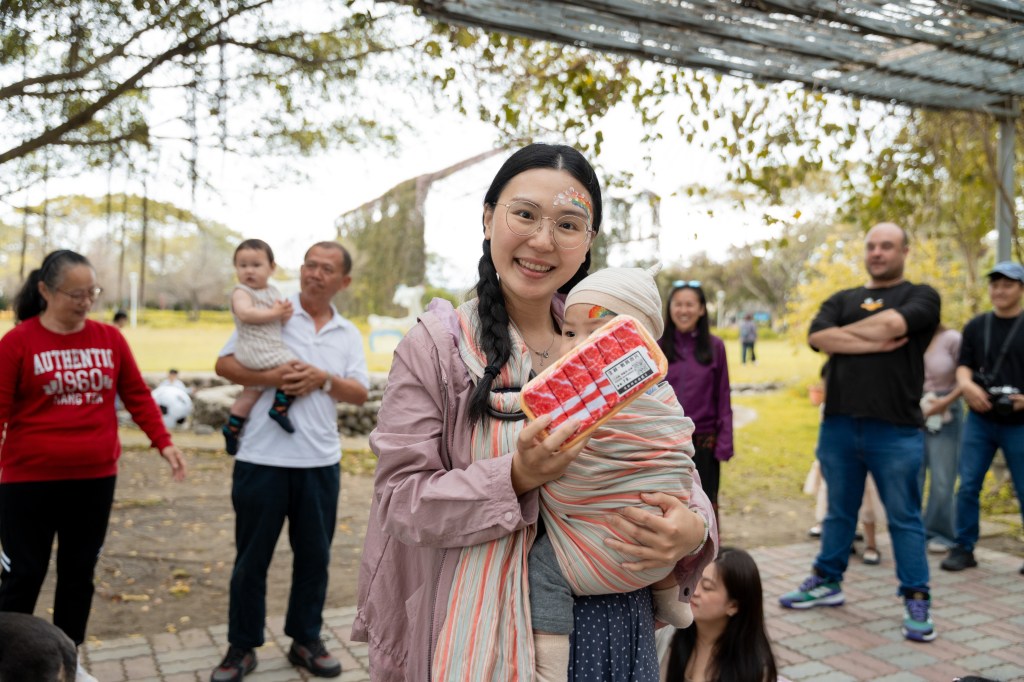


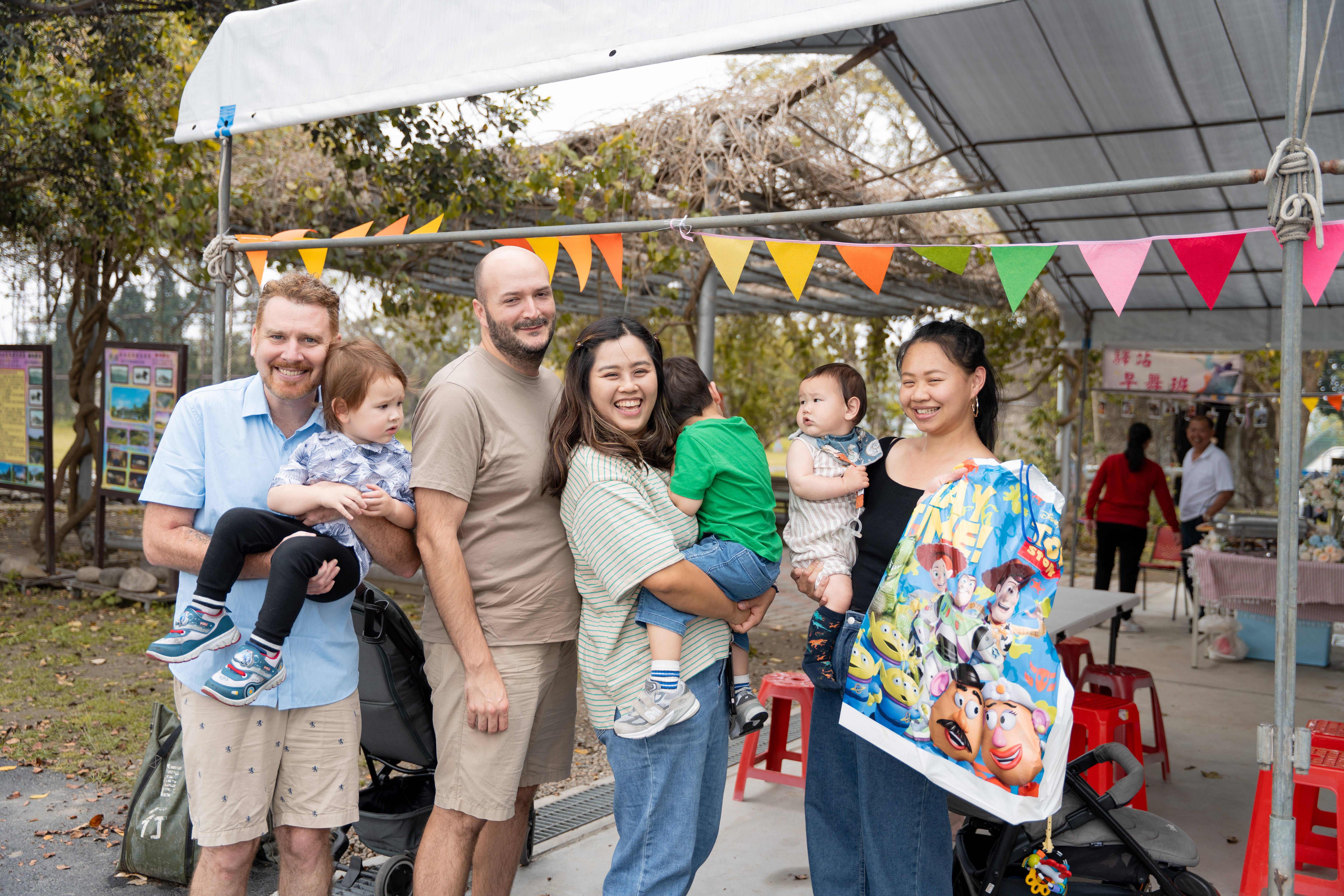
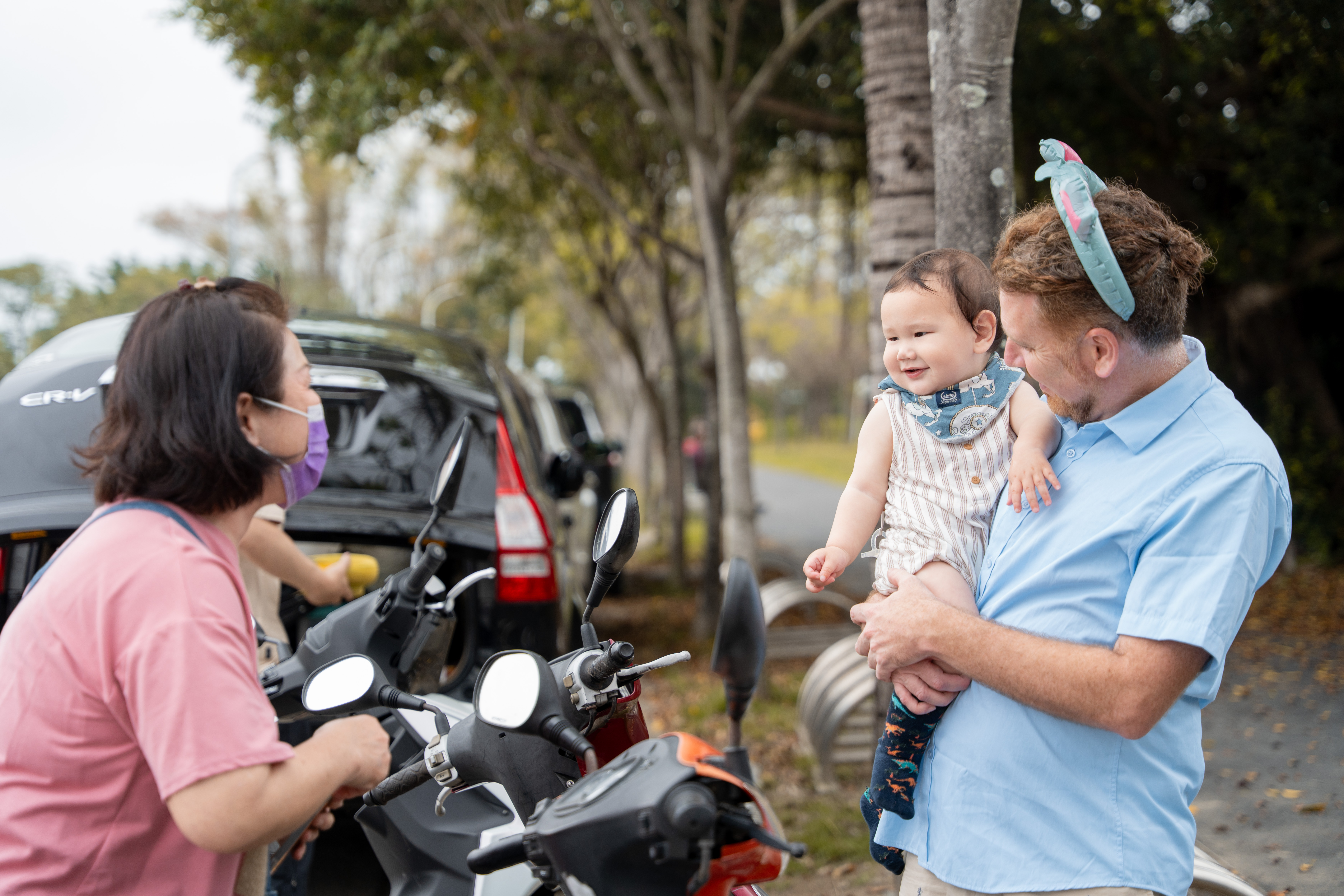
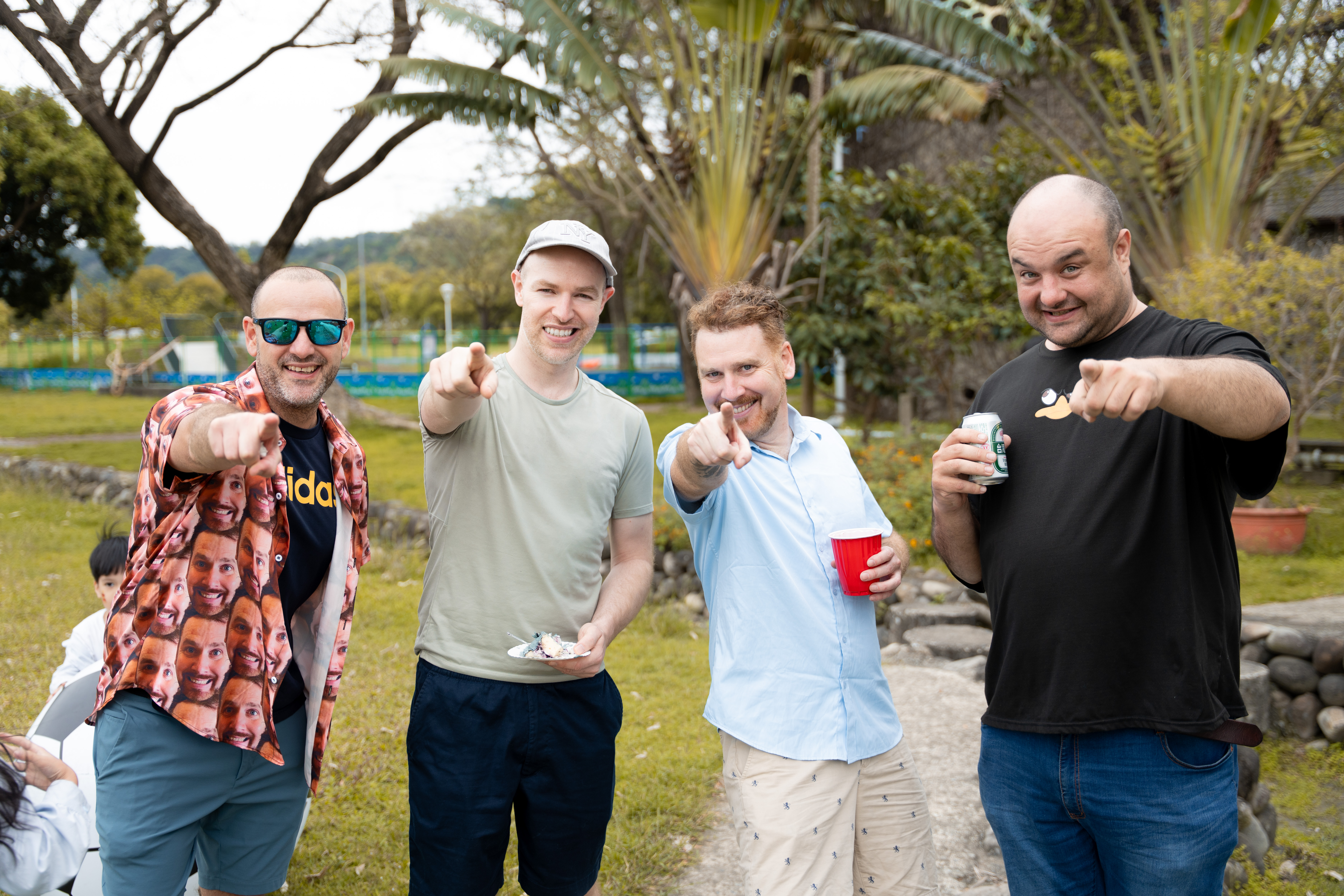

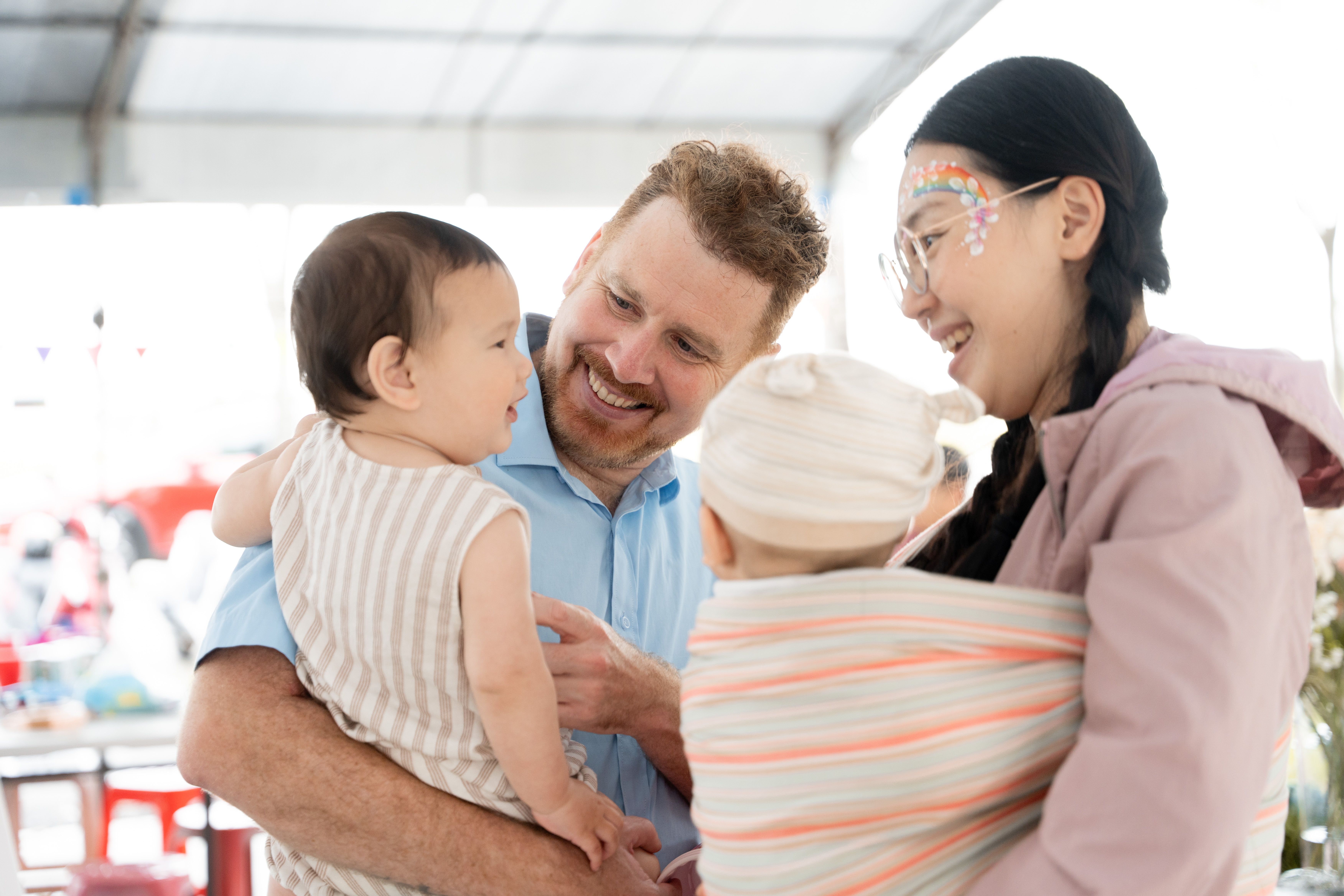

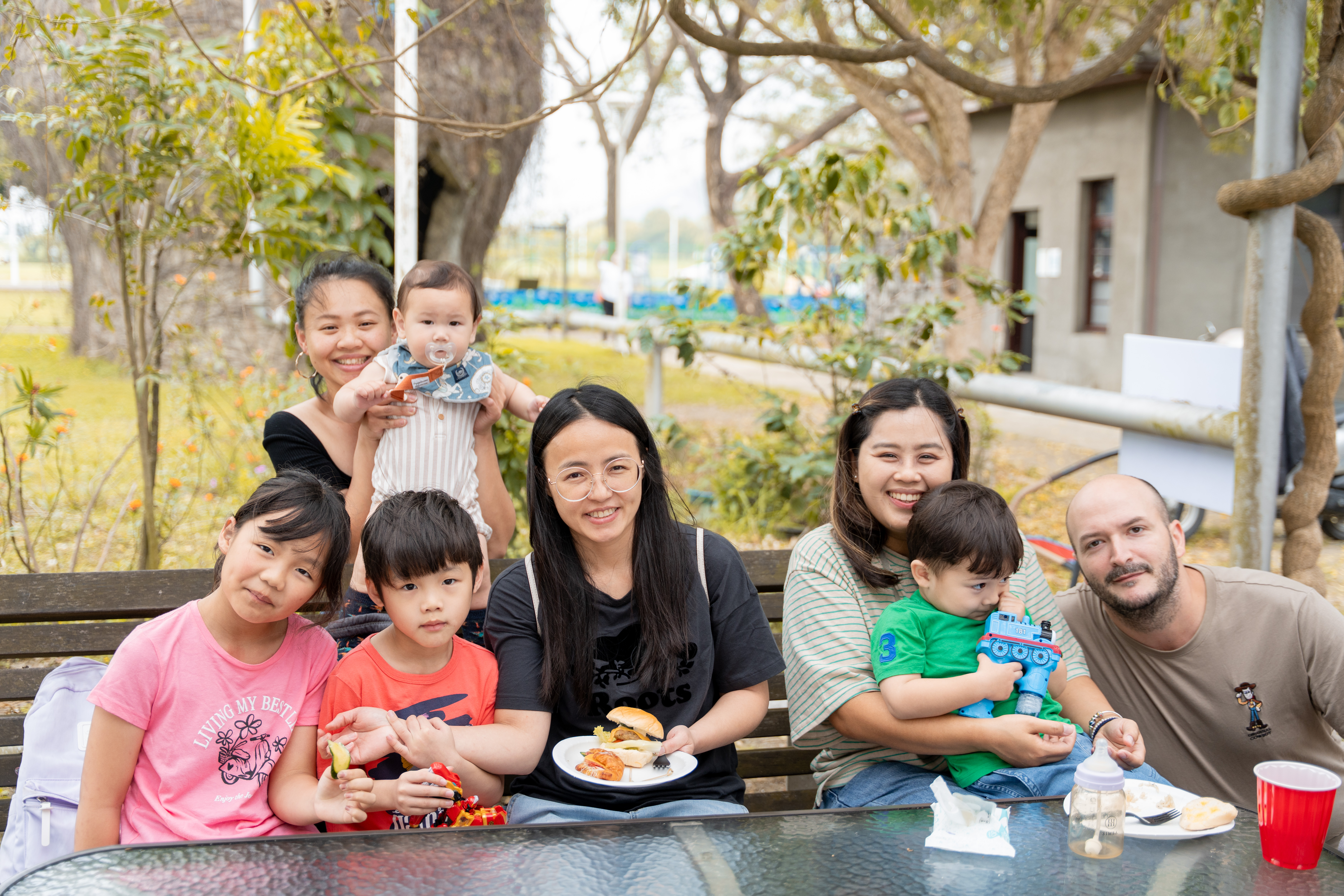

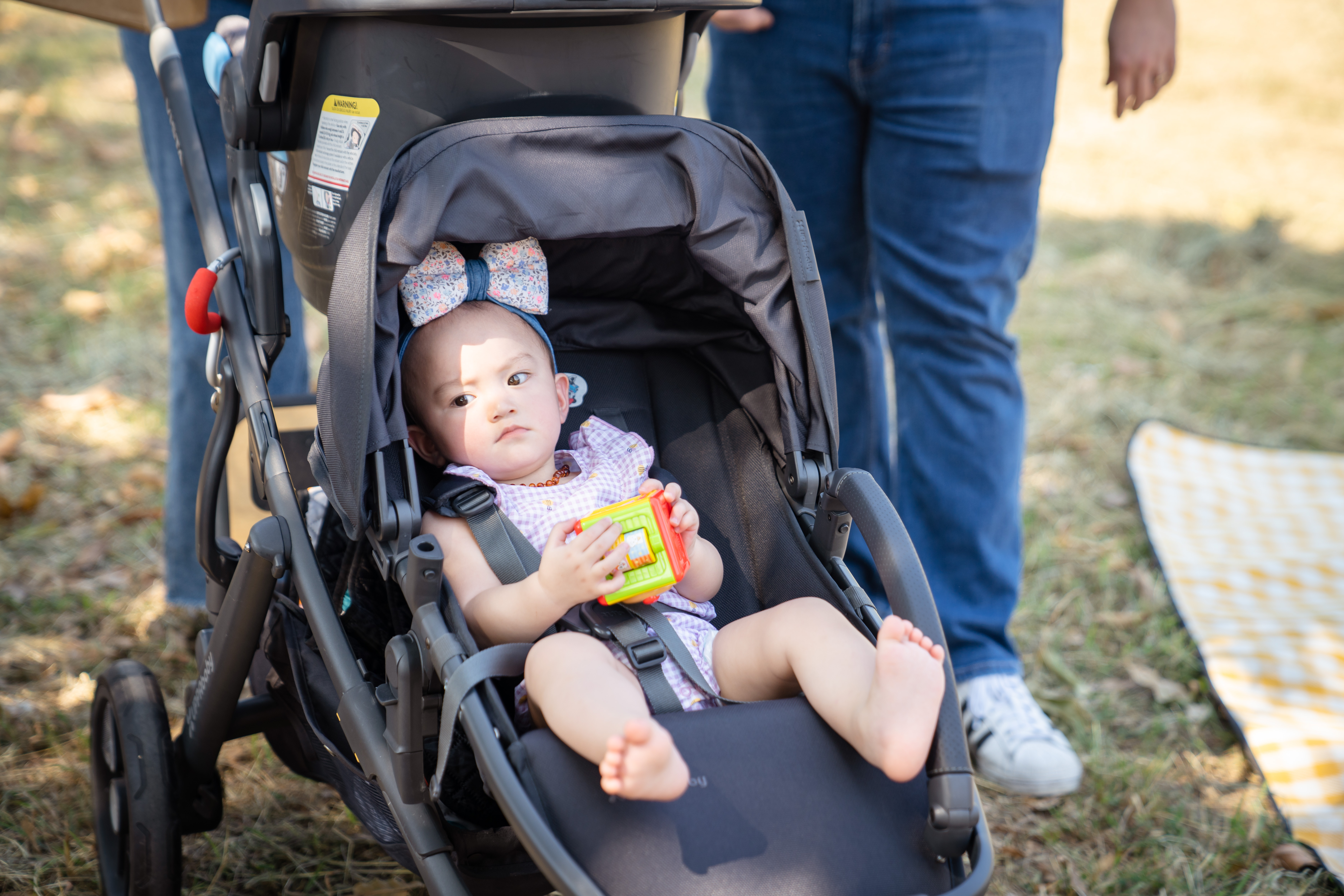
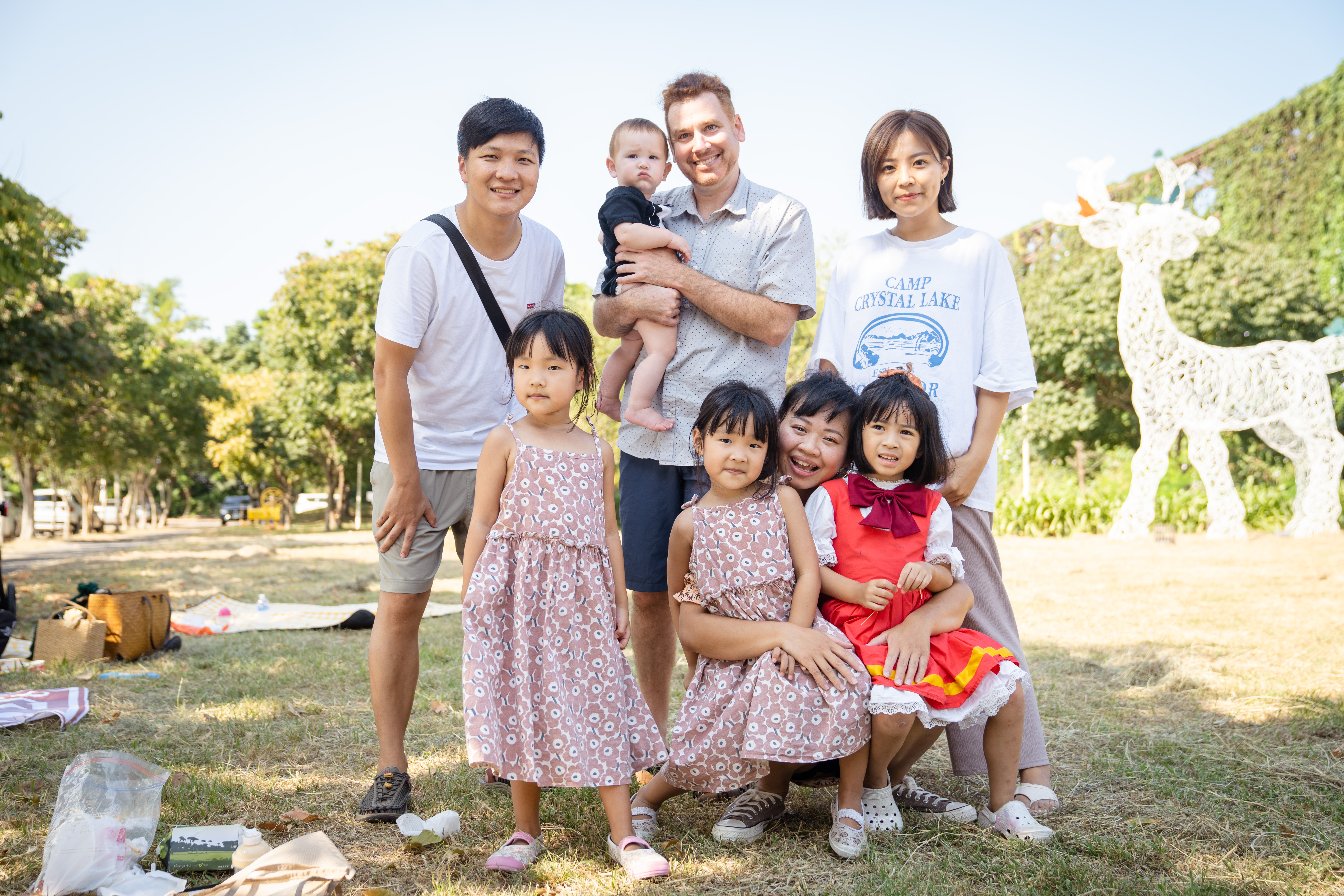


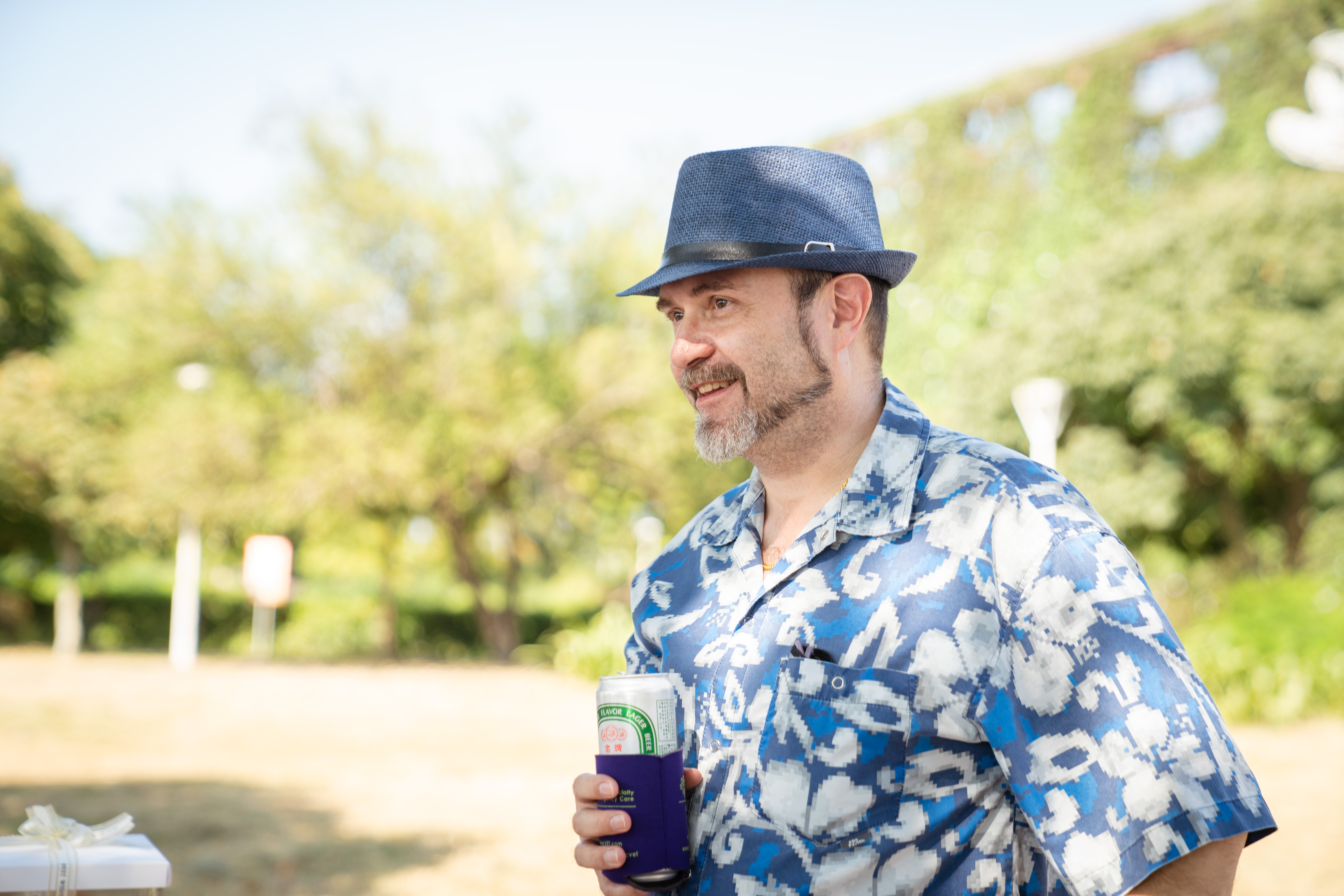
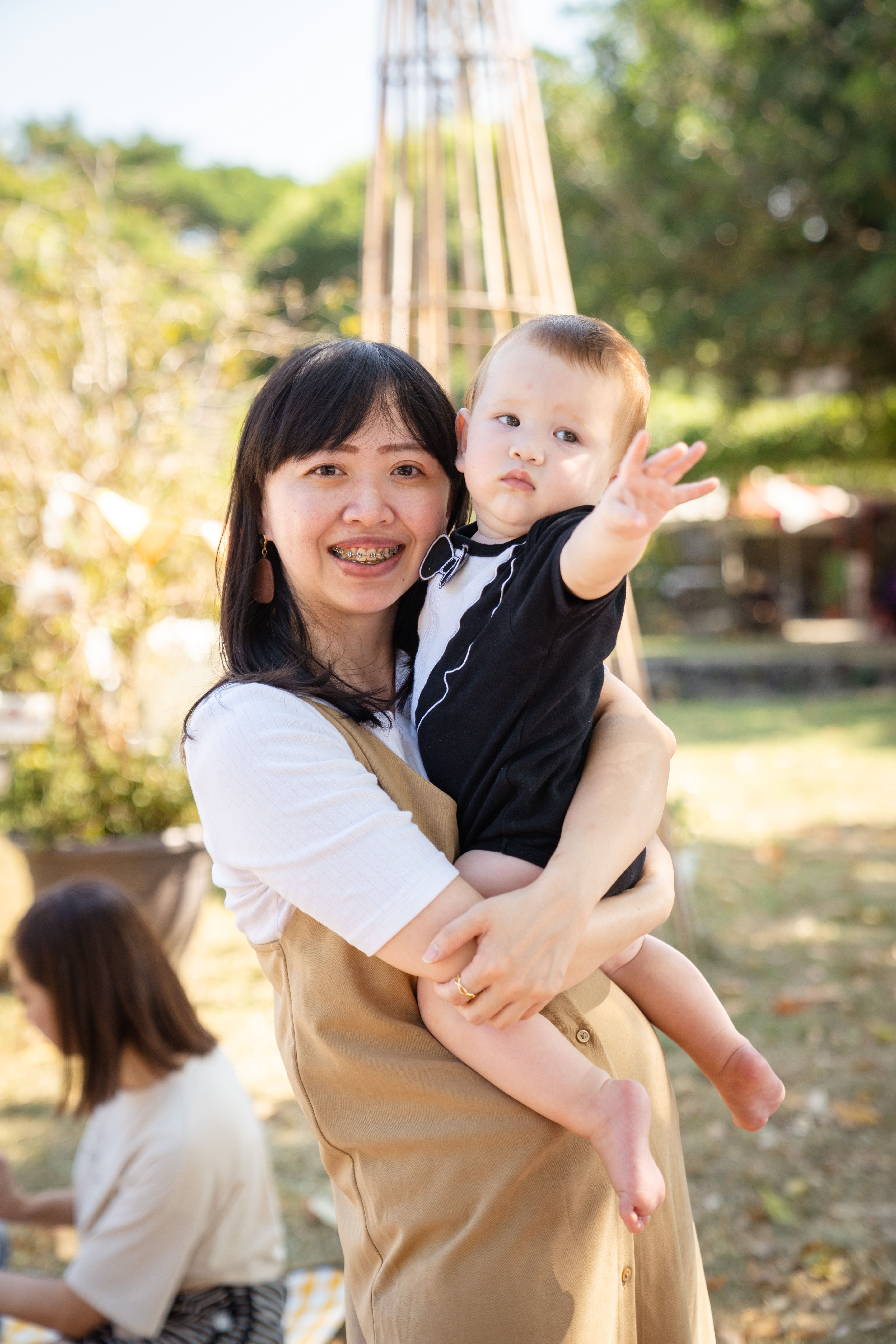
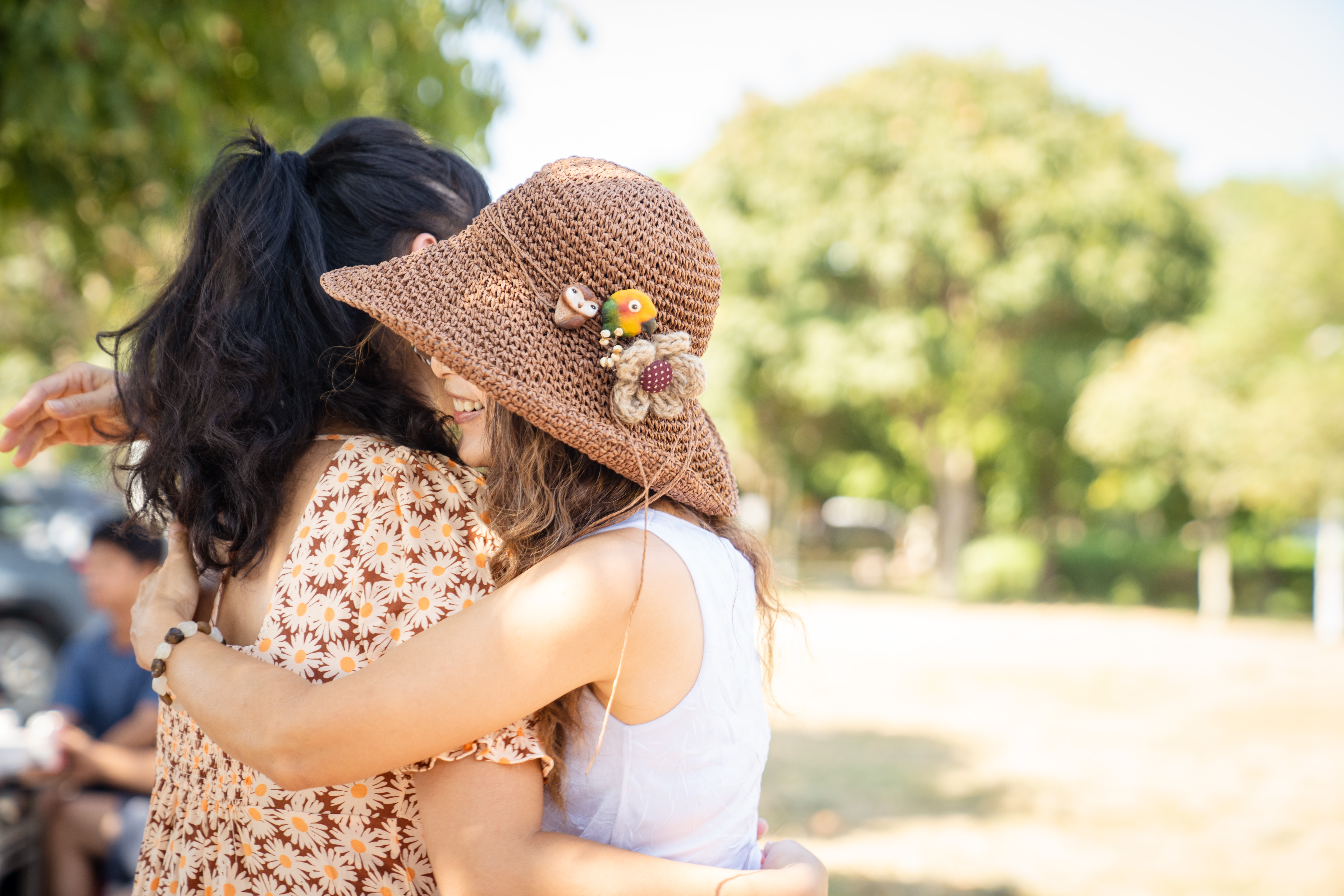


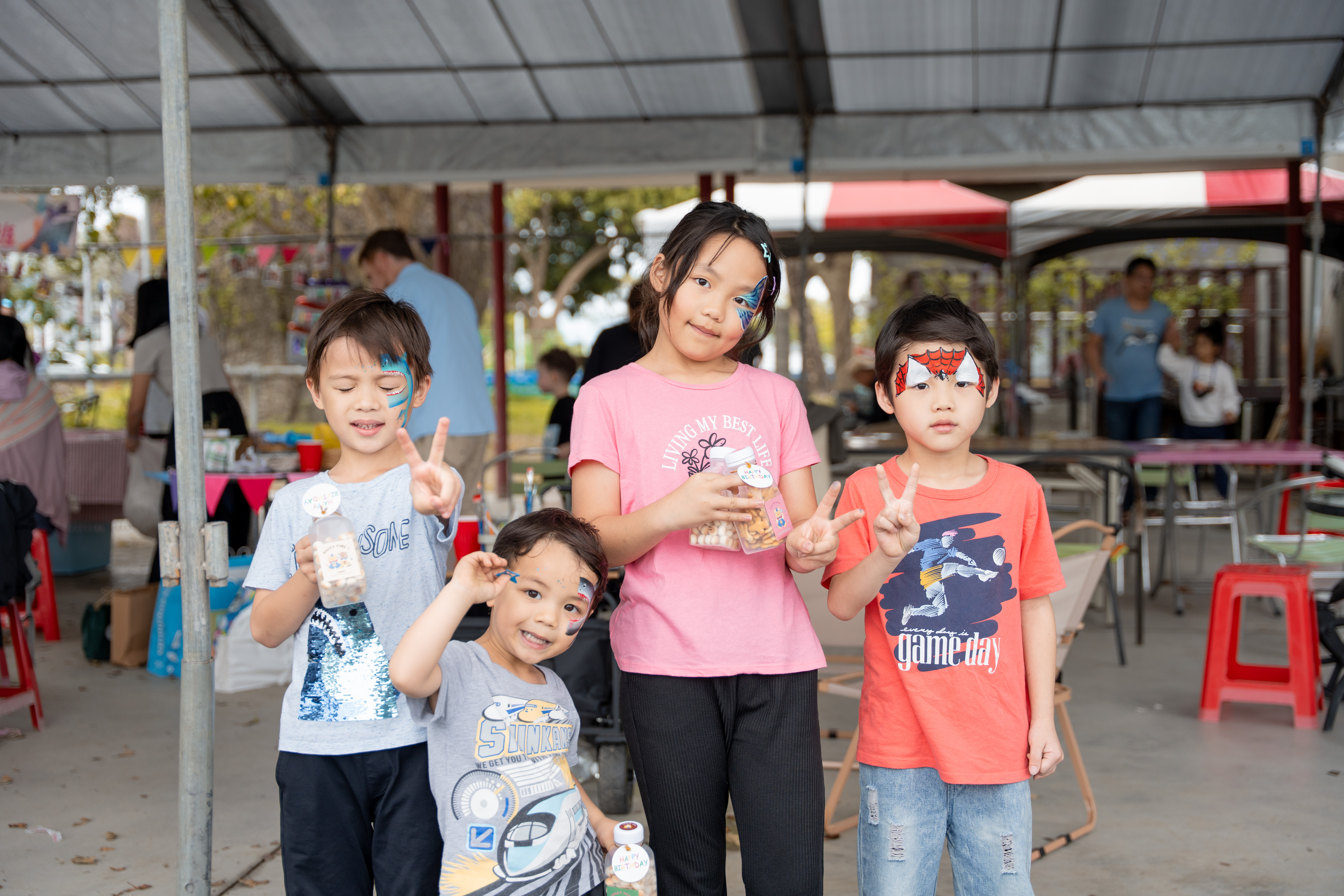
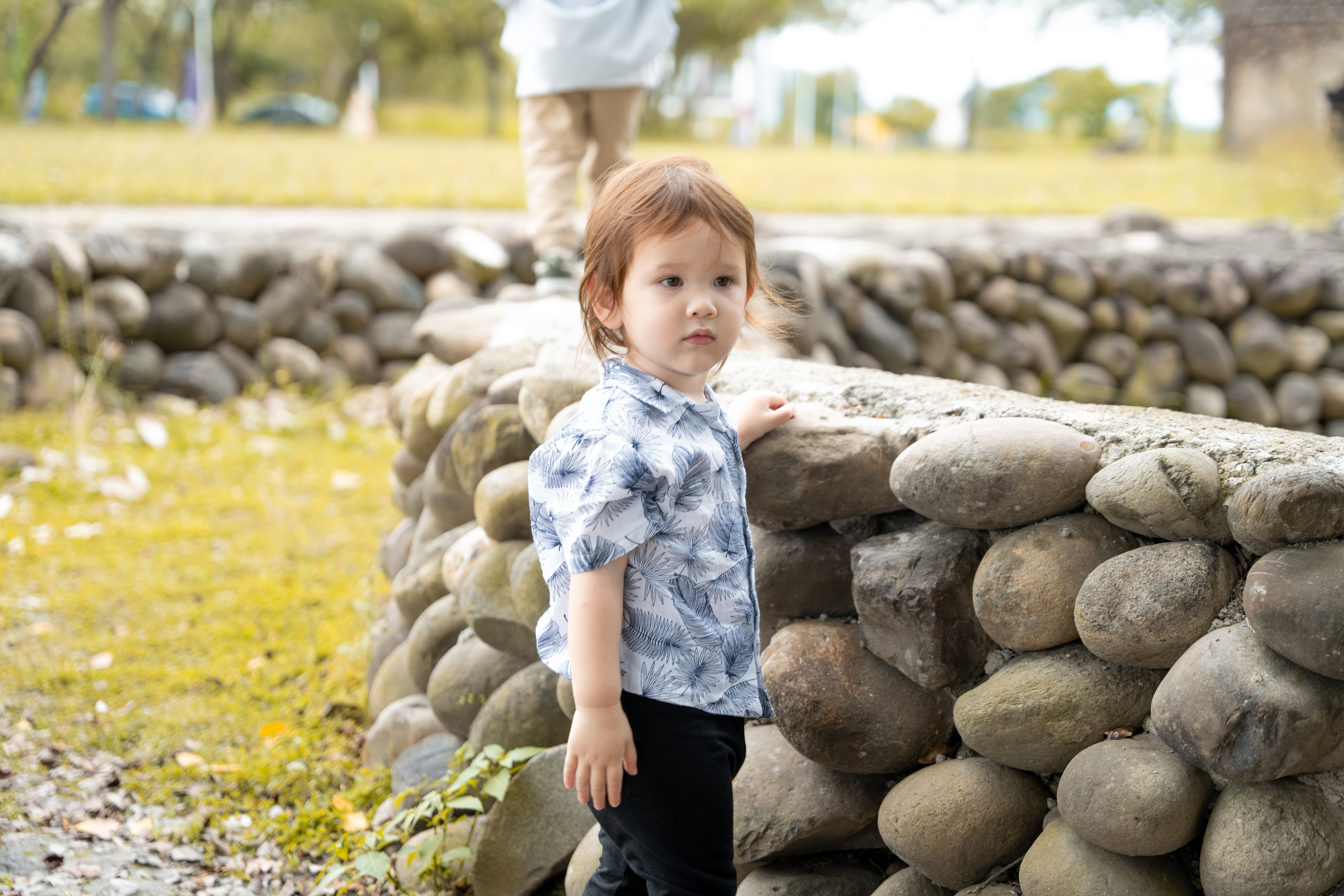


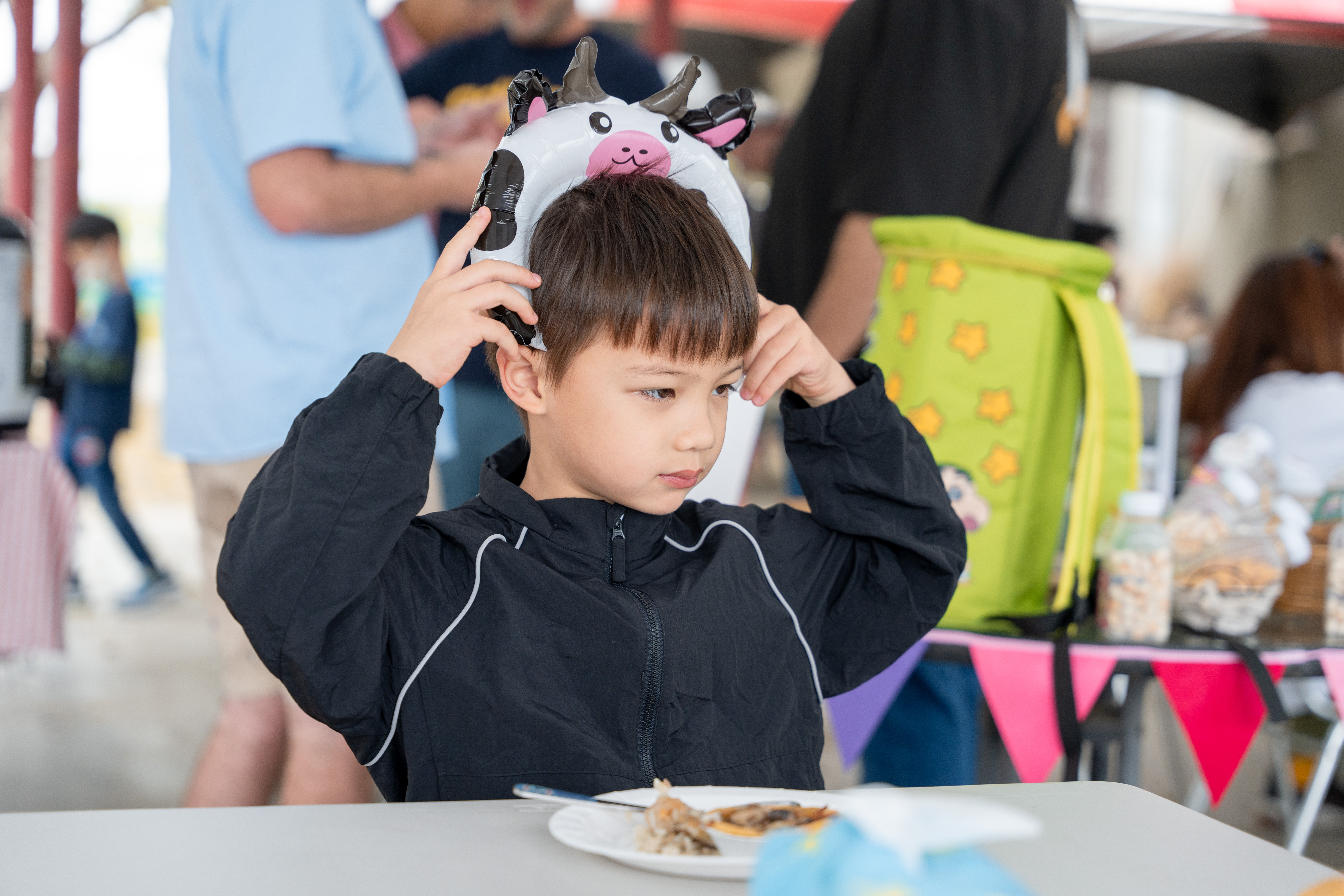

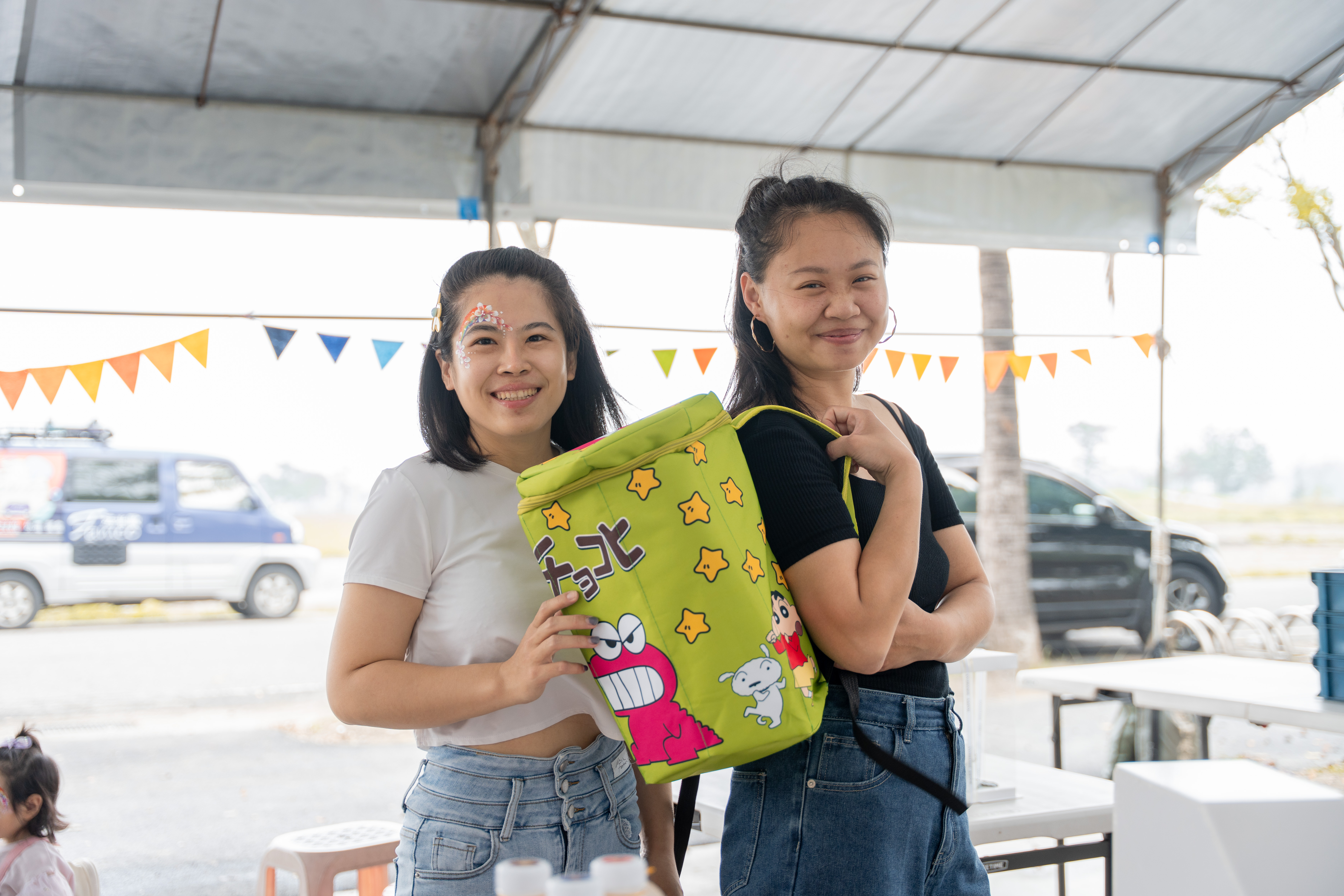

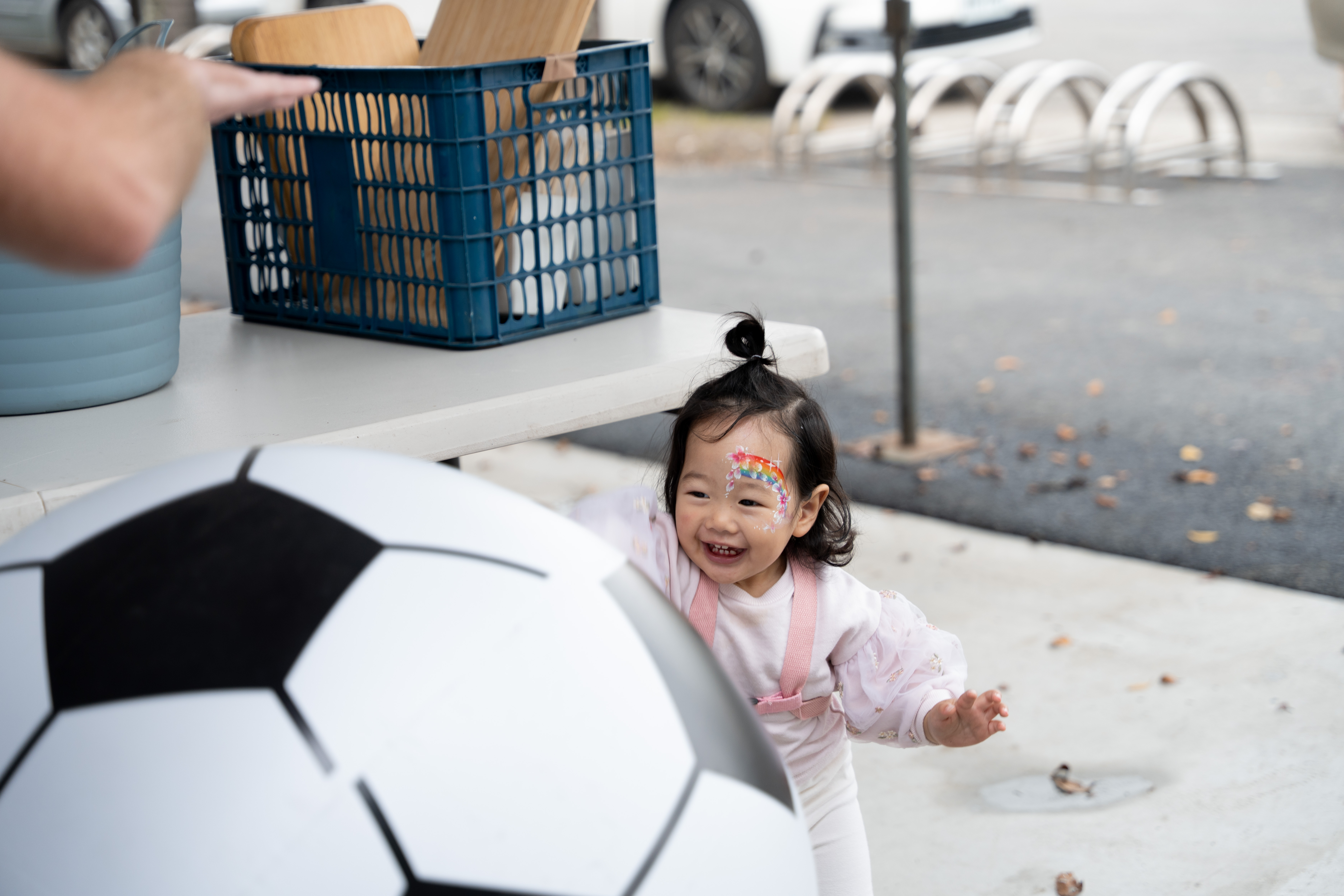
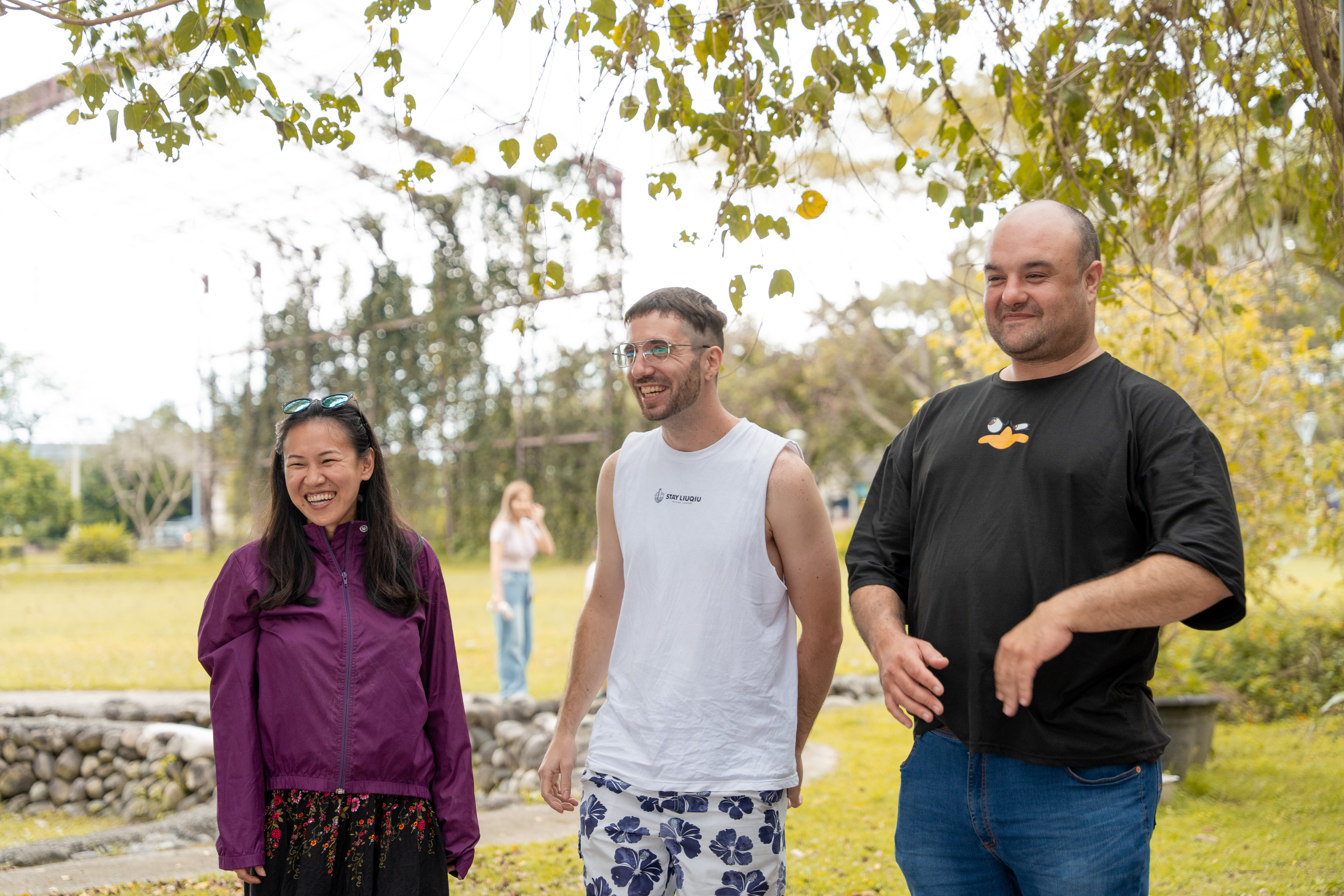
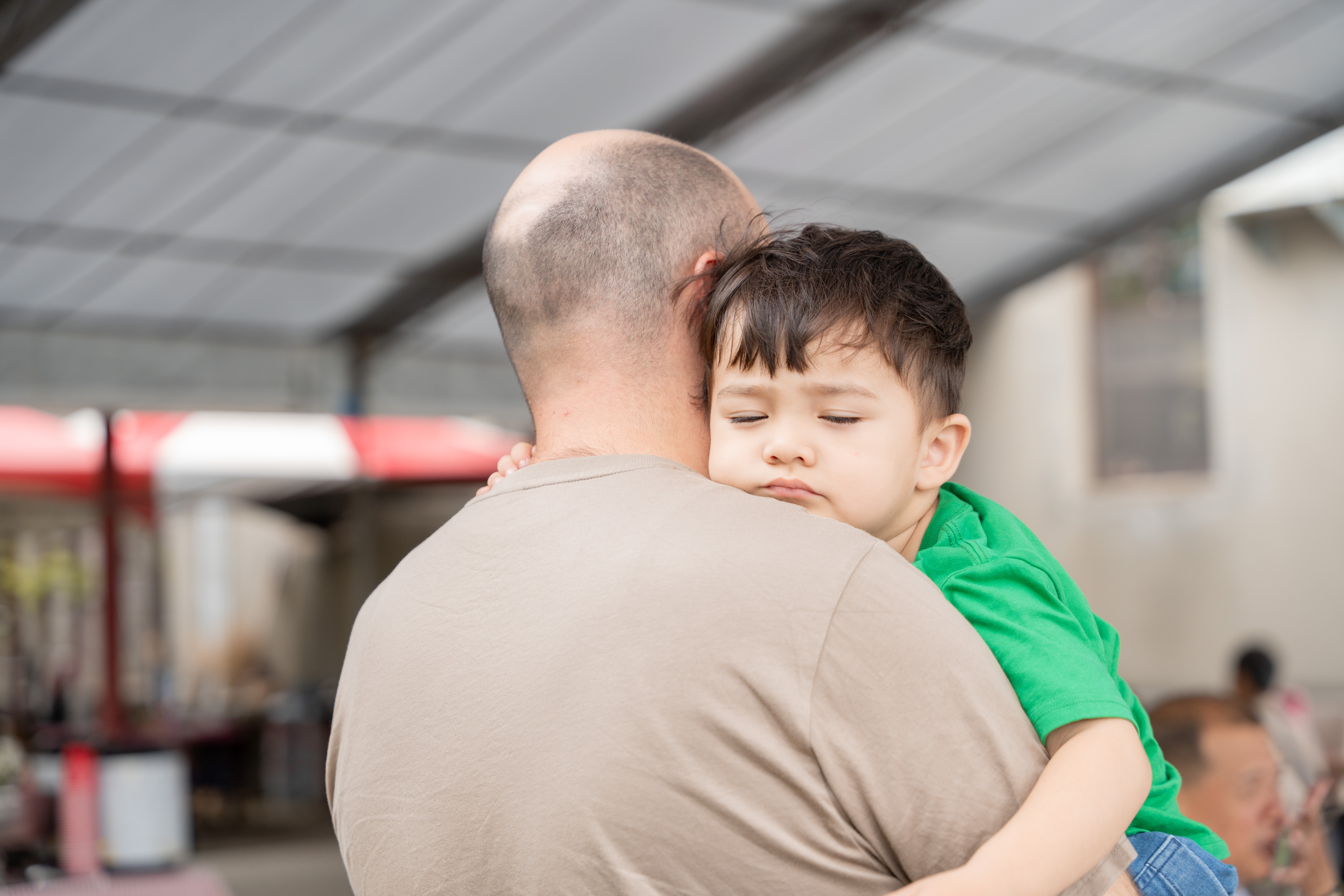
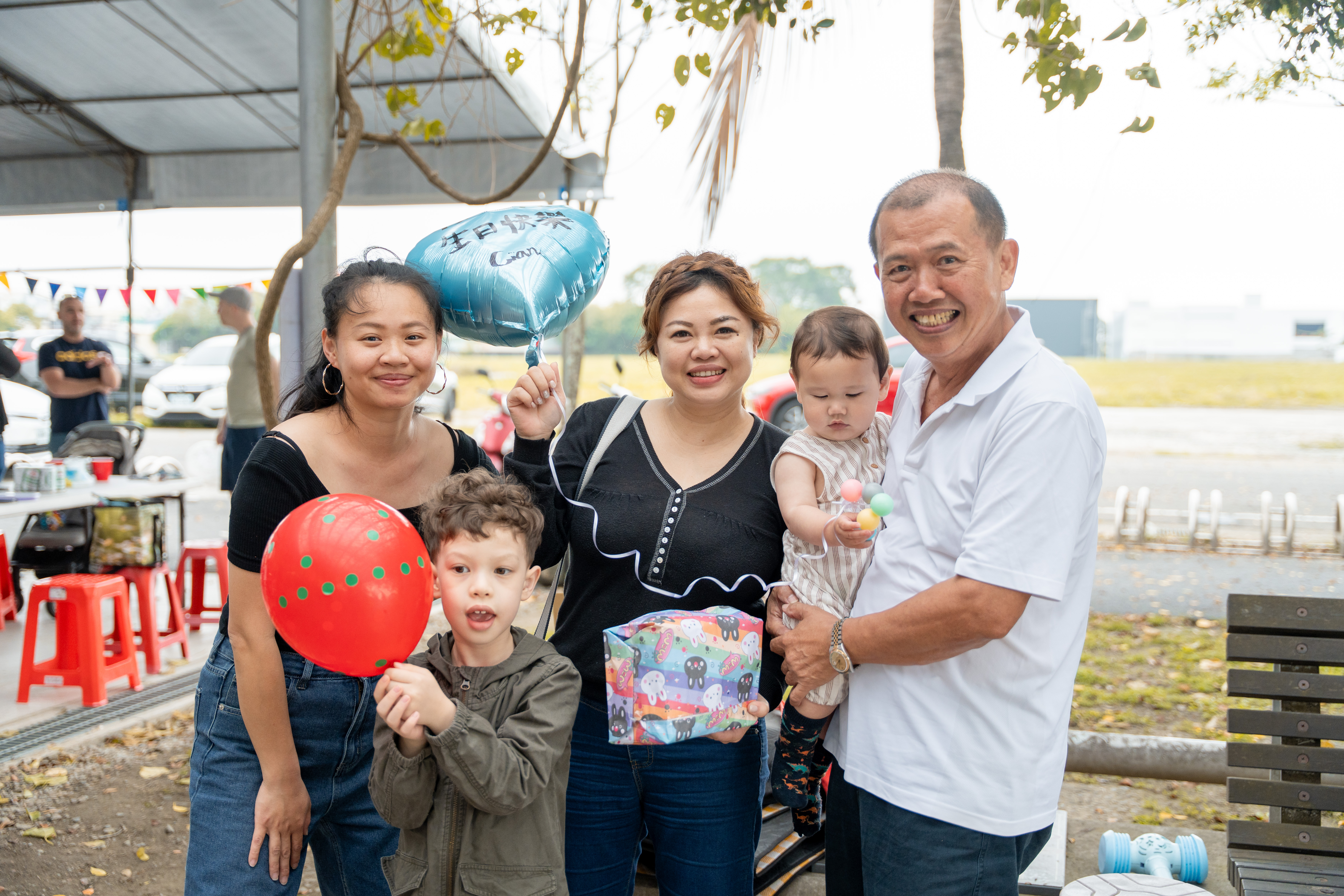
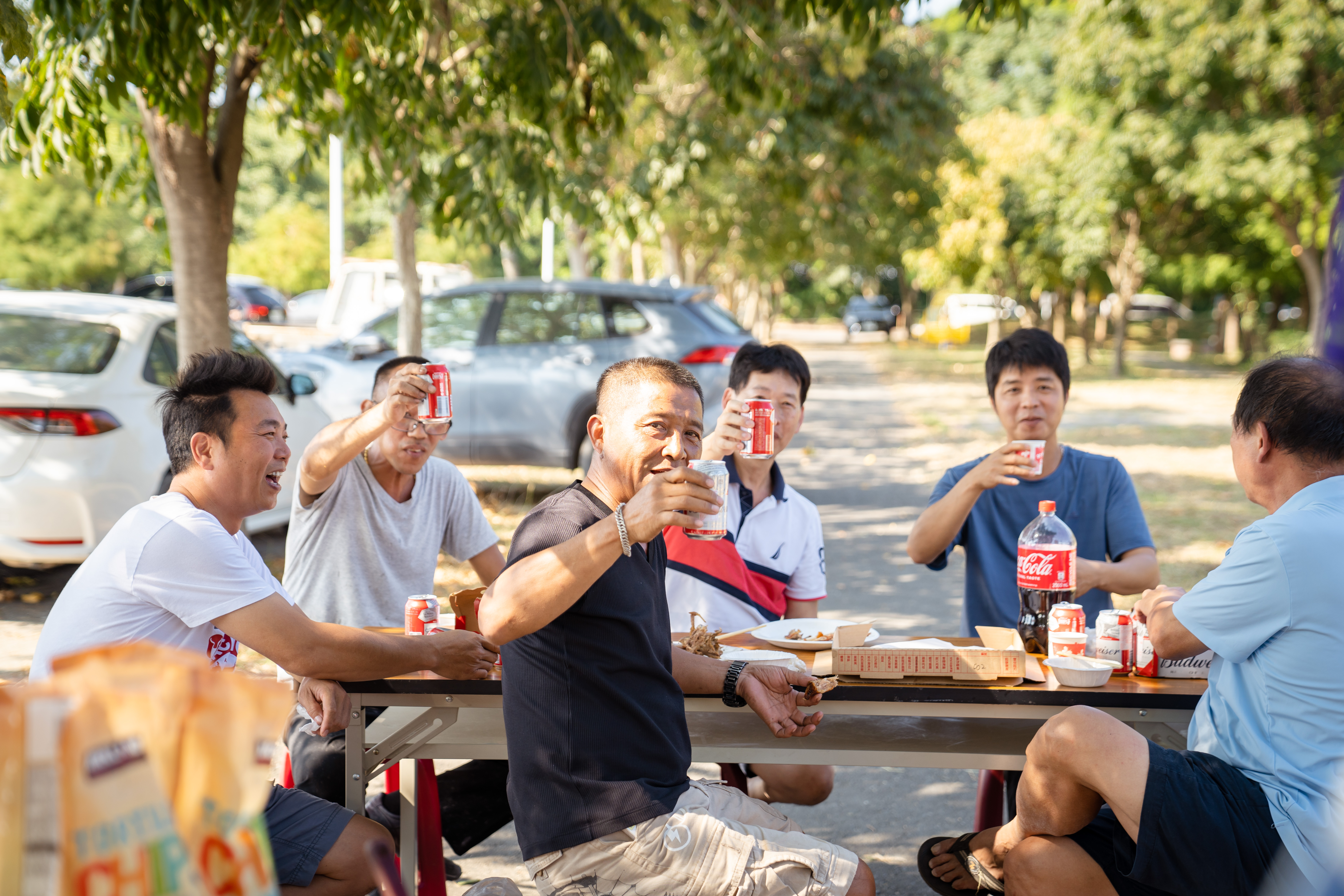

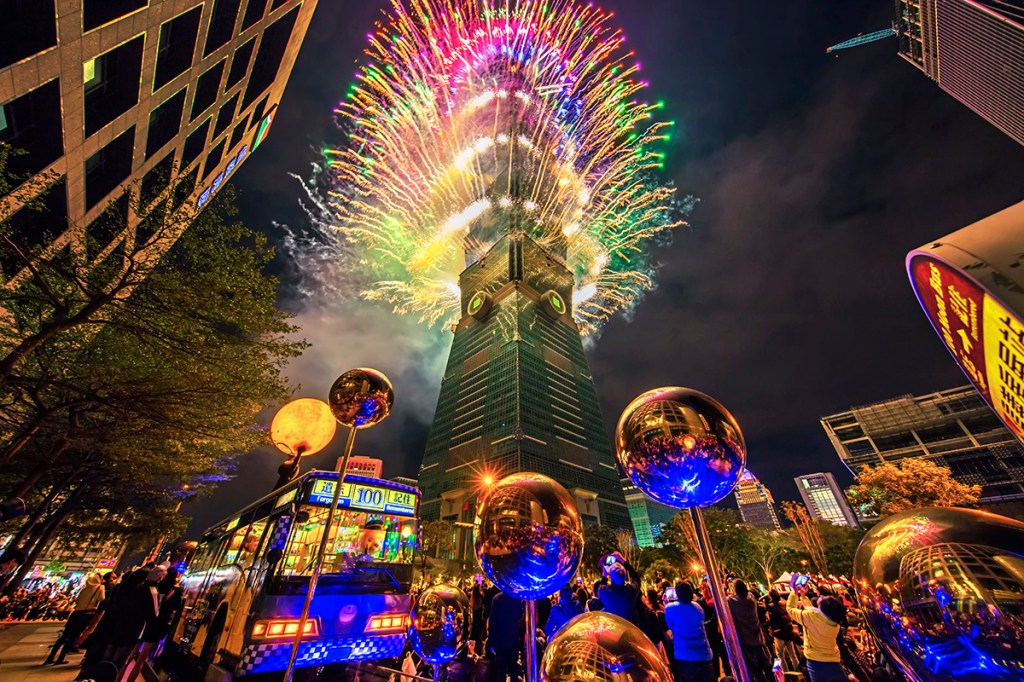
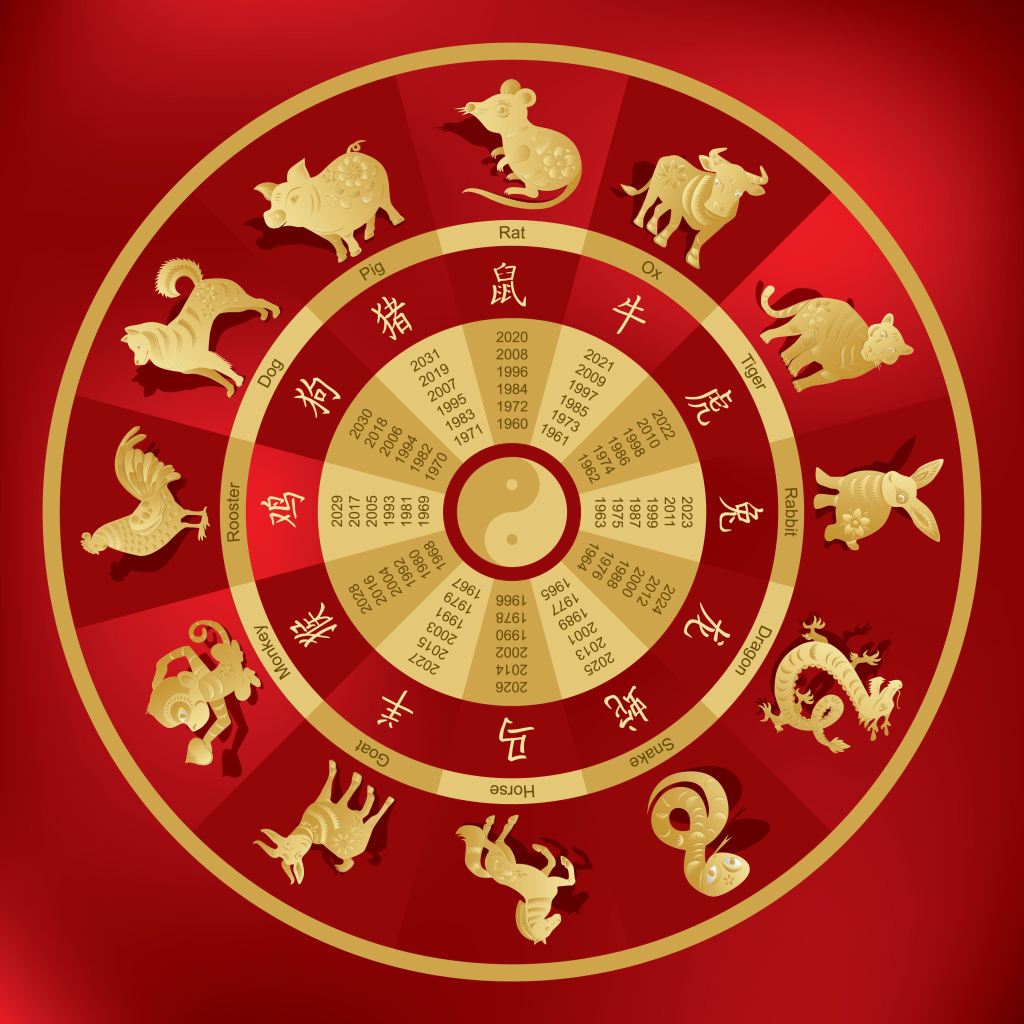
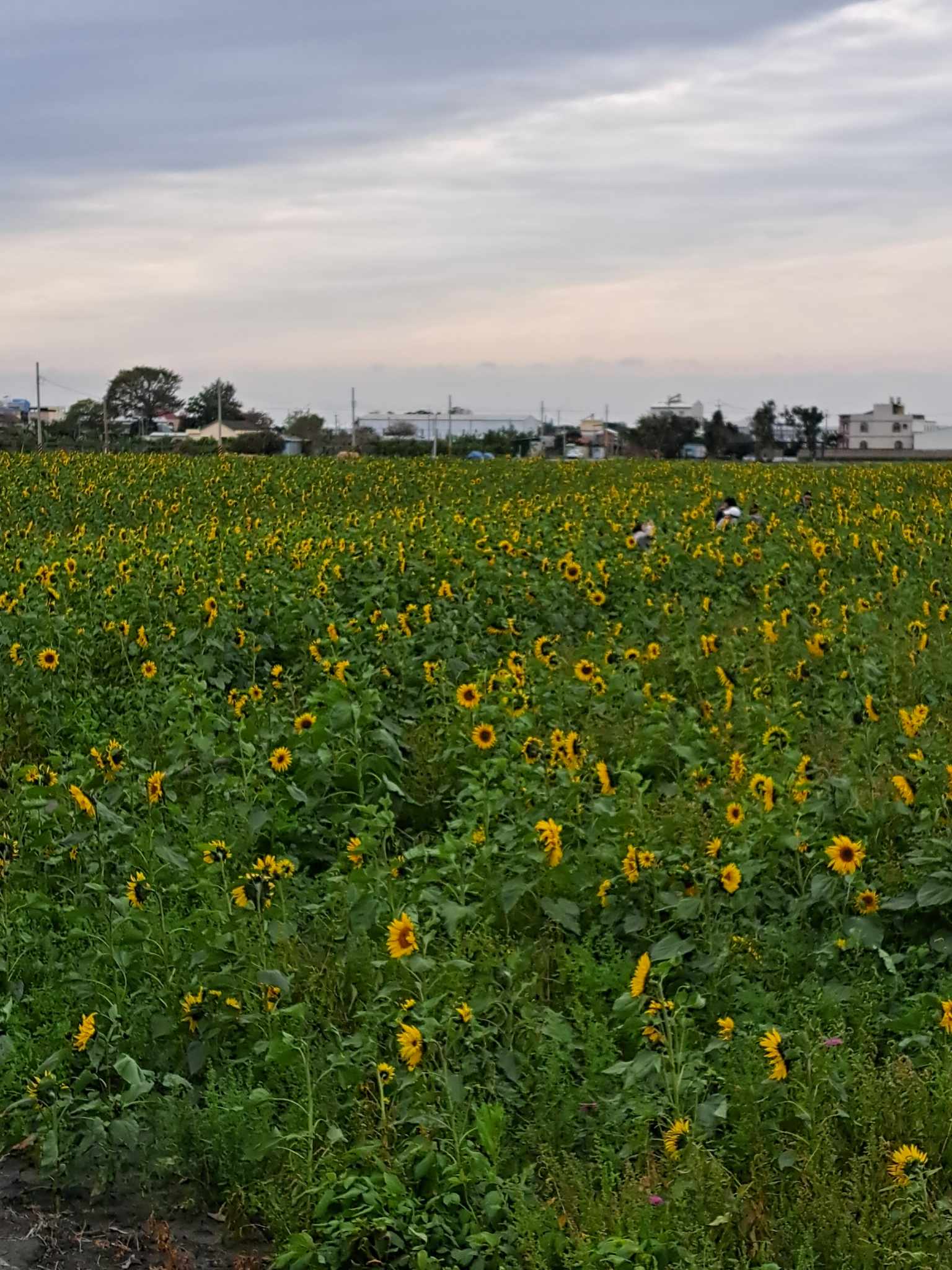

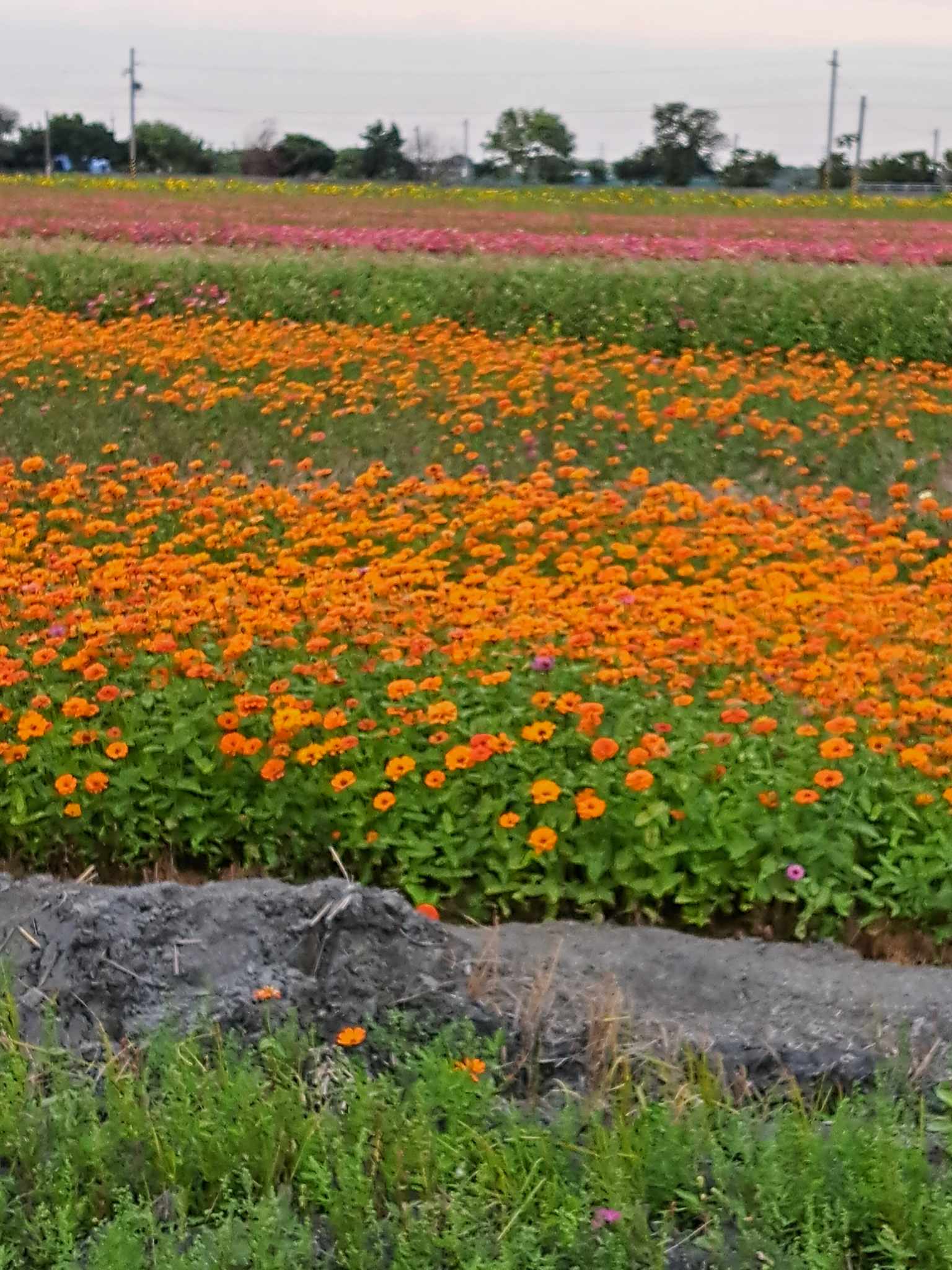
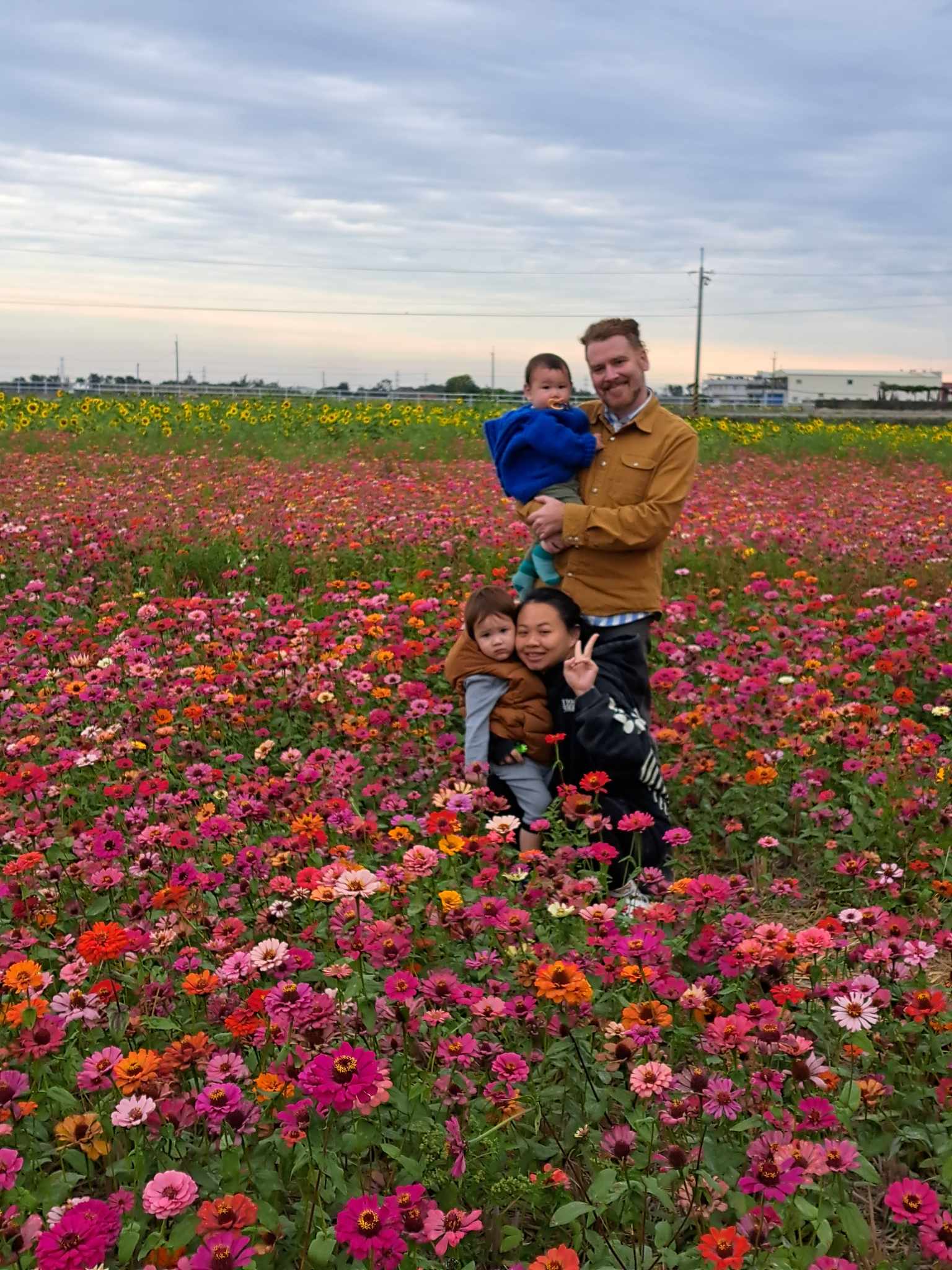

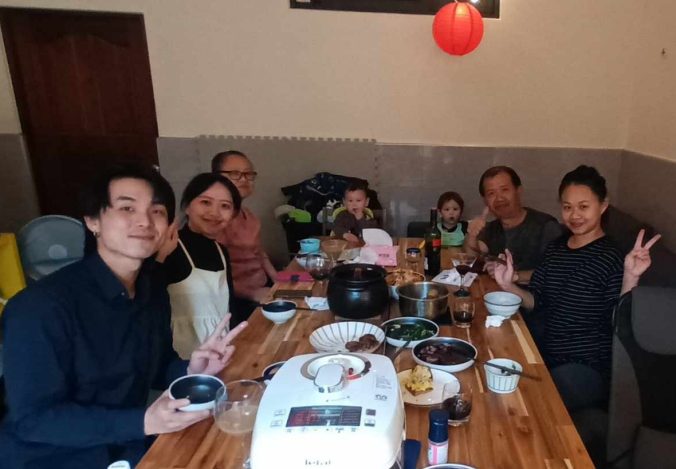


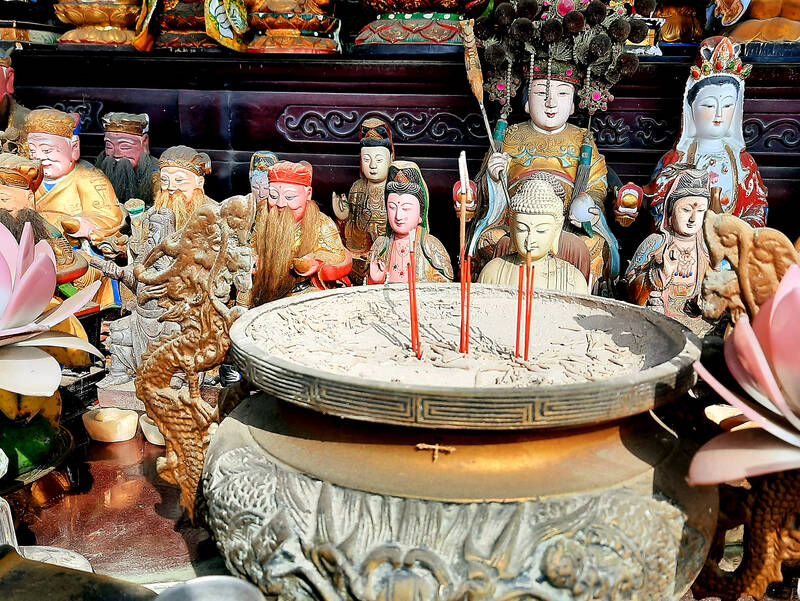
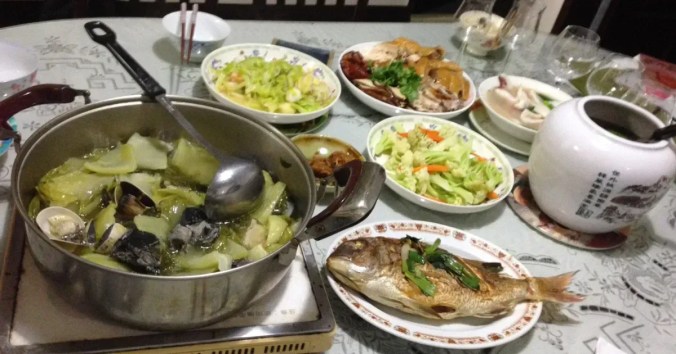
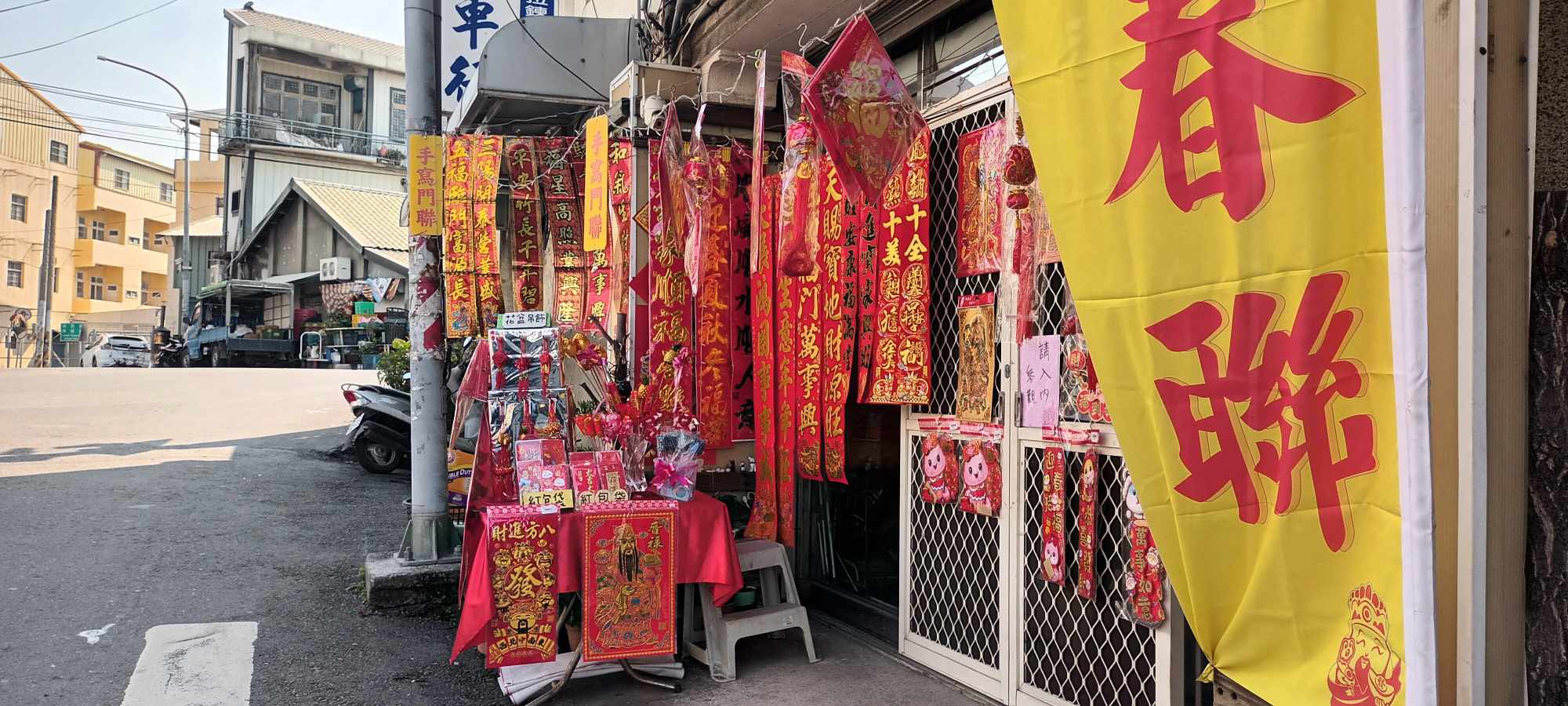


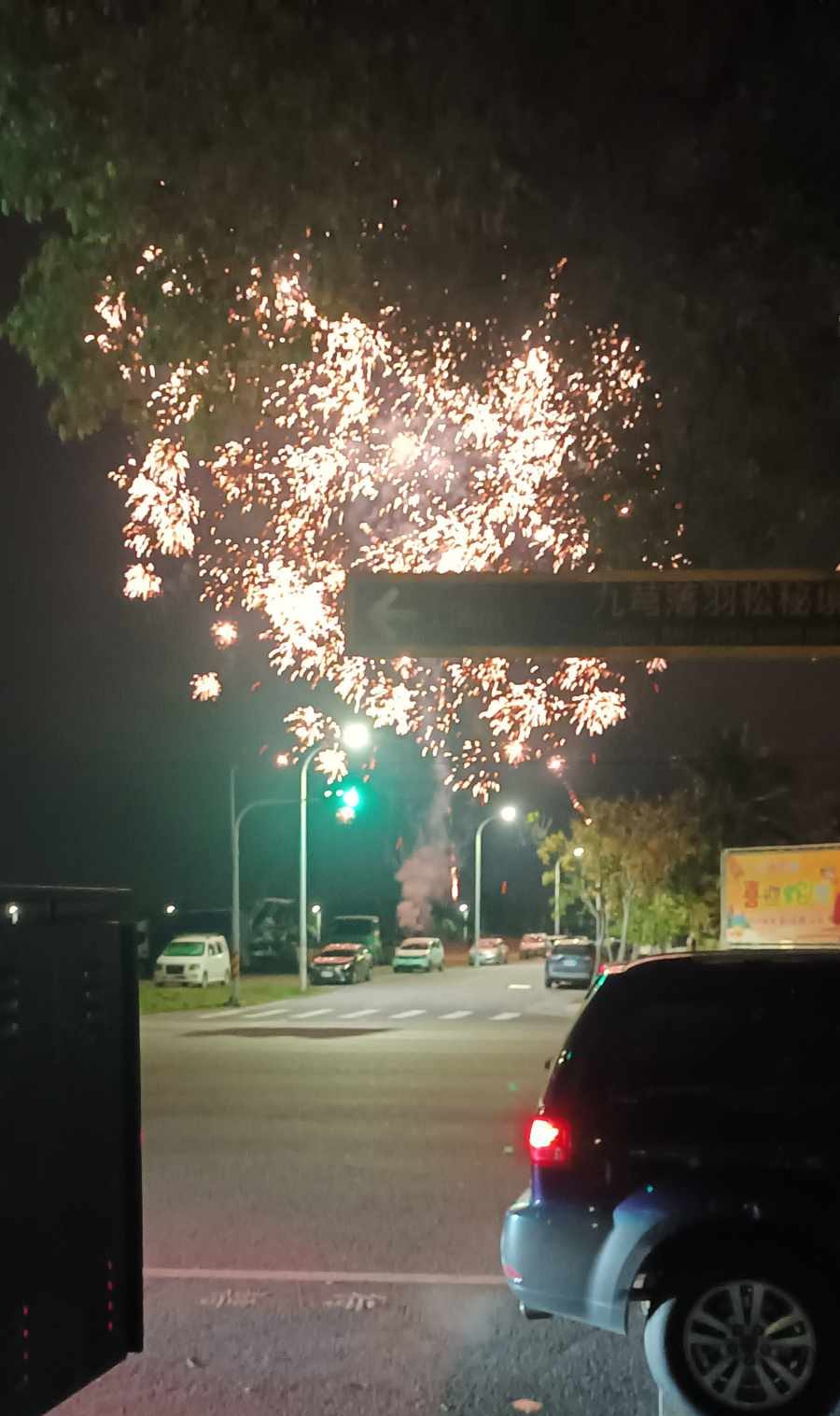
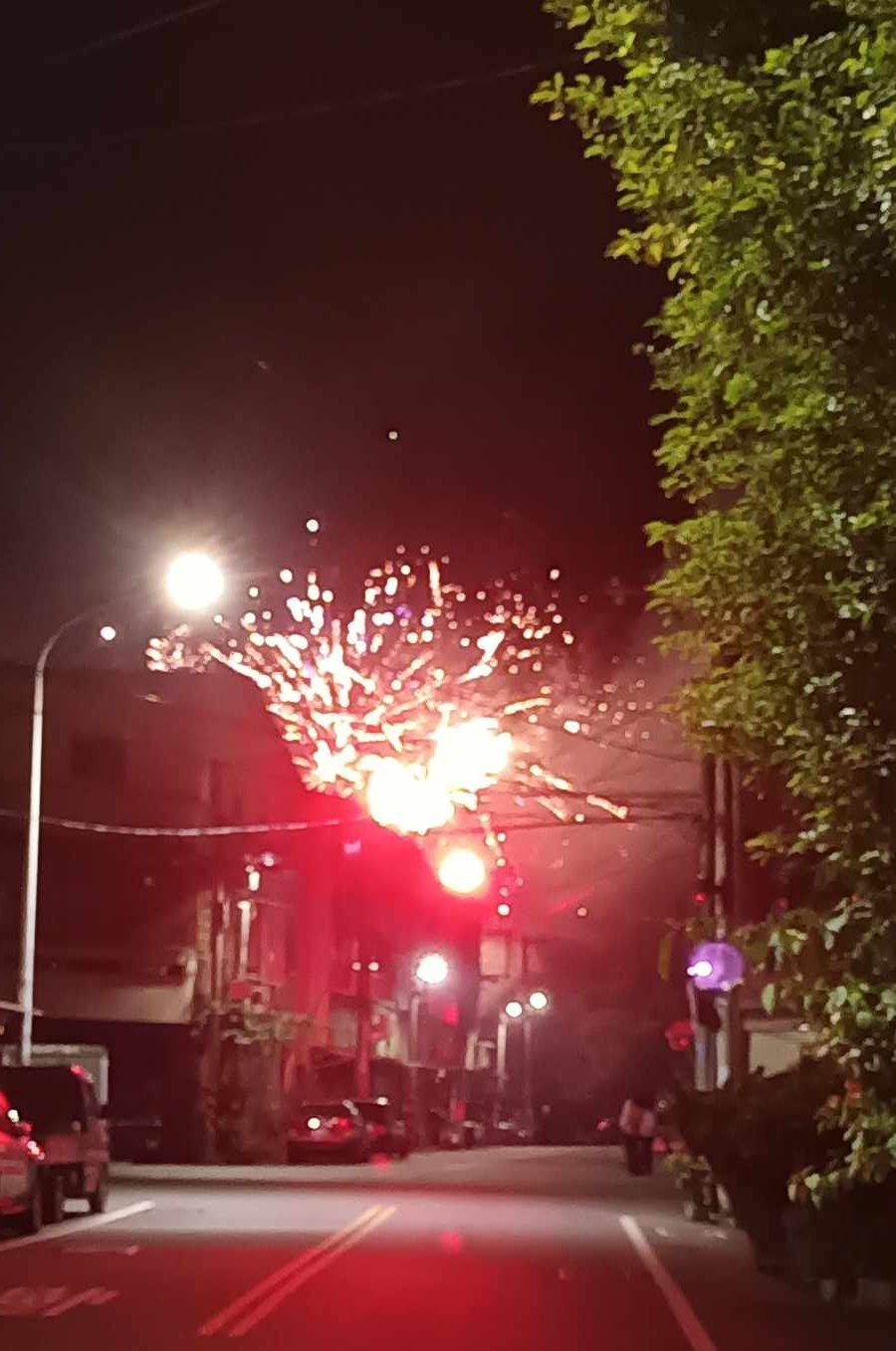

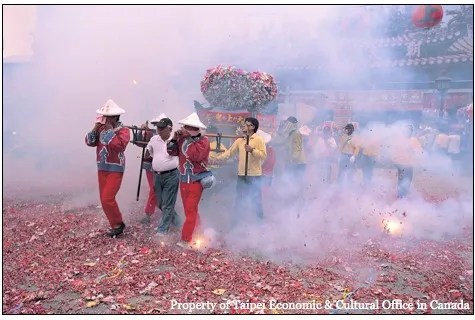
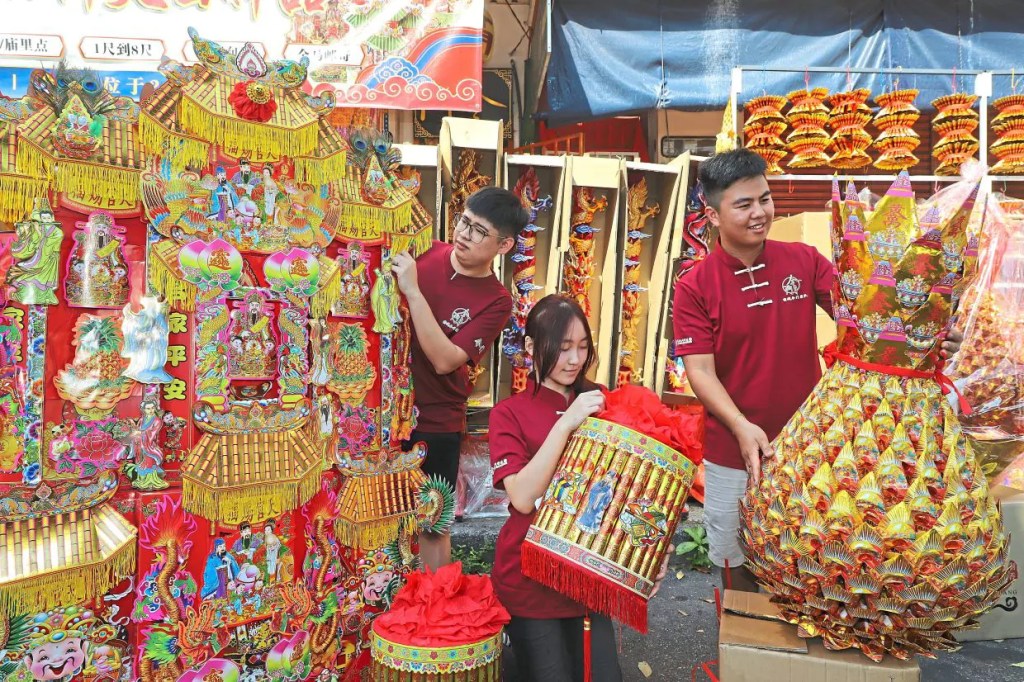


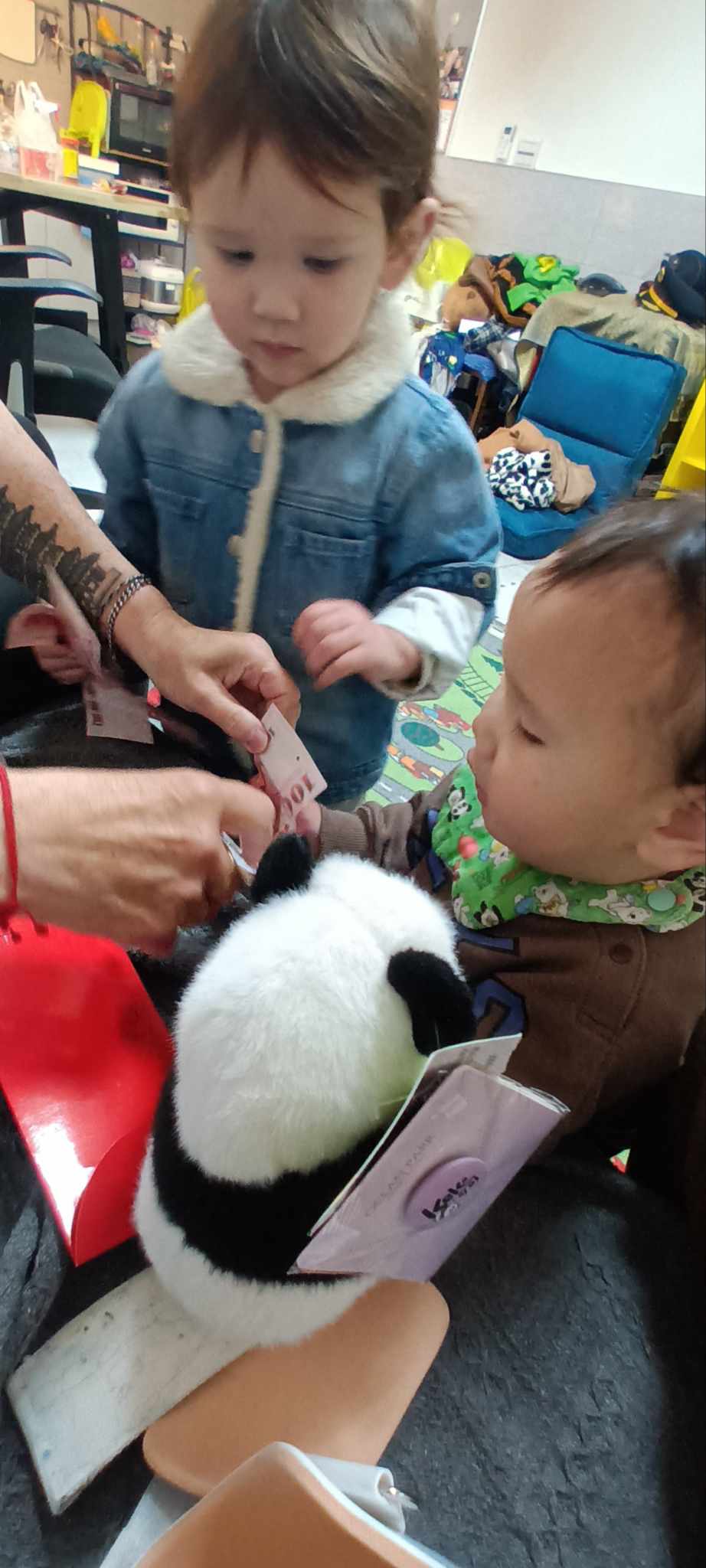
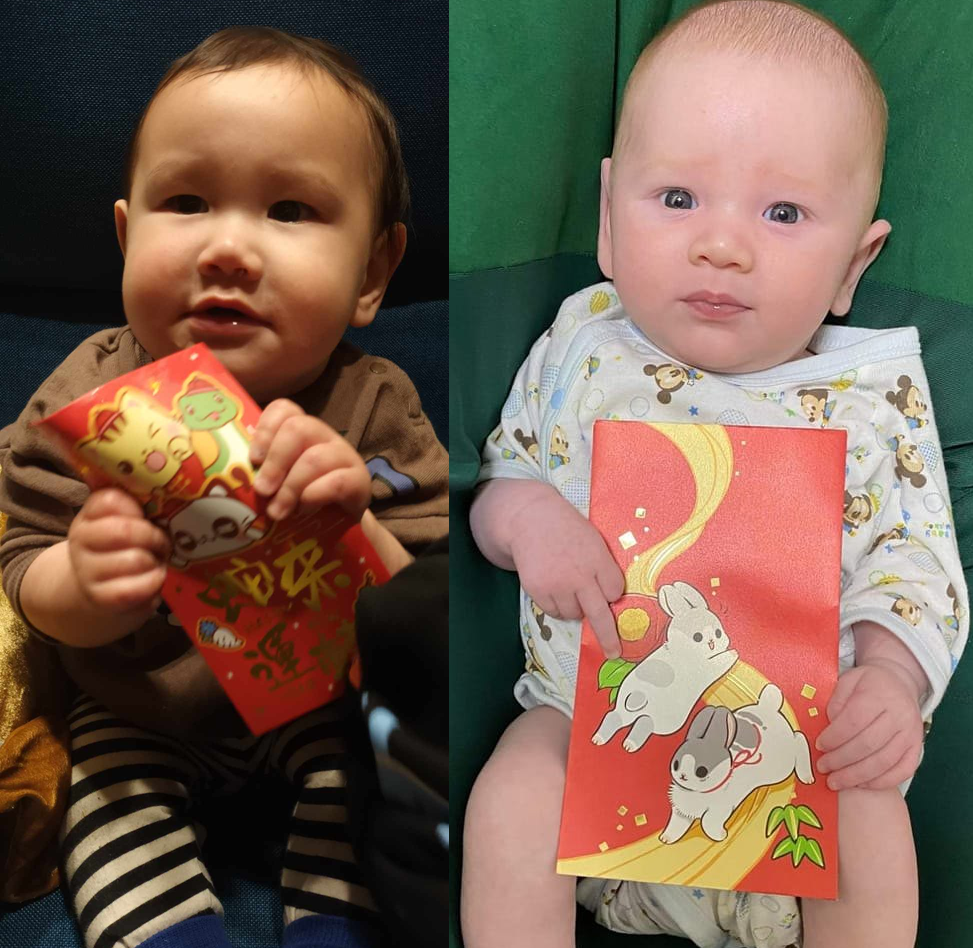
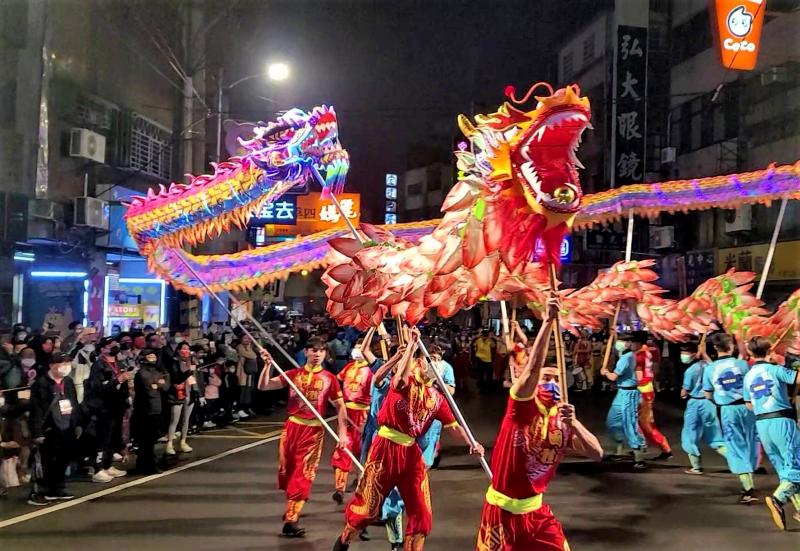

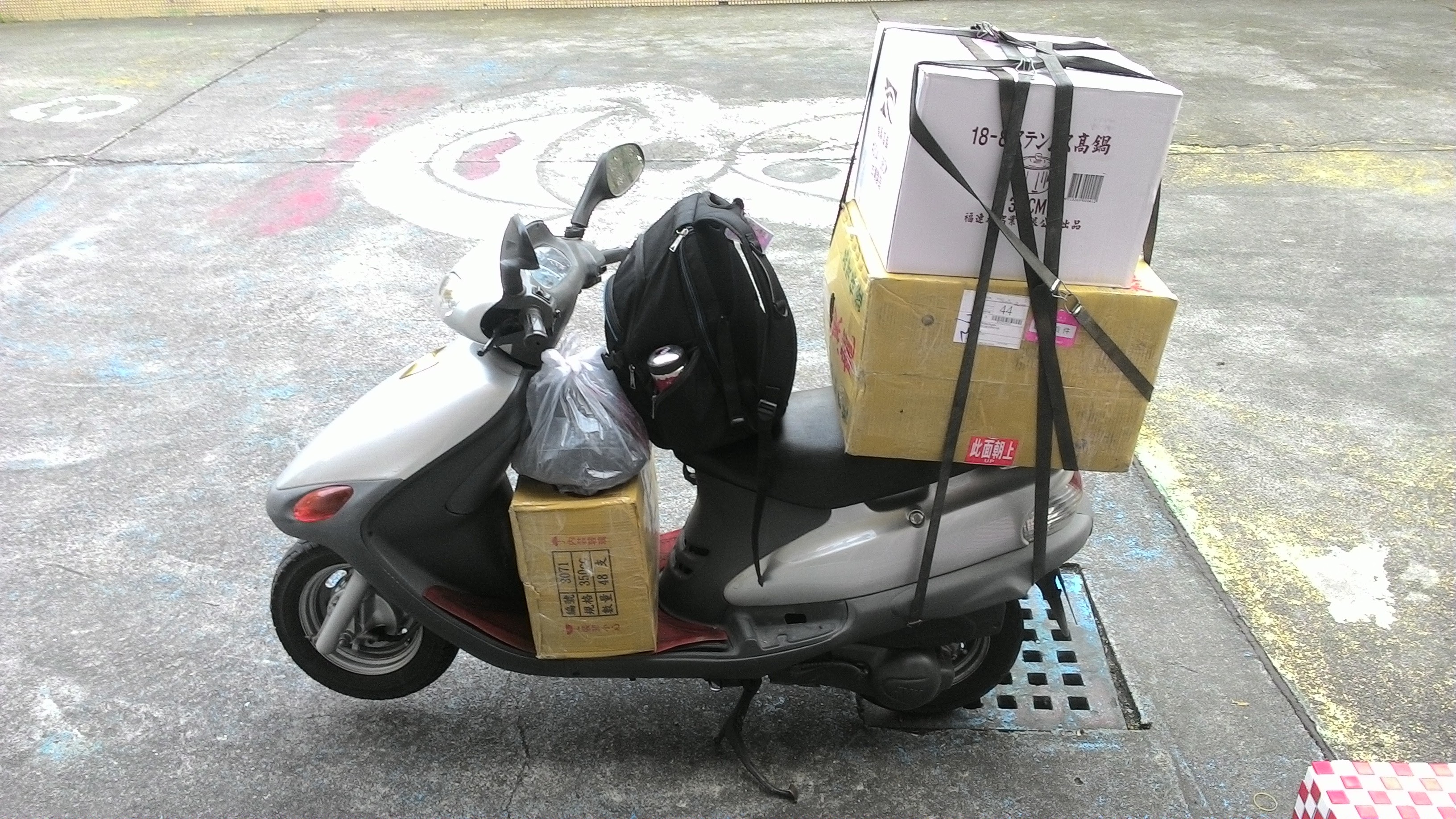

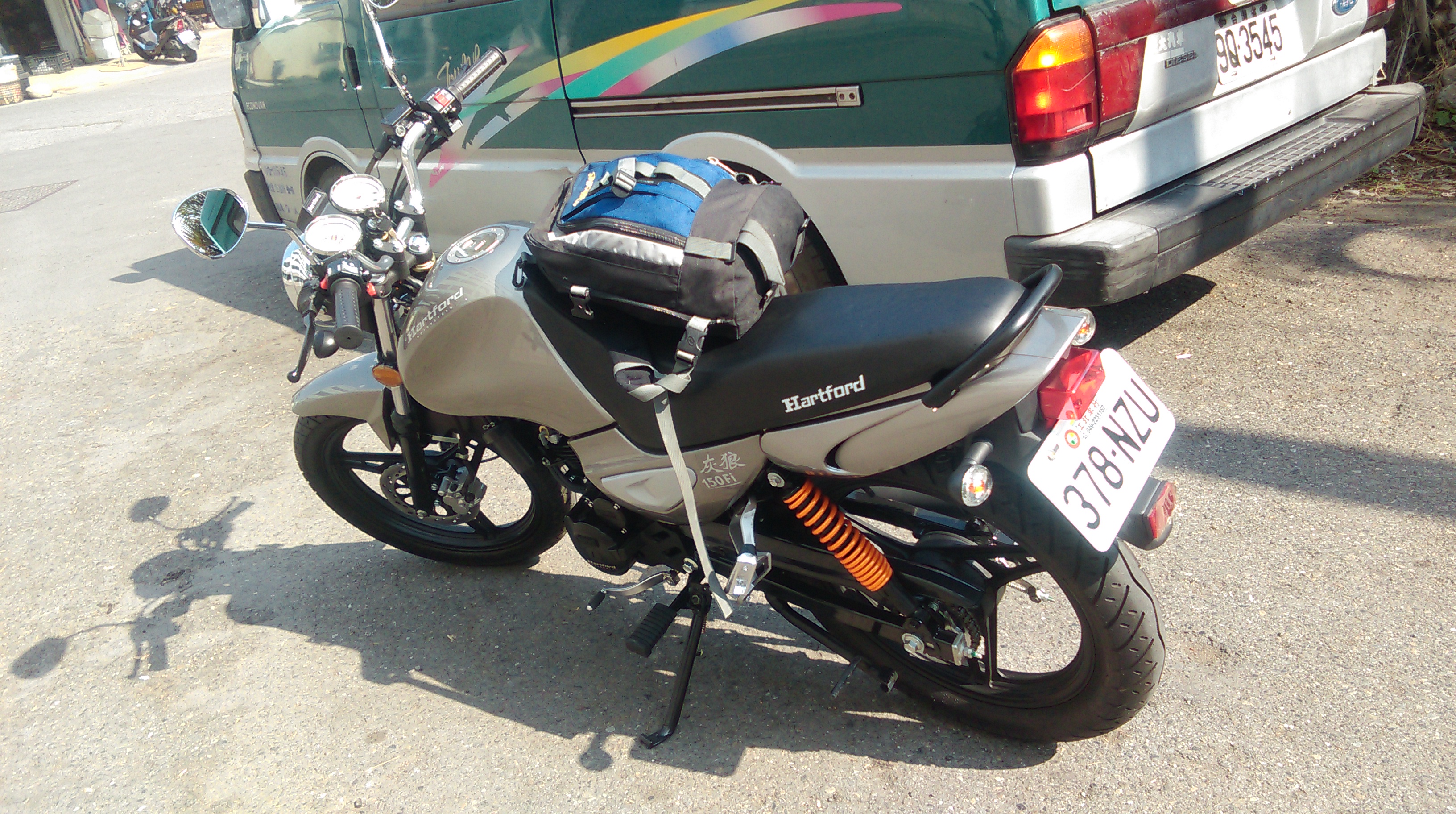

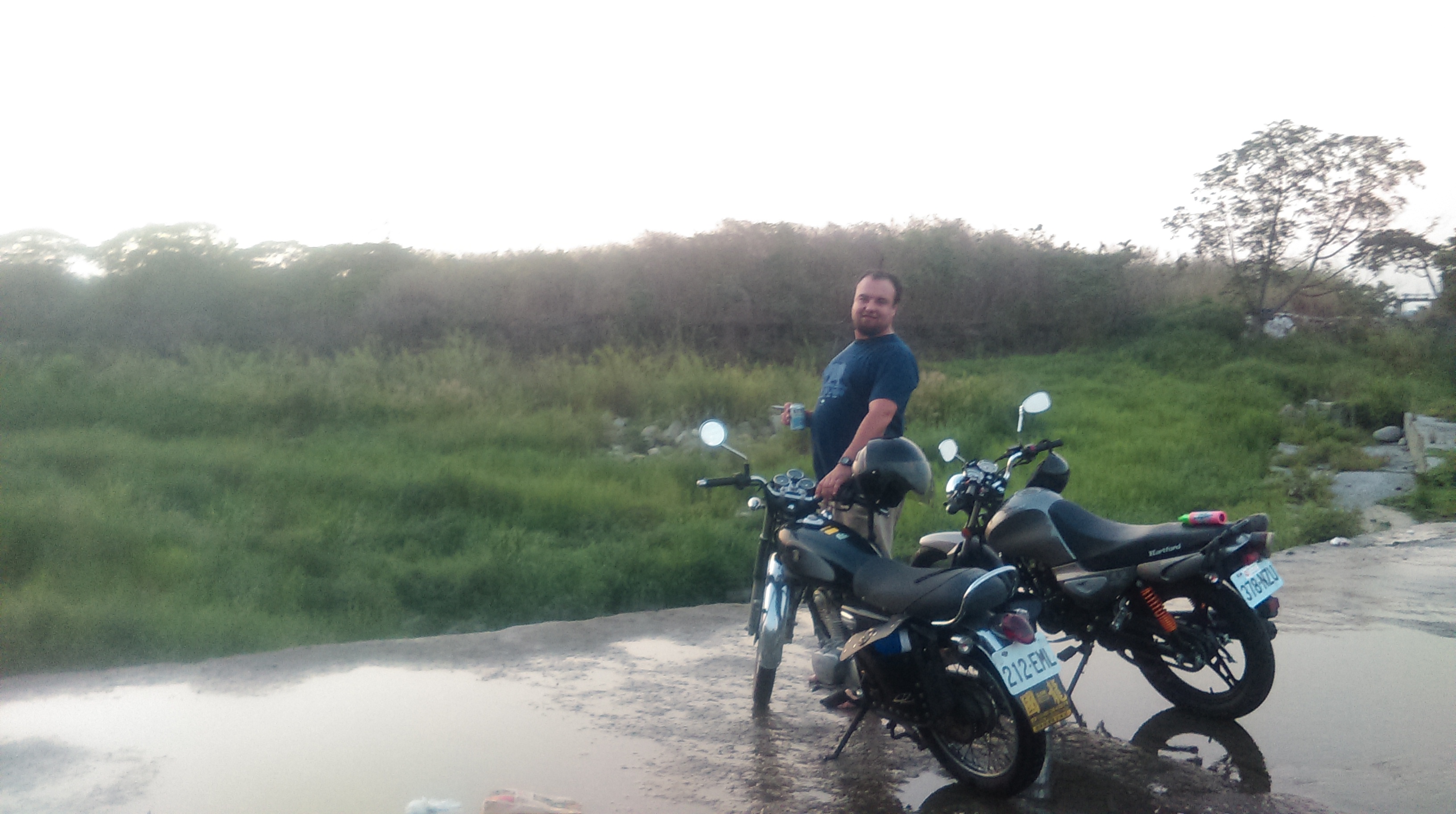
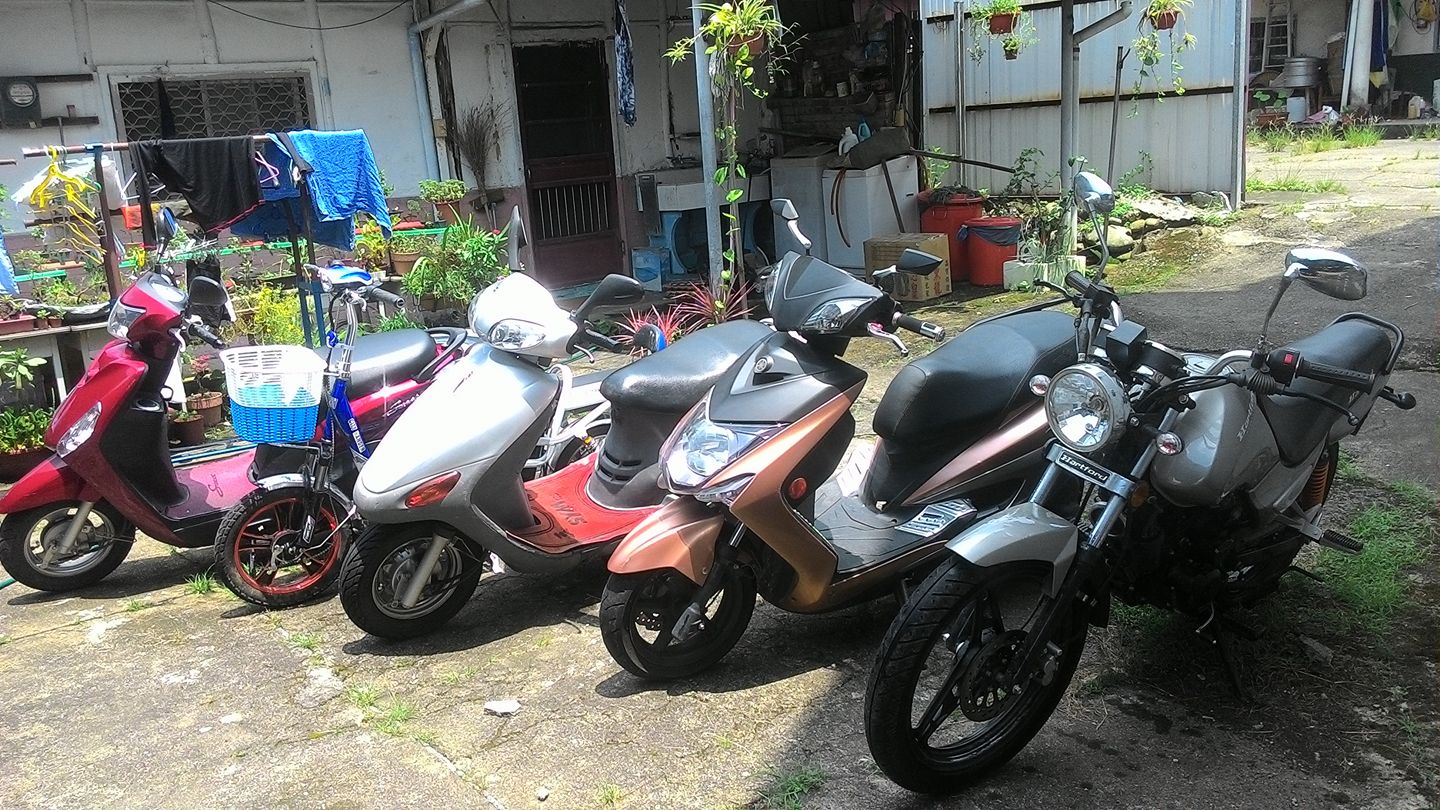

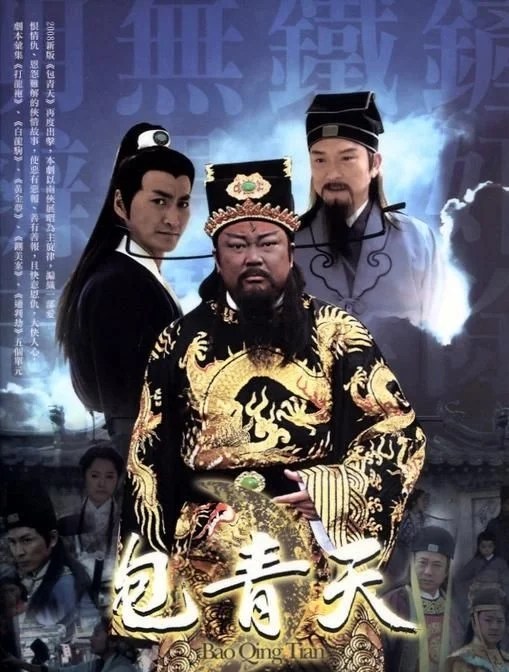
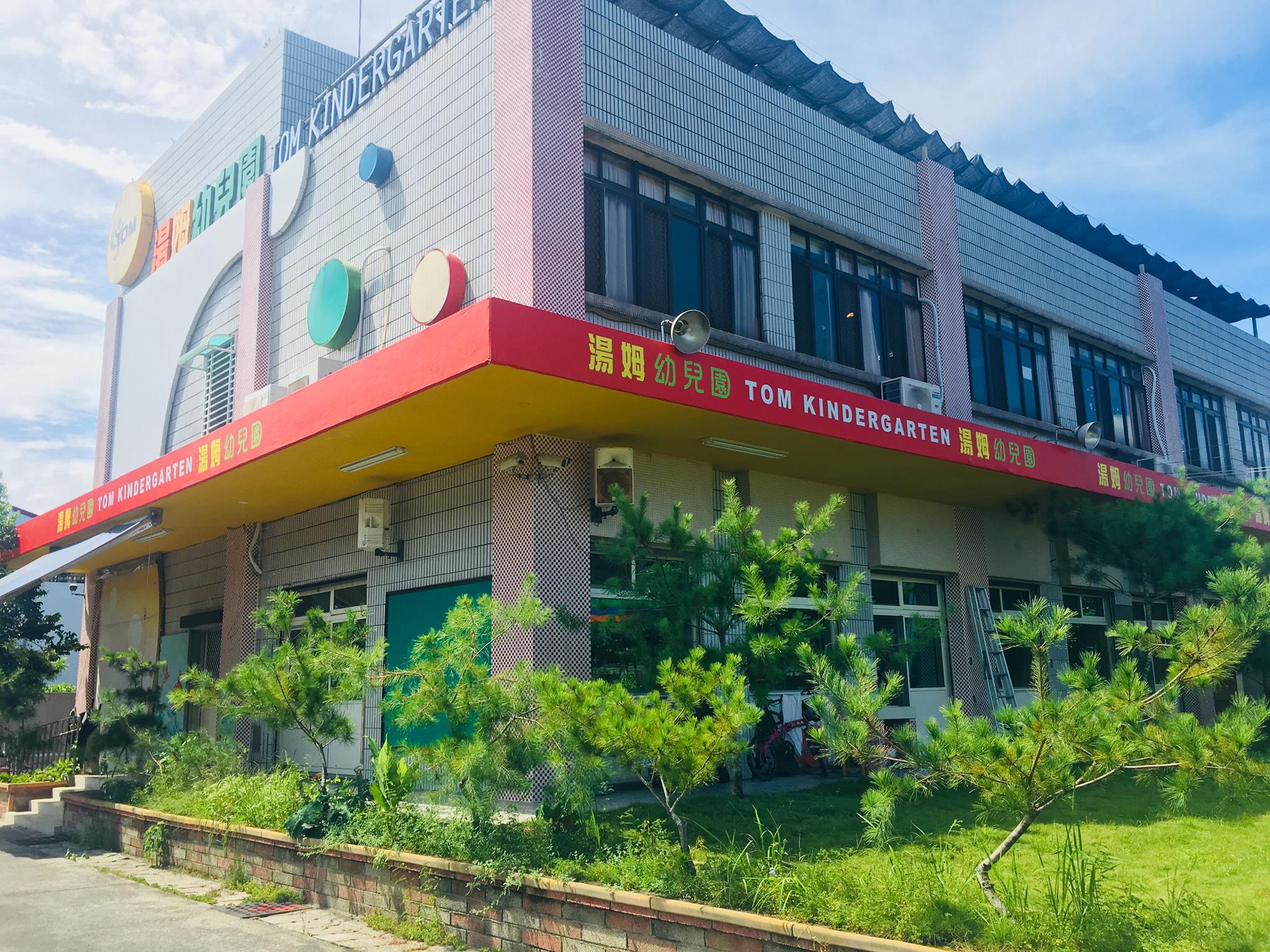
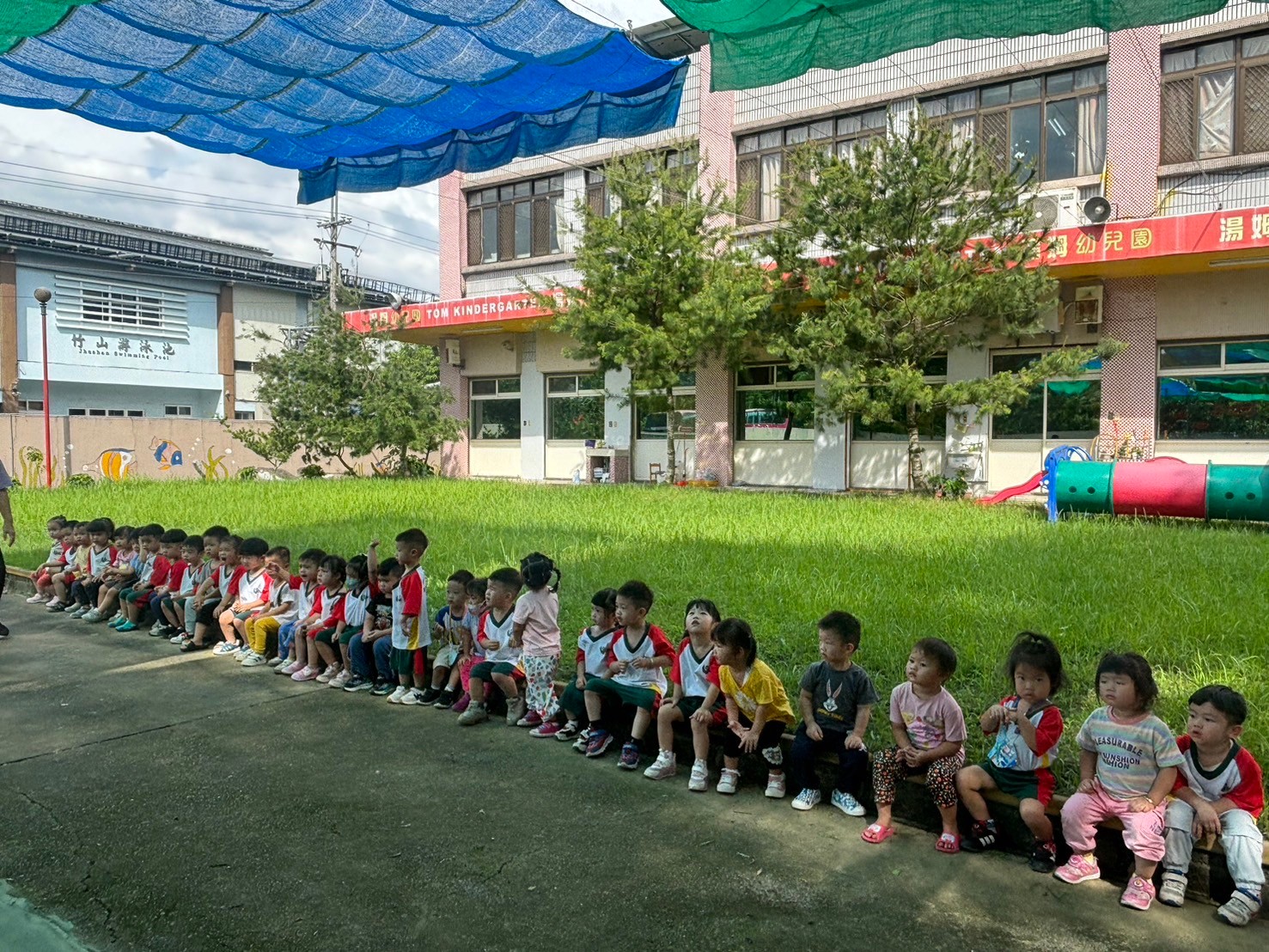

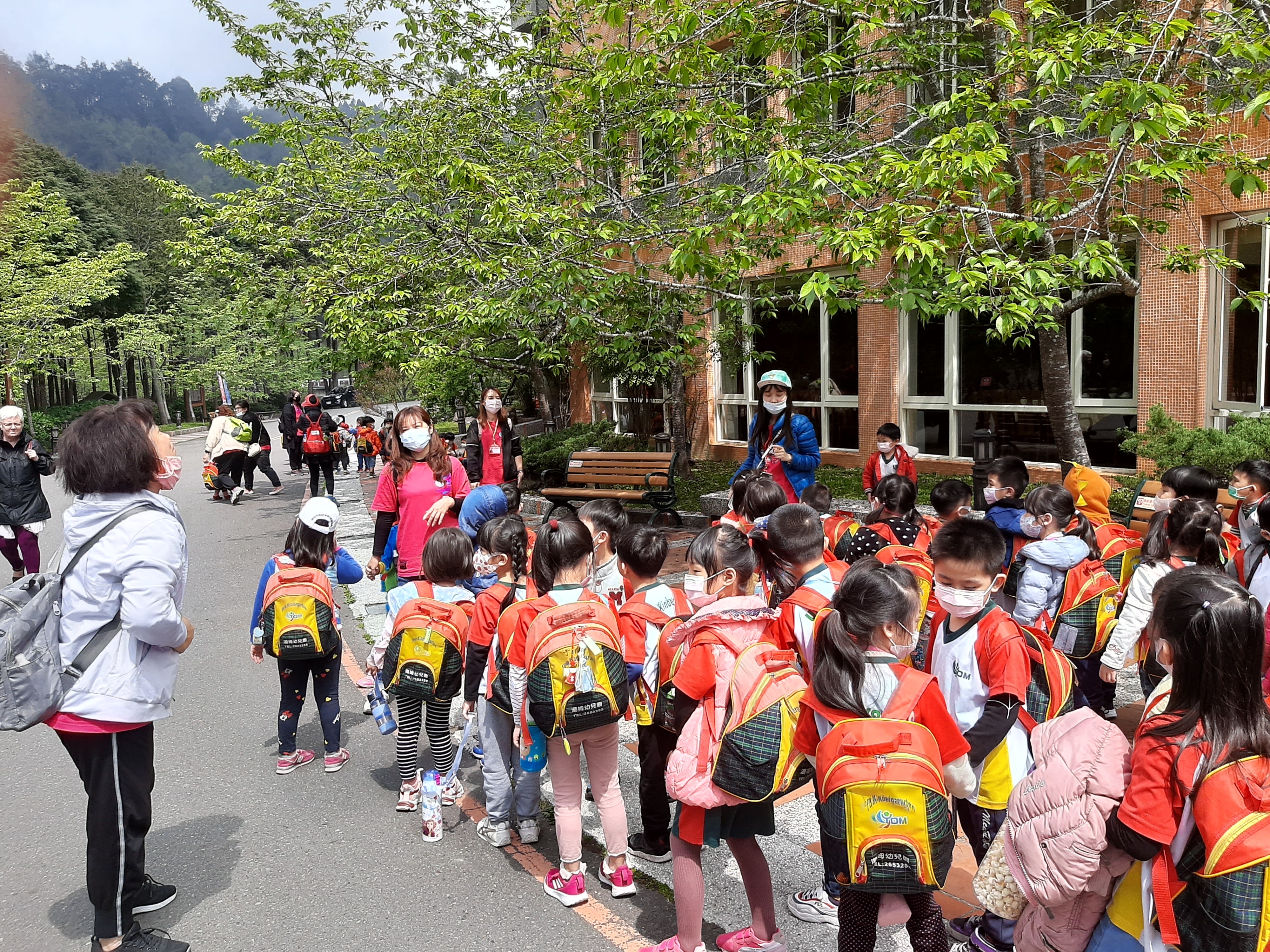
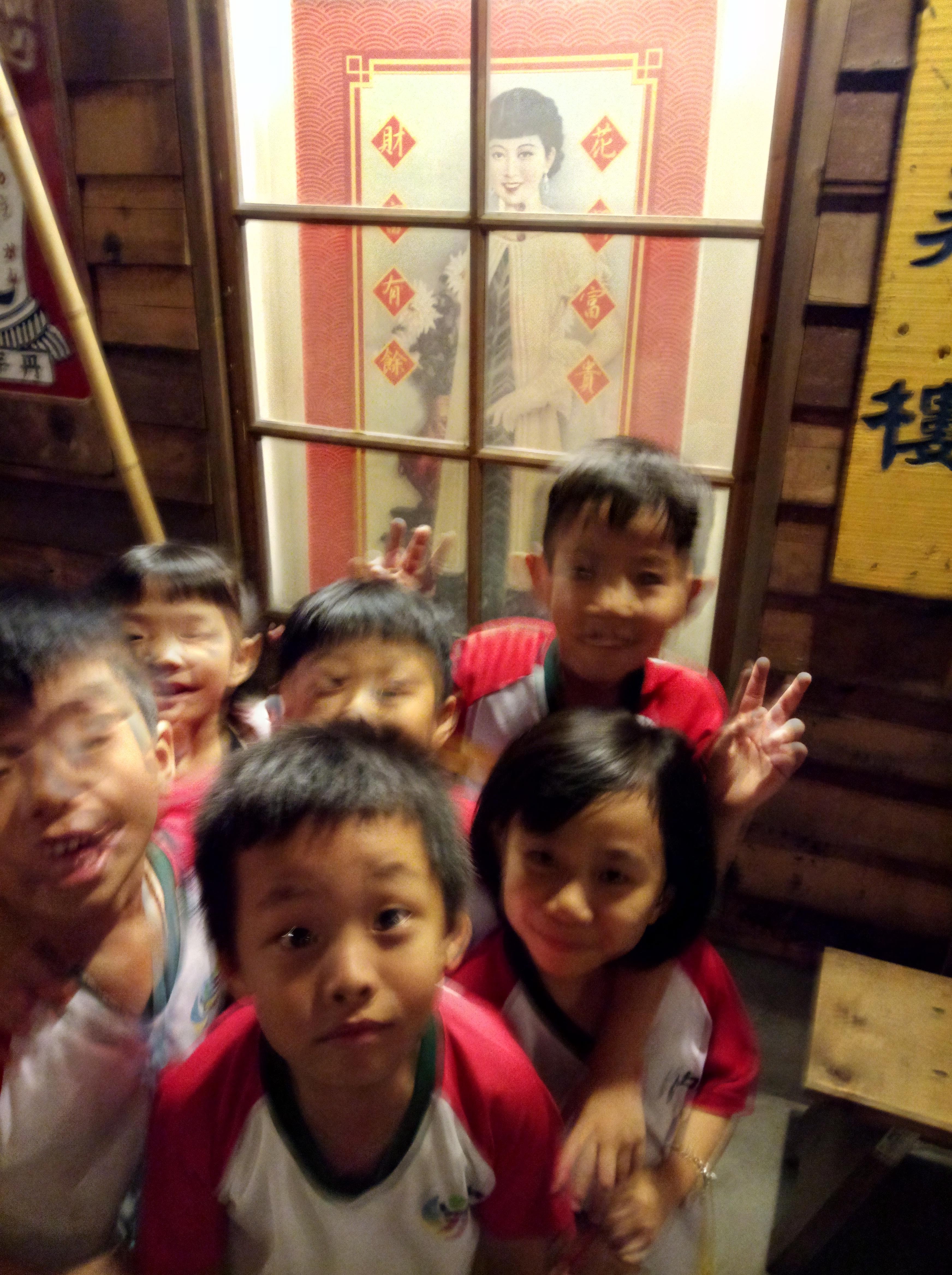

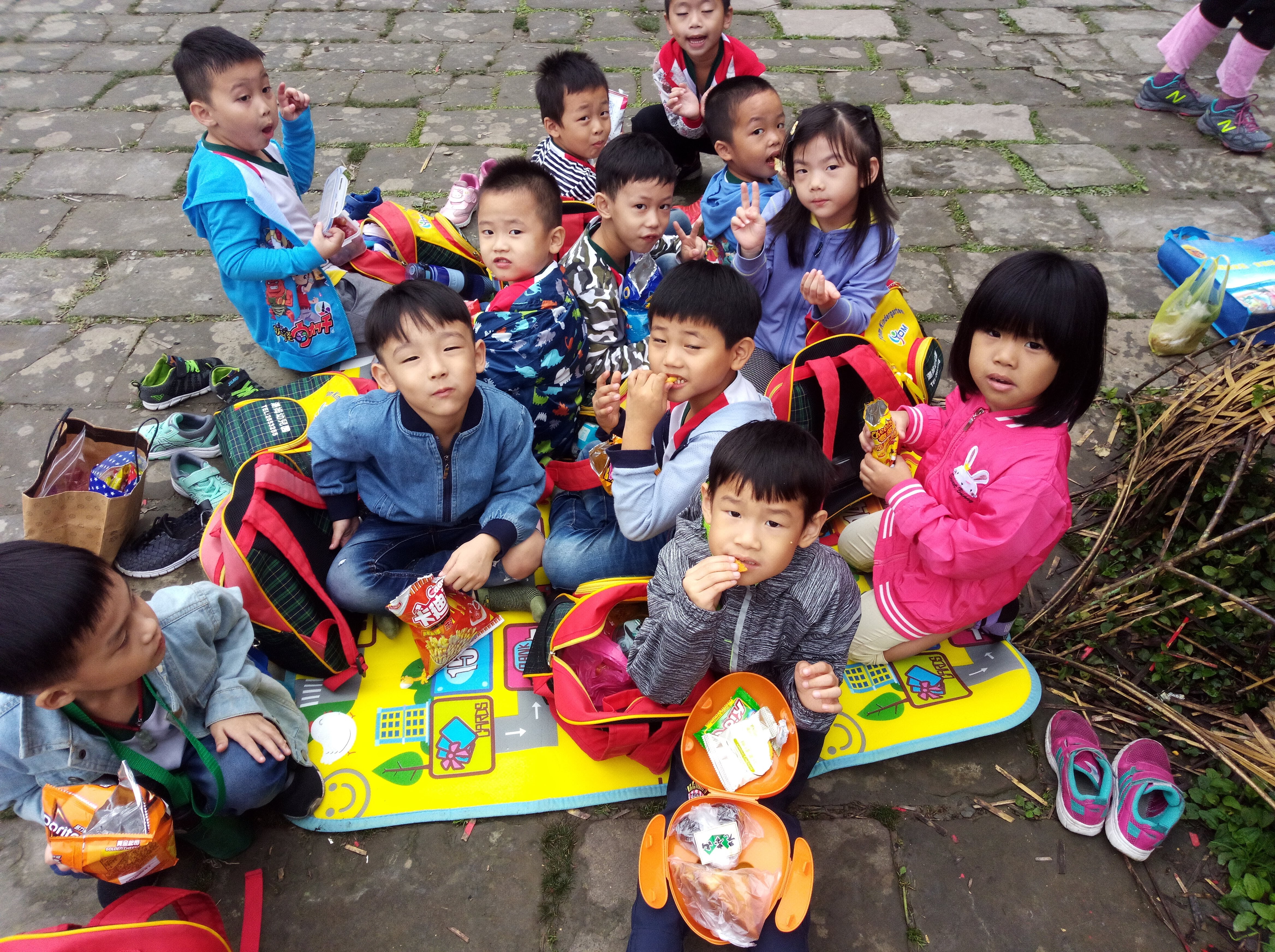
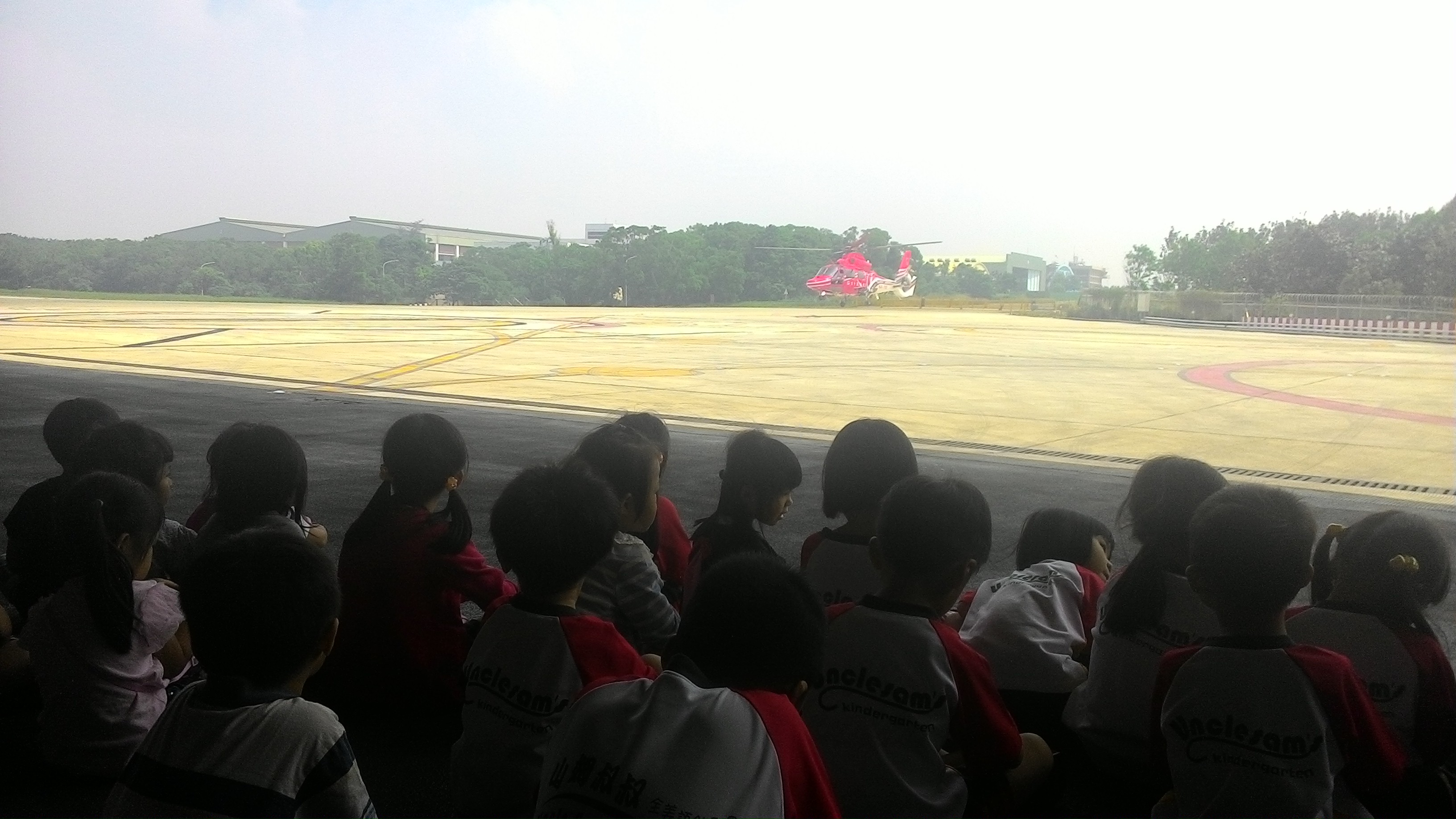
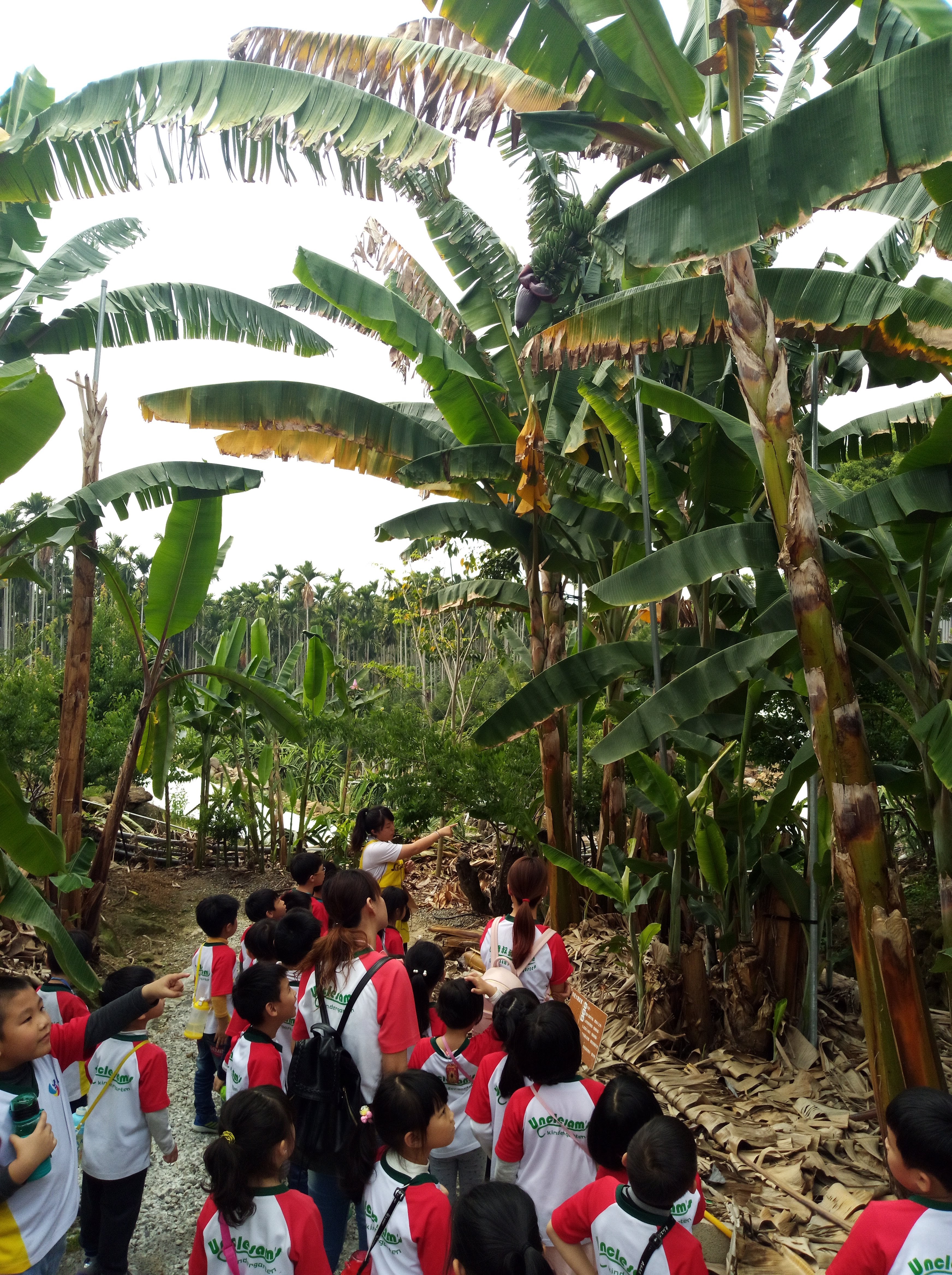

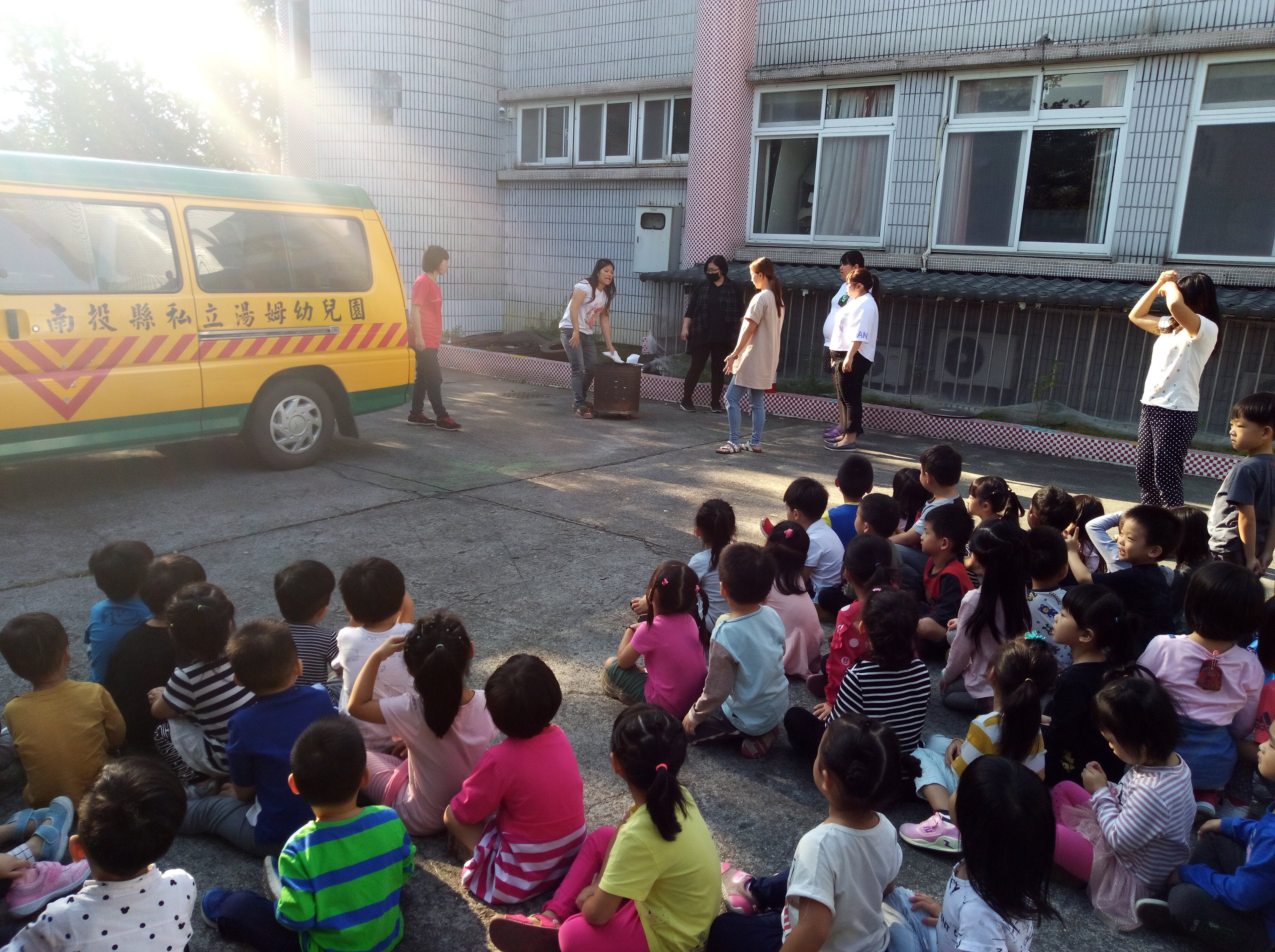




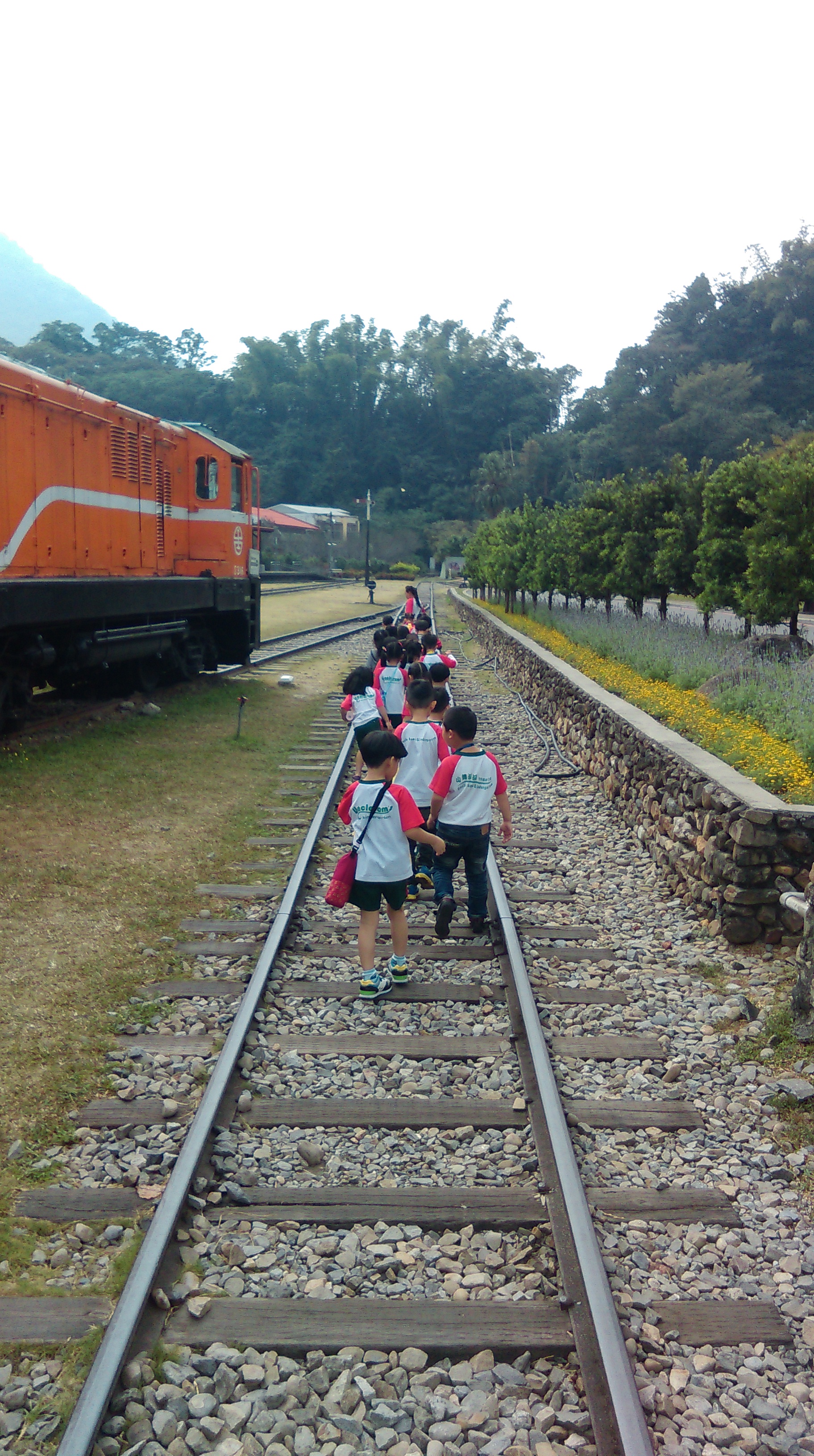
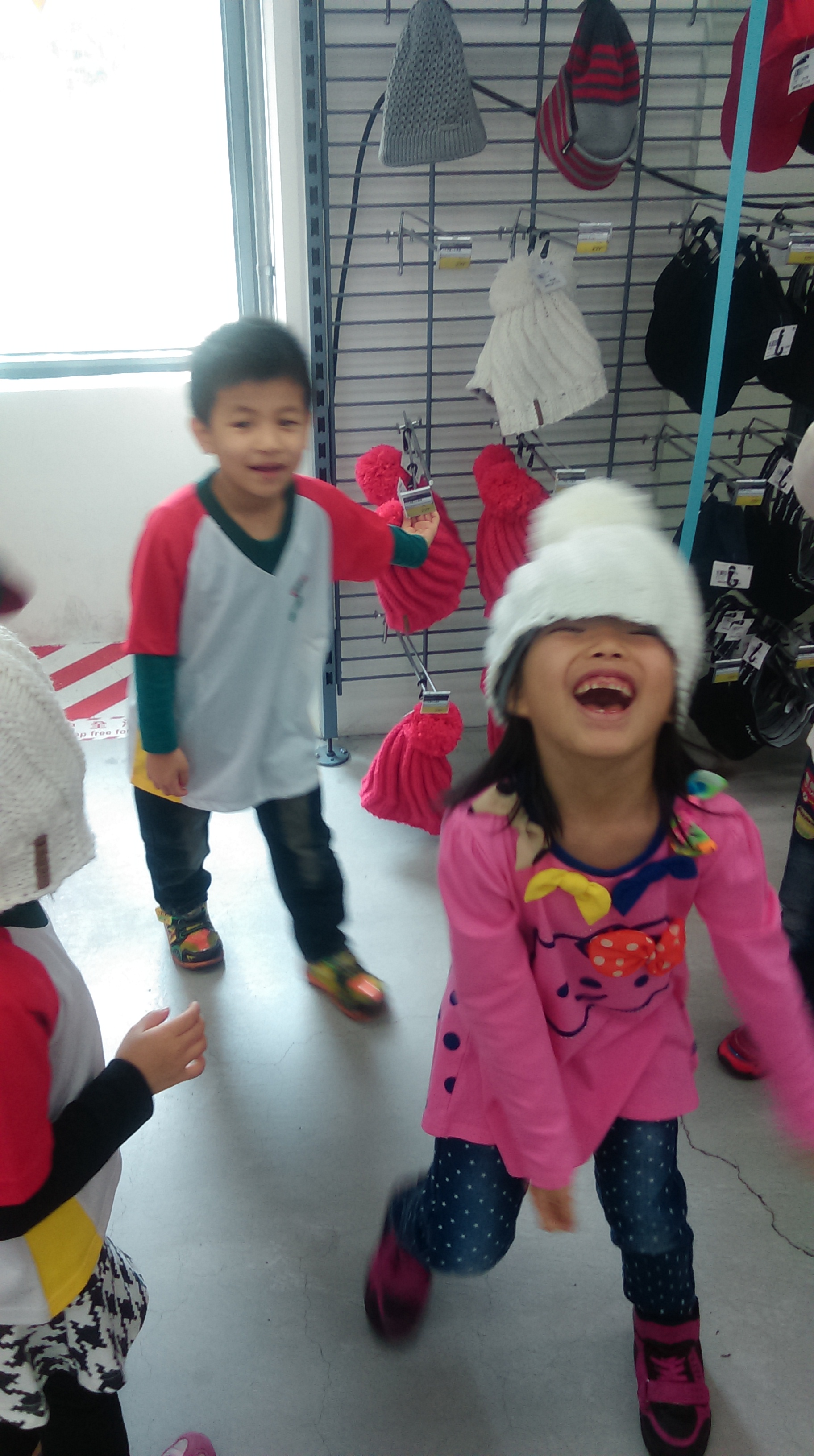

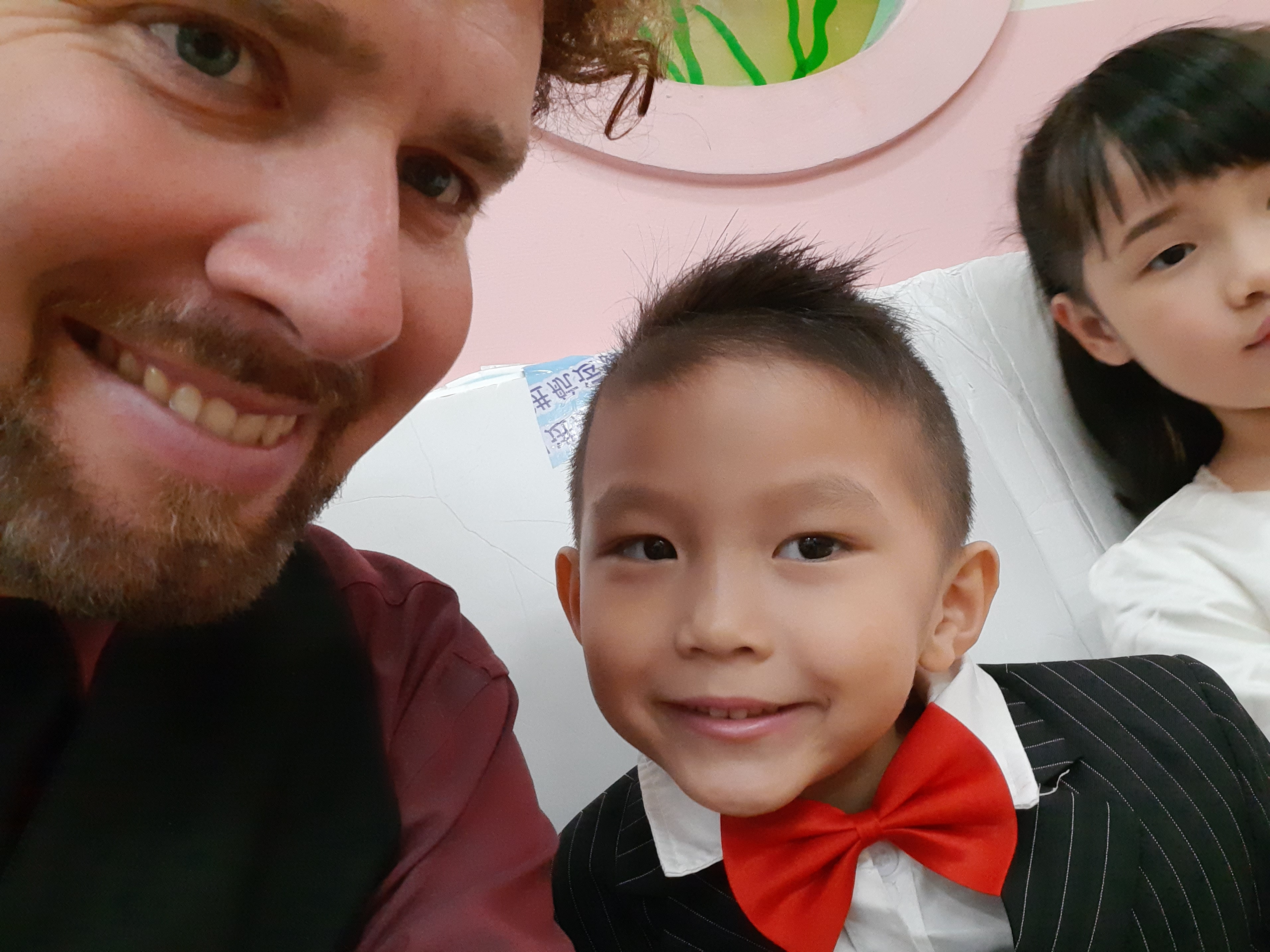



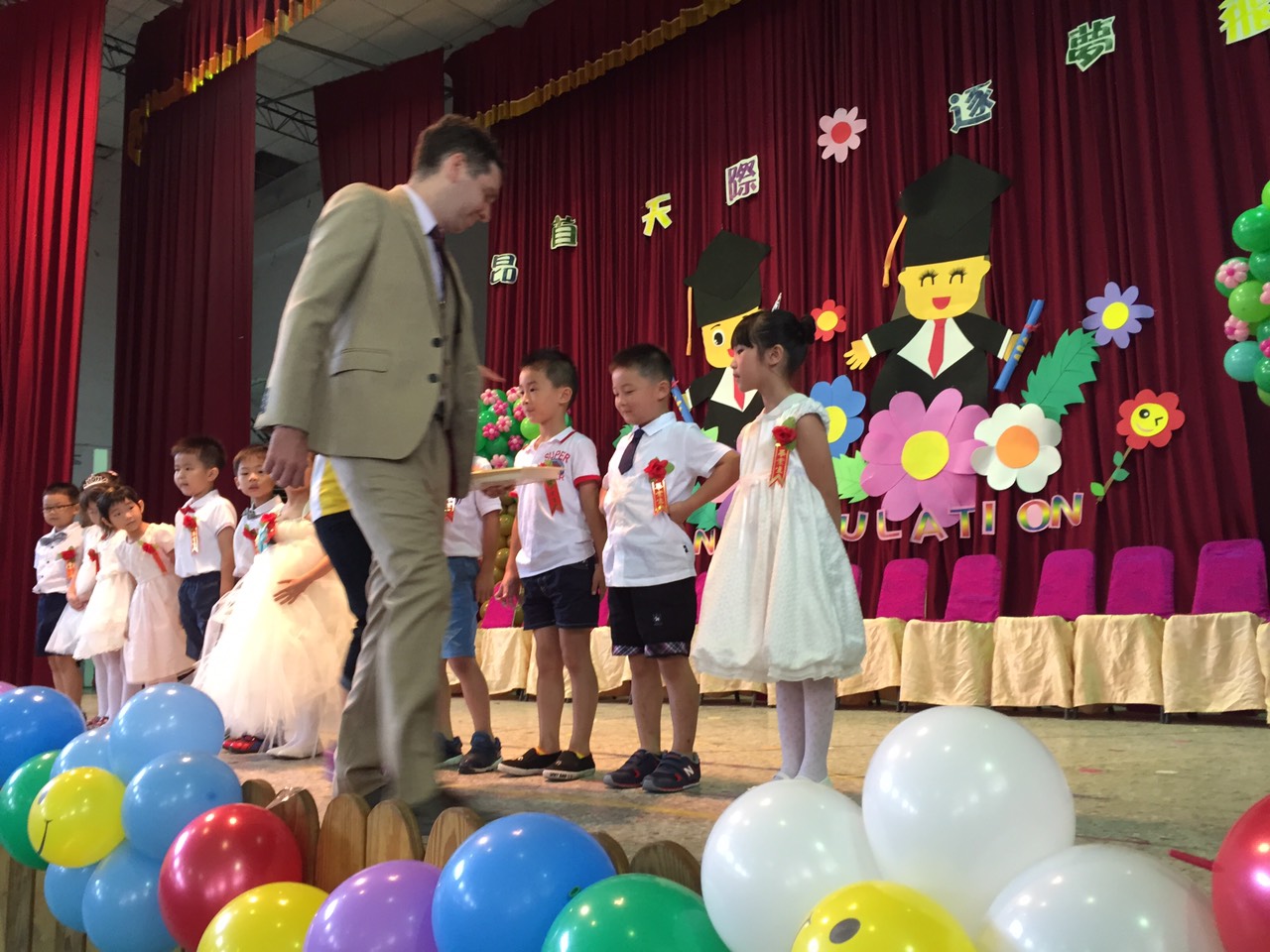



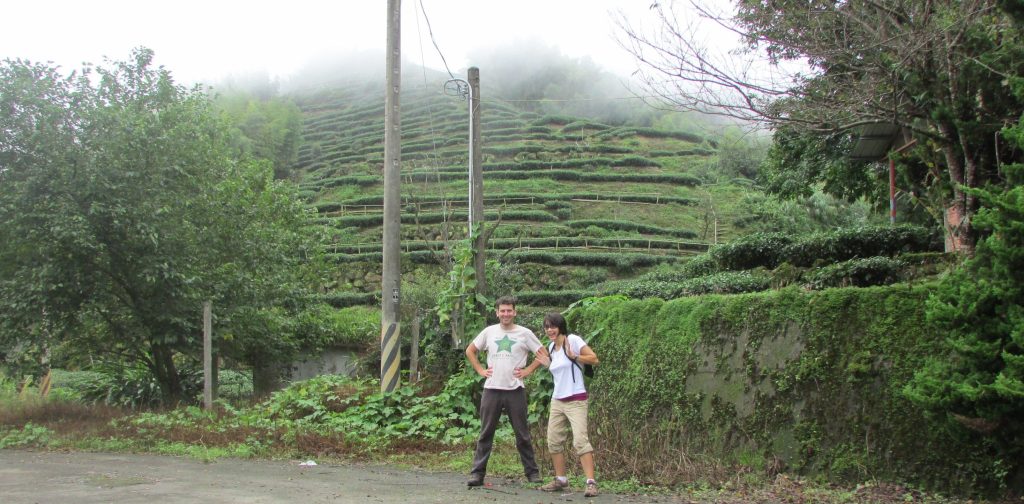
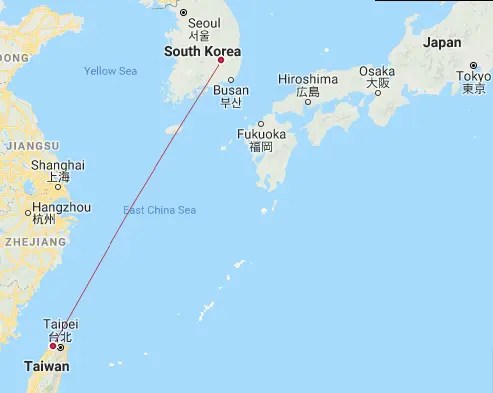
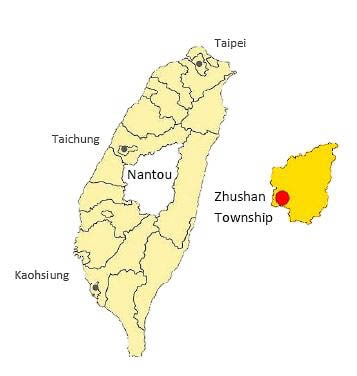


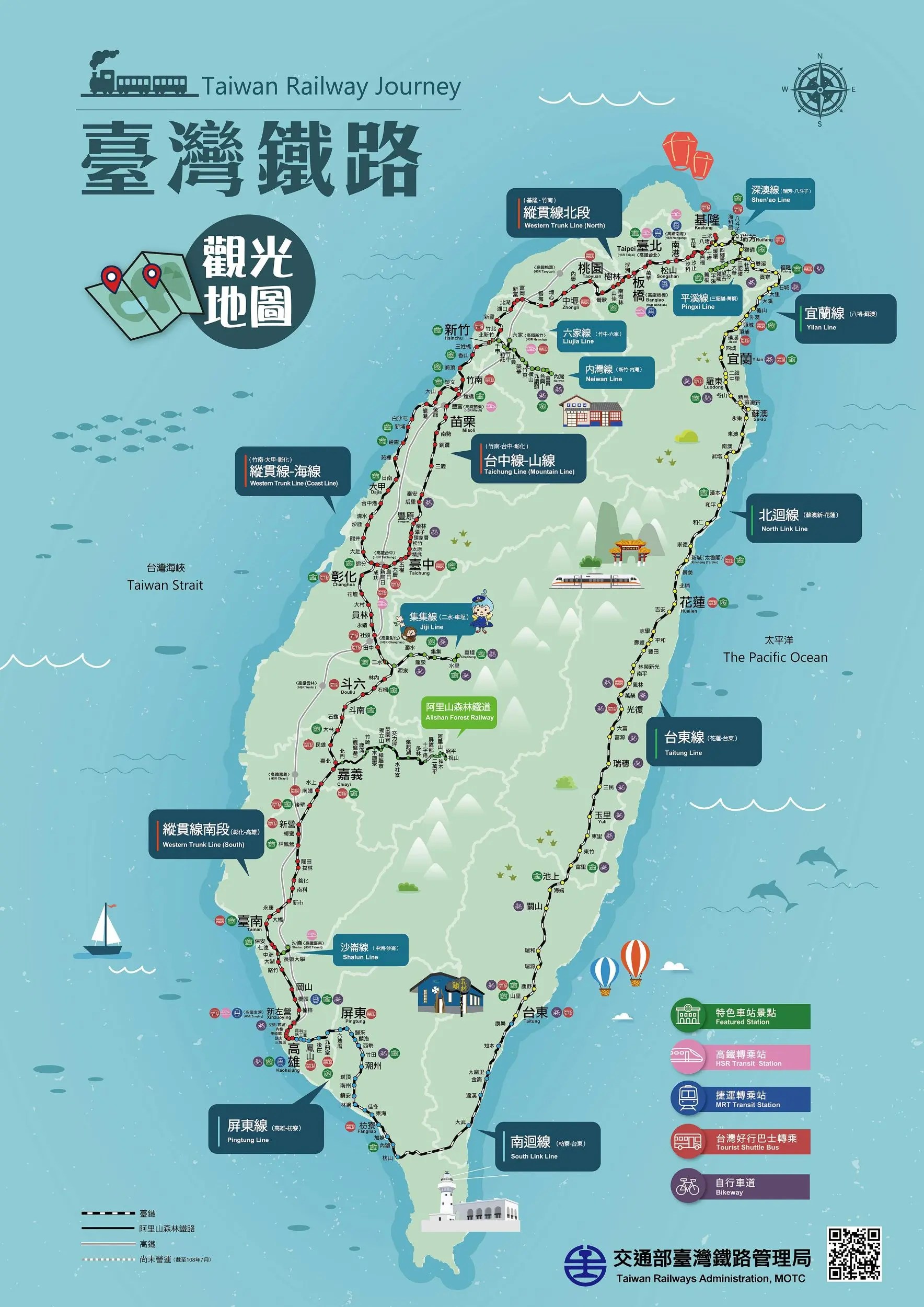





 Unfortunately, I did not bring enough books, only two small novels. Plus half of Verne’s 20,000 Leagues… is just scientific names listing all of the plants and fishies Prof. Aronnax gets to witness on his voyage with Capt Nemo… skim/skip. So I got to voyage into the depths of my own mind and spend way too much time contemplating life, love, and the nature of my current predicament. The weather was so bad no trains or busses came through the town. Was I safe there? How long was this typhoon going to last? Who were these people who so quickly ushered me into this little cabin? Did they have an ulterior motive? How much was their kindness going to cost me?

 No cameras were allowed inside the museum, so these photos are not my own, but there were many great exhibits. I enjoyed looking at the paintings done over centuries, some of the landscapes were my favorites.



 And of course, no hunk of pork would be complete without a piece of jade crafted to look like a cabbage.
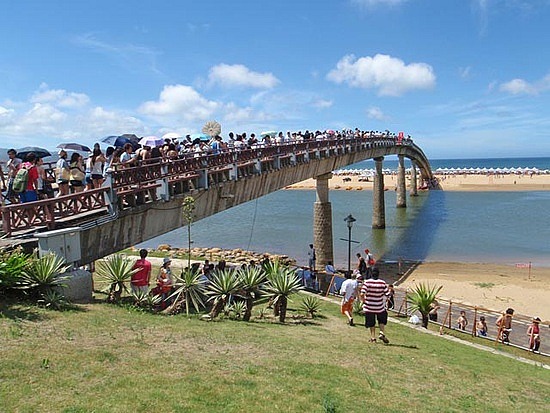
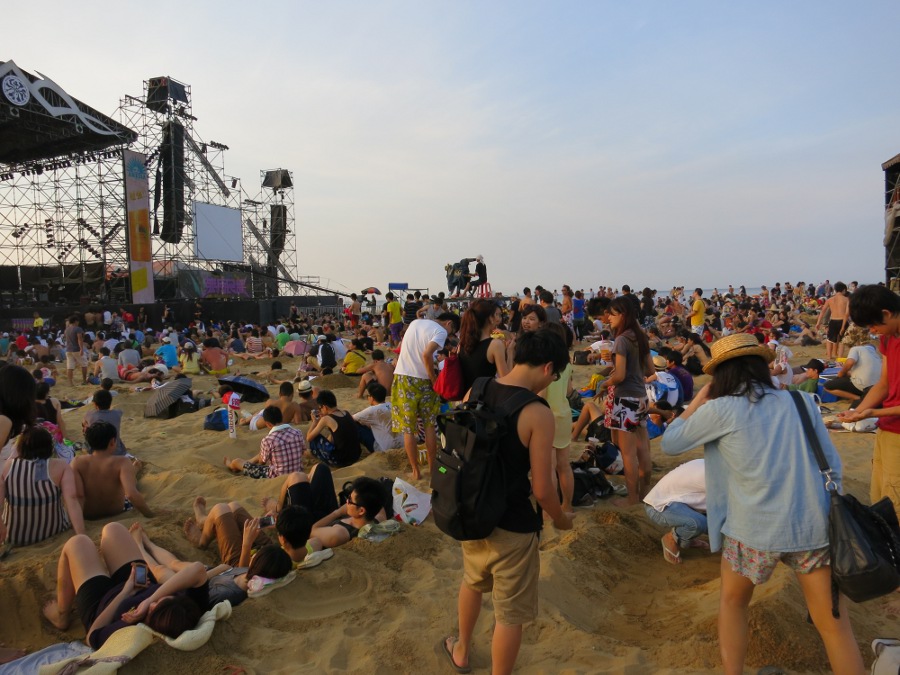 I liked the technique of digging a hole in the sand to make a beach recliner. It made you sandy, and walking through the crowd was hard without tripping over people. But it was a comfortable way to rest your feet after dancing in the sun. We stayed late into the night. The show ended with some fireworks and everyone crammed onto the last train back to the city. Did I mention that it was all free?
 I went back to the festival the next day, but a typhoon was passing through to the north and it was very windy and rainy, so I didn’t stick around to party in the mud. I went back to the beach after the festival was over and enjoyed swimming and sun without to much crowds.
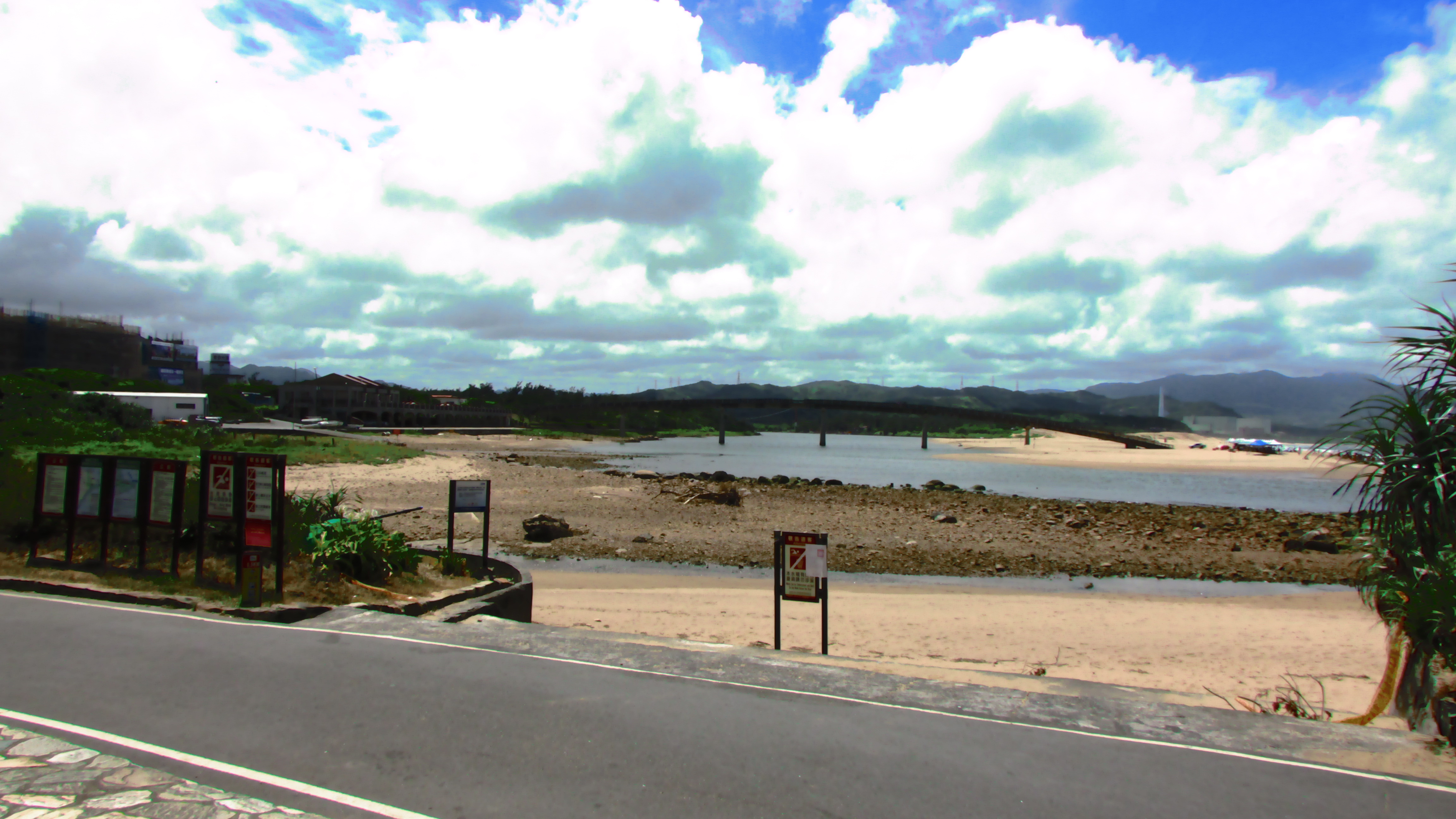 I still had my home base in Taipei, the longest I have ever spent in a capital city. It is just so clean and full of friendly people that I couldn’t leave. It also has a very convenient public transport system, so I could do day trips all over northern Taiwan. My next stop was the