“To everything there is a season, and a time for every purpose under heaven.”
During this time of year, the weather changes quite a bit in Taiwan. Thermometers rise astronomically when it’s sunny, rain pours down in torrents when it’s cloudy, and due to this drastic increase in temperature, typhoons start brewing in the Philippine Sea.
This is also the time when the sound of drums rolls across Taiwan’s rivers and harbors as dragon-headed boats slice through the water. Along with the Lunar New Year and Mid-Autumn Festival, the Dragon Boat Festival (Dwan Wue Gee-eh 端午節) is one of Taiwan’s most important national holidays.
Thanks to years and years of migration and colonization, along with the rising ease of cultural exchange, many countries celebrate the Dragon Boat Festival. As a Canadian from Vancouver Island, I had heard about it before.
Victoria, Vancouver, and many other parts of Canada normally host Dragon Boat events, but in 2026, they were cancelled due to FIFA.Buying bulk dragon boat mix from the grocery store was when I first realized my love for wasabi-coated savory snacks.
This post will outline what makes this time of year significant before looking at some of the festival’s founding legends. Then, we will examine folk beliefs, varying traditions, and a brief history.
The Fifth Lunar Month
For those of you who have read my post on the Lunar New Year, you may be familiar with the distinction between the common (Gregorian or solar) calendar and the lunar calendar. For those of you who haven’t, the distinction is basically that the former tracks dates based on the Earth’s yearly rotation around the sun, while the latter focuses on the phases of the moon.
The Dragon Boat festival is traditionally held on the fifth day of the fifth month, but because this is based on the lunar calendar, that doesn’t mean May 5th. Keep in mind, the lunar new year begins with the first new moon of the year, typically between late January and mid-February.
To make this a little clearer, here are some of the festival dates:
2024: June 8th
2025: May 31st
2026: June 19th
2027: June 9th
To understand this festival better, we need to look back. Long before it became something to celebrate, the time of year was associated with something much more practical and far less joyous: the need to survive.
As I already mentioned, around this time (May to June), things really start to heat up in Taiwan, and I am, of course, referring to the weather. The fifth lunar month is sometimes called the cursed month. It falls at the height of early summer, when rising heat and humidity create ideal conditions for all kinds of undesirables to thrive, such as:
Diseases
Pests
Venemous creatures
In Taiwan’s subtropical climate, early summer provides the perfect conditions for these undesirables to thrive, so the underlying logic of people’s concern is sound. Long before air conditioning and modern medicine, performing protective rituals was a practical response to a potentially dangerous time of year.
Three Interesting Legends
No single story fully explains why Taiwan’s rivers fill with drums and dragon-headed boats on the fifth month of each year. But I have found three legends that offer some interesting backstories.
After getting some information from a book I own on Chinese mythology and numerous online sources, I rewrote the legends as short stories, but be warned, they are far from perfectly crafted.
Please feel free to contact me if you want to know more about my sources. If you just want to bypass this exercise in creative writing and head straight to more concrete details about the Dragon Boat Festival, you can skip ahead to the sections on symbolism, modern dragon boat racing, or the historical timeline.
These are the three legends I am going to look at:
The first is the most well-known. It centers on Qu Yuan (Chew You-wen – 屈原: 343-278 BC). He was a minister, poet, and passionate advocate of the state of Chu (Choo – 楚) during the Warring States Period. He is remembered as an accomplished author whose works include the elegy of Li Sao.
The second story is not as well-known. It involves Wu Zixu (Woo Dzi-Shue – 伍子胥). He was also from Chu but served as a loyal minister to the state of Wu (Woo – 吳). Zixu’s story carries particular resonance in coastal Taiwanese communities with strong maritime traditions, where legends of river and sea spirits remain culturally important.
The last story focuses on Cao E (Chow Uhh – 曹娥), a young woman from Shangyu (Shung Yeww – 上虞) who enters a raging river to search for her father, Cao Xu (Chow Sheww – 曹盱). She was later deified as an enduring symbol of filial piety that persists in literature and temple murals.
Some artistic liberties have been taken with these stories, but I have included a few links for notable people and places. For clarity and to avoid repetitive vocabulary, I refer to some characters by their first names, some by their family name, and others by their full name.
I strove to preserve the essence of these narratives. They all talk about loyalty and grief while exploring a similar underlying question:
What does a community owe to those who gave everything for it?
The River Remembers
In the kingdom of Chu, where the Yangtze River flowed like a bolt of green silk through flowery hills, there lived a poet named Qu Yuan. He was tall, his long fingers were constantly stained with ink, and his eyes seemed to always be distant, like he was composing a verse no one else could see.
The palace court called him the Orchid Minister for two reasons: The first was because he placed an orchid in his belt where other men sheathed their swords. The second was because people claimed his poetic words in their ears when he spoke.
Yuan had risen through the ranks in the palace by being a trusted advisor to King Huai. Yuan always warned the king about making risky alliances.
“The state of Qin is hungry,” Yuan told Huai one morning, “and hunger does not offer friendship. Hunger needs to be fed.”
Not everyone agreed with Yuan. He had rivals in court who were allied with Qin and resentful of Yuan’s influence. They were petty, selfish people, and when they couldn’t beat Yuan’s powerful arguments and logical reasoning, they planted seeds of doubt among the king and his followers.
“Qu Yuan always acts so certain,” murmured one of the ministers, speaking just loud enough to be overheard. “One has to wonder whose interests he truly serves.”
The seed was small, but Yuan’s counsel was often cautionary, and the King was becoming increasingly enticed by voices that were more optimistic – and yet less honest – than the poet’s.
Within two years, the murmurs had grown into full-fledged accusations. Eventually, Yuan was forced into exile. He retired to his garden estate far from the capital and decided that if people would not listen to his wise words, he would quietly write them down. He spent his days filling scrolls that would outlast every throne in the Chu state.
One evening, Yuan was visited in his garden by a young scholar named Song Yu.
“Everyone in the villages still quotes your elegant verses,” Song said. “Please, come back, and petition the King again.”
“I wrote to him several times,” Yuan replied, not looking up from his scroll. “A king who will not heed so many friendly warnings will not open his ears even if I scream from the mountaintops.”
The wind blew through his garden from the west, carrying a soft floral fragrance. But there was something else on that gust; something far more ominous. Unbeknownst to the two men, to the west was also where armies from the Qin state were preparing for an invasion.
The news came on a grey morning on the fifth day of the fifth month. King Huai had been captured, and the Chu State was undone.
Yuan was mortified. He walked down to the river and stood at its bank all day. An old fisherman found him there at dusk.
“You look as though you carry the weight of the world on your shoulders,” the fisherman said.
“I carry the memory of a kingdom that no longer exists,” Yuan replied, “with a body that apparently still does.”
He turned a scroll over in his hands, contemplating what he had written. “If a thing cannot be saved, and a man has given everything trying, what is left to do?”
The fisherman sensed that it was a question with no good answer, so he gave a simple reply. “Go home, Master. Your problems, and the river, will still be here tomorrow.”
Yuan smiled and nodded politely, but he stayed at the bank. He did not move for a long time.
As the fisherman paddled out, he kept looking at Yuan. After a while, the poet’s form disappeared from his sight.
Yuan had walked into the river. He had lost the will to fight, and in that condition, grief alone was heavy enough to drown him. The water closed over the last great poet of Chu as quietly as a blanket being laid on a sleeping child.
The fisherman paddled back to shore and raised an alarm. Within the hour, every boat the village owned was in the water. Voices in the dark called Yuan’s name.
A young woman stood at the bow of one boat, holding her torch high.
“Faster!” she yelled. “If we are quick, we can—”
An old paddler in the boat interrupted her. “The current runs deep here,” he said gently. “He is likely already gone.”
“We continue looking regardless,” she snapped. “We owe him that much.”
They searched until the stars wheeled overhead, but they didn’t find Yuan’s body. Not one trace of him was ever discovered – no clothing, no sandals, not even the scroll he had been holding or the flower in his belt.
All they saw was black overhead and below.
As the boats turned back in defeat, the young woman grabbed the basket of rice that was meant to be shared for supper. She lifted it and began casting handfuls into the river.
“If we cannot bring him back to his family, let the river be his final resting place,” she said. “We will feed the fish, and make their bellies so full that they will not touch him.”
By morning, every boat was doing the same thing. The drums that had driven the search were now beating low and steady, a sound more signifying mourning than urgency.
The next night, the fisherman dreamed was at the bank of the river. Yuan was there, too, but the poet was standing on the water’s surface. He looked as he had in life.
“We couldn’t bring you home,” the fisherman said.
“You tried,” Yuan replied. His tone was calm. “You gave me something better than my old home. You gave me a place to truly be at peace.”
He paused for a moment before continuing, “But the rice sinks too easily. The river dragons take it before it ever feeds the hungry fish.”
“Then what should we do, Master?”
“Wrap it,” Yuan said. “Bind it in silk thread, tight enough that even a dragon’s hunger cannot unwind it. Let it hold its shape against the current. The same way I tried to hold together this kingdom against everything that wished to unmake it.”
When the fisherman woke up, he wasn’t certain whether what he had seen was an actual vision or just a dream caused by grief and exhaustion. But he told everyone else in the village anyway.
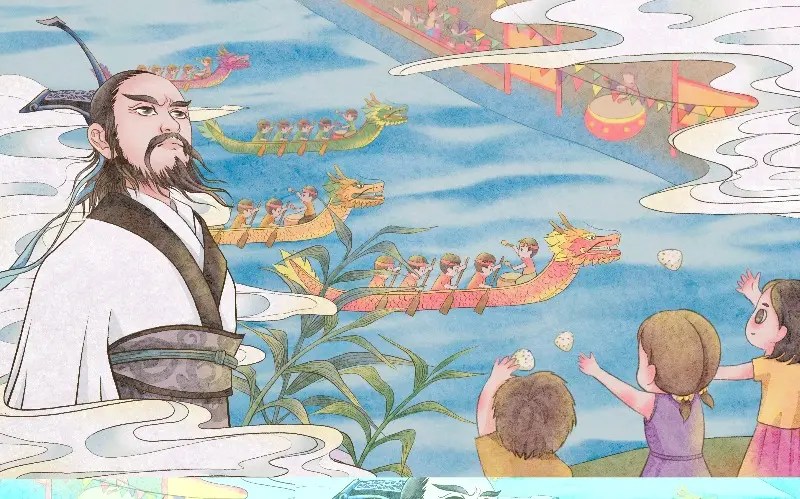
On the first anniversary of Yuan’s death, the villagers bound rice in bamboo leaves and wrapped them with silk thread. They dropped the green heart-shaped bundles into the river.
Generations passed. The boats that had once searched in desperation now raced in remembrance, with dragons on their bows and drums driving them forward.
The rice that was once scattered loosely became dumplings called zongzi. They were bound tight and offered each year to a river that had taken a poet and given back, in exchange, a festival that would outlive every ruler who had failed to listen to him.
The Mournful Minister
A young officer named Wu Zixu knelt beside the bodies of his father and elder brother. Both of them had been cruelly executed on the whim of a tyrant king. Zixu did not weep long. Instead, he fled, moving eastward across rivers and borders. He carried nothing but his sword and a solemn vow that he would avenge the lost lives of his loved ones.
It was that same vow that led him to the state of Wu, where King Helü recognized something useful in the exile’s hollow eyes – a hatred he could weaponize. Zixu quickly became the king’s most trusted minister, and within a few years, he had accomplished what he had vowed to do.
Zixu had led his armies into the capital of Chu. The old tyrant king was already dead, but Zixu settled the score with fire and conquest.
“You have claimed your vengeance,” Helü said to him afterward, watching smoke rise over the city. “What now, Minister Wu?”
“Now I will serve you as faithfully as I once sought to ruin my enemies,” Zixu answered. “A man who has been given a second kingdom to serve owes it everything the first one never deserved.”
He meant every word, but he would soon learn that loyalty is a promise that, more often than not, punishes its keeper.
King Helü entered into a war with a smaller, rebellious kingdom, the state of Yue (Yew-eh – 越). When the king of Yue died, King Helü took the opportunity to invade, but he was slain in battle by the defending armies that were led by Yue’s new king, Goujian (Go Jee-en 勾踐.
Helüs’ son Fuchai (Foo Chay 夫差) took the throne, but his ascension wouldn’t be an easy one. Goujian, being inspired by his victory against Helü, marched his armies forward to challenge Fuchai.
Zixu served Fuchai just as faithfully as he had served the young king’s father, and he met the Yue army at a strategic location where the land narrowed between a marsh and a hill. He had scouted that place long before the first arrow was ever loosed. After walking around and testing the muddy ground, he knew that was a prime location to funnel a desperate army into its own grave.
When the battle came, it was more of a slaughter than a fair fight. Zixu’s lines advanced in disciplined ranks while Goujian’s soldiers, already half-starved from a long march and a season of poor harvest, broke against them like surf against a cliffside. They were repelled again and again, each wave becoming weaker than the last.
By midday, mud and blood had churned, becoming indistinguishable underfoot. The marsh was now the color of rust. Zixu’s enemy had nowhere to retreat but into the deeper water, and it swallowed the soldiers. The screams of the dying carried farther across the land than any drum or war-horn ever could.
Zixu rode along the battlefield’s edge, completely untouched. He watched enemy banners fall one by one until the only standard left was the one above Goujian’s own collapsing guard.
By dusk, what remained of the army of Yue had been pressed into a shrinking half-circle against the marsh’s deepest water. The few remaining soldiers were stuck in mud that was too thick to run through and too deep to fight properly in. Finally, Goujian threw down his sword rather than watch the last of his soldiers die trying to win a battle that had already been lost hours earlier.
He was brought to Fuchai’s court in chains, still crusted in the blood-stained mud. Soldiers dragged him into a throne room that was far grander than anything his small, jealous kingdom had ever built. Great pillars were wrapped in red lacquer. The floor was inlaid with polished marble that reflected the torchlight, making the whole hall glow like the inside of a forge.
Goujian knelt on that gleaming floor with his head bowed low enough that it touched the stone. His fate, and that of his kingdom’s, balanced on whatever Fuchai chose to do next.
Zixu stood at the foot of the throne, still in armor unwashed from the field. He looked at the kneeling king before, understanding what could happen when such monarchs were allowed to live.
“Kill him now,” Zixu said, his voice carrying the particular urgency of a man who had watched that exact story play out before. “A defeated king deserves no gratitude. He is a weed in the grass, waiting for his time to spread again.”
But Fuchai was young, and he was enticed by the spectacle of mercy. Goujian knelt low, wept convincingly, and offered tribute. He promised gifts of gold, jade, silk, and eventually, he even gave his own wife as a personal servant.
Bo Pi was another minister, but unlike Zixu, his loyalty bent in whatever direction the wind of bribery blew.
“Your Majesty,” he murmured, leaning in close to the king’s ear. “What glory is there in slaughtering a man already broken? Let the world see your mercy as well as your strength.”
Bo Pi’s words swayed Fuchai, and he spared the rival king. Goujian was sent home in humiliation rather than a coffin.
Zixu watched the events unfold and said nothing more, though something in his face made him look as if he had just consumed poison.
Years passed. Goujian, being far from broken, plotted his revenge. He spent his exile sleeping on a wooden pallet and eating only plain rice and fish heads. The discomfort kept his hatred sharp as he patiently rebuilt Yue’s strength. During that time, he continued to send Fuchai gifts and words of praise. But, more importantly, he made sure to keep Bo Pi’s pockets full.
Zixu watched this happen. Events were unfolding exactly as he had feared. He could no longer remain silent, so he made repeated visits to the king.
“Your Majesty,” he said, on what would be one of his final visits to the throne room, “The tribute from King Goujian is not an act of friendship. It is the behaviour of a farmer who fattens the pig he intends to slaughter. Goujian is not grateful to you. He is patient, and a second chance is the most dangerous gift a defeated king can be given.”
“You see treachery everywhere, old man,” Fuchai snapped, weary of warnings that no longer matched the comfortable peace he had become accustomed to. “Bo Pi tells me that Goujian is loyal. I am more inclined to believe the minister who brings me good fortune over the one who speaks only of accusations, warnings, and ill tidings.”
“Then you are letting the gift blind you to the giver,” Zixu said quietly. “And you do not see the trap.”
It was those words, mixed with some embellishments and lies, that Bo Pi used to finish what years of bribery had begun. He started whispering of disloyalty dressed as devotion. Eventually, he accused Zixu of outright treason.
Fuchai was persuaded at last. He sent his old minister a sword with no letter; it was a command that didn’t require words.
Zixu received the weapon without surprise. Before he fell upon the blade, he spoke to the servant who had carried it. His voice was steady, like someone settling an old debt.
“Tell the king that when I am dead, I want him to take my eyes and hang them above the city’s eastern gate, facing the road to Yue. I could not make him see Goujian’s treachery while I lived. Let me watch it arrive, at least, once I am dead.”
By the king’s final act of cruelty, Zixu’s body was bound in a sack and thrown into the river that ran past the capital and into the sea. The waters there were famous for having a tide that rose more as a single violent wall than a gentle swell.
Years later, Goujian’s armies came exactly as Zixu had promised they would. King Fuchai fell exactly as he had been warned he would. By then, it scarcely mattered whether Zixu’s eyes had been hung above the gate or not. The river into which his body had been thrown had developed a reputation. The local fisherman claimed that the great tidal swell was a product of Zixu’s anger. The violent waters rose and fell as if something beneath them was still trying to be heard.
Zixu was a warrior who refused to lie down quietly, and water spirits remember the wrongs done to noble people.
The Daughter Who Would Not Wait
In a small river town, mulberry trees towered over wet fields of rice. Underneath those trees, you would often find a priest named Cao Xu. He was someone whose voice could call rain from a clear sky and was said, on certain occasions, to have the ability to speak with the spirit that dwelt in the river.
His daughter, Cao E, had grown up beside that river the way children in other villages would grow up beside a cooking fire – close enough to feel both its comfort and its danger.
At the end of the fourth month of the year, the whole village gathered on the riverbank before dawn, heaping various offerings onto woven mats. There were bowls of rice and fresh fruit, strings of paper coins, and bundles of reeds that had been lit so their smoke drifted low across the water, mixing with the rising mist.
Cao Xu had been fasting for three days beforehand, as the festival demanded, and that morning his hands trembled slightly. Cao E told herself that her father’s shaking was only from hunger.
She convinced herself he was fine as she helped him into his robes. They were sewn with silver thread that caught the early light in thin, quick flashes, like minnows darting beneath the surface of a pond.
There were four drums set in a row along the bank, and villagers began beating them as soon as Cao Xu stepped into the water near the ceremonial boat; it was a slow, deliberate rhythm meant to mimic the river’s own pulse and call forth the spirit from whatever depth it kept itself hidden in. The sound rolled out over the water and came back flattened by the wide, swollen current into something different.
The drums were meant as a summons, but that year, they sounded more like a warning.
The current bore little resemblance to the gentler flow Cao E was used to; weeks of spring rain had fed the river, expanding it past the boundaries it usually respected. What had once been a clean separation between water and field now blurred into a patchwork of shallow brown ponds spreading out across the lowlands. The young rice shoots in the fields were drowned before they’d had a chance to root, and whole paddies sat submerged and silent.
The water itself ran a milky-grey color, thickened with silt torn loose from collapsed banks upstream. The river was so heavy with churned earth that it hardly looked like water at all. It caught and carried away everything in its path – broken tree trunks, collapsed fish-traps, and the bloated carcasses of drowned farm animals. The village’s freshly-painted ceremonial boat looked small and unmanageable set against the bank.
The noise of the river was enough to raise the hair on the back of a person’s neck; it was a low, continuous roar, mixed with the wet cracking sound of debris breaking beneath the surface. Even as the villagers watched, the water clawed at the soft earth of the banks and spread wider. The air itself had changed, smelling more like mud and rotten wood. The river had reached deep into the earth and dragged something of that depth back to the surface.
Cao E and the other children would normally wade out and search for crawfish where the water moved in slow bends, but that year the river gushed as a single unbroken current. The surface of the water bulged and rolled like the back of something living and irritable, refusing to break apart into the familiar, harmless channels the villagers had trusted their whole lives.
Even the oldest fishermen on the bank, people who had understood the river’s behaviour for decades, found themselves stepping back from the edge with apprehension.
“Father,” Cao E said, tying the last cord to his waist, “the river seems angry today.”
“The river is always a little angry, my child,” Cao Xu replied. He smiled the way he would smile at everything, as if the world’s dangers were simply small things he had stopped fearing a long time ago. Maybe he had never feared them.
“That is why we make these offerings,” he explained. “We need to remind the river we have not forgotten its temper.”
He stepped into the boat, his silver robes settling around him. He did not look back as the current took hold of the vessel and began drawing him out.
As he rowed furiously, the drums on the bank beat to meet every one of his strokes. When he got to a place where the water ran deepest and darkest, he stopped.
Cao E watched her father put down the paddle and raise his arms. His voice rose over the drums, reciting words she had heard him say many times before but had never fully understood.
Then the boat lurched. No one knew whether it was just from the strong current or if something large had struck the vessel from beneath the surface.
Cao Xu fell over the side without even a cry to mark the moment. He was swallowed as completely as a stone dropped into the depths of a well.
For days, the village searched. They rowed slowly around every bend, dragged nets through the shallows, and called Cao Xu’s name into the fog that rose each morning.
Cao E stood on the bank all day and all night, refusing both food and rest. Her eyes were fixed on the current as though sheer attention might force it to give back what it had taken.
After three days, her mom tried to intervene. “Come inside, dear,” she begged, draping a shawl over shoulders that had gone stiff with cold and grief. “You will catch a fever standing here. Your father would not want this.”
“My father is somewhere in that water,” Cao E said without turning. “I will not leave him alone simply for the sake of my own comfort.”
By the seventh day, the search parties had dwindled and grown discouraged. The villagers muttered that the river kept what it took. People said that their efforts were better spent on mourning than in further searching.
An elder of the village who had known Cao Xu since boyhood approached Cao E. She was still standing at the bank. The bottom of her robe was filthy from walking in the silty shallows. Her hands were raw from gripping reeds to steady herself as she searched the steepest parts of the shore.
“Daughter,” he said gently, “for days you have walked this bank in vain. You honor your father more by living than by wearing yourself down asking something from a force that will not be reasoned with.”
“You misunderstand me,” Cao E said softly.
There was something in her voice that made him go quiet. It was not despair, but a terrible, settled calm; the calm of a person who had already made an important decision and was only waiting for it to play out.
“I am not asking the river to give him back. I am asking it to take me to him.”
On the fifth day of the fifth month, she walked out to the very place her father had gone under, the water moving past her dark, indifferent, and endless.
“I have searched every bank and bend,” she said loudly to the current. Her voice carried clear over its roar. “If you will not surrender him to my searching, then take my devotion as a daughter instead.”
She took another step forward without hesitation and went down. The water closed over her the same way it had closed over her father. The river, true to its nature, showed no signs of gratitude for what it had received.
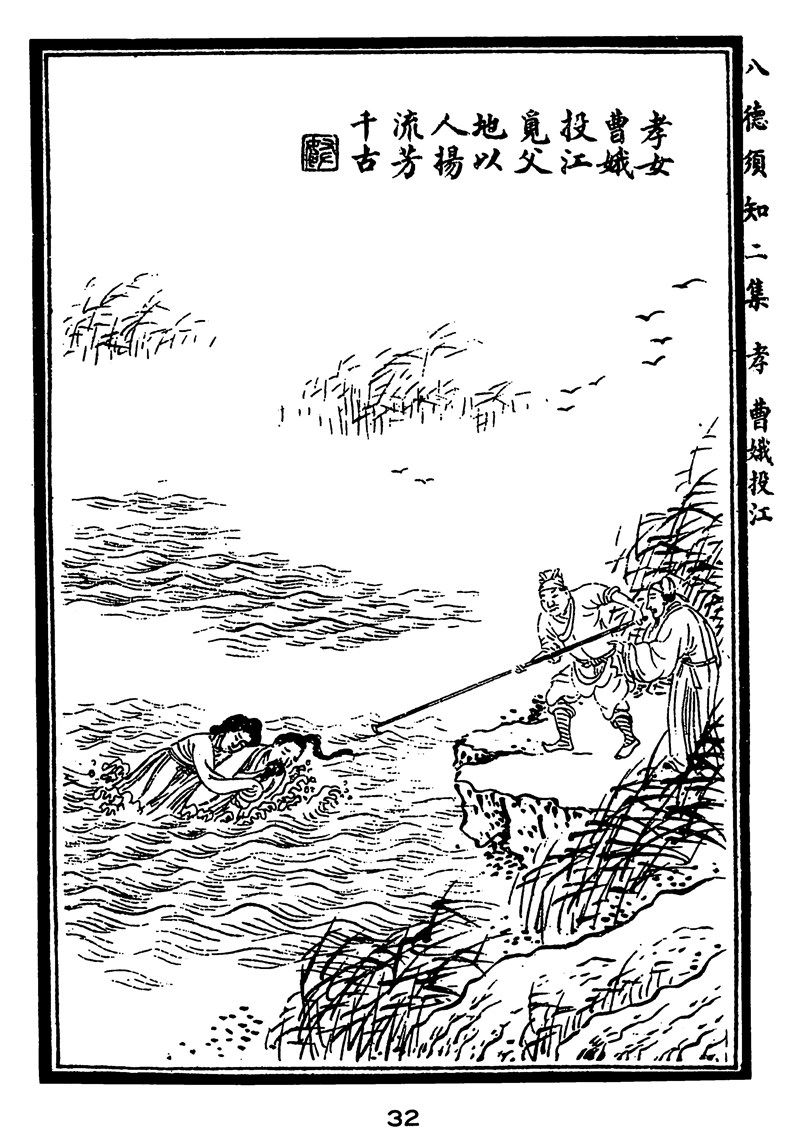
Days later, fishermen downstream found two bodies tangled together among the reeds. The arms of both father and daughter were locked around each other as though neither current nor death had been strong enough to pry them apart.
The village buried them together, and within a generation, Cao E was no longer remembered merely as a grieving daughter but as a goddess of filial devotion. The river now carries her name rather than its old one, and her shrine adorns the riverbank where she had once stood, refusing to abandon her father.
Her story of devotion exists quietly in temple murals and old verses, reminding us that what we owe the people we love is sometimes paid not in comfort, but in refusing, against all sense, to abandon them in the dark.
Symbolism and Folk Beliefs
Each of the three legends ends in a similar way: a body (or bodies) is given to a river, and a community is left to make meaning from the loss. But the symbolism of the Dragon Boat Festival reaches back further than any one story. There are even older beliefs about the dangers of early summer and the forces believed to govern water and protection.
Beneath the legends lies a deeper layer of folk cosmology, one concerned less with individual people than with the unseen forces a community had to appease, repel, or honor simply to survive the season. The following are three important folk beliefs.
1. The Five Poisons
The snake, scorpion, centipede, lizard, and toad were believed to become more active and dangerous as the temperature intensified in the fifth month. A lot of the festival’s rituals, such as the herbs hung over doorways, the sachets worn by children, and the wine once drunk for its supposed antidotal properties, exist specifically to repel the five poisons.
2. Dragons
Dragons are obviously quite central to the festival. What many people might not understand is that in local folk religion, dragons can be water spirits who control rain, rivers, and the turning of the seasons.
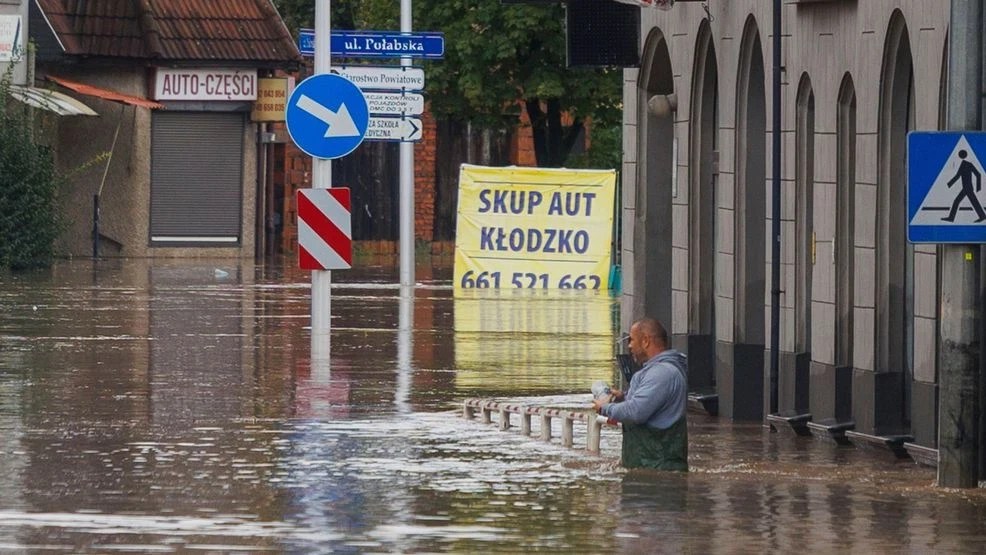
Racing a dragon-headed vessel down a river isn’t just athletic competition; it’s a ritual act meant to appease or command the water spirits whose favor determines whether the coming months bring good rain or torrential disaster. Judging by all the flooding that has been happening around the world, perhaps more people should jump in a dragon boat and start beating drums.
3. Children’s Protection
Children often receive special attention during festival time. Colorful threads are tied around wrists, or small fragrant sachets (Shee-ang Boe – 香包) are pinned to kids’ clothing.
Both are meant to ward off illness and misfortune.
Dragon Boat Racing in Taiwan
The boats themselves carry as much meaning as the legends that inspired them. What began in the old stories as something used to desperately search for a body lost in the river has been reshaped over centuries. They became vessels built specifically to embody the dragon’s authority over water, weather, and fortune.
Taiwan is an island nation, so it should come as no surprise that rivers and harbors shape daily life for a lot of the people who live there. Dragon boat racing is as much a ritual as it is a competition, and to many people, the festival helps shape the island’s identity.
Structure of a Modern Racing Team
A competitive dragon boat crew in Taiwan today includes several specialized roles:
The drummer (Goo Show – 鼓手), who sits at the front and sets the paddling rhythm.
The paddlers (Gee-ang Show – 槳手), who provide the boat’s power.
The steersperson (Gee-oh Show – 舊手), who controls direction from the rear.
The flag catcher, a paddler at the bow who snatches a flag from the water to mark the official end of the race.
Symbolism of the Boats
Like dragons themselves, dragon boats are understood in Taiwanese folk belief as guardians of local waterways. They are vessels whose presence on the water is thought to help chase away disease and bad fortune for any communities that live along the riverbank.
Important Foods and Drinks
There is more to this festival than public spectacle, competition, and old folk beliefs. Like almost every celebration in Taiwan, feasting plays a central role.
Bundled Rice Dumplings
Anyone who has been in Taiwan around this time of year has probably seen zongzi (Dzong Dzih – 粽子). Throwing rice into the river was central to the legend of Qu Yuan. In that story, the rice was wrapped in bamboo leaves to protect it from river dragons.
Sticky rice is still bundled in bamboo leaves, and the practice has grown, over centuries, into one of Taiwan’s richest culinary traditions. The regional variations are a point of genuine local pride and friendly rivalry.
Northern Taiwan style favors steamed, individually loose grains of rice.
Southern Taiwan style is boiled, producing a softer, stickier texture.
Hakka zongzi typically include fatty pork, dried radish, and peanuts.
Some Indigenous communities make millet-based versions reflecting local agricultural traditions.
Vegetarian zongzi are widely available at Buddhist and Taoist temples.
To tell you the truth, I don’t love zongzi. They are not, by any means, bad; I just think they’re a little bland and unremarkable. However, I will eat them when they are given to me, and I am given heaps every year.
Fruit and Drinks
Realgar wine (She-ong Gwong Ghee-oh 雄黃酒) is said to be important to the festival, but I have never tried it. Realgar is an ore that contains sulfur, and it was believed to ward off insects and disease (along with evil spirits). However, I am doubtful that the purported health benefits of drinking something with toxic levels of arsenic have held up to scientific scrutiny.
Now, it is more common for people to drink cooling herbal teas, which I enjoy. This is often paired with seasonal fruits like lychee and mango, which I devour ravenously every chance I get.
A Historical Timeline
The evolution of the Dragon Boat festival in Taiwan combines both Han Chinese and Indigenous understandings of early summer; it is a time that requires protection, purification, and careful transition. This overlap of customs, rather than direct borrowing, shows that there was a shared response to the practical dangers of the season despite different cultural frameworks.
Amis communities, for example, observe summer rituals tied closely to fishing cycles, and some communities incorporate their own unique boat blessing ceremonies into the festival. The Bunun people mark the season with rites connected to agriculture and hunting, with particular emphasis on seeking ancestral guidance during the dangerous time of year.
It is no accident that distinct cosmologies arrived independently at the same instinct toward seasonal protection. It reflects centuries of layered history, as migration, colonization, and political change brought the festival to Taiwan and reshaped it.
To understand how the festival has evolved, we can trace its history from the earliest origins through to the present.
Pre-Qin Origins
The festival’s roots reach back to rituals that predate even the Warring States period. These included fertility rites performed to ensure plentiful crops, prayers to avert illnesses and avoid poisonous creatures, mock battles to awaken the hibernating Heavenly Dragon (Tee-an Long – 天龍), and worship of the water dragons as representatives of the Jade Emperor (Yew Huang – 玉皇). However, the true origin of the dragon boat festival is commonly believed to be the Legend of Qu Yuan rewritten above.
One thing that these traditions do show us is that early summer was always recognized as a dangerous transitional period into the hot season.
Spread to Taiwan
Han settlers brought dragon boat traditions to Taiwan, where the customs were gradually adapted to the island’s distinct subtropical climate and absorbed into local folk beliefs that were already shaped by the island’s geography and Indigenous heritage.
Japanese Colonial Period
During Japan’s rule over Taiwan, dragon boat races were promoted as organized athletic events, and races were structured in ways that influenced how the sport is done on the island today.
Post-War Taiwan
After WWII, temple-centered celebrations grew in prominence, Indigenous elements became more visibly woven into public observance, and the festival increasingly took on a role in tourism and cultural branding as Taiwan sought to promote its distinct cultural identity.
Each of these venues attracts both serious competitive teams and casual spectators. Given that these are all outdoor events and the weather at the time is either extremely hot or extremely wet, my family and I have not made it a habit of attending every year. Besides, I would rather be paddling around in a boat myself than simply watching others do it, but that doesn’t take away from the beauty and cultural significance of the whole event.
A Unique Time of Year
While I don’t really enjoy the blistering heat of a Taiwanese summer, thankfully, a cooling dip in a lake, ocean, or mountain stream is never far away. Besides, the way things have been going for the past few years, it seems record-breaking temperatures are not limited to just this part of the world. One thing we can be thankful for in the sub-tropics is that summer rain keeps everything moist, almost completely eliminating the risk of forest fires that plague the drier summers of more temperate zones.
Taiwan’s Dragon Boat Festival not only serves as an event that showcases elements of culture from Chinese cosmology, centuries-old legends, local folk religion, and Indigenous Austronesian tradition, but it is also a reminder that the natural world is full of powerful forces. While we might understand these forces better than we used to, they can still surprise us. That is why we need to show our respect.
Whether that respect is shown through traditional festivals, age-old customs, or simply making more ecologically-minded decisions, is up to us.